Level Up: Mia's Middle School Quest
Tiny goals, big wins in a big school
Read story →
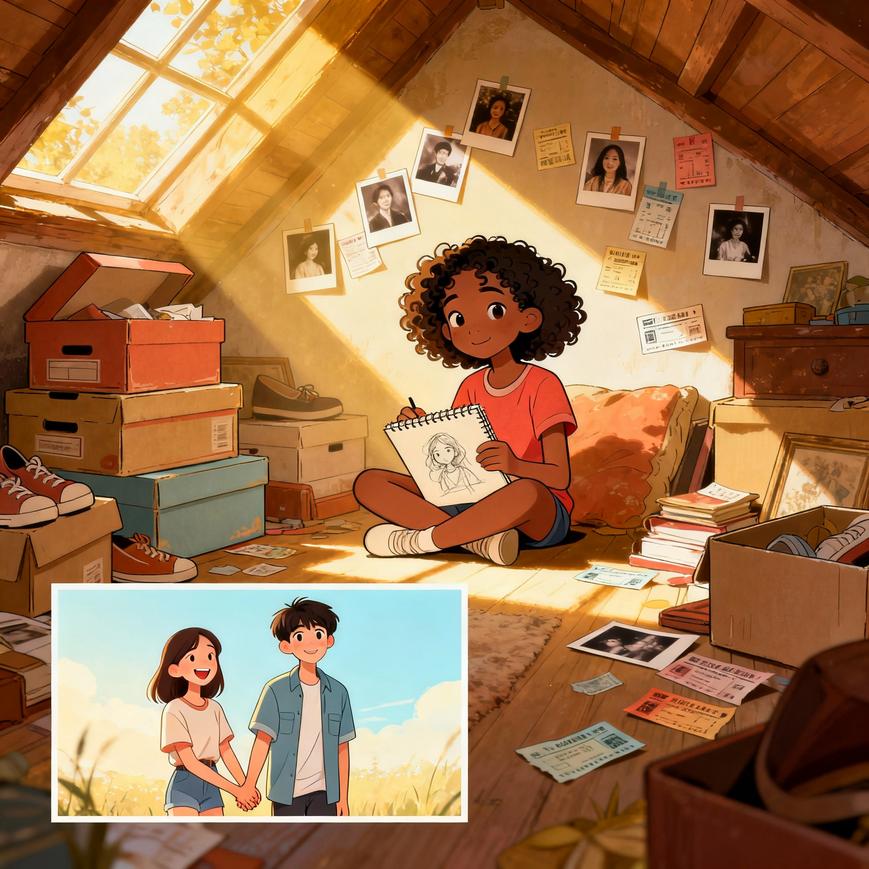
I always thought my parents were superheroes with rules-until I found their shoebox in the attic.
Summer was fading. My sketchbook was already half-filled, but I wasn't ready for school projects. Especially not Mrs. Locke's "Family Portrait" assignment. Write about your family-beyond facts, beyond names. "Capture their essence," she'd said. Whatever that meant. To me, Mom and Dad were experts at setting curfews and reminding me to do chores. Not exactly portrait material.
Mornings smelled like burned toast and damp grass. Mom humming as she rinsed mugs, Dad pacing in sneakers, prepping for a never-ending list of grownup meetings. They read the news, fixed leaky sinks, told me to be responsible. They didn't talk about feelings much, or dreams, or why Dad laughed so hard at corny jokes that made Mom groan. My idea of them was as tight and safe as the lid on a jelly jar.
Sunday, after lunch, I ducked up to the attic for art supplies-and found a battered shoebox wedged behind old coats. The box thudded heavy onto the floor. Inside: a tangle of paper and color. Ticket stubs. Polaroids with faded smiles. A tiny notebook, the corners nibbled by time.
My thumb brushed over a blue summer art camp flyer, crinkled at the edges. A ticket from a play-"Velvet Sky, 1999." A wrinkled note in Mom's tidy handwriting: "What if I mess up on stage? Try and see." Lyrics to a song, scribbled in purple ink. Was that Dad's looping scrawl? I couldn't picture him singing, let alone writing poems. It felt like I was meeting secret versions of them-kids, almost like me, daring themselves to try new things, afraid they'd trip up.
In the Polaroid, Dad wore oversized glasses and a grin way goofier than he'd ever let slip now. Mom had braids and her shirt was splattered with paint. Their arms hung loose around each other's shoulders, not like rules-enforcers, but like partners about to dare something.
I tucked the box beneath my sketchbook, heart jumpy with questions. Maybe my project wouldn't be so simple after all.
That week, I noticed details I'd never seen before. Dad, pacing the kitchen with a stack of index cards, practicing jokes under his breath. When I raised an eyebrow, he jammed the cards into his pocket and winked. "Neighborhood meeting tonight. Gotta convince Mrs. Tumlinson to let us repaint the playground benches."
Later, while Mom washed strawberries, she froze for a second, hands in the suds. She hummed a tune quiet and soft. It sounded like the one in the crumpled lyric sheet from the shoebox. I wondered if she remembered the words, or how her hands had trembled before a long-ago performance.
I scribbled questions in the margin of my sketchbook. Why did Mom keep the camp flyer? Had Dad really forgotten the words to his own poem? What did they dream about back then? Why did I never ask?
I decided to do something brave: interview them. That night, I trapped Dad in the living room after dinner, sketching while he folded laundry.
"Did you go to art camp as a kid?" I asked, trying to sound casual.
He blinked, then laughed, a little embarrassed. "No, that was your mom. I wanted to go, but... I chickened out. Ended up writing poems in my room instead. Your grandma found my journal once and said my handwriting was tragic."
I smiled. "You kept the poem, though."
He looked surprised. "You found the shoebox?"
I nodded, sheepish. Dad shrugged. "We stashed the box just after we moved here. Figured we'd show you someday, when you were less-"
"Annoying?" I offered.
He snorted. "Curious. Which is the best way to be."
Later, Mom told her side. How she'd been scared of making mistakes on stage, how she forgot her lines once but her friends filled the silence by humming her favorite tune. How after the disaster, she kept the crumpled camp flyer to remind herself she survived.
"Did that help?" I whispered, fingertips tracing the paper.
She grinned at me, eyes sparkling. "I think so."
All week, I kept noticing small things. The way Dad's voice wobbled at the meeting but steadied when kids clapped after his joke. How Mom hesitated before volunteering for the neighborhood festival, then raised her hand anyway, voice gentle but sure. I kept drawing them, each time with a little more shadow, a little more light. I even drew their hands reaching for each other, sometimes missing, sometimes landing just right.
My project draft changed. No more flat words like "responsible" and "strict." I wrote: "They mess up, they try again. Sometimes they're brave, even when scared. They laugh at each other's old mistakes. They give hugs when I'm frustrated and sit quietly when I don't want to talk. They let themselves be seen-and now, maybe, so can I."
I handed in my project feeling something had shifted. Not just in how I saw them, but in how I was allowed to feel about myself-scared, brave, messy, trying again. Someone who could ask questions and get answers, even if they surprised me.
Mrs. Locke read my essay, lips curling over every word. When she handed it back, she didn't say anything, just tapped the margin where I'd drawn three linked hands. My parents read it, too. Dad looked at Mom, then at me, the light behind his glasses catching soft and kind.
That night, while cicadas sang through the window, I slid the shoebox under my bed. I didn't have to see my parents as superheroes-or villains. Just human, just growing, just trying. Maybe that's the best kind of story we get to tell about the people we love-and about ourselves.
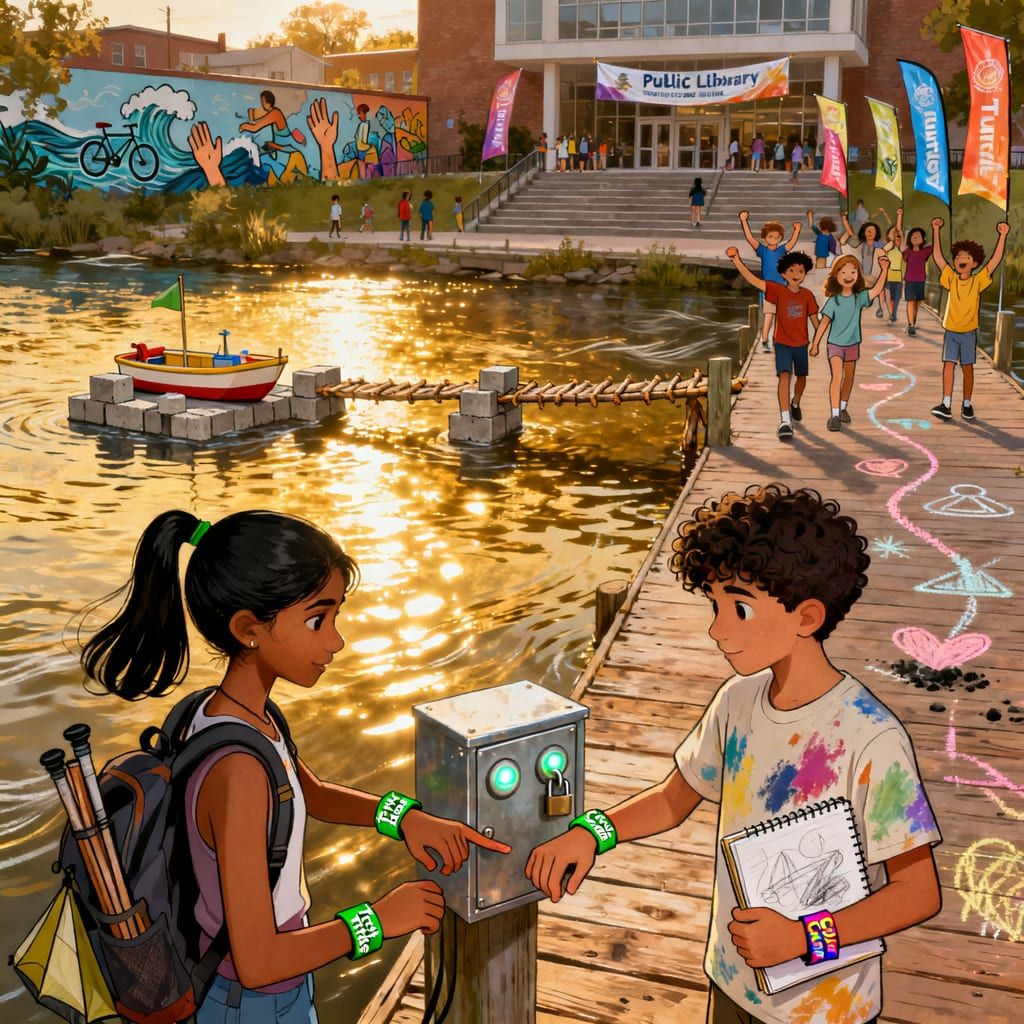
An adventure race that redraws a friendship map
Read story →Story audiobooks for children of all ages — a new one every day on Smarter Way Stories.