Two Houses and One Quiet Heart
A daughter learns to read between the lines of a life split in two
Read more →
Mara remembers the heat of fluorescent bulbs and the weight of coins sliding from her mother's palm. A carton of eggs, a gallon of milk, bread, jam-the humdrum metronome of evenings across checkout conveyor belts. She was eight, small enough to be told to hush, old enough to sense her mother's worry trembling beneath her careful hands. Her baby brother wailed from their battered shopping cart, writhing against the cling of a sweat-damp blanket. Mara watched her mother glance at the diapers pooled near the register, then tuck them quietly back on the shelf before surrendering the last of the change.
She never forgot that night. The way shame colors even kindness, how sometimes love looks like improvisation.
Twenty-six years later, Mara rides the #32 bus with her satchel and overdue copy of Matilda. At a stoplight, she sees a young father wrestling with a restless baby. The father coaxes a fraying diaper around chubby legs, frowning at the torn tabs-stretching hope thin, one stop at a time.
She looks away, as if her noticing might make things worse. But a memory presses against her-a remembered wish for something clean, for dignity, for anything but the ache of doing without. It follows her home, settling stubbornly beside the kettle and the sink.
That night, on a whim, Mara posts on Maple Heights Nextdoor: _Unused diapers? Collecting for neighborhood families, DM for porch drop-off._
The response is uneven-two replies the first week, four the next. Still, by the third Sunday, her car trunk sags with mismatched packages and half-emptied boxes. Little by little, she tucks grocery bags against weathered porches, adding a note in neat librarian's print: _Care, no questions. You're not alone._
Her principal, Mrs. Lin, finds her shelving diapers between read-alouds. One Thursday, Mrs. Lin unlocks the basement storage, giving Mara a quiet nod.
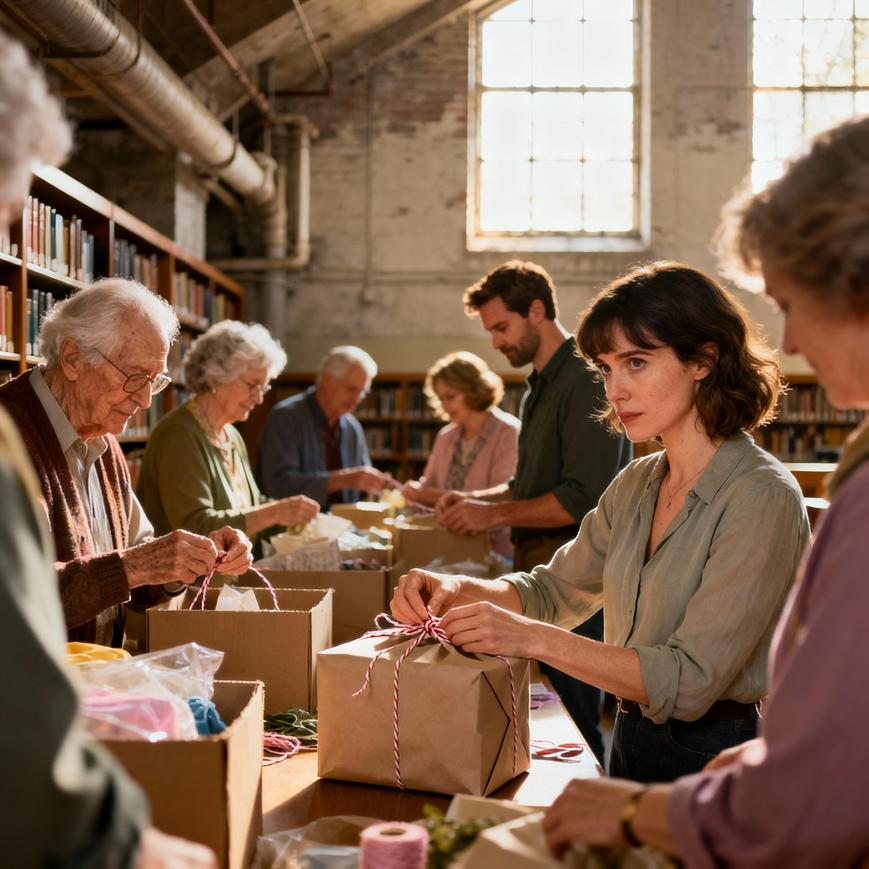
By April, Mara's project has grown beyond one person. On weekends, families arrive by double stroller or with canes, claiming plain-wrapped bundles by appointment. Mara enlists volunteers: Mrs. Day, a retired nurse with a sharp laugh who remembers changing blankets in the '80s; Jonas, a delivery driver who brings in city blocks worth of goodwill; and Sarai, a shy mother who returns the favor-_We came last year_, she whispers, _but I'd like to help now._
Mara trains them to listen more than ask. She shows how to tie the string, to tuck the note, to offer the bag as if it's a gift and not a favor. "No forms unless someone wants to share," she insists. Dignity isn't a word, it's a posture-a way you hand over an ordinary need.
The piles grow. So do the spreadsheets, the inventory, the shelf-lists. Mara spends nights rewriting requests, arranging a food drive for wipes, arguing with her own worry over rent for the basement.
A city councilwoman proposes an online fundraiser. Mara hesitates, picturing the parade of stories required for a successful pitch-some pains are not meant for spectacle. Instead, she enlists fourth-graders to create pastel "thank you" cards for each donor. Ritual grows: people come to swap not only diapers, but tips and recipes. Neighbors linger at folding tables, sharing coffee from donated thermoses, trading weary smiles.
Once a month, the bank hosts "Story Night"-people speak, if they want, about cloth or premium, about balancing budgets, about parents' phone calls from far away. _You too?_ someone says, every time, and a new silence emerges-a relieved, companionable one.
One gray November, Mara notices repeat requests from unfamiliar addresses-orders for the largest sizes, marked with initials instead of names. When she visits a stone building on Ridge Avenue, an aide shepherds her down linoleum corridors lined with echoes and half-open doors. Elderly residents greet her with embarrassed smiles when she leaves the bundles. Later, her phone vibrates with a message: _Didn't know who else to ask. Thank you._
Word spreads slowly. Mara adds adult diapers to the standing order. The swap fills with new, aching stories: widowers with shaking hands, sisters who knit for each other, an older woman who asks for a pink ribbon around her weekly package "just to feel remembered."
A Saturday in spring: Mara is sorting sizes L and XL when a familiar signature leaps from an envelope-her estranged brother's, Ethan. She opens it with trembling fingers. Inside is a check and a note: _Saw the forum, thought of Mom. For the ones who still need._
She finds him at the next weekend swap, uncertain at the door but unmistakable-leaner, solitary, unshaven. They pass between tables crowded with diapers and neighbors laughing over homemade muffins. Mara holds out a bundle to a trembling, grateful man-her brother nods, wordless, understanding. Later, they find themselves arranging packages side by side, hands moving in quiet, practiced symmetry.
Some things, Mara thinks, take a village to repair. Other things want only a stubborn, gentle persistence-a habit, or a hope.
In the basement, muffled laughter rises from story-sharing night as Mara draws clean string around the last care package, folding the note with quiet hands. Above her, the library lights flicker on for closing. Below, in the hush of stacked boxes and tired hope, the rumble of connection-old and young, giving and needing-spreads out, as ordinary and as sacred as laundry done well and in time.
A daughter learns to read between the lines of a life split in two
Read more →
A fog-draped night, two souls found, and the quiet shape of a life
Read more →
Story audiobooks for children of all ages — a new one every day on Smarter Way Stories.