Two Houses and One Quiet Heart
A daughter learns to read between the lines of a life split in two
Read more →
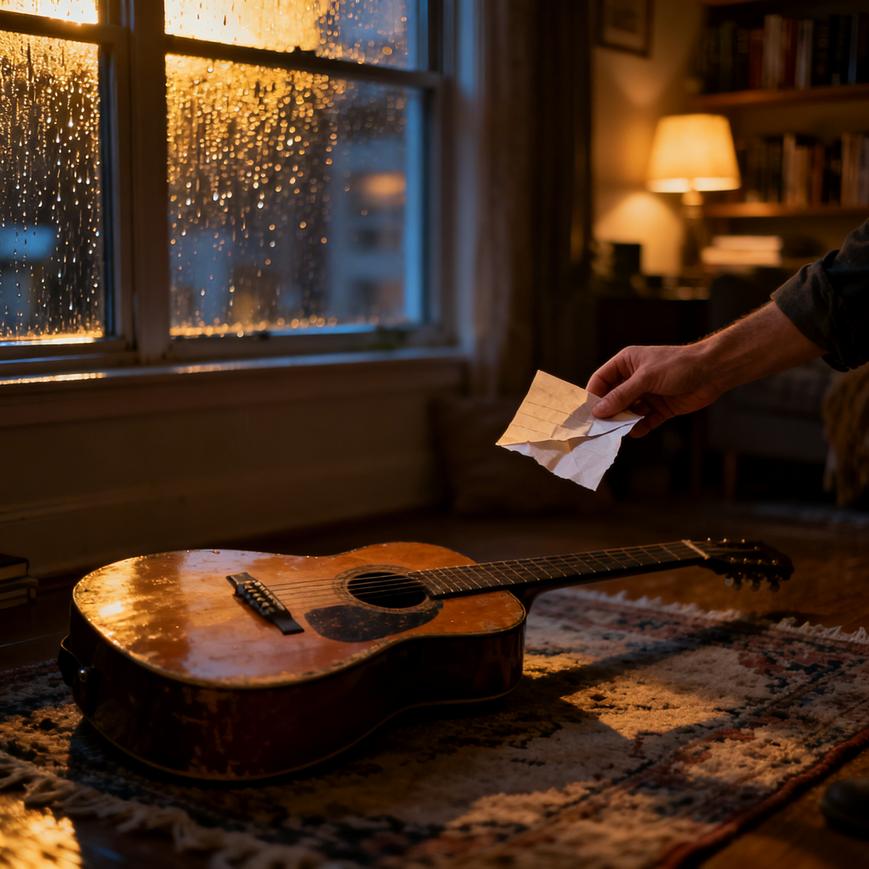
The Discovery It was the kind of rain that scurries along the coast, hammering every windowpane and nudging at memories best left packed away. Mara sat cross-legged on the faded rug in her living room, the battered acoustic guitar across her lap-its varnish scuffed, strings slack, a relic from a man she'd scarcely understood in life. Under the yellow haze of her desk lamp, she'd decided to salvage the neck for a shelf project.
A practical gesture, she told herself, not sentiment; scraps for something new. She fumbled with tiny screws, tongue caught between her teeth, the air smelling faintly of old wood and autumn mildew. As she loosened the pickguard, it jerked free with a sigh, exposing a slip of folded paper, browned and patched against the guitar's hollow chest.
Her first instinct: junk mail, some snip of catalogue. But the paper trembled as she unfolded it, thumb tracing lines penned in hurried graphite: *For June- Forgive the winters I made too long. If my hands were smaller, I would have held you tighter.
Let the chords be softer now. I am sorry. - D.
March 1999* Mara read it twice. June was nobody. Not in the stories, not in the inheritance.
Yet the apology spun, sticky and familiar, in a timbre she once knew. She pressed the note to her chest, and somewhere deep, something shifted-like the hum of a lullaby she thought she'd outgrown.
The Unspooling Suddenly, Mara found herself listening. To rain sliding along the window. To the slow pulse of the city below.
To the hidden ache curling up among the boxes stacked in her mother's attic, where half-remembered winters, a porch swing, and her grandfather's rough hands on a fretboard flickered behind her eyes. She texted Jenn-her childhood neighbor, now a physics teacher in Arizona: *Hey, random. Did Grandpa ever mention someone named June?
The response was quick: No, why? Find a girlfriend in his will?* Mara half-smiled.
She shut her eyes, chasing the memory-not a name, but a sound: her grandfather humming through teeth, watching snow stack on fence posts. A silence between verses stretched longer each year, grew roots through holiday dinners and voicemails unreturned. Over the next days, Mara unearthed boxes in the attic-school photos sticky with age, battered cassettes, birthday cards, her mother's handwriting looping in blue ink: Back before Dad stopped singing, one card confessed at the bottom edge, as if ashamed to admit tenderness.
The Search Saturday afternoons took on a metallic tang: press pot coffee, the clatter of mugs in the corner coffeehouse. Mara watched local songwriters paw at chords under dim Edison bulbs, letting nostalgia strum across the room. The battered guitar-her companion again-rested by her feet, an anchor both awkward and reassuring.
A barista nodded at her guitar. 'That old Martin's seen some stories, huh?' Mara traced a sticker half-peeled from the neck.
'Maybe more than me.' She slipped the note from her pocket, searching for seams of understanding in each loopy letter. Dated 1999.
She would have been seven-old enough to remember the way her mother's voice went quiet at the mention of her grandfather's name. She Google'd the poem's lines at midnight, found nothing but the echo of her own searching. One evening, her mother called for the first time in months-an accident, a pocket-dial Mara nearly let ring out.
On impulse, she answered, and after minutes of halting chatter, she carved open the silence: 'Did Grandpa ever call you June?' Her mother's breath caught, a gust across the line. 'No...
but he wrote it once. On a song, before he left. I always thought it was a slip, or maybe a name he wished I'd had.
He wasn't-great with words by the end.' Mara's hands curled instinctively over the guitar. 'I found a note.
In the soundhole.' Her mother fell silent. 'I never heard him say sorry.
Not once.' Mara nodded, even as she knew her mother couldn't see. 'Maybe this was how.'
The Song At the next open mic, the battered acoustic felt foreign in her arms, strange as the ache twisting in her chest. Her name echoing from the speaker cable sounded too soft, too close to the girl who once taught children how to clap in time-but Mara walked to the mic anyway, fingers trembling over grooved frets. She cleared her throat, gaze skimming the faces-strangers and familiar regulars, the barista waving an encouraging hand.
She set the poem's folded scrap before her, a talisman. Then, quietly, she spoke: 'My grandfather wrote a note to the wrong name. But it was meant for someone who needed it.
I think maybe we all do, sometimes.' She played-one of the lullabies half-lost in the attic, the melody bending with the years. Her voice didn't soar, but it filled the room, warm as winter light.
And as she sang, she pictured her mother's hands laying out birthday cards, her grandfather's shadow on the porch, and all the notes, missed and unspoken, echoing back.
The Bridge When the final chord faded, Mara let the silence settle around her-not empty, but brimming with the things left unsaid. She packed up the guitar gently, palm lingering where the pickguard had been, and walked home into a night rinsed almost clean of rain. In her apartment, she left the guitar whole.
She pressed the note inside once more-unfolded now, the apology breathing with new air. She couldn't know if her mother would ever play again, or if forgiveness warmed easily across the years. But as Mara set the guitar back beside her window, she listened-to the hush, to memory, to the small, brave hope that sometimes, a wrong name is only the beginning of being heard.
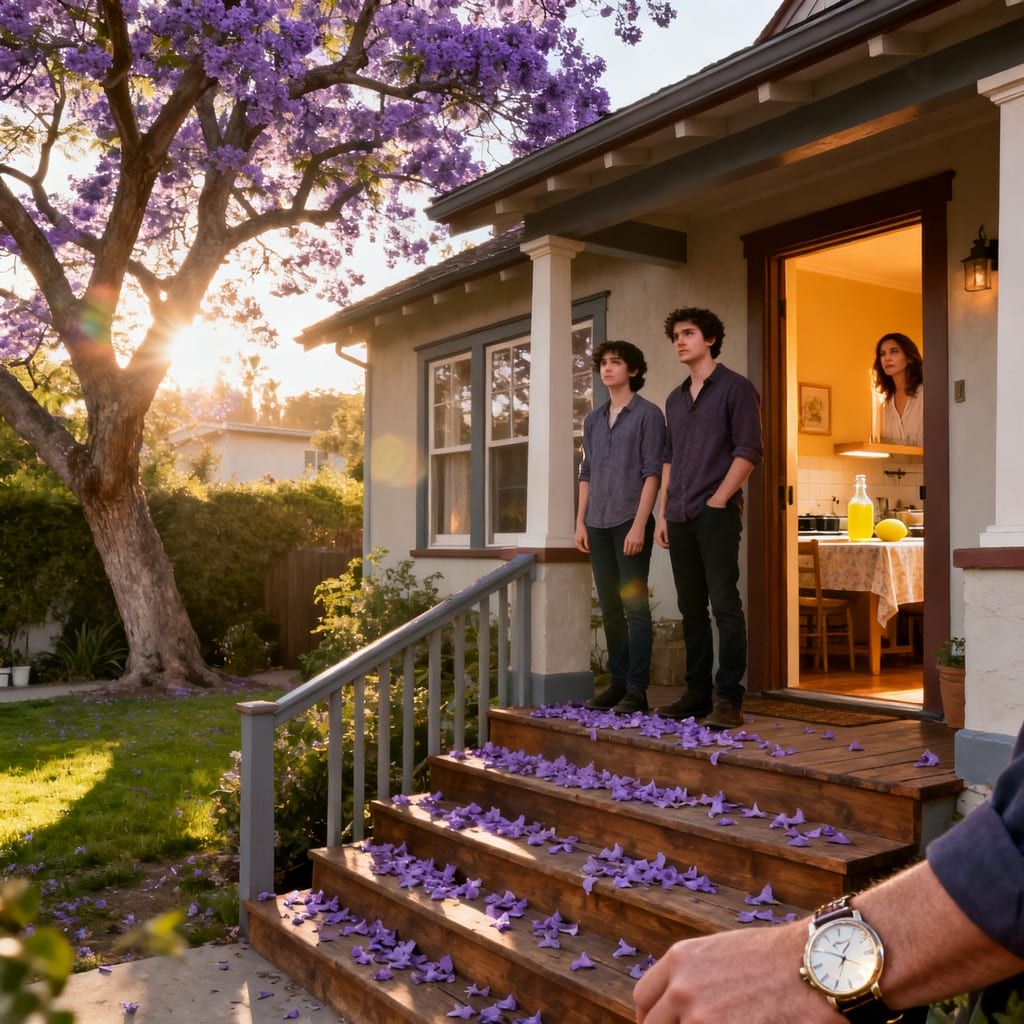
A daughter learns to read between the lines of a life split in two
Read more →
A fog-draped night, two souls found, and the quiet shape of a life
Read more →
Story audiobooks for children of all ages — a new one every day on Smarter Way Stories.