Two Houses and One Quiet Heart
A daughter learns to read between the lines of a life split in two
Read more →
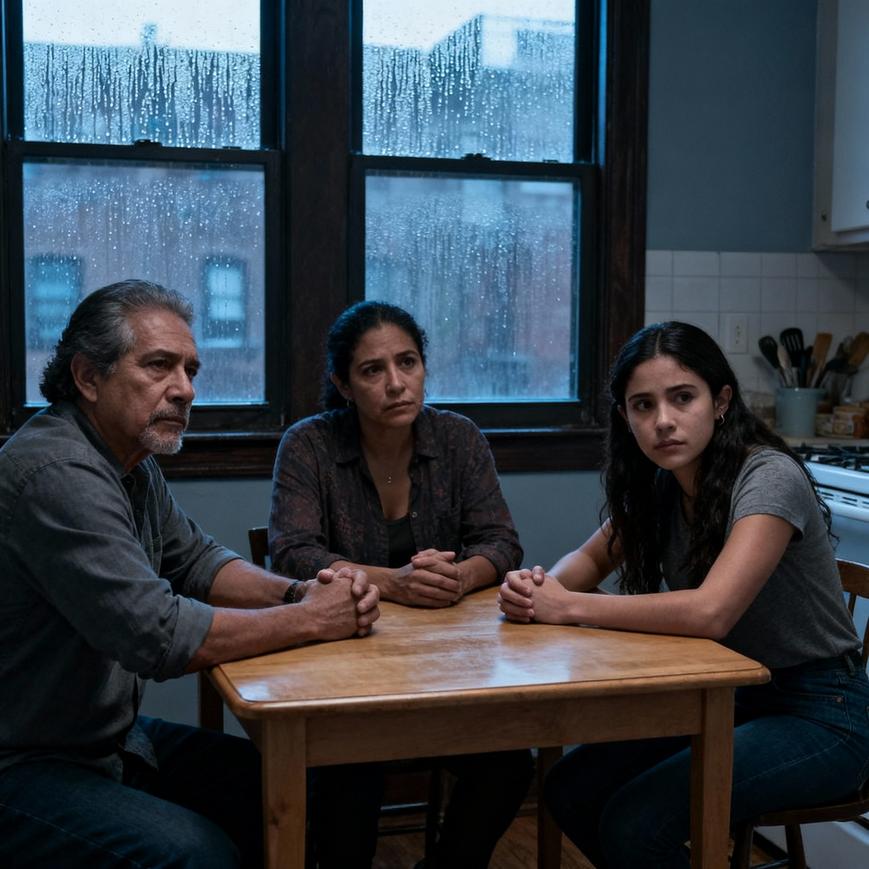
Discovery Rain tapped stippled rhythms against the kitchen window, mingling with the low simmer of Lina's anxiety. She balanced her phone on one knee, laptop open-work emails glowing quietly, waiting for her to offer calming words to strangers. Instead, her attention gripped a single word on the fresh PDF: carrier.
She traced it with her finger, almost tenderly, as if she could smudge it into ambiguity. Spinocerebellar ataxia, the report read. A disorder she'd met only in the footnotes of college textbooks.
She thought about neural pathways, about loops and feedback and the way small errors sometimes propagated. She didn't think of her childhood-her father's shuffling gait, her mother's 'clumsy' hands-but those memories began reorganizing themselves, silently, just behind her eyes. She dialed her mother.
The phone trilled atonally. When her mother answered, there was the quick, brittle sound of her clearing her throat. 'Lina, sweetheart.
Everything all right?' 'I got the panel back,' Lina began, conscious of her own voice-calm, practiced, a professional tone even now. 'They found something.
Something genetic.' A pause expanded. Rain pooled and fizzed against the glass.
When her mother spoke again, Lina could hear the effort in her smoothing. 'Can you send it to me? I'll show Papa.'
Neither mentioned what might come next.
Reckoning They arrived on Saturday, hours early, with oranges and comforters and a box of her father's favorite loose tea. The apartment shrank around them-her mother in the living room, folding the same throw blanket over and over, her father in the kitchen lining up mugs as if orchestrating an invisible ritual. Outside, the sky hung low and gray.
'So this is about SCA,' her father said, breaking the silence with an uncertain lightness. 'Did I ever tell you about Cousin Rosa in Buenos Aires? Walked a tightrope as a girl.
Still cooks paella for forty, no problem.' Her mother pressed her lips tight. 'I told you to let Lina ask,' she whispered.
Lina set her mug down, its heat imprinting her palm. 'I don't want stories,' she said quietly. 'I want the truth.'
The confession unspooled slowly. Her great-uncle Ernesto, a pianist who played Chopin until he could no longer button his shirt. An aunt, missed at holidays, hinted at but never named.
Her parents-they'd chosen not to test Lina as a child, to keep possibility open. 'We didn't want you to live under a forecast,' her mother said, eyes bright. 'We wanted you to be Lina-the real Lina, not some genetic risk.'
The table held silence. The radiator ticked-it sounded for a moment like her father's uneven breathing. 'How long have you known?'
Lina asked. This question stilled the room. Her mother's hands trembled faintly; her father reached to steady them.
'We've known for decades. And last fall-your father enrolled in a trial, up at Columbia. I've...
I have some early signs. But they're mild. We thought-' 'To spare me?'
Her father's voice cracked. 'To give you a wider world.' Lina's jaw clenched.
Bitterness flickered-then settled, quieter than she'd expected. Instead, she found herself wondering what it meant to love like that: fiercely, clumsily, with omissions for armor.
Choice Sunday morning smelled of rain and toast and something new-recognition, perhaps, or the absence of pretense. Lina sat beside her father, scrolling through trial protocols on her phone. Her mother hovered, offering blocks of cheese, then hovering again, gaze darting from Lina's face to her own hands.
'They say there's hope,' her father said. 'No guarantees. But some patients slow down-give themselves more years.'
Lina looked at her mother, at the stray white thread at her temple, the way she gripped her teacup. 'I want all of it,' Lina said, not quite knowing where the words came from. 'I want to be part of this.
No more secrets. No more edits after the fact.' Her father's smile was small, tentative.
Her mother's relief-a sigh, so soft it barely registered. On Monday, Lina stood beneath the washed blue glare of the genetics clinic, her parents on either side. She read the consent forms aloud, the legalistic language alien and thick in her mouth, but she kept going.
This time, she translated everything-every risk, every option-until she was sure they all understood. As they walked out together, Lina felt a sling of cool spring wind, the way it sometimes rushed and stilled at corners. Something opened in her chest-a room that had been sealed off, now airing out.
She texted her partner not it's all okay or it's all ruined, but simply: *We're planning. We're not pretending. We're here.
* On the walk home they passed a playground, children shrieking and stumbling, no one asking for forecasts. For a long moment, Lina watched the swings, listened to the rain evaporate from the slide. She thought about inheritance-how it was never just biology, but also the architecture of hope you built, one beam at a time.
Not closure, she thought. *But a door, open.
A daughter learns to read between the lines of a life split in two
Read more →
A fog-draped night, two souls found, and the quiet shape of a life
Read more →
Story audiobooks for children of all ages — a new one every day on Smarter Way Stories.