Two Houses and One Quiet Heart
A daughter learns to read between the lines of a life split in two
Read more →
Mara Bennett first notices the way Niko scans the room-eyes quick, shoulders pulled tight beneath a jacket two winters behind. A judge's gavel sounds like a car door slammed at midnight, and Niko doesn't flinch, just fingers the frayed corner of his backpack, tracing familiar escape routes. Mara, thirty-four, appointed by the county for her calm articulation of facts and her refusal to dramatize the suffering of children, knows not to come too close yet.
She watches from a respectful distance, refining her reports, polishing her presence until it's gentle enough to slip under doors.
A Role Built on Procedure At first it is all forms and meetings: foster parents with fresh lanyards, social workers swapping case plans over vending machine coffee, the prosecutor who calls her 'Miss Bennett' and means it like a warning. Mara sits at the edge of school assemblies and cold mediation rooms, jotting notes that reduce whole childhoods to bullet points: Trauma history. Attachment patterns.
Reunification off track. She knows the rules, and for months, follows them.
A Small Shift One gray Thursday, between the official business, Mara finds herself on a battered couch in Niko's foster placement. He's buried in a comic book, back pressed to the armrest, toes pointed at the door. Mara brings hot cocoa-she learned, as a teacher, exactly how much sugar children will stir in before giving up.
'Is Batman better alone or with Robin?' she asks, and Niko answers only with a shrug. For weeks, he drifts away-until one evening, in the cramped apartment, he reads aloud to her, soft and off-key, the dialogue between unlikely heroes.
She starts asking: not what's next, or what adults want from him, but what Niko himself misses. Pizza from Sergio's, recess at Lincoln, the sound of his aunt singing on laundry days. It takes time-he watches her, cataloging whether her questions have sharp edges.
Eventually, he starts returning questions of his own. 'Why don't superheroes ever stay in one place?'
The Unexpected Contender Amir arrives on an evening when the world smells of hot brakes and thawed snow. He is fifteen minutes late to a supervised visit, apologizing with ink-smudged hands and an anxious half-smile. Niko's face changes-not brightening, exactly, but softening, as though he's let go of something heavy.
Mara notes it quietly, as is her habit. During case discussion, Amir sits forward, elbows on knees. He talks about school drop-offs, the junkyard behind his old building where he fixed Niko's first bike, the missteps of his own teenage years.
The file says: juvenile conviction, years without stable housing. The file does not say: steady Saturday dinners, scraped-together birthday cakes, the way Niko's eyes chase the lines of Amir's hands while he speaks. The foster parents stiffen; the social worker frowns.
Mara is quiet, absorbing. In a hallway lined with posted rules, Mara catches Amir lingering, uncertainty haloed around him. 'They'll never choose me,' he says.
His voice is rough sandpaper. Mara, not promising, not soothing, only listens. She goes home and reads about fictive-kin guardianship, pencils questions in the margins of guidebooks.
It is, at best, a maze through gray statutes. She circles it by asking everyone: Niko's second-grade teacher, who volunteers a letter about the change she saw in him after the Saturday mechanic lessons; a neighbor who recalls Amir walking Niko home in rainstorms; the pastor who offers up a spare room for visits. Each story becomes a tessera in Mara's careful mosaic.
The Voice that Changes Everything Court days mean pressed collars and nerves dressed in best behavior. Mara expects Niko to fold into himself, say nothing. But when the judge, peering over rimless glasses, asks about wishes, Niko's voice comes out clear and incongruous in the hush: 'I want to live with Amir.'
A shuffle: the foster mother's sharp inhale, the social worker's pen paused mid-mark, Amir's blink-shocked and a little afraid. Mara draws in a steadying breath. It is her turn.
Not grand language, not an argument-the system rarely bows to flourish. She describes steady presences, reads the letters, outlines the plan she pieced together in the hours after midnight. Mentorship, job stability steps, supervised kinship-the legal scaffolding is fragile but real enough to hold if everyone leans in.
She feels the weight of all the rooms she's sat in, of all the times she listened when others wrote scripts.
A Small, Remarkable Compromise There's no cinematic triumph. No last-minute tears. Niko will live with Amir, under a supervised plan.
The foster family stands ready, as does the agency, but for now-Niko's voice holds sway. His mother, wringing her hands in the corridor, clings to the hope of reunification days ahead. Mara walks out into late winter sun, feeling not victorious, but oddly light.
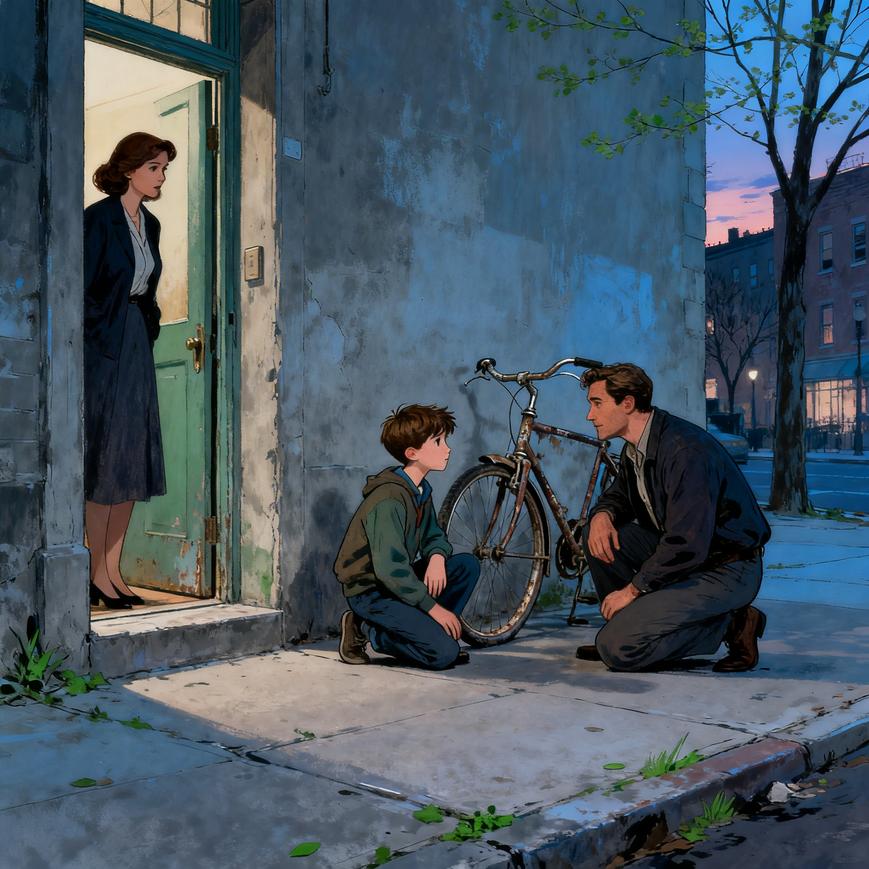
Echoes A month later, Mara stands in the tired doorway of a row house, watching Amir and Niko crouched beside a dented bicycle. Niko hands up a wrench; Amir grins, grease up to his wrist. There are forms left to file, meetings ahead, but in this slender moment, child and guardian remake something battered into working order, under the hum of early spring.
Mara stays quiet, watching. The trick, she thinks, wasn't to save anyone-or to speak for a child-but to listen long and gently enough that, for once, the world heard him.

A daughter learns to read between the lines of a life split in two
Read more →
A fog-draped night, two souls found, and the quiet shape of a life
Read more →
Story audiobooks for children of all ages — a new one every day on Smarter Way Stories.