Two Houses and One Quiet Heart
A daughter learns to read between the lines of a life split in two
Read more →

Rain stitched the air into a gray curtain, tapping tin music against the garage roof. The concrete floor drank in the damp and held the chill, the smell of wet cardboard and old motor oil rising like a memory Lena couldn't quite place.
She had come here to help her mother clear space, to stack decades into neat piles: keep, donate, forget. Twenty-four hours earlier she'd accepted a work promotion on a video call while her lawyer finalized her divorce papers in a parallel window. She clicked "Accept" and "E-Sign" back-to-back, then spent the night on a mattress that sounded like rain when she turned.
Now she stood in a maze of boxes with sharpie labels-Holiday, Kitchen, Dad's Tools-and a radiator panel leaned against a wall, rusted like something that had once been useful. She crouched to shove aside a bin of tangled extension cords and felt the slick cardboard give under her palm. Behind the panel: a slim rectangle bound in cracked faux leather, pocked with stickers from bands she never saw and places she never went. A key dangled from a frayed shoelace.
Her name, LENA, bubbled on the first page in a handwriting that pressed down too hard, as if trying to carve proof.
She perched on an upturned milk crate. Her jeans soaked through where they touched the floor, a wet ring blooming around her.
She turned to a page dated in spring green marker: APRIL 28. She pictured herself at twelve-tight ponytail, the cheap violin that left a rash under her chin, a back so straight it ached.
I am practicing double-stops and my fingers hate me, the small script began. Dad promised he would come to the recital. He looked at his phone while he said it and that means he will forget. Note to Future Lena: if you have a kid, don't promise. Say maybe. Or say nothing.
She read more. A best friend who had stopped saving her a seat at lunch, whose new friends laughed with their vowels stretched like gum. A birthday, parentheses around the gifts that didn't fit. A list titled WHAT I HATE ABOUT SURPRISES. Then beneath it, WHAT I WANT TO BE LIKE: sure of things, busy, somebody who doesn't shake when people look at her.
Lena-present-day, a product manager whose slides ate Monday mornings, whose calendar had hardened into a defense-felt something slide under her ribs. She kept reading, nibbling a hangnail until a dot of blood beaded up.
There were tighthanded confessions about plans canceled the night before because the air felt too sharp in her lungs. Notes to that future self: don't be a person who needs. Don't make noise if you can't be right. If you're in control they can't leave.
"Jesus," she said softly, the word fogging in the cool air. "Hey, kid."
The spring recital entry ran two pages: the dress her mom sewed with a crooked hem, the smell of old curtains in the auditorium, the way her bow shivered like it had a heartbeat. Dad will be there, she wrote. He said it twice. If he looks at his phone I'm going to throw up.
At the bottom of the next page, her twelve-year-old self had drawn a tiny violin with frowning eyebrows. Then a sentence: He didn't come. I played anyway. No one noticed my hands. Or if they did, they didn't say.
Lena closed her eyes and saw the tidy story she had arranged from that day, displayed on the mantle of herself: he chose work over me. She'd dusted it weekly. She'd pressed it into shape whenever it melted.
When she turned the page, a brittle rectangle whispered to the floor. A ticket stub, paper soft as lint, printed with the auditorium's name. Folded around it, a note in her father's blocky, careful print.
Mija- I went. Balcony. Your abuela had chest pains and I had to take her to the ER. I didn't want to slip out on you again. I heard you. You were brave. I'm sorry I couldn't tell you that then. Love, Dad.
The words were neat to the edge of apology. He had been there, a pair of hands in a dim row. He had left not for a meeting, not for a client with a louder voice than a daughter, but for a fear he couldn't ignore.
Something inside her-an old grief that had calcified, good at its job-cracked like thin ice. She imagined twelve-year-old her reading that note. Would it have mattered? Would it have fixed the ache? Probably not. But what else might it have loosened? The story she had told herself for two decades was not a lie so much as a guess that hardened into truth by repetition.
She looked up. The boxes had edges again. The rain sounded like rain instead of static.
On the way back to the city, the highway flapped out in a wet ribbon. Wipers wagged a steady metronome. She kept the radio off and listened to the tires sing their one-note song. Her hands were at ten and two; once she would have gripped until her knuckles ached, a way to insist on safe passage. Now she let her fingers rest, the steering wheel humming against her palms.
Her phone lit up on the passenger seat. Slack pings stacked like hail. She flipped it face down.
In her mind, the auditorium unrolled-a room of plastic seats and sweat-sweet air, a child at a music stand with socks bunched at the heel, a program folded into a fan by nervous hands. The invitation had come from her sister two days ago. Lena had typed: Can't, sprint to launch. Next time.
She took the exit toward home and, from there, changed lanes.
Sunday brought a low ceiling of clouds and the promise of more rain. At the elementary school, paper stars hung from strings like punctuation. The auditorium smelled faintly of too many people and floor wax. Lena took a seat in the middle rows. She turned off her phone-not onto silent, not face down, but off-and slid it into her bag.
Her niece, Sofi, stood onstage in an uneven line of children, each cradling an instrument with both reverence and fear. Sofi's hair was in two puffballs that made her look like punctuation too, joyful commas. The bow in Sofi's hand quivered. Lena wondered if you could hear trembling, if the air knew nerves were invited.
The music was as messy as ten-year-olds finding a song together. Notes skidded and then found footing. A boy in a blue shirt played a beat ahead, smiling like he had invented time. Sofi's chin tucked down, her eyebrows doing tiny lifts with each measure. Lena unclenched. She didn't realize she had been clenching.
When Sofi's solo came, it was a narrow bridge over rushing water. She took it step by step. Her bow shook. Her sound didn't break.
Lena let tears stand in her eyes without scraping them away. She didn't think about how she'd look, or if crying meant something was wrong. She thought, I am here. She thought, I hear you.
After, in the hallway of shoe squeaks and hugs, Sofi ran toward her, program fluttering like a wing.
"You came!" Sofi said, breath turning her words glossy. "Mom said maybe you had a work-thing-"
"I had a me-thing," Lena said. She laughed, the sound surprising her. "But I'm practicing."
Sofi looked at her like practice could be for anything. "Did you hear my hands? They were doing an earthquake."
"I heard your brave," Lena said.
That night, Lena found a pen that wrote dark and true. She opened the diary to a blank back page, past stickers and the lift of dried glue where the ticket had rested for years.
Dear Me at Twelve, she wrote. You were not unchosen. Grown-ups are messy and scared, too. Showing up is a skill you can practice. Sometimes emergencies happen. Sometimes people fail. Both can be true and love can still be there. Also: shaking is a kind of honesty. It means your body cares.
She paused. The radiator in her apartment hissed. Outside, a siren wound up and down. She added: I'm trying to speak when I'm not sure. I'm trying to show up before I'm ready. I'm trying to let care be soft, not sharp. If you want proof that things change: I went to Sofi's recital and turned off my phone. And I didn't disappear.
She signed it with her grown name, then with the curly lowercase version she used to practice on looseleaf margins.
In the morning, the rain had washed the sidewalks clean. She slipped the ticket and her father's note back between two pages, like returning a bone to its right place. She slid the diary into her bag.
On her block stood a Little Free Library, paint peeling into cheerful confetti. She opened its door and felt the damp breath of paper. She tucked the diary inside, spine visible. On a neon sticky note, she wrote her email and stuck it to the inside cover. It felt small and ridiculous, like tossing a message-in-a-bottle into a bathtub.
Then she closed the door and went to work walking.
Weeks passed with their creases: commute, meetings, leftovers eaten over the sink. She canceled one plan and kept two. She said "I don't know yet" in a room where silence had once been her safest bet. On a Friday, she texted her sister to ask when Sofi's next thing was, and put it on her calendar with a star instead of a caveat.
One afternoon, a new email arrived with no subject line. The address was a jumble of letters like a password. Inside were three sentences.
Hi. I found your diary in the little library. I thought I was the only one who shakes. Thank you.
Lena stood by her window where the sun made a bright rectangle on the floor. Dust floated slow as if time had been thickened. She thought about a kid in the neighborhood, book bag cutting into their shoulder, tucking the little hardcover like contraband. She thought about the balcony of an auditorium, about a man with careful letters who had chosen wrong and right in the same breath, and a girl who needed a story to hold.
She didn't feel fearless. She felt something quieter and warmer, like a pilot light.
She wrote back: Me too. Me still sometimes. Practice with me?
She hit send. In the reflective glass, her own face looked like someone else's for a beat-a possibility not yet settled.
Her hands were steady on the sill. Outside, the pavement shone from a brief, stubborn rain. A car splashed by and left its soft applause, and Lena stayed where she was, letting the sound finish.
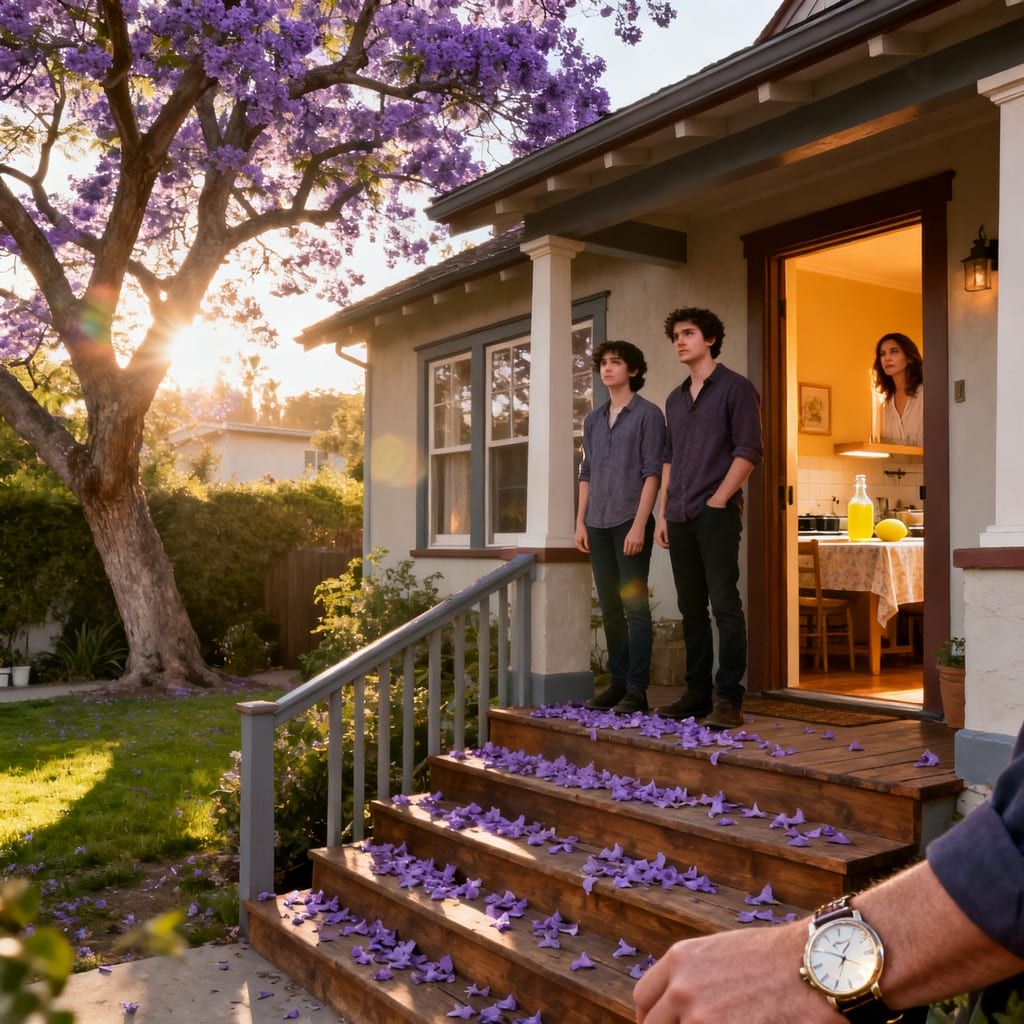
A daughter learns to read between the lines of a life split in two
Read more →
A fog-draped night, two souls found, and the quiet shape of a life
Read more →
Story audiobooks for children of all ages — a new one every day on Smarter Way Stories.