Two Houses and One Quiet Heart
A daughter learns to read between the lines of a life split in two
Read more →
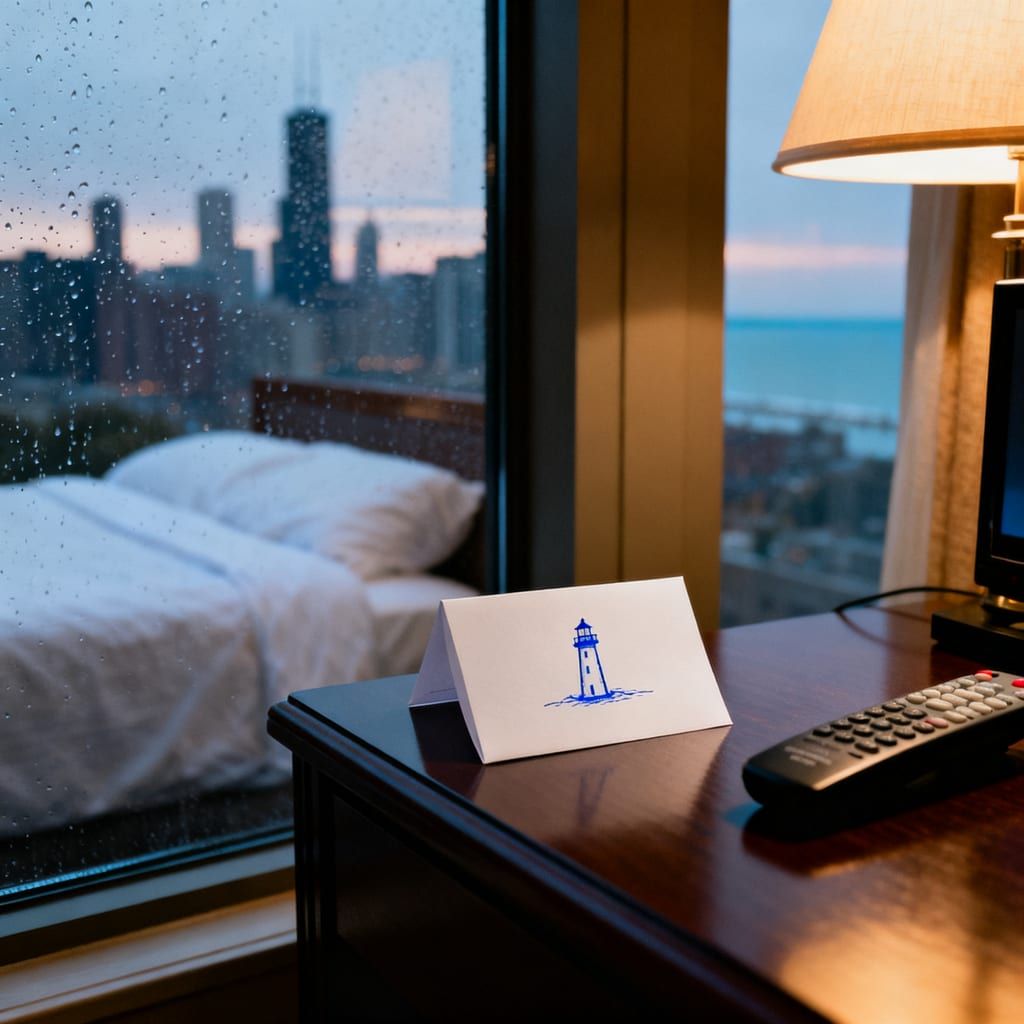
Alma Reyes learned the weight of a room by the sound it made when the door closed.
Some sealed with a soft sigh, as if exhaling. Some clicked with a precise little bite. Some clanged, bruised by wind and a misaligned latch. She could tell before she crossed the threshold whether the guest inside had been neat and quiet or chaotic and forgetful.
She had a ritual no one taught her. After the scrubbing and tucking, the swipes of glass cleaner that left a sting in her nose, the ballet of replacing tiny bottles and aligning pens with the hotel logo facing forward, she paused at the desk.
A dog-eared paperback left open to a chapter on forgiveness became, in her neat block letters, a single line on hotel stationery: May your pages turn easily today.
Running shoes by the door, their laces twin rivers, brought: Soft landings and finish lines that meet you halfway.
A framed photo, face down beneath the lamp: Lift the things that matter; they carry you back.
She never signed them. She never waited to see a face receive them. She slipped her notes under remotes, into folded towels, between coasters, and left with the cart's quiet squeak in the hallway like a private applause.
At the front desk, the clerks reported more thank-yous than complaints that month. In the break room, other housekeepers started leaving small mercies of their own, wordless as birds. A folded blanket left warm from the dryer. A single chocolate on a pillow that wasn't part of any brand standard.
Then the audit landed like a hand on the back of her neck.
"Unapproved guest interactions," the manager said, not unkindly, but with the look people get when a policy is too large to move. He'd brought printouts-a spreadsheet with columns that looked like a field of small gravestones.
"No names," Alma said. "No asks." She kept her hands flat on her thighs to steady the shake.
"I know," he said, rubbing his temple. "But corporate is corporate. We're getting flagged. Please-just for now. We have to stop."
She nodded as if the agreement had already been decided in her body. Back of the house, she pressed her forehead to the cool of the mop closet door and inhaled lemon until the sting worked its way out of her eyes.
That same week, Evan checked into 1416.
He was a line of neat block letters, too-Evan G-on the printout at the beginning of her cart route. One night only.
In the room, evidence spoke without a voice. A bar receipt folded in half with a single line scrawled across the back-Is there still time? The trash can brimming with false starts, each opening with Dear Olivia, ink cut off like a road at a cliff. The bed made and remade, the pillows dented as if from conversations with the ceiling.
Alma cleaned anyway, the motions a rope she could hold onto. She refolded the tissue at the top of the wastebasket. She straightened the pens. On the desk, the reflection of her hands in the lacquer made her think of another room, another version of herself with a ringing phone she couldn't make quiet.
Her manager's words hovered like a fly.
She reached for the remote. Her fingers hesitated, then moved of their own accord. She slid a note beneath it as if planting a seed where no one would expect to find green.
If a door is still in front of you, it's not too late to knock.
The pen left a small divot in the paper. The air felt different. She didn't sign it.
By morning, Evan was gone.
Three days later, the front desk called the back office and waved an envelope like a white flag. It was addressed to Housekeeping in careful, hopeful script.
Inside-a photograph of a lighthouse, sky the color of a cut bruise healing, and a note.
I turned back. I made the call. Met someone at the water and said what I couldn't write in a hotel room. Thank you. -E.
Alma held the photo by its corners the way you hold a newborn's heel. The lighthouse was slender, black and white against a restless lake. You could feel wind in it. She slipped the photo into the pocket behind her time card. All day, it warmed her side like a secret kept by the skin.
The next envelope arrived the following week. And another after. Small squares, thick with gratitude. Some came with pressed leaves from conferences in other cities. One with a ribbon from a marathon bib. One holding a page torn from a journal with a water ring like a moon.
The manager called her in. His tie was askew, his hair Sunday-loose on a Wednesday.
"I'm not here to scold," he said, hands up. "I keep getting these. People are writing to... whoever sees them." He looked at Alma as if he were trying on a thought like a jacket to see if it fit. "We can't fight the audit. But we can... reframe."
He laid a small, approved welcome card on the desk. Plain font. A city outline at the bottom.
"What if you keep doing what you do," he said, voice softer, "and we ask you to sign with a symbol. No name. A mark. Something we can-that we can defend if anyone asks."
Alma blinked hard at the card until its edges softened. A symbol. She thought of the black-and-white pillar, the lake's cold courage.
"A little lighthouse," she said.
He nodded. "A little lighthouse."
Years before, she had slept three nights in one of these rooms with a bruise blooming beneath her eye and a phone she refused to answer because each ring vibrated her ribs like a violin pressed too hard. In the morning, she held herself together with the starch of the sheets and the names of the streets on the map they tucked beside the TV guide.
On the third night, she'd gone to the room service menu as if the prices there might decide who she could be. A note had been folded into it. One line, sharp and steady as a spine:
You are not what happened in this room. -E.
She'd slid it into her wallet, the small cathedral of it pressing against the plastic of expired medical cards and grocery receipts. She kept it there through the job application, the interview where she made her mouth say yes to questions her stomach answered no, the first day she learned how to fold a sheet so tight you could bounce an apology on it.
She never expected the world to answer back in the same handwriting.
A new reservation appeared, a small miracle in black and white: E. Calder, one night only, 1416. A request arrived with it: a meeting, if possible, with the person who leaves the notes.
Alma's fingers hovered over the assignment sheet like water testing flame. She could have said nothing. She could have let the request shrivel in the air above the front desk candy dish.
Instead, after her shift, she rode the elevator to fourteen with the soft hiss of doors and the click she knew-precise little bite-at 1416.
He opened the door with travel-soft eyes and a beard that let in too much wind. His apology was in the way he held his shoulders, not his mouth.
"I won't keep you," he said, stepping back. The room smelled like rain on carpet and the bright sweetness of something peeled. He set a folded slip of paper on the desk as if returning a library book terribly overdue. "Years ago I left this for someone, because a note once saved me. I've been writing them in my own way ever since."
Alma lifted the paper and knew the script before her eyes finished the curve of the E. The lines were twin ropes across time.
"It found me," she said, voice smaller than she meant it to be. "I kept it." She felt her hand press her pocket for a photograph that wasn't there.
They didn't become friends. They exchanged two stories and a nod. He told her about a winter on a coastline the color of nickels, how a stranger's note had made space between him and the water. She told him about three nights and a different door she'd opened because of ink.
On the desk, in front of the blank, approved welcome card, Alma drew a tiny lighthouse. It looked like a child's idea of shelter and exactly right.
E. Calder smiled into his palm the way people do when they keep a laugh for themselves. "Good," he said. "Let it be that."
The policy changed without confetti. The front desk added a sentence to check-in: There may be a personal note in your room-signed with a lighthouse. We hope it finds you well. Corporate didn't call to congratulate them; they didn't call to fire anyone either.
The notes kept folding themselves out of Alma's hands.
A hairbrush with a single long strand caught in its teeth: Untangle gently. You are not what you comb out.
A suit jacket hung like surrender over a chair: The person inside will arrive soon. Give them time.
A stroller wheel dirtying a white bath mat: Bless the mess that means you brought someone with you.
Sometimes the rooms were empty by twelve and her words had no reader she could see. Sometimes an envelope waited the next day with a thank-you square as tender as bread.
She drew the lighthouse each time, the same short lines, the same small door.
On a slow morning, rain seamed the windows. Her cart hummed as if it remembered a song. She opened 1416 and found it like a page paused mid-sentence: the imprint of a suitcase on the carpet, the faint ghost of coffee in the air.
She cleaned, refolded, righted. She paused at the desk. For a moment, there was no guest behind her, no audit, no policy-only the door in front of her and the pen in her hand.
She drew the lighthouse, its small light facing the inside of the room as if to remind the space who it could be.
Then she wrote a single line, one for herself and for whoever would come next.
If you're here, you made it.
She set the pen down. The room made its soft sigh when she closed the door, and in the hallway her cart squeaked a yes that only she could hear.
Out by the elevators, Lake Michigan was a rumor in the sky. Somewhere, a stranger opened an envelope and sent back wind in the shape of gratitude. Somewhere, a man with a tired beard wrote another line to tuck where someone couldn't bear to look.
The lighthouse lived small in the bottom right of a card, ink barely dry, door wide enough for a fingertip.
It was enough light to move by.
A daughter learns to read between the lines of a life split in two
Read more →
A fog-draped night, two souls found, and the quiet shape of a life
Read more →
Story audiobooks for children of all ages — a new one every day on Smarter Way Stories.