Two Houses and One Quiet Heart
A daughter learns to read between the lines of a life split in two
Read more →
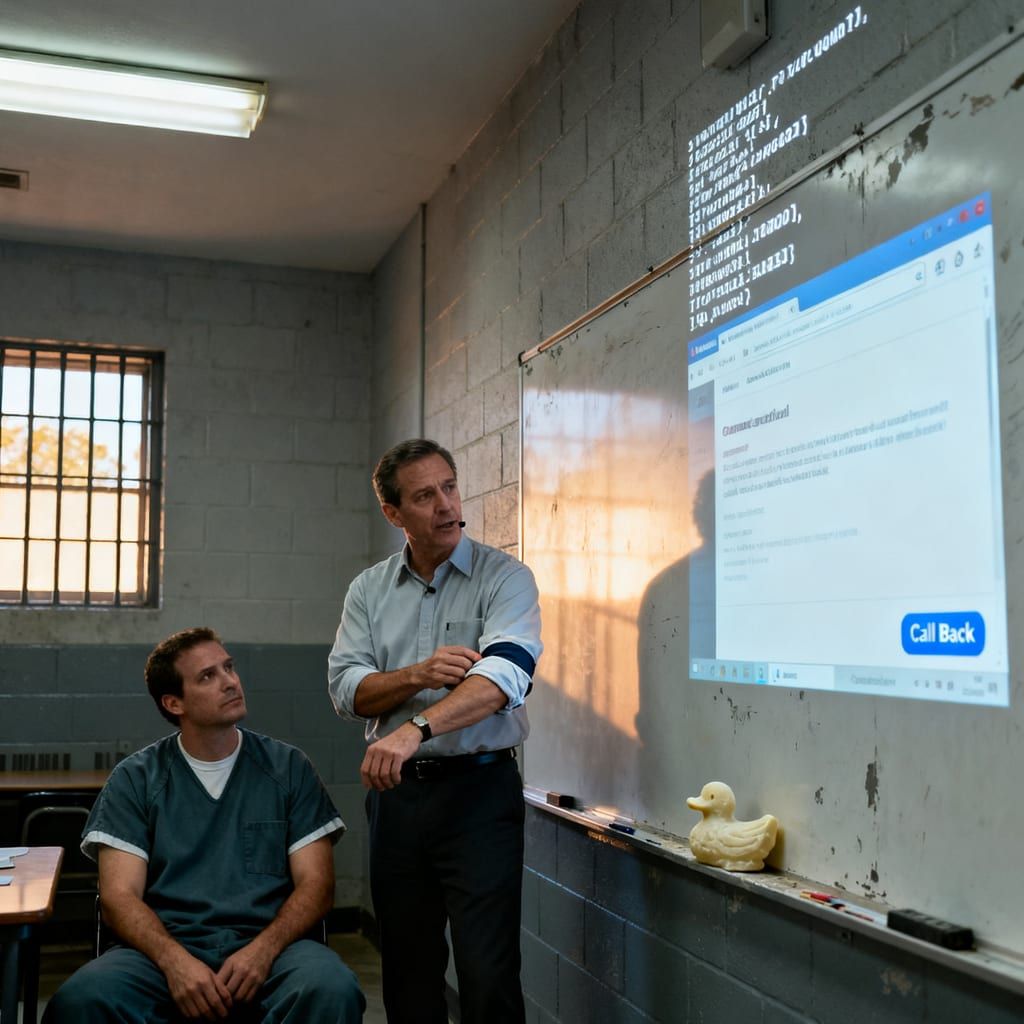
The gate swallowed Eli's name badge with a clack like a closing jaw.
He traded plastic for a dry-erase marker, lifted his arms for the pat-down, and stepped into fluorescent noon. The corridor smelled like pencil shavings and disinfectant; somewhere, a radio leaked a country song he almost recognized. He counted the doors like he always did-one, two, three-and the last one released him into the classroom where time was measured in 50-minute blocks and the clock had a habit of staring back.
"Pair up," Eli said, capping and uncapping the marker until it squeaked. "You're going to debug each other's pseudocode. No computers. Pencils only."
Groans, a few laughs, the shuffle of chairs. On the right, a man with wire-rim glasses traced a flowchart in the air with a bitten eraser. In the back, someone tapped a beat on a spiral notebook, soft as rain.
DeShawn chose the seat nearest the board and wrote small, tidy lines as if neatness could make time move faster. He wore his intelligence like an undershirt-there if you looked, never the point. Eli watched the way DeShawn's eyes moved: left margin to right, then back through the spaces, like a scanner searching for an interrupt.
"You're good at patterns," Eli said, crouching to DeShawn's level. "Humor me. Where's your bug?"
DeShawn smirked. "I don't do bugs," he said. "Only undocumented features."
The room laughed, and the temperature shifted a degree toward human.
Weeks folded into each other. Eli watched trust accrue in small denominations: a nod across the room, a question that was actually a risk. They coded on paper, sweating through logic in pencil until the meat of it showed. They built stacks and queues out of index cards. A stack of ramen cups became a queue. The room learned with its hands.
On a Thursday heavy with humidity, Eli pitched a final project. "Something small," he said. "Small and true. Something that solves one problem you already live with."
They threw ideas like pebbles-tracking commissary, simulating fantasy football picks, a chess clock made of time served. DeShawn stayed quiet, then tugged his pencil sharp, its shavings curling like wood perfume onto the desk.
"Bridge," he said finally. "I was thinking about something that matches returning citizens with work. Not big jobs. Micro-work. Apprenticeships if we can. Stuff that doesn't need a perfect past to start." He drew as he spoke. Boxes, arrows, a database shaped like a dinner plate. "It spits out a clean one-page resume we can stick in a parole folder. And like-a website. Dead simple. Profiles. Skills. A button that says 'Call Back'. That's it."
The hum in the room wasn't from the lights. Even the beat on the spiral notebook stopped.
Eli felt the heat behind his eyes the way he felt sun through glass: not on the skin, but all the way in. He tapped the board with his marker like a gavel. "All in favor?"
Hands rose like shy birds.
They built Bridge like men building a canoe where the river was rumor. Data models were index cards; relationships were threads looped through holes. On the board, Eli wrote schemas in black and function names in blue.
"Profiles," he said. "Attributes?"
"Name," DeShawn said. "Skills. Contact info for the halfway house or parole officer. Preferred shift. Transportation options." He paused, thinking. "Proof of work."
"Proof of work?" Eli raised an eyebrow.
"Yeah. Like a portfolio but for us." DeShawn's pencil hovered. "Screenshots, PDFs, little code snippets. So when someone says, 'We don't hire from there,' we can show this."
"Receipts," someone said from the back.
"Receipts," DeShawn echoed, and drew a small icon of a paper with a checkmark.
They talked about security in the way people practice saying "please" to locked mechanisms. No last names posted publicly. No addresses. Access through a partner nonprofit. Controlled invites. "We can hash emails," DeShawn said, and Eli couldn't help smiling at the pride tucked under his deadpan.
On the last day before demo, the printer coughed, held its breath, and spat warm resumes into Eli's hands. They were clean, well-typed, proof that a function can return more than values.
Demo day arrived under a sky so blue it felt like an insult. The projector warmed slowly, sighing into color. The Wi-Fi was a rumor passed down the hall and found wanting.
A prison administrator in a navy blouse set down her clipboard and crossed her arms. A local tech rep with a logo polo and careful shoes looked at the cable spaghetti like he expected it to bite.
Eli felt the old twinge-the twitch to make himself smaller, safer. He rolled the marker between his fingers and said, "We'll run it from the command line."
DeShawn's hands trembled enough to make the pencil wobble. "I don't know if-"
"You do," Eli said, quieter than the room but into the center of it. He knelt beside the terminal, the plastic keys warm from too many hands. "You've done this three dozen times. Show them the process."
Together, they navigated through directories like paths in a dark park. DeShawn typed slow at first, then faster as muscle memory translated spaces into slashes. The projector blinked, then held. A line of white text on black: server started on localhost.
A beat. Then the room broke into small cheers when Bridge rendered: an austere, beautiful page-names, skills, a button titled Call Back, as declarative as a doorbell.
The administrator pursed her lips as if repressing a smile. The tech rep leaned forward, caught.
"Security?" the rep asked. "Liability? Vetting? How do we know who's behind these profiles?"
DeShawn faltered, the old answer fogging his throat like cold breath: Not for people like me.
Eli felt it-the moment where you want to talk over someone you love because you think your words weigh more. He inhaled. He let the room hear him breathe.
"Hey," he said to DeShawn, not breaking eye contact. "You got this."
DeShawn swallowed. "Profiles are generated inside," he said, voice steadying. "Verified by staff. No personal addresses. Contact is through a partner. Click 'Call Back' and it emails a case manager, not the individual. No one's putting their life on the internet. We're putting their work on it."
The rep nodded, unconvinced but listening. "And you think someone will click that?"
Silence. The projector hummed.
Eli rolled his sleeve to the elbow, the fabric whispering like a confession. He set the marker down.
"The first time I wrote a for-loop," he said, and the room swiveled, "I did it at a bolted desk on the other side of a locked door."
The administrator's eyebrows lifted a millimeter. The rep blinked. DeShawn angled his head, as if hearing a new module load.
"A volunteer came in every Wednesday," Eli went on. His voice wasn't dramatic. It was the voice you use to tell someone what the weather is. "He refused to see only my worst mistake. Taught me to think like a developer with a pencil and a cheap whiteboard. My first pull request came from a terminal I wasn't allowed to carry away."
He pointed to the soap-carved duck he kept in his backpack-the one he'd carried in today out of habit more than hope. He pulled it out and set it on the table. Its wings were uneven, one eye a little higher than the other. "A guy made me this in that class," he said. "Said it floated because it didn't know better."
Someone laughed, soft.
"I can vouch for what this kind of proof of work can do," Eli said, looking at the rep now. "And for who's behind that profile." He tapped DeShawn's name on the screen. "Opportunities don't start with perfection. They start with a person willing to click once-and someone willing to put their name next to it."
The room held its breath the way the yard held shadows at noon.
The administrator let her arms fall. "If we partner with a nonprofit," she said, "we can manage the callbacks through them."
The rep looked again at the page as if it had grown edges he could grip. "We could pilot," he said finally. "Through our reentry partner. I can guarantee informational interviews for the first five profiles." He glanced at the administrator as if asking permission from the air.
"You'll have my signature," Eli said, pulse sprinting. He didn't look at DeShawn, but he felt the heat of him, a star on his left.
Weeks threaded into each other like stitches that might hold. Bridge's first five profiles printed clean on cream paper, the ink still a little wet around the edges.
At the parole hearing, there was no projector-just DeShawn in a suit borrowed from a man whose shoulders were broader than his, holding a folder that smelled like toner. The room was colder than it needed to be. The board members stacked their pens in parallel, faces practiced as walls.
"Explain your project," one of them said, not looking up.
DeShawn placed a printout on the table and slid it forward. "This is Bridge," he said. "Profiles, skills, and a button titled 'Call Back'. The data structures are simple-arrays of objects, filtered by skill tags and zip codes. It formats printable resumes. It doesn't ask for perfection. It asks for proof of work." He didn't rush. "We have a pilot. A partner nonprofit. Guaranteed informational interviews for five."
He placed the cream paper between them like an offering and did not reach back for it.
"Who's vouching?" another board member asked without softness.
"My instructor," DeShawn said. "Eli Mercado." He swallowed. "He knows where this kind of road starts."
A pause. A rustle. A pen clicked and stayed out.
Minutes later-hours, it felt like-the board surprised itself with a work release tied to the pilot. "Conditional," they warned. "Supervision. Reports."
DeShawn nodded. "Yes," he said simply, as if agreeing to syntax.
Late summer sagged into the gentle fatigue of early fall. On a Wednesday, the guard recognized Eli's walk and waved him through. The classroom looked the same and not at all-same humming lights, same board ghosted with graphs from last week, but the air was tuned to a different key.
Eli stood in the doorway with a visitor badge warming his chest. Next to him, DeShawn tugged at his sleeve as if the fabric might take better shape.
"You good?" Eli asked.
DeShawn smiled-small, full. "I wrote my first callback function at a bolted desk," he said, and then rolled his shoulders like a man settling into an old friend. "Let's teach them to write functions that return more than values."
He walked to the front and picked up the marker. The room stilled. Eli watched the younger men's faces tip toward the board the way flowers tilt to certain light.
"Pair up," DeShawn said, the marker squeaking the first line into the white. "We're going to debug each other's pseudocode. No computers. Pencils only."
A laugh rippled. Chairs scraped. Somewhere, a radio down the hall went quiet as if to listen.
From the doorway, Eli slipped the soap duck from his pocket and turned it in his hand. The little thing really did float-he'd checked, once, in a kitchen sink late at night when no one was watching. He set it on the metal ledge beneath the whiteboard where the erasers slept.
DeShawn met his eyes across the room for a half second-not long enough to call it a conversation, just long enough to hold a charge. Eli nodded. DeShawn nodded back.
The marker moved. The logic held. The air changed shape.
Outside, keys jangled on a belt, an old ritual. Inside, they worked with keys made of light and logic, clicking in locks no one could see. Eli stood in the doorway and understood that he had been holding it from both sides all along.
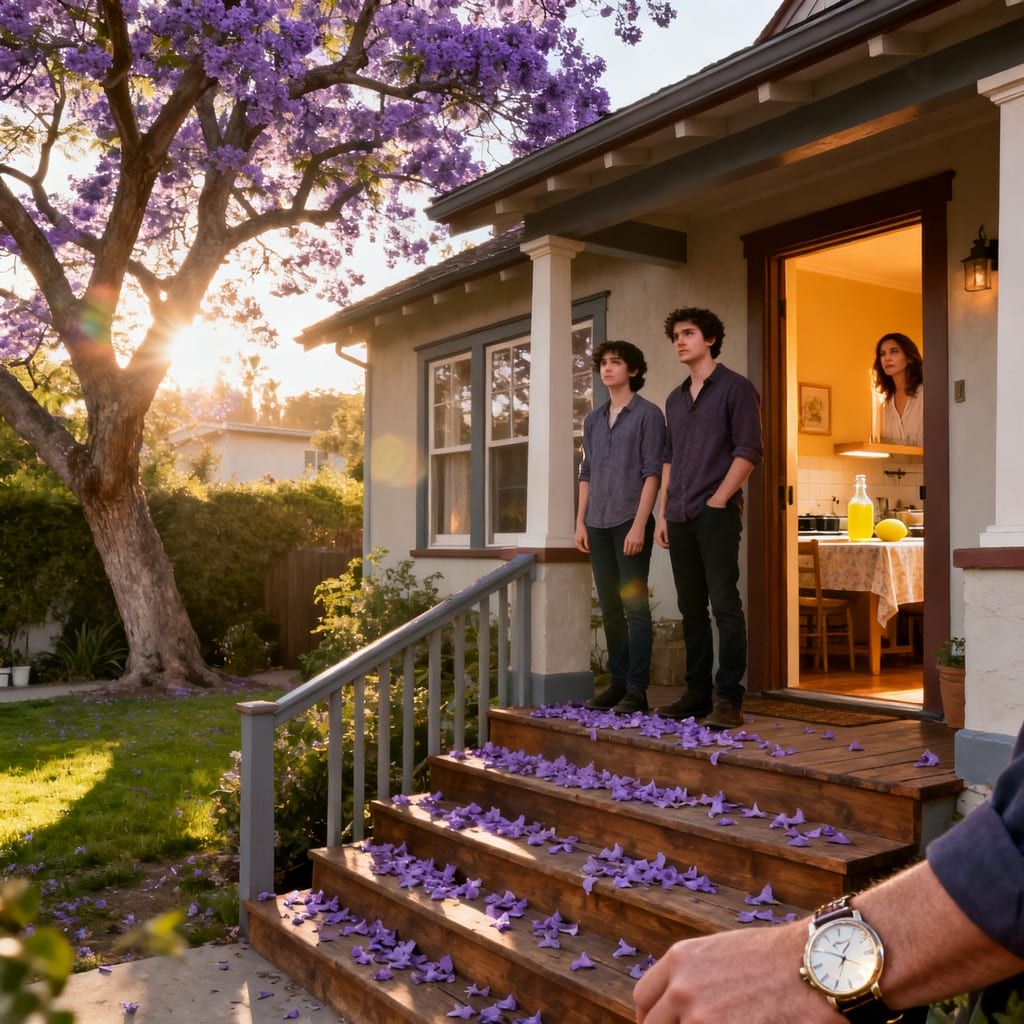
A daughter learns to read between the lines of a life split in two
Read more →
A fog-draped night, two souls found, and the quiet shape of a life
Read more →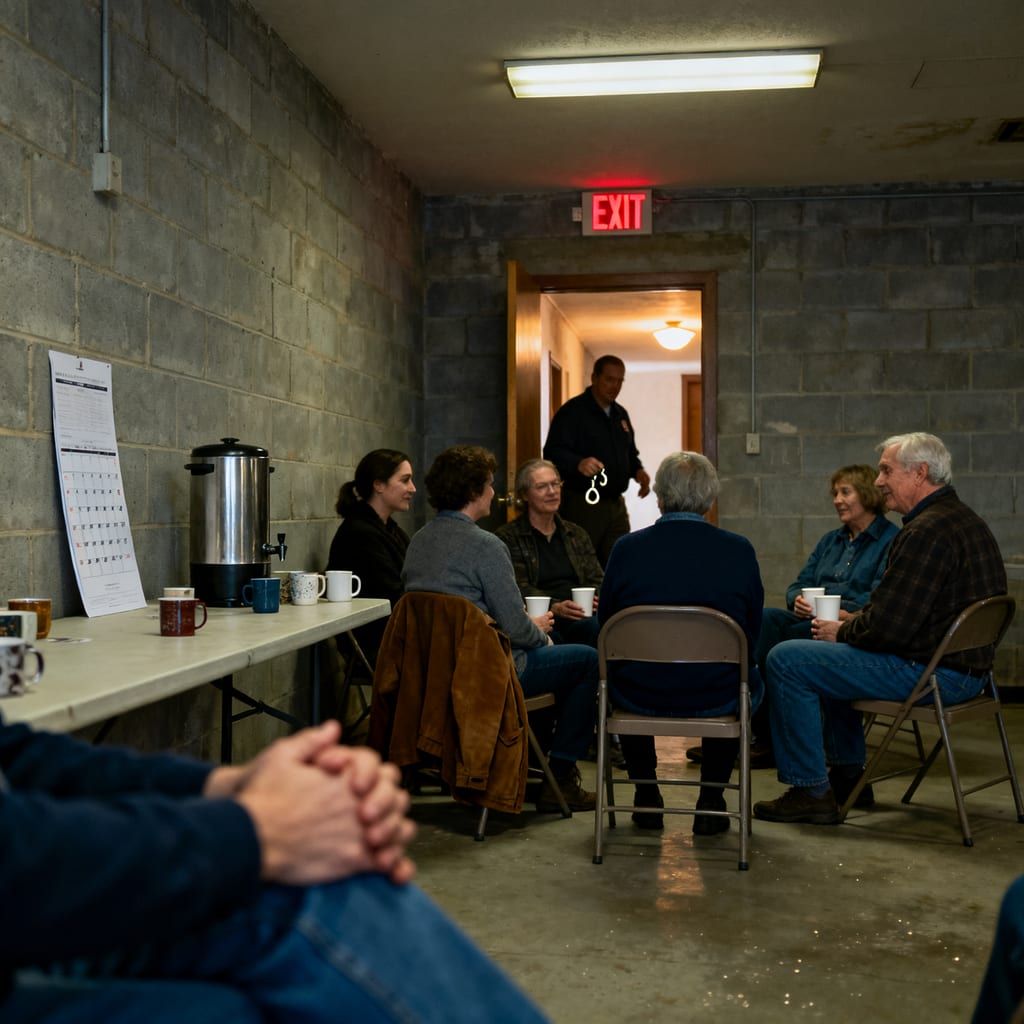
Story audiobooks for children of all ages — a new one every day on Smarter Way Stories.