Two Houses and One Quiet Heart
A daughter learns to read between the lines of a life split in two
Read more →
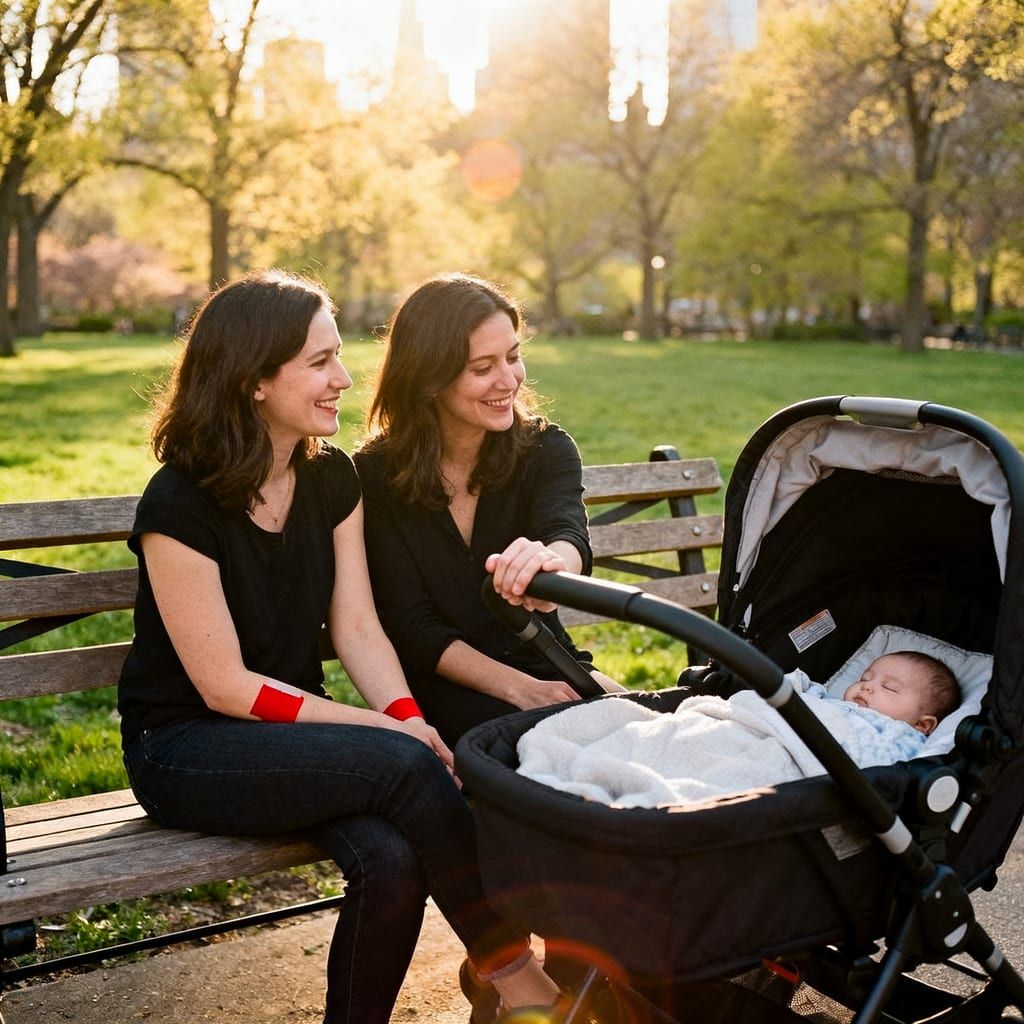
Every eight weeks, Nina Alvarez surrendered a little to the plastic chair and the puncture of a needle. The neighborhood blood center smelled faintly of bleach and orange peels, and the phlebotomist wore a charm bracelet that chimed when she taped the cotton square in place.
She always asked for the apple juice afterward. Lukewarm, sweet, it tasted like kindergarten snack time and resolve. She sipped, folded the paper cup into a crease, and admired the red bandage on her arm-left on longer than necessary, as if time might learn something from it about staying put.
At thirty-three, Nina trusted this one habit the way she didn't trust most everything else about herself. Crochet projects snaked off her couch, unfinished. A piano app blinked reminders she shifted to later. There was the conversation she kept avoiding, a door inside her that thudded when the wind of a memory hit it-Lila Chen, college cofounder, former best friend, the two of them once shoulder to shoulder on a folding table, building an app they believed could teach the world to breathe.
Instead, the world held its breath and their startup imploded. Blame scattered like loose nails. Nina still found them in her pockets.
Back at her desk, a train seethed by on the elevated tracks, rattling the windowpanes. Her inbox blinked: a subject line she recognized-"Your recent donation was used at Mercy General."
She smiled before she clicked. The email said what they always said, brisk and kind-your blood helped a patient at Mercy General Hospital. Thank you for being a donor. She pictured a plastic bag hung like a lantern in a bright room. She pictured someone's life tilting back toward itself, just a fraction.
Nina pressed the trackpad with her thumb and tunneled back into spreadsheets, dependencies lighting up green when they aligned. She liked the quiet grammar of it-if this, then that-numbers pulling their weight without apology.
Days later, she bumped into Mrs. Ramos on the stairs, the woman's grocery bags pitched like buoys on her hips. The stairwell carried the warm scent of cumin and laundry detergent. Nina reached for a bag without asking.
"Mi niña," Mrs. Ramos panted, grateful, "my niece-can you believe it?-a brave young woman named Lila. She had a baby. Almost died. Mercy General." She shook her head, her gold earrings catching light. "The doctors said universal donor units made the difference. And a nurse-oh, a nurse who worked like a conductor, calling in a symphony."
Nina's fingers tightened around plastic handles that cut into her palms. The name hit her chest and rang there. Lila.
In the pause, she heard the old falling-out again, the way panic braided itself with pride. Words had come in a rush the night everything folded-about investors and delays and who should've said what when. Nina had said the thing you can't unsay: "If you weren't so-" and then some combination of controlling and reckless and right. Lila had left the office airless with her absence.
On the landing, Nina breathed slowly. "Is she... okay now?" she asked, voice steady by effort.
"Alive," Mrs. Ramos said, eyes shining. "Alive and with a bebé as quiet as a moon."
They climbed the last flight shoulder to shoulder, Nina nodding, amen, congratulations, a chorus of thin words that had to stand in for the truth pressing up against her ribs: her blood might have steadied Lila's heart.
That night, Nina set water to boil for pasta and then turned off the burner. The apartment hummed with the open window's cool. On her counter, she arranged noodles in a casserole dish with ricotta and spinach, something forgiving that would reheat well and feel like someone had been thinking of you while they chopped. She wrote a note in her tidy project-manager hand: For the new mother. -N.
She placed it on Mrs. Ramos's doormat and moved down the hall before the door could open. Back in her kitchen, she finally started the pasta water and ate without tasting much, the fork quiet against the plate.
For days, she kept her hands busy. She color-coded a backlog with a care that would've impressed an archivist. She refolded her kitchen towels along the selvage so they would stack without fuss. Yet her mind kept walking the worn path to the hospital room as she imagined it-fluorescence, the sharp scent of antiseptic, a curtain breathing in the air-conditioning.
In that room, she pictured a nurse with fast hands and a focused face, the IV pole click-clicking closer. She imagined a bag of O-negative sliding against a gloved palm, the beeping monitor easing as if a held note could finally resolve. Someone's life coming back to its pitch.
She did not tell anyone. She held the possibility like an egg.
The envelope arrived three weeks later, forwarded from the blood center. The return address was a relay station of numbers and a P.O. box. Her name in a handwriting both round and decisive.
She stood by the window to open it. The paper smelled faintly of hospital soap.
Dear stranger, it began. I am a mother because of you.
Nina sat down on the rug. The note ran on in a careful ink that thickened where the writer had paused. It said there had been more blood than anyone expected. It said the baby had slept through the beeping like a stubborn seashell of a person. It said the nurse was tireless, a woman named Nina, and isn't that funny? It said thank you in three ways: an apology to the body that needed help, a gratitude to the person who offered it, a blessing to whoever would read to the end.
At the bottom: I don't know if you'll ever see this, but if you do-know that a whole world went home from the hospital because of what you did. With love from a stranger with a full heart.
Nina pressed the paper to her chest. Around her, the apartment held its breath with her. The L underlined itself in her mind's eye-Lila or not Lila, it didn't matter. The street noise returned like a tide. She tucked the letter into the cookbook that yielded the best banana bread, between pages stained with cinnamon and hope.
On a Saturday in April, Chicago did that thing it does-a blue so clean it made buildings look new, grass daring itself into green. Nina walked to the park because the air asked her to. Kids tried soccer with more sincerity than aim. A dog wore a bandana as if entering a small parade.
She was looping past the pond when she saw the stroller. The woman coaxing it over the subtle unevenness of grass moved with a care that Nina recognized. There was a hat, a simple ponytail, a profile she had known before it was complete.
"Lila?" Nina heard herself say.
The name lifted the other woman's head. That same startle, that same warmth that grief and time could not bleach. Lila laughed, a small breathy thing. "Nina."
They both stepped toward each other and then each glanced at the stroller, as if to ask the same permission. It came in the form of an infant snore.
"Hi," Nina managed.
"Hi," Lila said. And then, "Do you want to sit?" She nodded toward a bench warmed by sun.
They sat with a careful inch between them. Birds fretted in a nearby tree, stitching air to branch. For a moment, they were girls again, on a lawn with laptops, the campus squirrels acting like they paid tuition.
"How are you?" Lila asked, and the question landed between them like a trusted tool.
Nina breathed. "Working. Walking a lot. Learning the names of the trees on my block." She realized this sounded like a riddle and smiled. "You?"
Lila's eyes softened. "Alive," she said, almost apologetically, and then shook her head as if to correct the tone. "Very alive, actually. Sleep-deprived. Hungry all the time. Grateful in a way that makes me worry I'm not doing it right."
Nina nodded, and the space between them loosened.
"I almost died," Lila said, not like a confession, more like a fact you need the room to hear. "Postpartum hemorrhage. Everything went red and then got very small. There was this nurse-tiny, terrifying in the best way-who ran the room like a symphony. And there were universal donor units, thank God. Anonymous. Saved me. There was even a nurse named Nina-funny coincidence, right?-who squeezed my hand when I wanted to let go."
The name-her name-moved through the air and settled. Nina watched a pair of geese arrow across the pond. "That is a funny coincidence," she said softly. She let the next breath be long enough to unspool a little pain.
Lila smiled at the stroller. "We named her Lin, after my grandmother. But for, like, an hour in the ICU, her temporary bracelet said 'Nina Chen.' Some mix-up. The nurse laughed, I cried, the baby slept. It was a whole thing."
They both looked at the sleeping child. The tiny fist, the lashes like comma marks. A slight squeak, as if a door in a dream had opened and closed.
"I'm glad you're here," Nina said. She wasn't sure which here she meant-the park, the city, the world.
"Me too," Lila said. "I'm sorry about-" She gestured, an arc that covered years: the offices, the anger, the undone seams.
Nina shook her head once. Words crowded her mouth, all the incriminations sanded into apologies, all the apologies stiff with pride. Instead, she let them pass. "I brought your aunt a casserole," she said, and then laughed at how small and how large a sentence could be. "I didn't know what else to do."
Lila leaned back, face turned toward the sun, the corners of her eyes wet in the way that comes from brightness and feeling. "Thank you," she said. "You always did know how to show up in practical ways."
They talked then. Not in a tidy way, not as if editing the past, but with an honesty that let the old scene air out. They admitted to fear. They folded blame until it held like a paper crane. They let silence do part of the work.
At some point, Lila's daughter sighed, uncurled a little, resettled. The park kept happening around them-scooters, a kite that insisted on the earth, a teenager practicing scales on a battered trumpet by the fountain.
"Coffee sometime?" Lila asked as they stood, both of them easing up slowly to avoid jostling the stroller.
"Yes," Nina said. The word felt like a magnet turned the right way. "Soon."
They hugged in the polite way strangers do, then in the familiar way people remember. The red bandage on Nina's forearm, fresh from that morning's appointment, pressed warm against Lila's shoulder. Neither mentioned it.
On the sidewalk, the wind off the lake lifted early leaves into a private conversation. Nina walked without checking her phone. She passed a florist's buckets of ranunculus, a teenager doing heel-toe tricks on a skateboard, a dog whose leash tangled lovingly around its owner's legs.
At the corner, she paused to adjust her sleeve. The adhesive of the bandage tugged at her skin. She peeled it off slowly, the way you remove a label from glass when you plan to keep the jar. Beneath it, the dot of red had settled into itself. She tucked the strip of fabric into her pocket to throw away properly later, a superstition she couldn't name.
She felt lighter, not undone but unlatched. Ahead, the crosswalk's white paint offered its gentle command. She stepped onto it without ceremony, kept moving, and thought-not for the first time-that some gifts find their way back without fanfare. You only had to make the offering and let time do its quiet, unshowy work in the veins of a city.
Behind her, a trumpet found its note. Somewhere not far, a baby slept through every beep the world made.
A daughter learns to read between the lines of a life split in two
Read more →
A fog-draped night, two souls found, and the quiet shape of a life
Read more →
Story audiobooks for children of all ages — a new one every day on Smarter Way Stories.