Two Houses and One Quiet Heart
A daughter learns to read between the lines of a life split in two
Read more →
The first day Aria left the camera at home.
She walked out into the late-summer thickness-hydrants stuttering rainbows over asphalt, bus brakes sighing like tired animals, laundry lines trembling with T-shirts-and let the city move past her unrecorded. Her lanyard and battery packs sulked in the dark. She waited for the itch to film to subside like a mosquito bite.
It didn't. It merely shifted, like a tide. By Gowanus it had become a thought so simple she almost missed it: What if I stop hunting? What if I let the city choose?
That's how she found the baker.
His sign said Open by Luck. The bell over the door coughed when she pushed it. He was shoulder-deep in dough, a man with wrists like oars and flour on his cheekbone like a fingerprint.
"You're late," he said, not unkind. "The apology loaves go fast."
She blinked. "The what?"
He nodded toward a rack of narrow baguettes, each tucked into a waxed bag sealed with blue painter's tape. A small square of paper peeked from each bag, like a business card too shy to introduce itself.
"Notes," he said, shaping a boule. "For people I wronged. I can't find them, so I leave bread where mouths are. Maybe it reaches the right stomach. Maybe not. But bread forgives a lot."
He handed her a bag. The note inside read: For the bike I took in '98. I hope your knees found better things.
"Do they ever find you?" she asked, fingers greased with butter from a sample he tore and pressed into her palm.
"Sometimes," he said, a shrug turning into a smile. "More often, they feed someone who hasn't been apologized to at all." He slid another loaf onto the peel. "That's the trick with making-it goes where you can't."
She came back the next night with the camera. He flinched, then stilled.
"Three minutes," she promised.
"Three minutes is a loaf in the oven," he said. "You burn what you overthink."
In the cut, she kept the whisker of flour on his cheekbone and the way he leaned his body to listen to the bread. She kept the notes. She kept the bell's cough. When she posted it with no hashtags, the comments were quiet and long.
A week later, under the rattle of the J train, a violin unfurled a phrase like a ribbon and then-stopped.
Aria found the player in a red cap, bow held above the strings like a hovercraft. People looked up, expecting the swell, the chorus. He let the expectant air grow a skin, then lowered the bow.
"Why?" she asked afterward, when he packed his case with a neatness that suggested ritual.
"Because the end lives in their heads," he said, jerking his chin at the platform. "They hum it on the walk. Also-" he added, "I save the endings for dinner."
He held monthly dinners for widowers, he explained, at a church basement with beige walls and good acoustics. They ate stew and took turns finishing sentences they didn't get to say when it mattered.
"The first time," he said, "Mr. Alvarez stood up and said, 'I never told her I liked the gray in her hair.'" He tugged at his cap brim. "We ate in silence afterward. Best meal I ever heard."
He let her film, but only the backs of hands passing bread, the shadow of a bow traveling a note across a room, forks pausing. She didn't chase the tears. She held close on the spoon as it tapped once against a bowl like a metronome finding time. When the violinist began an old song and stopped mid-phrase, the room leaned forward and stayed there-together in the lean.
He laughed when she showed him the cut. "You see the hush," he said. "Most people point the camera at the crescendo. You point it at our lungs."
The building's super kept a tin of pencils near the boiler. He sharpened them with a knife that looked older than the building.
"I used to map rivers that changed their minds," he told her, smoothing tracing paper against the concrete floor. "Siberia," he added, eyebrows making a trip of their own. "Now I map this." He touched the paper with his finger, leaving a faint smudge where the pads met the graphite.
Lines unfurled not as streets but as gestures: a curl at the bodega where the clerk rounded down; a little starburst by the stoop where a teenage boy tied an old woman's shoe; a wavery hatch for a landlord who waited a month for rent without calling.
"What do you do with them?" she asked.
"I pin them up and forget them, until I need to remember," he said. He pointed to a paler line. "That was the day the city didn't swallow me."
She filmed his hands moving across the vellum, the pencil leaving softness, the fan's blade turning paper corners into a slow applause. When she asked for his name on camera, he shook his head.
"Call me the guy who fixes leaks," he said. "People respect leaks."
By then Aria had gotten used to the feeling-a hush around certain stories, a polite refusal to be Important. She liked that her week smelled of yeast and solder, that her footage was quieter than her inbox used to be.
She found the locksmith on a Thursday because all the other days were too expensive. The shop was narrow as a hallway. Keys hung in rows like metal fish waiting for light. A bell tinkled when she nudged the door.
"Free day," he said without looking up. The top of his head was the soft white of shelf dust. "What won't open?"
"Nothing," she said. "I make short films."
He set down a cylinder and peered over his lenses. "I open things people locked by accident," he said. "Sometimes you lot open things on purpose and call it art."
"Sometimes," she agreed, smiling. "Why free?"
"Because I took more than I gave when I knew less," he said, matter-of-fact. "You can't pay back the past, but you can tip the scale until your arm gets tired. I like the weight."
He told her, in pieces between filing and fitting, about the summer he and two friends broke into empty houses just to see if they could. "We liked the click more than the cash," he said. "The skill stayed. The shame did, too. Now I use the first to soften the second."
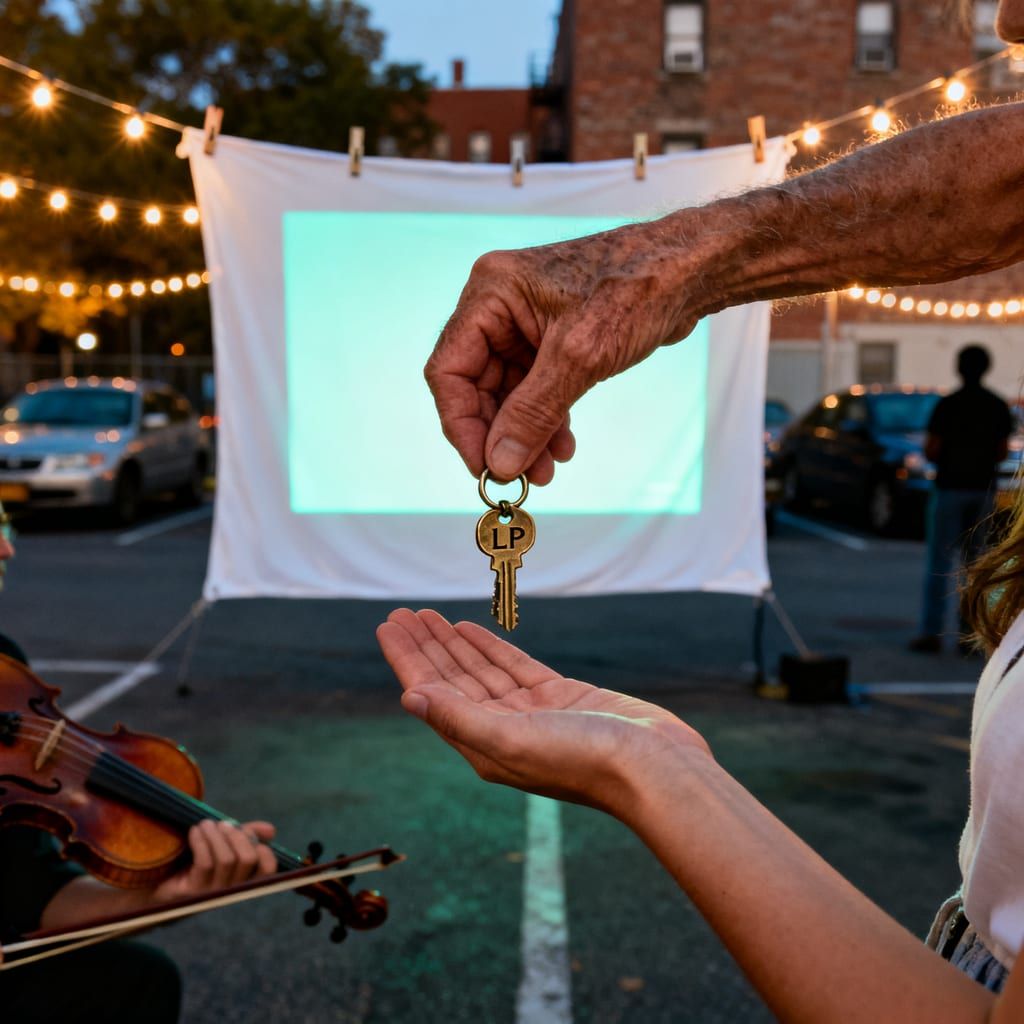
She looked at the wall behind him, a quilt of brass and bronze. One hook held a single key labeled, in neat block letters: LP.
"That one's old," she said, and he turned, eyes following her gaze the way you look at a word you haven't read in years.
He took it down. Brass, bruised with thumbprints worn into rumor. He held it as if the metal could bruise further.
"Smoke," he said, voice softening. "The kitchen was a fog machine. I wasn't supposed to be there-landlord business only-but I was four doors down and smelled it through my nose like a dog. Door stuck. I got it open with this, or something close. Inside, a kid with a plastic camera, clicking it at the smoke like it could take the picture away. Little hands. Big eyes."
She felt the city tilt.
"What happened to her?" Her voice came out in thirds.
He looked at her as if noticing her for the first time not as a category-Documentary Person-but as a person, full stop. He pointed, very gently, to her wrist where a faint melted line curved like a crescent of old sugar.
"She's got a scar," he said. "Like that."
Aria swallowed. The plastic camera had been yellow, its strap the color of a school bus. She had made it clack at the flames that ate her mother's dish towels, her father yelling from the fire escape, the unfamiliar hand that found her under the table.
"My mother's initials are LP," she said. "Leena Patel."
He blinked. The keys on the wall stayed fish-still.
"Then this is yours," he said. "Or hers. I never took souvenirs, but this-this hung around. Maybe it was waiting for a name."
He looked smaller then, not with age but with the suddenness of standing near a long-ago door. She realized he might have carried the weight of that afternoon like a coin in a pocket, worn smooth and indivisible from him.
"Did you know?" she asked.
"No," he said. "I open. I don't keep track of what gets out and who it becomes." He paused. "Maybe I should have."
She shook her head. "Maybe you did, in your way."
He put the key back on its hook. "You want to film?" he asked, voice returning to its workman setting. "Three minutes. Then I have an appointment with a woman whose lock keeps forgetting her."
She filmed his hands, the rasp of a file, the soft click of pins aligning in a throat of steel. She filmed the hook with LP and how his eyes flicked to it and away, as if staring might loosen the past.
At home, she cued the footage. The baker's blue tape notes. The violinist's held breath. The cartographer's pencil fog. The locksmith's hands that had once taken and now, on Thursdays, refused to.
She sat in the candle of her desk lamp and heard the hush between every sentence. Not special, each person had insisted. Not a story.
She cut the new film without narration. No confessional, no Algorithm Voiceover. Instead, a braid: bread sliding into an oven, a spoon ringing a bowl, graphite fog gathering into paths, a key turning, a child's cheap plastic camera laughing at the dark. She let the violinist's unfinished phrase carry through transitions, always almost resolving.
In one place, she put the baker's hands and the locksmith's hands side by side. In another, she let the cartographer's pencil line end at a door, and the door open not onto a hallway but onto the laundromat parking lot two blocks from her apartment.
They hung a sheet against the brick and pinched it with clothespins. Someone dragged extension cords like vines. The air held detergent and August. Kids created constellations with glow sticks. A neighbor with a truck parked just so and aimed his headlights at the screen until a lamp arrived.
People came because people always come when something flickers in a familiar place. The baker slipped in with flour on his shoes. The violinist stood in the back with his cap in his hands. The building super leaned against a cart, pencil tucked behind his ear like a cigarette he'd quit.
Aria introduced nothing. She stepped to the side and pressed play.
On the sheet, hands. On the sheet, tools. On the sheet, breath between phrases. The parking lot went quiet, except for a baby's soft commentary. When the locksmith appeared, a few heads turned toward the nearby avenue as if the shop might have grown there at that second.
Aria felt the moment approach the way a train announces itself down a tunnel with a suggestion of wind. The LP key on its hook. The way the camera did not name it-only looked. Then the cut to a small hand gripping a toy camera, the sound of plastic teeth ratcheting, the suggestion of smoke in old sunlight.
She hadn't told her mother. She hadn't told anyone. It wasn't a secret so much as a thread she did not yet know how to pull.
When the film ended, it didn't. People stayed facing the sheet. Someone clapped once. The sound landed and broke like a wave and then came back as ripples-applause, yes, but also a laugh that became a name across the lot, a name answered by a hand, a hand intercepted by another.
The baker went to Mr. Alvarez and handed him a loaf with no note, because Mr. Alvarez was owed nothing and everything. The super pointed at the sheet and told a kid, "That little star? That's your shoe." The violinist lifted his bow and drew out the ending he'd held back on the platform-not loud, not even full-just enough to settle the room.
The locksmith stood at the edge, thumb on the spine of the key in his pocket. He caught Aria's eye and gestured.
"Take it," he said. "Not for your wall. For your pocket."
She opened her hand. He let the key fall. It landed with a small sound that rearranged a decade. It was permission and also not-more like a nod to a road she was already on.
On instinct, she didn't film it. The memory would hold.
They disassembled the night with the reverse choreography of making it. Cords wound, clips unpinned, someone dumping melting ice into thirsty tree pits. Compliments came soft, sideways, like small bills slid into an apron.
"Good endings," the violinist said, and meant what could not be seen.
"Strong seal," the baker said, tapping the place where the film had closed and left the air fuller.
The super handed her a scrap of tracing paper with a pencil dot in the center. "Unmapped kindness," he said. "It moves."
Aria waited until the lot was almost empty, then walked home in the hum after applause, that hush that is not silence but something shared. The key weighed her pocket just enough to remind her she had been a door once, and someone had chosen to open her.
Her phone buzzed itself silly, then tired. She did not look. A moth threw itself at her porch light and then thought better of it.
Inside, she laid the key on her desk-not as a relic but as a tool, a heavy comma in a sentence still being written. She set the plastic toy camera beside it, the one her mother had kept in a shoebox with report cards and safety pins. Yellow, still ridiculous. She clicked its empty shutter. The sound was the same.
She did not shoot a confessional the next day. She laced her shoes and left the equipment on the table and went walking. The city waited, pretending indifference, ready to trip on its own small miracles.
A man down the block apologized to a dog for stepping on its leash. Someone held an elevator for a ghost who turned out to be a nurse. The hydrant coughed an afternoon rainbow.
Aria smiled at no one in particular. Her smallest films had never been small at all. She knew it in her bones now, in the crescent scar on her wrist, in the way a key cooled the warmth of her palm long after it let go.
The next morning, a note on her door in blue tape: For the film that finished my sentence.
She left it there until the tape lost its stick and fell, gently, to the floor.
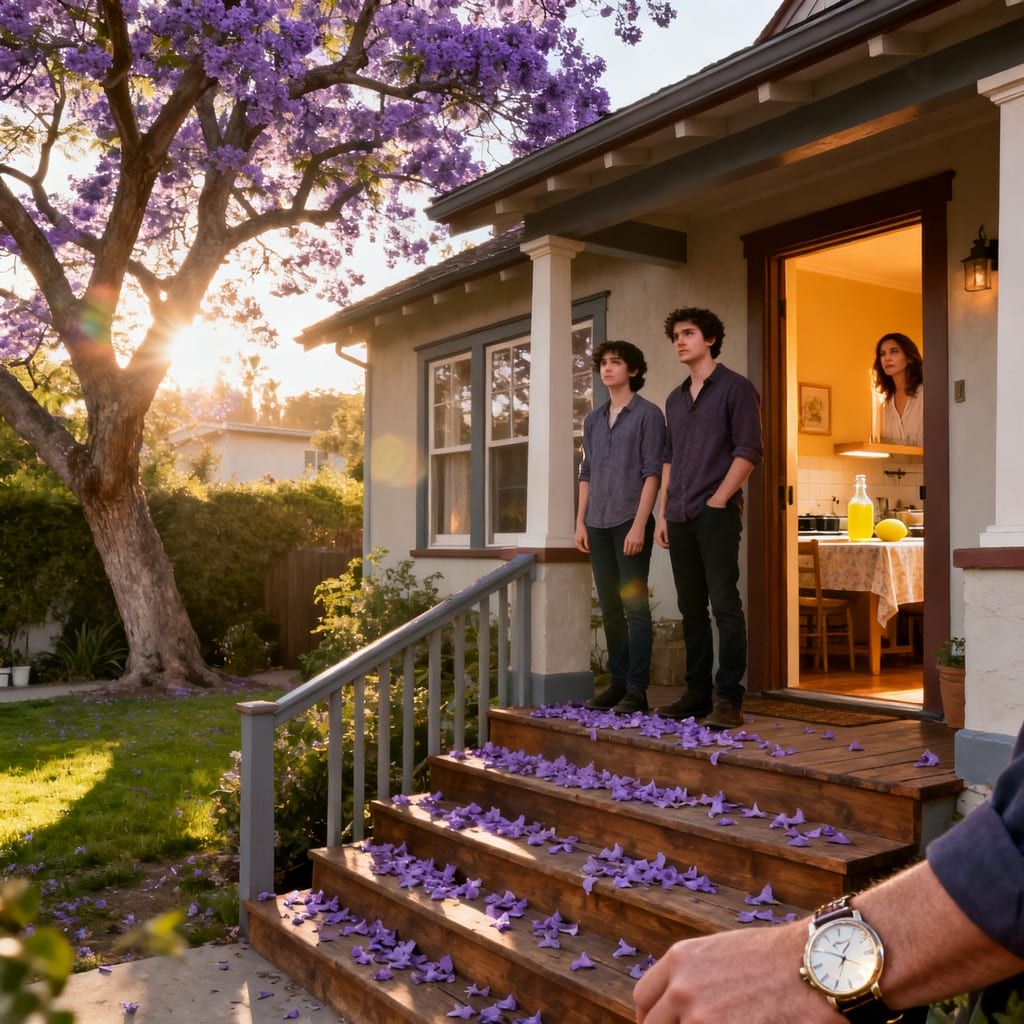
A daughter learns to read between the lines of a life split in two
Read more →
A fog-draped night, two souls found, and the quiet shape of a life
Read more →
Story audiobooks for children of all ages — a new one every day on Smarter Way Stories.