Paper Cranes on the Mountain
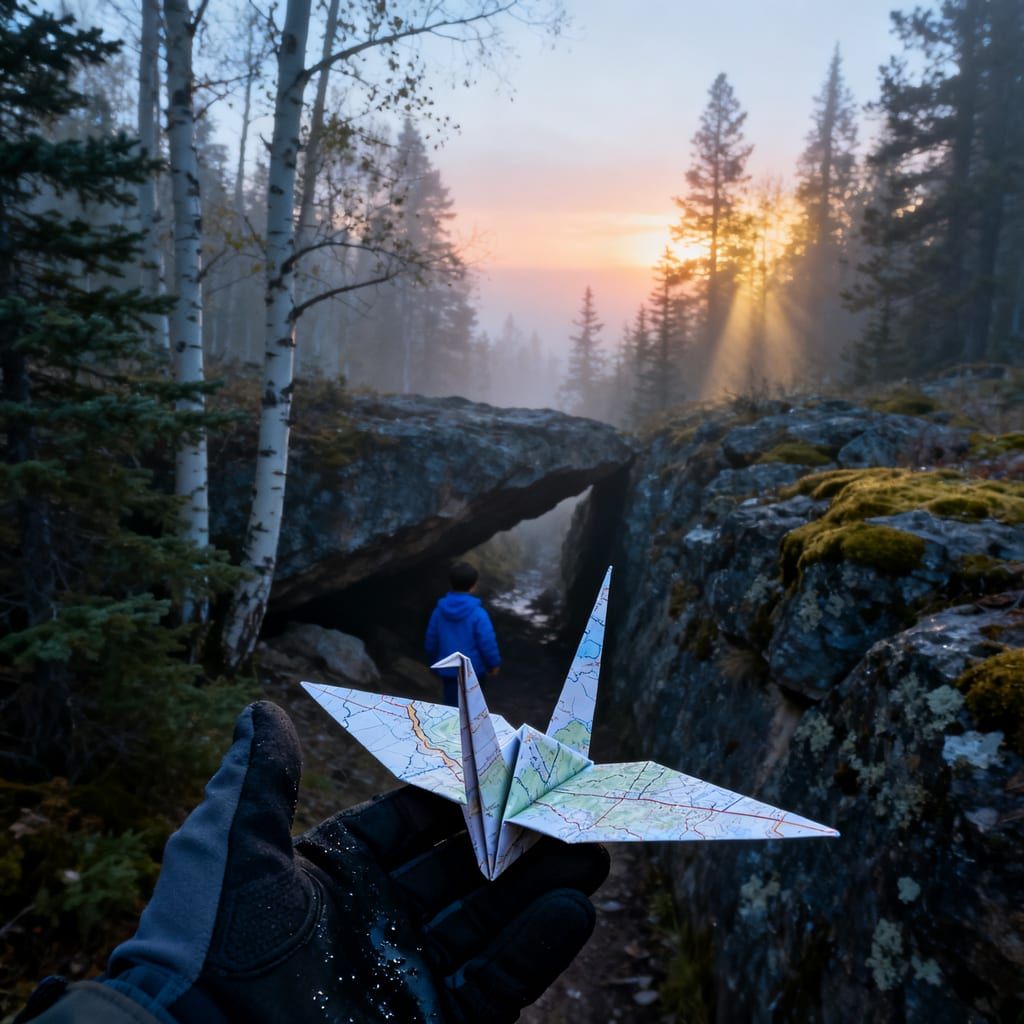
A fog-draped night, two souls found, and the quiet shape of a life
Read more →
The ticket is glossy as a postcard, a small rectangle of permission. Lina turns it over twice, then slips it into her pocket like evidence she can deny later.
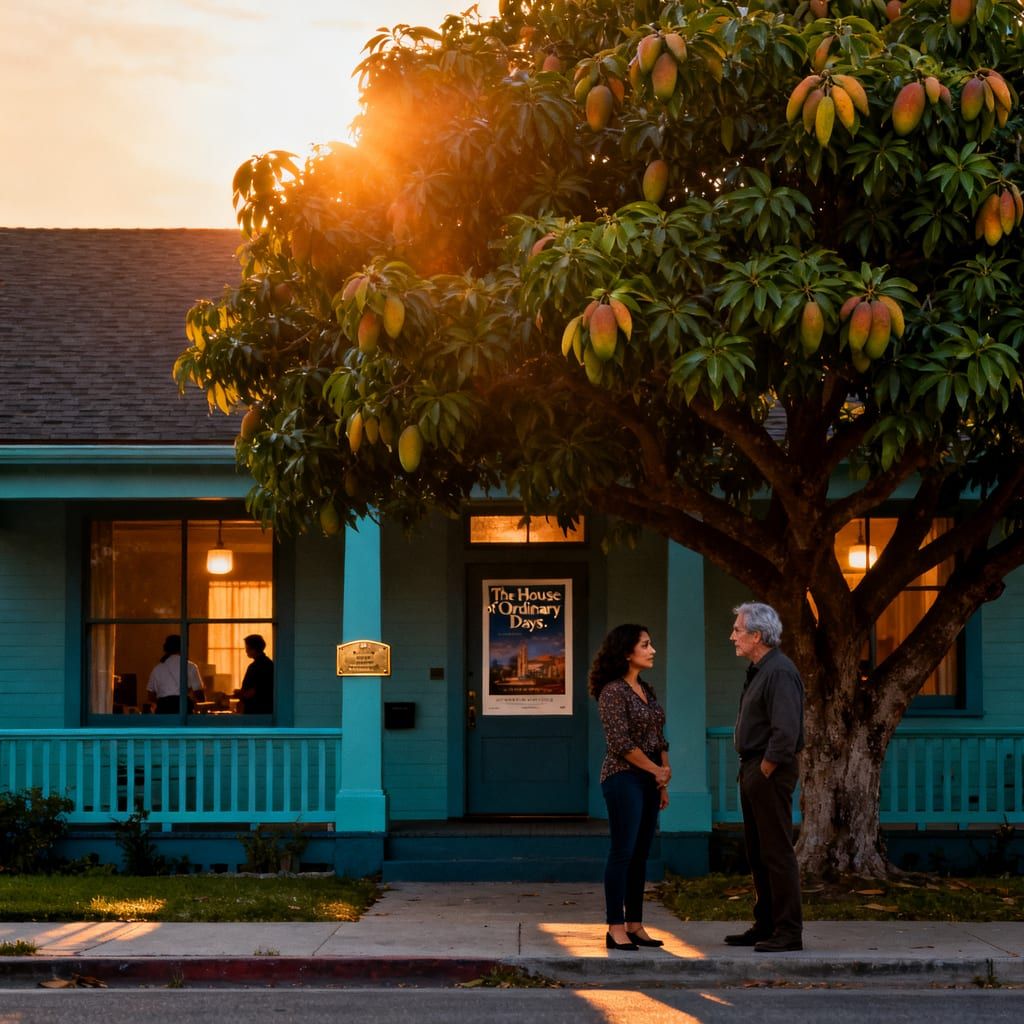
She can't explain to her coworkers why she left the workshop early or why the rental car drifted into the neighborhood on its own, as if the roads remembered her better than she remembered them. Lakeshore light shimmers like something spilled on glass. The house sits where it always has, squat and square, the porch boards smoothed by decades of feet. A new sign in tasteful serif: The House of Ordinary Days.
She stands at the edge of the yard and searches for the mango tree. It's taller than the roofline now, improbably Midwestern, its leaves glossy and defiant. Her mouth fills with the green-sweet taste of summers she wore like a second skin.
Inside, the lobby smells like lemon cleaner and paper. A teenager at the desk-museum shirt tucked too neat-slides a brochure toward her.
"Audio is included," the girl says. "Pick up the guide at the start. If you need anything, I'm Rowan."
Lina nods. Her voice seals up. She writes her name on the sign-in line, hand hesitating over Alvarez. The pen scratches it out before she can change her mind.
She takes the headset, the weight of it both familiar and absurd. In New York, she designs apps to make friction disappear-buttons you don't notice until you need them. If only grief had an interface, she thinks, a skip button for the parts that ache.
The first room is the kitchen, styled to look as if someone just left for the store. The chipped blue bowl stares from the counter, a thin moon of enamel missing on the rim. Visitors murmur about the authenticity. A woman in a wool coat taps the stove with reverence. Lina pictures herself at eight, scuff-kneed, sneaking sugar with wet fingers. The audio narrator speaks in a pleasant radio tone: "This home captures ordinary Midwestern life from the late twentieth century. Notice the practical placement of utensils, the thrift of saved jars-"
Lina doesn't need the narration. Her body knows the distance between fridge and sink, the syllables the floorboards make when someone is tired. The hallway is narrower than she remembers. On the right, height marks climb the wall in penciled years-1994, 1997, 1998-each now dressed with tiny brass plaques. September 12. October 3. A small gleam of permanence where once there was only graphite and a stretch.
A couple pauses, awed. "Can you believe someone lived like this?" the man whispers, as if it's a church.
"I can," Lina says. It slips out. They blink at her, then move on.
At the doorway to the "Community Voices" room, Rowan appears, hands clasped like she's hiding something small and breakable.
"Ms. Alvarez?" the girl asks, shy. "I mean-sorry. I saw your name on the sign-in. There's an old deed on display. I wasn't sure if-" She swallows. "Anyway. The next room has... stories." She doesn't say more. Just points her, with a look that is both official and kind.
Lina inhales like she's about to go underwater. She presses the audio guide to unpause.
Static hisses, then softens. A woman clears her throat.
"Lina?" It's her mother's voice-the way it turned the name into air and honey. "If you're listening, maybe I did this right." A brittle laugh. "The nice lady said I could record for 'future family.' I don't know if that means you. I'm imagining your back as you go out the door."
Lina leans against the wall. The paint is cool and slightly gritty. A stranger beside her reaches for a tissue and offers one without looking.
Her mother continues, unsure at first, then steadier as if the microphone were a hand she could hold. "I remember the storm nights when the power went out. We'd make sandwiches by window light, and you'd ask me to make the wind quieter. I told you to listen for the gaps, where the house took a breath."
In the background, a kettle squeaks, and her mother's voice veers into a recipe for arroz con leche, rattling off milk ratios, cinnamon sticks, the way you have to watch the bottom so it doesn't catch. Ordinary. Piercing.
"I kept a coffee tin under the sink," she says, voice dipping. "For bus tickets, in case we needed to leave quick, in case your father-well. We never needed them, not like that. I'm sorry I taught you to expect to run. There, I said it." A breath. "I'm proud you left for college. I'm sorry I made leaving a muscle you couldn't unclench."
Lina closes her eyes. The room sways. She thinks of New York trains rattling past her apartment at dawn, of how she kept her suitcase in the hall for years like a pet.
The recording ends with a small scrape, as if her mother set down the cup and couldn't find words for what came next.
The stairs to the attic are roped off, but beneath them is a new installation: a plaque with clean typography and the gold punctuation of a donor's initials. "This home was preserved by the generosity of A.A."
Her tongue goes dry. The initials burn simple as a brand.
A sliver of text explains the fund that saved the house from development-condos with lake views, an artist's rendering of balconies stacked like inboxes. There's a list of donors, but only those two letters glow under their own light.
She stares at the rope, the splintered rail she once rode as a pretend horse to the landing, the scar on the banister where a cousin's belt buckle drew blood from the wood. She wants to laugh. She wants to curse. Her father's absence was a fact she arranged her life around, like there being no elevator in a fourth-floor walk-up. She worked around it. She got strong.
"Are you all right?" someone asks.
"I am," she says, surprising herself with the certainty in it.
In a case under her third-grade drawing-the mango tree with a lopsided sun and fat birds like apostrophes-rests an envelope labeled in careful block letters: Admission.
Her fingers hover before she remembers: look, don't touch. The glass is spotless, her face a faint ghost on its surface.
Inside is a single museum ticket stub, stamped with a date from two years ago. Tucked behind it, a note in a hand she used to try to forge for school slips: I paid once so you wouldn't have to pay with silence. Forgive me when you can. I'll wait in the yard at closing.
Lina exhales. The sound leaves her body like the end of a storm. If the world had an undo button, she would hit it once, then twice, and still land here.
She presses pause. The building hums around her-the compressor, the whisper-thread of people, the distant slap of the lake on rocks.
Lina walks the rooms again, but slower, as if she's responsible for turning the lights off at the end of the day. She taps the banister scar with two knuckles-gentle, like greeting an old knee.
In the bathroom, the mirror over the sink is new, but the shadow of a stain on the ceiling still makes a half-moon when the light catches it from the right. She holds her palm up to it, then laughs quietly. Once, at ten, she insisted it spelled her name. She can almost see the ghost letters now, the way a child insists a cloud is a dragon because she needs it to be.
In the bedroom she and her mother shared, someone has fluffed the pillows into obedience. A quilt lies folded at the foot: triangles in patient colors. A picture frame holds a bus schedule from the year she left, a tiny caption about young people who move away and the shelves they leave behind. She wants to tuck her mother's voice under the blanket and say, I found you. She wants to open the window and pass it to the lake.
On the way back to the front, Lina pauses at the "Leave a Thread" wall, covered in cards laced by twine. Some are prayers shaped like grocery lists. Some are jokes, small relief valves.
She takes a pen. Her hand is steady. She writes: "We are more than the rooms that held us. We are the hands that keep the doors unlocked." She pins it near a Polaroid of the yard.
She saves the audio file to her phone-the museum's app offers it neatly, a button that says Download. She watches the little circle complete; a century contained in a progress bar. She texts herself the link, then, after a heartbeat, adds a new contact: A.A. She doesn't write Dad. Not yet. The name can unfold later.
At dusk, the docents herd the last of the visitors toward the exit. Rowan flips the sign, locks the cash drawer with the soft clack of an ending.
"Thank you for visiting," she says to Lina, voice measured, as if reading from a script. Then she leans closer, conspiratorial. "The yard gate stays open until the lights go out."
The air outside smells like cut grass and a coming chill. The mango tree lifts a long arm toward the house as if to touch the eaves. Under it, a man waits with his hands clasped behind his back, posture formal as a school photo. His hair has receded into a thoughtful widow's peak, gone the gray of early snow. He has her cheekbones, her careful mouth.
For a second, neither of them moves. The sounds of the town-bicycle chain, dog bark, a far radio-braid together, neutral and alive.
"I didn't know if you'd come," he says. His voice is a register lower than memory. He looks down, then up. "I didn't know if I had the right to ask."
"You didn't," she says, and then, because the truth has edges and a softness, too: "But I would have wanted to, if I'd known how."
He nods like he deserves that arithmetic. "The ticket," he says, trying for a smile. "I wanted to leave something that wasn't just money."
She steps closer. The mango leaves clatter, small hands applauding. "You left a line," she says. "I picked it up."
They stand shoulder to shoulder, not touching, eyes on the windows as the staff move through rooms switching off lamps. Each click drops a square of light, the house blinking itself to sleep. He clears his throat, then fumbles in his pocket for a folded paper.
"I wrote down my number," he says. "In case-well. In case we want to talk when it's not a performance."
She takes the paper. Their fingers meet, brief and electric. She keys the digits into her phone, labels it simply with his initials. The contact glows blue as if submerged.
"What do we say?" he asks, almost a laugh.
"We can start with the mango tree," she says. "How it grew anyway."
He looks up, follows her gaze. "You planted it in a shoebox," he says. "With a spoon."
"You told me it wouldn't take," she says.
"I told you it might not," he corrects. "And you said we should try anyway." He smiles, a cracked place softening. "You were right."
They talk in small lanes at first-weather, the museum's paint, how the lake kept its voice. Then the lanes widen: that winter, the bus tin, what absence does to a life and what presence can't fix but can hold. Their sentences find a rhythm. When silence comes, it isn't a wall. It's a place to breathe.
The porch light flicks off last. From inside, a final sweep, a last glance old houses seem to give their people as if to say, Go on then. I'll be here.
"I have to go," Lina says. The rental car waits a block away, headlights chalked with road dust.
He nods again, too many nods now, and it tugs at her. She risks it. She leans in, brushes his shoulder with hers. The contact is brief, a proof of concept.
"I'll call," she says. "Not because I owe it. Because I want to see where this goes."
He blows out a breath like he's been underwater for twenty-seven years. "I'll be here," he says, though she suspects he means more than the yard.
She walks to the sidewalk, the gravel speaking the old language under her shoes. At the corner, she turns. He is still under the tree, smaller now, framed by leaves that catch the parking lot light like little coins.
Her phone buzzes-a calendar alert for tomorrow's client call. She silences it. On the screen, two new anchors: a saved recording, a new contact. She feels the weight of both with a strange, welcome balance.
At the car, she pauses. The air has thinned into evening. The sign by the path reads Admission one last time, black letters on a white field. She thinks of thresholds, of all the doors that looked locked until someone tried the handle.
She gets in, starts the engine, and doesn't brace. The road opens like a sentence that finally knows where it's going.
A fog-draped night, two souls found, and the quiet shape of a life
Read more →
Story audiobooks for children of all ages — a new one every day on Smarter Way Stories.