Two Houses and One Quiet Heart
A daughter learns to read between the lines of a life split in two
Read more →
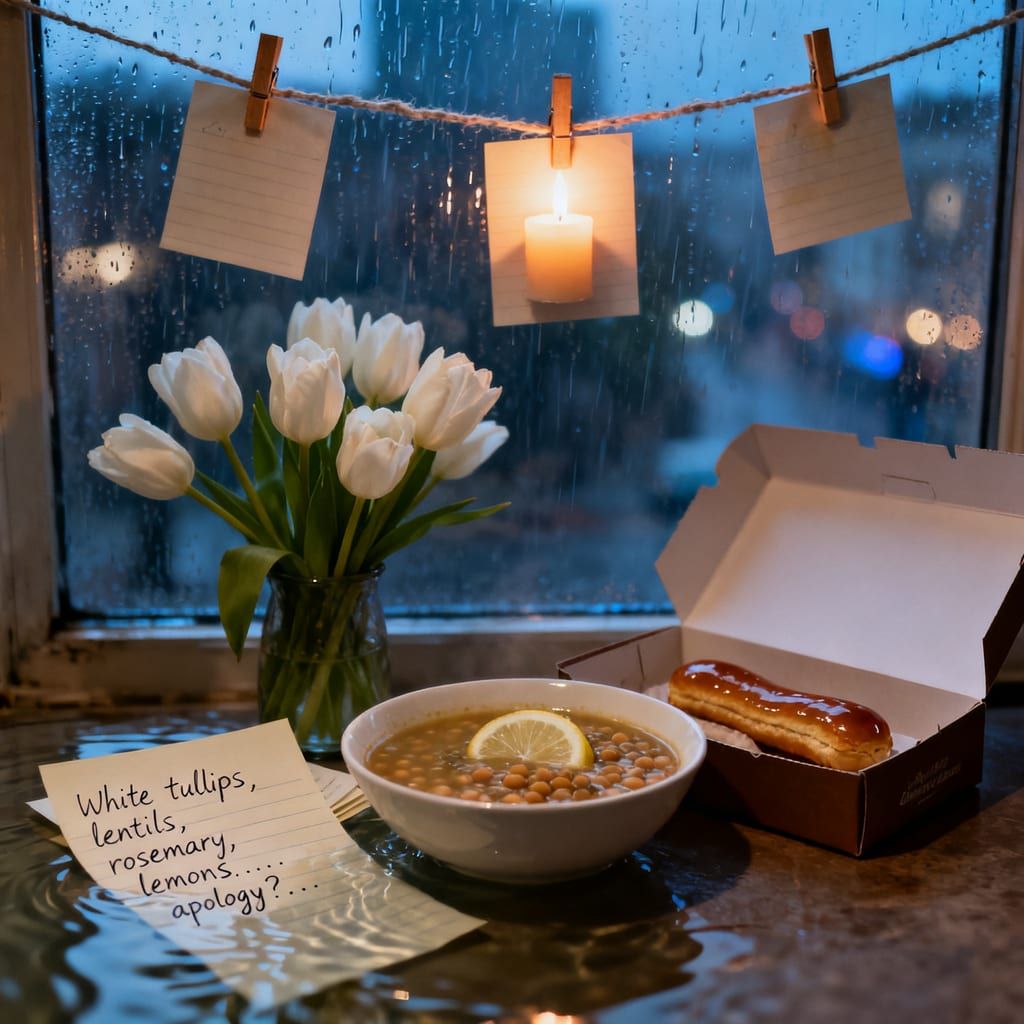
On Sundays Lena Park takes the long way home, mapping her route by sliding glass doors and automatic mats. Three grocery stores, each with a different soundtrack-hissed misters, fruit thuds, a child bargaining for cinnamon rolls.
In her tote, among the green onions and seltzer, there's always a shoebox. Its lid is rubber-banded and soft at the corners. Inside: orphaned artifacts of our small hungers. She plucks them from cart seats, lint-clung to freezer floors, caught beneath endcaps. A quiet scavenger hunt against calcifying.
She tells no one at work. There she is precise, a data analyst whose dashboards bloom with clean lines. But on her phone-on Carted-every Sunday she posts a single list and a vignette that lifts it like a shell to the ear. She writes in lowercase more often than not. She lets the paper speak.
Paying attention, she's discovered, feels like a kind of prayer.
At East & Main, in the blue haze of the freezer aisle, she sees it: a slip of paper, edges curled, stiff with condensation. She eases it free from a puddle near the peas and smooths it against her palm.
white tulips, lentils, rosemary, lemons, notecards, thick black pen, batteries, string, clothespins, printer ink, stamps, bakery-2 éclairs, apology?
The question mark hooks a soft part of her. She imagines the hand-heavy, deliberate-hesitating at the tail of the y. Who buys notecards and batteries in the same errand unless they're building courage with logistics? She can almost see the string, a clean line hung like a thought across a room. Clothespins like little bites.
That night she writes a story about a widower who rehearses an apology to his daughter after years of silence, practicing it in the mirror between stirring lentils and peeling lemons. She calls him Marco. She places white tulips in a vase because grief likes a clean color; she lets him fail once-voice catching, a call dropped before a word-and then try again. She imagines his hands worrying the thick pen, the notecards blotched with starts: Dear Ana. Dear you. Dear I-have-no-excuse.
She posts the list and the vignette. She tucks the original into her shoebox and goes to wash a single bowl in the sink.
By morning her phone trembles more than it should. The post-quiet, tender-has been carried by others. Comments stack gently. In her inbox a DM waits from someone named Ana: I think this is my father's handwriting. We haven't spoken in years. I live two neighborhoods away. I don't know what to do.
Lena stares at the message like a bird at a window. She answers with care, only what's public, only what's imagined. She says she hopes the list belongs to a day where trying feels possible. She adds a blue heart and then backspaces it. She does not push.
For the first time since she began collecting, the shoebox feels heavier.
A week later, a summer storm shouldered the city. Heat wrung itself into the sky and the sky let go-thunder like a dropped piano, rain marching hard. After work, Lena climbed the stairs of her old building in a damp hush. Then the lights gave a soft, unanimous no.
The hallway glowed with the dim galaxy of phones. Someone laughed. Someone swore. For the first time in months, neighbor voices braided-You okay?-I've got candles-Is that water coming under your door? A child streaked past with a flashlight, turning everyone into shadow puppets against the stairwell walls.
Across the hall, a door opened to candlelight and something warm in the air-rosemary, lemon, the high clean of boiling water. Lena paused, palm at her own knob. Inside, she could see the corner of a table set for two. A vase of white tulips. Along the wall, a cotton string hung like a horizon, clothespins waiting like small wooden mouths. On the counter, a paper lay splayed and water-warped, its lines trembling in the low light.
The handwriting was exact.
The man-older, careful-stood with his phone in his hand as if it were heavy. Candlelight made a lake in his eyes. "I should have tried sooner," he murmured into the room, as if to the spoons.
Lena's heart shook itself awake. The life she'd imagined-its bowl of lentils, its line of hopes-was happening behind her own thin wall.
She knocked before she could think to practice it. When he turned, his face registered the intrusion, then the shared dark, then something like relief. He had the posture of someone braced against weather.
"I'm sorry-" she began. "I live across the hall. I think I... found something of yours. A list. A week ago, in the freezer aisle at East & Main." She watched recognition rearrange him. "I wrote about it," she said. "About a man trying to be braver than his regret."
He winced, one hand at his chest, as if press and exposure both lived under the same rib. Then he exhaled. "I'm Marco," he said. The name surfaced like a dock after fog. "I didn't know how to start."
They sat at the table, a candle between them hammering a small, determined light. Rain stitched the window. On the counter, the tulips stood like surrendered flags.
Marco spread the notecards with careful fingertips, as if shuffling memories. The thick black pen hesitated above the first card. His hand shook a little. Outside the storm softened to a worn applause.
"Tell me about her," Lena said. Her own voice surprised her-low, steady, like a bench offered.
"Smart," he said, smiling with one side of his mouth. "Always a step ahead. She used to correct my lists when she was ten-said 'batteries' needed specifying." He swallowed. "We said things badly when my wife died. And then we stopped saying things. I thought time would do the talking."
He wrote Dear and stopped. The pen left a small lake.
"Try again," Lena said, gently. She pulled a card toward herself, testing the weight of the paper. She pictured all the strangers whose grocery-neat handwriting had made her feel less alone. Empathy was a rehearsal, she realized, but this-this was the stage.
In the blue-dark of a city without electricity, they drafted and crossed out. They let artlessness be a virtue. I am sorry that I let my silence do harm. I am sorry I hid inside my grief and made you knock at a locked door. I am sorry for the ways I chose ease over love. He practiced the sound of her name in his mouth like a fragile thing.
"I'm going to send her a message," Lena said, her phone a small comet in her hand. "Only if you want." He nodded, jaw set but eyes open.
She typed: Hi Ana-it's Lena from Carted. Our building's out of power. A storm has turned the city tender. If you want to come, there is soup and a man with a notecard and a lot of sorry.
The three dots came and went. Minutes stretched in a soft ache. The candle listed, then righted itself. Marco reheated the lentils-earthy and bright under the lemon. He set two plates like a question he dared to ask.
A knock sounded like a held breath released. When the door opened, a beam of flashlight swept the ceiling, then found the table. A woman stepped in with rain on her collarbones and distance arranged neat on her face.
"Ana," Marco said, standing so fast his chair scraped. His hands didn't know where to be. He left them open.
"I read it," she said, nodding toward the list on the counter, toward a week of strangers' tenderness. "I thought it was you. I didn't know if I wanted it to be." Her voice was taut and adult. Under it Lena heard a younger octave, a memory unwrapping.
They sat. The meal was humble-lentils bright with lemon, bread warmed against the oven's brief heat before it clicked dead, two éclairs sweating in their box like nervous guests. Marco picked up a notecard and did not read from it. He looked at his daughter instead.
"I am sorry," he said, the words plain and full. "I let hurt turn to habit. I thought if I worked and cooked and didn't cry in front of you, it would be better. It wasn't. I left you alone inside something we both were carrying."
Ana's jaw worked. She lifted a spoon, the smallest of shields, then set it down. "I kept waiting for you to say that," she said. "So I learned not to expect it." Her hands bracketed the bowl. "I'm still mad."
"Okay," Marco said, nodding as if given a weather report. "I'm here anyway."
Silence spread, a clean cloth. Lena felt her usefulness thinning like thread. She reached for the string, clipped the first notecard-a messy, beautiful apology-to the line. The clothespin clicked shut with a sound like yes. She lit a second candle and set it near the tulips, then stood.
"I'm going to let you be," she said to them both, backing toward the door. "If you need a spare pen-" She lifted it with a small smile. "I'm across the hall."
In the corridor, phone lights had gone to bed. She slipped home in the trusted dark, the storm now a soft exhale. Through the wall, a low murmur-voices relearning each other's steps. She didn't listen. She simply sat on her floor beside the shoebox and breathed.
When the power returned in a stutter and then a wash, Lena turned on no lights. She opened the shoebox and emptied it onto the rug. Lists spilled like confetti and then, as she touched them, like invitations.
Block letters that shouted BUDGET? and quiet cursive that promised cake-funfetti! A sharpie list that read formula, gas, with a circle dug into the paper like a plea. A torn envelope corner that said try again in pencil, erased and rewritten until the words had shadows.
She smoothed each one as if it had hair to be tucked behind an ear. She still imagined stories-she couldn't help it; the mind hungry to make shapes-but she felt something tilting inside her. Noticing, she understood now, was the door frame. You still had to step through.
She gathered quarters in a jar for the list that needed formula. She wrote a note on a tulip-wet card and left it at the community board where she'd found try again: You don't have to do it alone. She bought printer ink for her neighbor downstairs who always borrowed and seemed ashamed of it. She tucked spare stamps into the library's free bin.
On Sunday she posted a photo of the freezer-aisle list, its water-warped lines now part of a family on a string. Her vignette ended with two éclairs eaten in the dark, the taste of lemon hanging in the room like a decision made. She did not say what happened next. She let the image of a candle and a notecard do the speaking.
Later she heard the click, click, click across the hall as more cards found the line. Once, laughter-a single bright coin tossed and caught.
She refit the shoebox lid and slid the band back on. On its spine, in neat pen, she wrote: acts.
At her window the city was rinsed, new as a dish in a rack. The misters at East & Main would be hissing again. Somewhere a list was being drafted in a car with the overhead light on, or on a napkin at a deli, or on a phone that would lose it to the ether. Somewhere a hand would hesitate over a question mark and then commit to it anyway.
Lena's phone buzzed once on the table. A message from Ana: Thank you for opening the door. He made too much soup. Do you like éclairs?
She typed back: Always. And then, after a beat: I have clothespins if you ever need more.
The storm's after-smell-earth risen to nose-level-lingered in the hall. Somewhere, a transformer hummed itself certain. She set a fresh notecard by her own door, a small beacon for whoever came next. When she turned off the lamp, the room held its shape.
Some nights the city is all angles. Some nights it softens. Either way, she walks it-pockets ready, eyes kind-prepared for the moment a life might step clean out of imagination and into the hallway, asking for a witness, or a pen, or simply someone to say: I see it. Keep going.
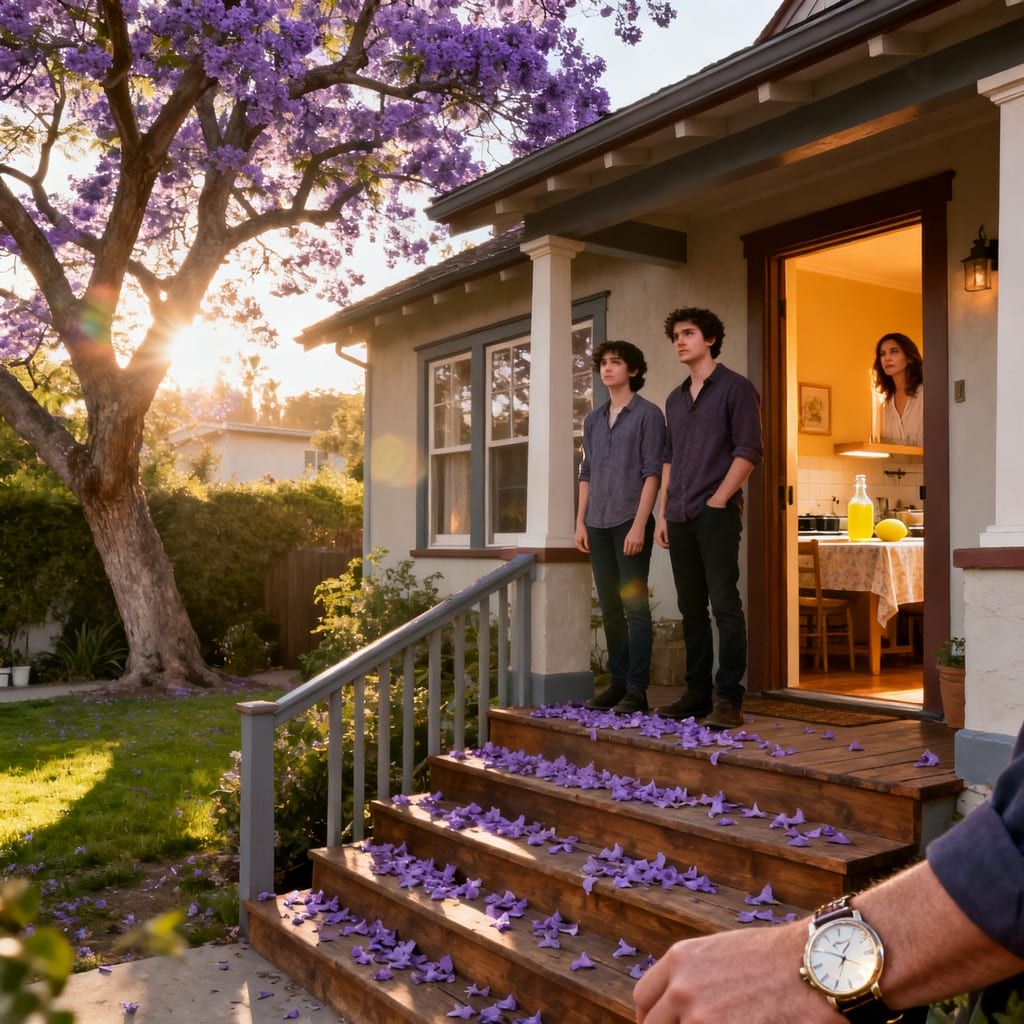
A daughter learns to read between the lines of a life split in two
Read more →
A fog-draped night, two souls found, and the quiet shape of a life
Read more →
Story audiobooks for children of all ages — a new one every day on Smarter Way Stories.