Two Houses and One Quiet Heart
A daughter learns to read between the lines of a life split in two
Read more →
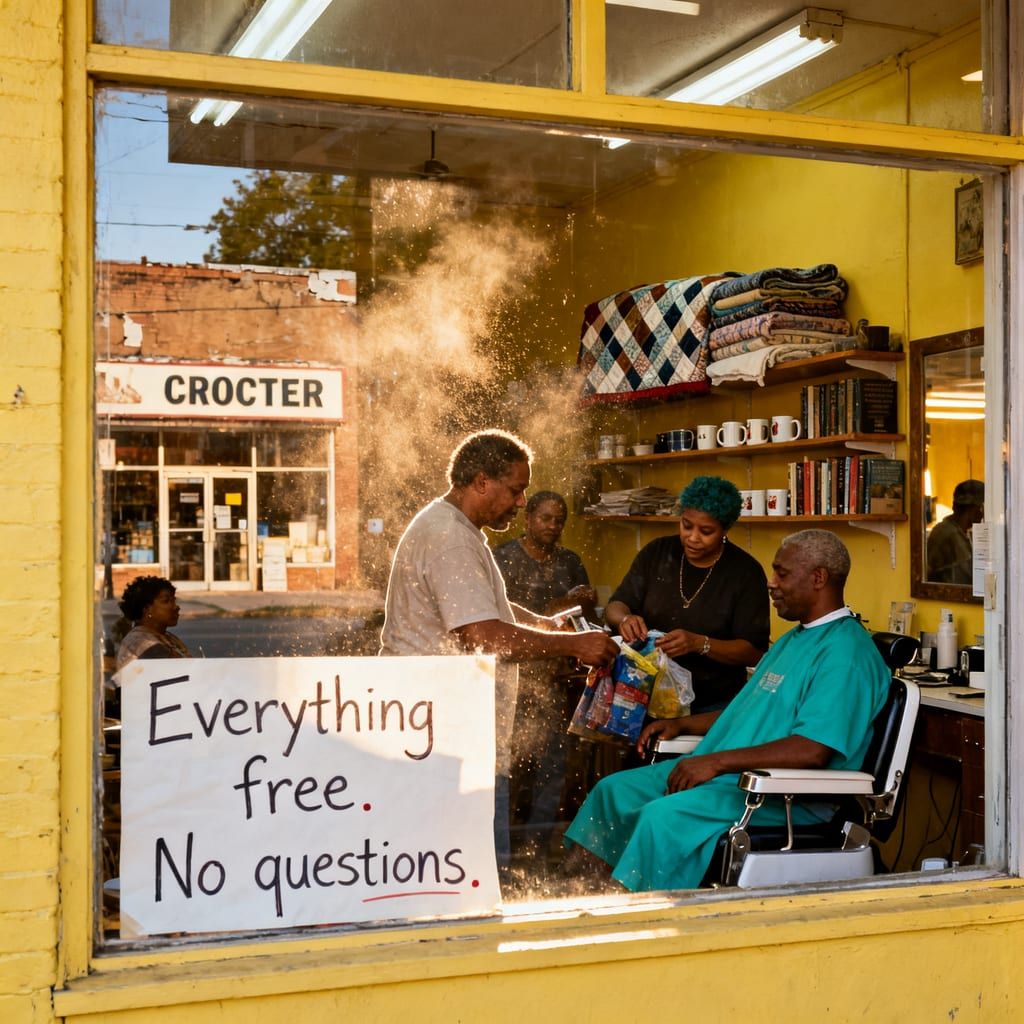
Lina painted the walls the color of cut lemons and opened the shades so the morning could walk in on its own two feet.
She taped a note on the glass with blue painter's tape-crooked, hopeful: Everything free. No questions. The paper fluttered each time buses sighed at the corner.
They came slowly, like shy birds testing a feeder.
An elderly man pressed his palm to the glass before stepping inside. He stood among the mismatched shelves and thrifted baskets, blinking as if surprised the air didn't smell like starch anymore.
"Is it really-" he began.
"Yes," Lina said, trying to make her smile a promise instead of a sales pitch. "What do you need?"
"A coat," he said. "For church. But also... for everything."
They found one together-navy wool with a missing button. He shrugged into it, rolled his shoulders as if remembering a dance step, and left with a little bow.
Then came a teenager with a bitten lip, mumbling about a phone charger.
"Android," he finally said, a dare in his voice.
Lina dug through an old bread tin until she found one. "Here," she said. "Bring it back if you want."
He tucked it in his hoodie and left a pack of gum on the counter, as if the gum and the charger could weigh the same on some unseen scale.
A nurse on her lunch break appeared next, hair tucked under a cap, eyes tired. "Saucepan?" she asked, almost laughing at herself.
"In the back," Lina said. "Yellow, a little dented."
By afternoon, a barber had wandered in with a case of clippers. "I can set up Saturdays," he offered, already scanning for a chair with the right height.
A retired teacher tapped the rim of a button jar like it might answer back. "Leave these with me," she said. "I like making lost things fit again."
A baker from two blocks over left three loaves on the counter so warm that Lena-Lina corrected herself in her head, even here, even now-had to resist tearing off a piece. She wrote "Take a slice" on the bread bag with a black marker.
By evening, Open Hands hummed. Things came. Things went. The lemon walls caught the last light and it made everything look braver than it was.
After closing, Lina counted hangers like a nervous rosary. Wire sang against wire. The racks stood more empty than full, the air thinner where coats had been.
What if the giving runs out? The thought slipped under the door like a draft.
She tried to shoo it with practicalities-make a list, print a flyer, ask the café to spread the word-but doubt had a mother-tongue that wrapped around her ribs.
She knew growing up that her grandmother's store had been a stop-and-chat kind of place-press-and-starch, a crackling radio, the smell of steam lifting the day off people's shoulders. When Tita died, the storefront went dark. It was only a rectangle of dust and hangers when Lina got the keys.
She had left a job with sleek decks and metrics that measured everything except the sick feeling at the back of your throat when the client smiled and asked for more. Now there were no metrics. Just a hand-lettered sign and the faulty bell over the door.
He came on the second week. Gaunt. A stubble that wasn't fashion, eyes that didn't land on things so much as circle them like crows. He hummed under his breath, a radio between stations.
"Hey," Lina said, because everything else felt too polished.
He nodded without looking at her and moved through the aisles like he knew the layout. A blanket. A lamp. Two mugs shaped like pears. A toaster.
"Cold where you are?" Lina asked lightly.
"Something like that," he murmured. He balanced the toaster on top of the blankets and left, the bell clanging an indignant, off-key note.
He returned the next day. Another blanket. Batteries. A stack of plates.
By the fourth visit, Lina's worry grew scaffolding. She found a ledger in the back-a leftover invoice book from the cleaning days-and started writing down what people took. She taped a paper near the door: "Limit 3 items per person. Please be fair." The lemon room felt a degree cooler.
The retired teacher squinted at the sign. "You start counting," she warned softly, "and people start counting too."
Lina nodded, then didn't change a thing. She tucked the ledger under the counter like a flask.
A local influencer swung by with a ring light and a laugh like a wind-up toy. "This is wild," she squealed to her camera, panning over the shelves and the crooked sign. "A free store in the city! Share share share!"
The video swelled into a flood. Teenagers arrived in gaggles, thrilled by the treasure hunt. Moms with strollers. Men in work boots, women in scrubs, a couple with a tiny dog peeking from a sling like a late-breaking headline.
Shelves emptied until they gleamed with nothing. The bread loaves vanished. The button jar looked lonely as a planet.
When Eddie slid in again, humming, hands already reaching, Lina's fear crested into a hard edge.
"You can't take this much," she blurted across the counter before she could reel the words back. "It's not fair."
His humming stopped. He looked at her like light had hit a pane of glass between them. His mouth opened, then closed. He set the lamp back carefully, as if returning it to sleep, and left without a word.
The room felt colder after, as if her breath had fogged the air. The ledger's flap dug into her wrist when she moved.
He came back the next afternoon, not alone.
A line of people followed him down the sidewalk, each carrying something. A café owner with surplus chairs stacked like vertebrae. A contractor with boxes of paint quarts, each lid a bright coin. A woman rolled in a cart draped with quilts that smelled faintly of cedar.
Eddie held the door with both arms like a doorman at a grand hotel. "These are mine," he said, then corrected himself. "My people."
He managed, it turned out, an impossible building three blocks over. Not officially. The landlord lived in Florida; the city misfiled inspections. But Eddie kept the lights on when he could, settled arguments before they boiled over, knocked on doors until someone answered. Single rooms. Bad wiring. A hallway that leaned.
"I was outfitting lives," he said, eyes finally landing on hers. The humming was gone. "Didn't know I was supposed to sign for them."
Lina felt the ledger under the counter turn hot as a coal. She pulled it out, opened to the page where she had written his description-gaunt, toaster, blankets-and drew a line through it.
"Help me make space," she said, voice low and steady. "We'll need places for paint and quilts."
They did, and the room warmed by degrees. The café chairs lined one wall like a tiny parliament. The contractor set the paint on a low shelf, rainbow in order. The woman stacked quilts that made the lemon paint sing.
The retired teacher arrived in time to laugh. "Now this," she said, patting the quilting woman's arm, "is inventory I understand."
The blackout hit on a Wednesday, a shrug from the grid that left the block blinking at itself.
Open Hands became a lanterned hush, candlelight flicking over the lemon walls. Someone rigged a car battery to a power strip, and the counter became a surgery for blinking phones. The baker dropped off a pot of soup and a camp stove; steam made halos in the air. The barber showed up with headlamps and cut hair by touch and laughter.
Lina stood in the doorway, dispatching people like bees. "Two flashlights to Ms. G on Maple. Soup for the Santiagos. Does anyone know if Mr. Ruiz on the third floor is okay?"
A child traced his finger down the foggy glass, writing his name and a heart. The heart dripped, and he giggled like an apology.
Eddie took a box of candles under one arm and a bag of batteries under the other. "I can do the back stairs in ten minutes," he said. "If no one stops me."
"No one will," Lina said, and meant it.
In the circle of battery light, people tried on generosity like it was a coat that had always been theirs.
Morning laid itself across the block like a quiet sheet. The lights returned. A warm stink of thawing freezers rode the air for a while, then thinned.
Lina found post-its tucked under the register, stuck to the tins, wedged between paperbacks: Thank you for the kettle. I made tea for my mother. The flashlight got my dad down the stairs. That quilt is joy.
The barber taped up a sign-up sheet: Free cuts on Saturdays.
The retired teacher wheeled in a sewing machine the color of a robin's egg and made a mending table near the front. "Buttons don't judge," she said, threading a needle.
Across the street, the café put up a chalkboard-Give one, take one breakfast. "Coffee tastes better when I don't count it," the owner said, winking.
Lina stopped sleeping with the ledger under her pillow. She began rewriting its pages so they made more sense. Instead of columns of objects, she drew arrows, names, little notes: Quilt to Mr. Ruiz-tell granddaughter it's machine-washable. Paint to 3B-ask if they want rollers. Chair to nurse's porch-bring her bread on Thursday.
The pages became a map of circulation. It looked less like a bookkeeper's tool and more like the veins inside a leaf.
When the landlord came in-a man with smooth hands and a tie that had never met soup-he didn't touch anything.
"New lease," he said, placing a paper on the counter like a coaster. "Rents are going up on the strip. Market trends." He smiled a taught smile and left his phone number like a favor.
The number on the page swelled and throbbed. Lina's stomach went hollow.
She was still staring when Ms. Dalal from the grocery next door stepped in with a bag of cilantro and a look that knew things.
"What's wrong, beti?" she asked, sliding the cilantro across the counter.
Lina showed her the paper, voice small. "He'll raise it beyond what we have. I don't want to-" She didn't finish. The lemon walls held their color.
Ms. Dalal read the paper, then shrugged like a woman used to weather. "He'll get over himself," she said. "And if he doesn't, we will get over him."
Two days later, she came back with an envelope, folding it into Lina's palm with the same tenderness she used to bag ripe tomatoes.
"No, I can't-" Lina began.
"You can," Ms. Dalal said. "Your grandmother kept our books open an entire summer once. My husband had a bad year. She did not collect. She said, 'Pay me when your breath slows down.' I am paying her now. Don't make me argue."
The floor under Lina steadied. The circle had been here all along, incense in old fabric. She had only hung a sign.
By the time spring found the lemon walls, Lina had taken down the limit signs. In their place she hung a piece of thick paper, edges scalloped, her grandmother's cursive borrowed from a recipe card. Four words. Ink looping like a promise.
Take what you need.
The bell over the door still misbehaved. The shelves filled and emptied and filled again. Eddie hummed sometimes when he sorted batteries, but now the tune had a key.
The ledger lived open on the counter, not as a guard but as a map. When someone asked what they could give, Lina ran her finger along an arrow and said, "Here. Or here. Or-" and often the person pointed to a place she hadn't thought to draw yet.
In the late afternoons, when the sun hit just so and the dust made the air honest, Lina would lean on the counter and watch the room practicing its own kind of breathing. She could hear her Tita in the rasp of the pencil, in the quiet thrill of a button finding its hole, in the clatter of a pot that would become soup somewhere else.
On a day like that, a boy returned the charger. He placed it on the counter and slid a folded note beside it. I passed my GED, Ms. Lina. Thank you for the light.
She didn't tell him that the light had been his all along. She only tapped the sign with her finger and let the room do the rest.
Outside, buses sighed. On the glass, the hand-lettered words trembled and steadied as the door swung, catching and releasing the morning like always.
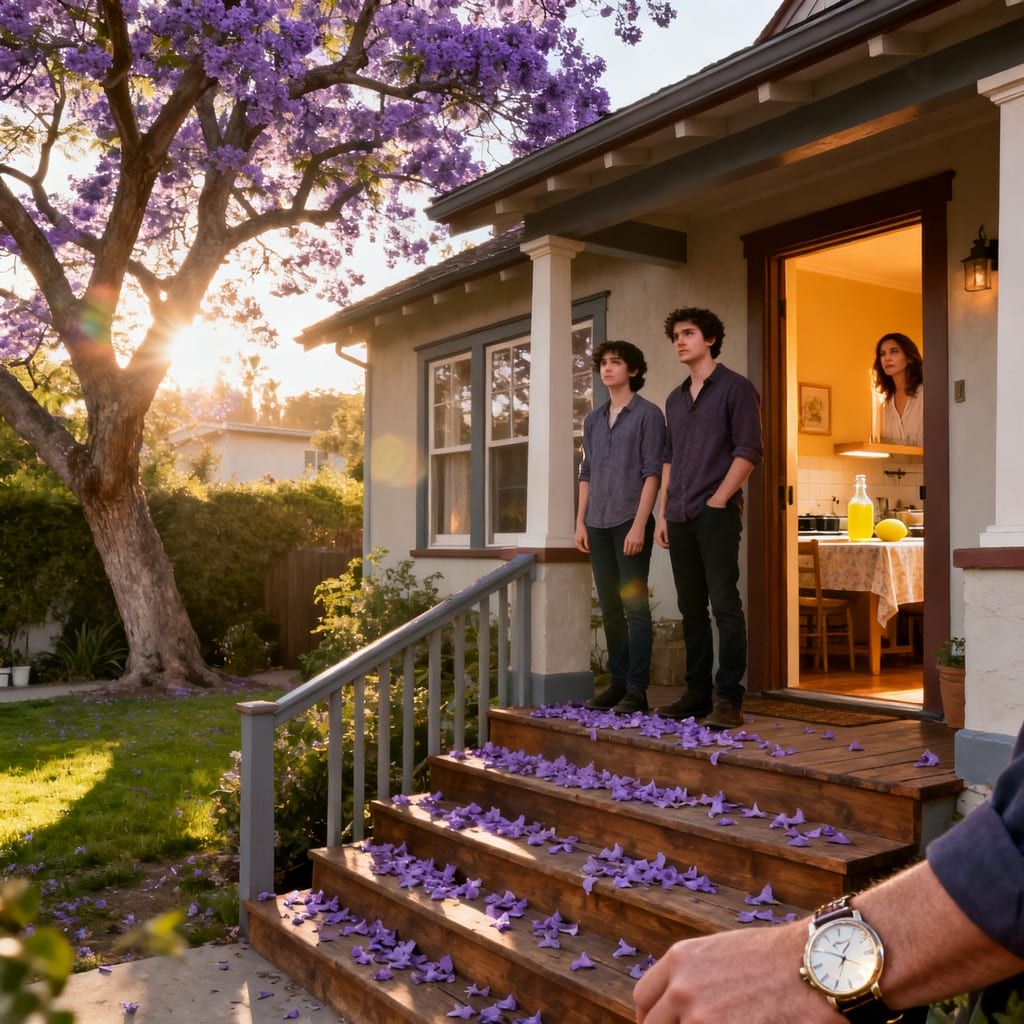
A daughter learns to read between the lines of a life split in two
Read more →
A fog-draped night, two souls found, and the quiet shape of a life
Read more →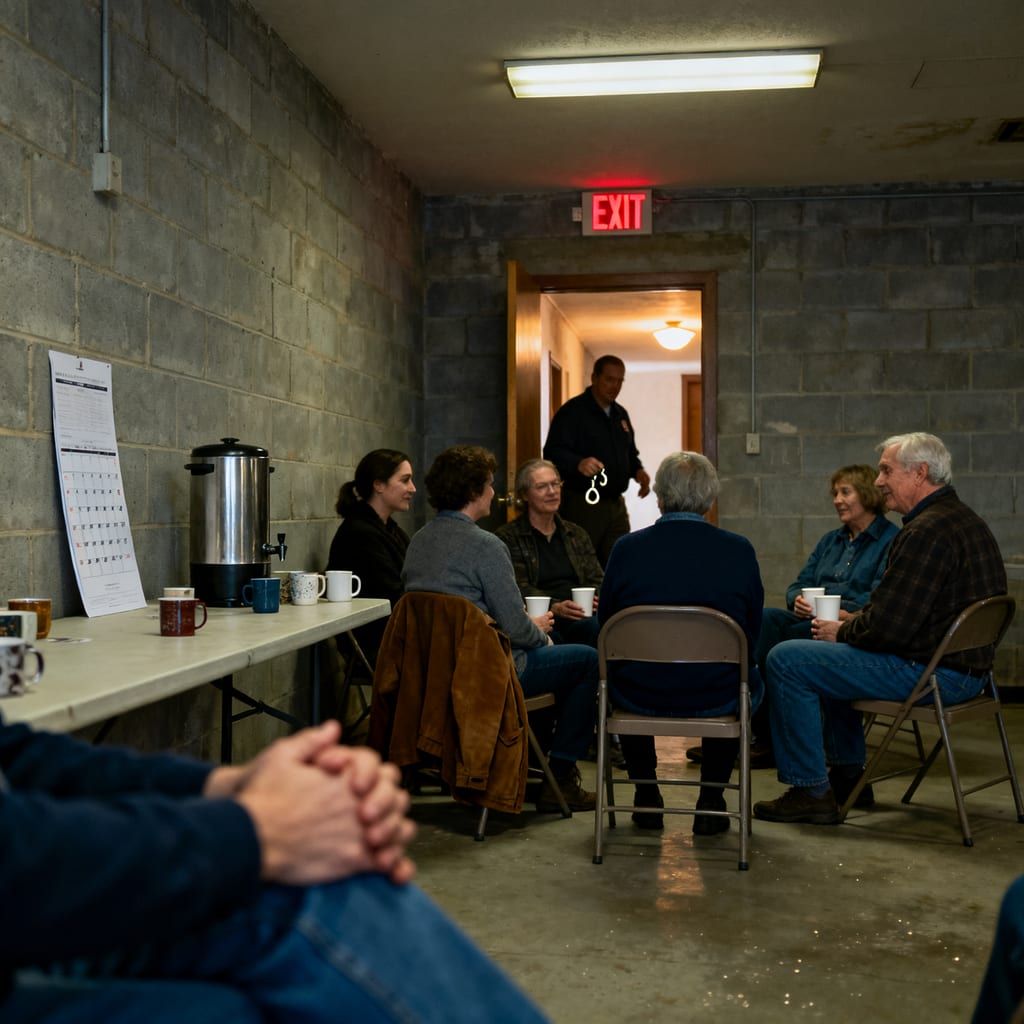
Story audiobooks for children of all ages — a new one every day on Smarter Way Stories.