Keys Before Questions
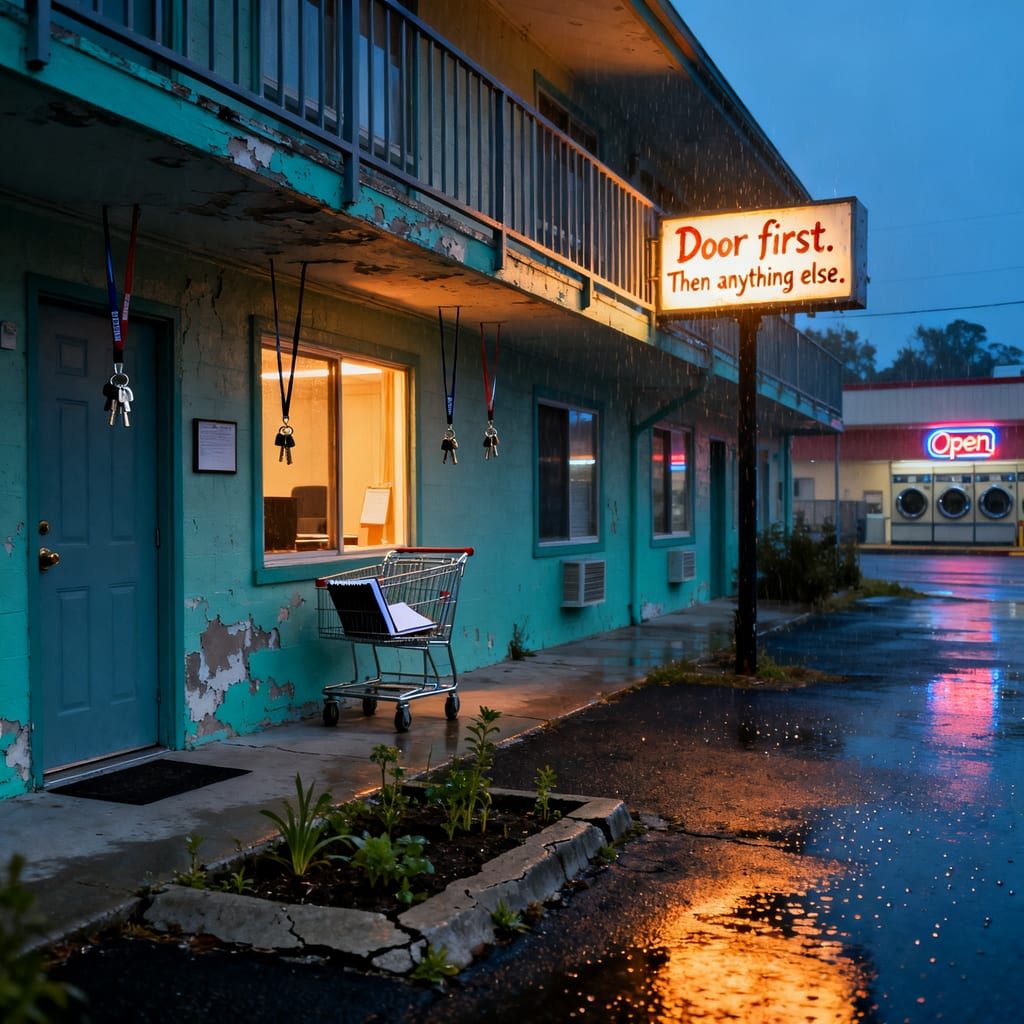
A motel, a storm, and the way doors remember
Read more →
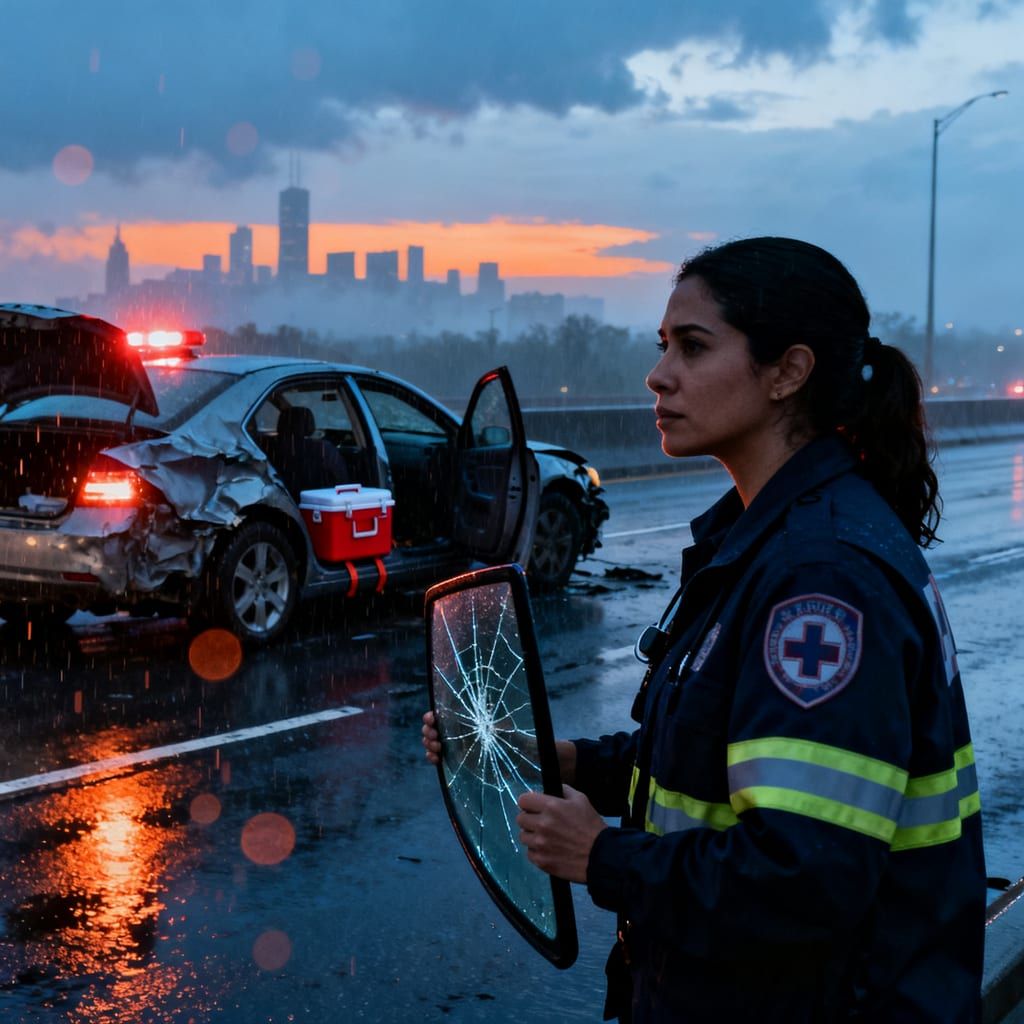
Before sunrise, the city wore its softer face. Sodium streetlights floated on puddles; an orange line was beginning to whisper at the lake. Lina Ortiz leaned against the ambulance bumper and breathed steam into the dark, tasting yesterday's coffee gone stale.
Her partner, Malik, kicked at a pebble, the sound small in the empty bay. "You look like you fought the night and lost."
"I didn't even make it to the bell," Lina said, and tried to smile.
The ache rode shotgun anyway-quiet as a held breath, old as the last minutes in a hospital room that smelled of bleach and lavender lotion. She never scheduled it, never welcomed it, but it found her at odd hours, like dawn.
The radio cracked and changed the shape of the morning.
They threaded the ambulance through a clot of brake lights on the Dan Ryan, rain slicing in lines. The sky flickered-not lightning, just the reflection of hazard blinkers bruising low clouds. Up ahead, twisted metal slouched into the median and stopped trying to look like cars.
"Three vehicles," Malik said, already thumbing his gloves. "Sedan's the worst."
"Got it," Lina answered, though no one had given orders. She moved before the thoughts arrived-bag open, shears biting fabric, the world shrinking to the rectangle of a broken windshield and the copper smell that lives under rain.
The man in the sedan stared through her, breath brought low by pain. The dashboard had folded into his thighs; a hard-sided cooler had slammed forward and come to rest under the passenger footwell, buckled like a life jacket.
"Sir, I'm Lina," she said, voice finding its evenness. "Stay with me. Breathe with me. In. Out. That's it."
A bystander hovered, eye whites bright. "Do you need-should I-"
"You," Lina said, pointing. "Hold this." She placed the bystander's trembling hands where they became useful-steadying a c-spine like a fragile vase on a moving shelf. She slid an oxygen mask over the man's mouth, adjusted the flow, and felt the rush of cold air against her wrist.
Rain needled through the empty windshield frame. Lina pulled the jangled glass from its gasket and shouldered it up like a small door against the weather, her jacket a hinge. "Malik!" she called. "Tourniquet." The belt on the passenger seat turned out to be stronger than it looked-tightened with the steady ratchet of her hands until the bleeding reddened then relented.
The man's eyelids fluttered. There was a rhythm in his neck if she angled her fingers just right. The golden hour isn't bright-she'd learned that years ago-it's a narrow hallway you run down with your breath in your mouth, turning corners by touch.
"Talk to me," she said, leaning in so her words could find him. "Name?"
He coughed, teeth clicking. "D-Daniel."
"Okay, Daniel. My job is to be stubborn. Yours is to breathe. We're going to argue about it, and I'm going to win."
He almost smiled, then winced. The cooler's buckle bit into her knee. A sticker on the lid, half-fogged with rain, showed a red heart with wings and the words TIME SENSITIVE in block print. She noted it and filed it away, the way you clock a blinking light in your periphery and promise to return.
With Malik at her shoulder, the backboard slid under like a magic trick. The bystander, unexpectedly precise now, became a second set of hands. Fire pried metal from metal. A paramedic's world teaches you levers more than miracles-how a seatbelt can pinch a river closed, how a windshield can keep the sky from drowning you.
They extricated on three. The sedan released the man with a groan, and the rain felt suddenly louder. Lina counted the beats she could claim: pulse, oxygen, pressure-fragile but present. She watched the man's ribs move up and down twice more before they shut the doors and the world turned to siren and steel.
At County, the doors breathed open. Hands she knew and hands she didn't pulled the stretcher forward; Lina's report fell into the current and carried downstream into a trauma bay where light was too bright to be morning.
"The cooler," she said, turning. A nurse with a clipboard and a bun tight as a fist reached past her, unhooked the buckle, and whisked it away without a word, leaving rainwater in a trail behind.
And then-paperwork. The tide went out. The monitors sang to themselves. She wrote the facts, not the feelings, because there wasn't a box for those.
Malik slid a protein bar across the counter. "You did good," he said, mean it sounding like he meant it.
"I did my job," she said, because sometimes the difference comforted her, and sometimes it didn't.
The man disappeared into surgery. The morning went back to being ten calls in different flavors of hurt. The golden light that had been leaking at the horizon was swallowed by fluorescents and later, by rain again. She washed blood off her forearms and the water ran warm, the pink going ghost and then gone.
Weeks spilled. Calls stacked like plates in a diner sink: a diabetic crash, a fistfight with a fence post, a grandmother who forgot her pills and her address.
Between calls, Lina found herself reaching for the locker's familiar clatter, the metal giving back the echo of her key. She'd open and close it just to hear the hinge. She wasn't sure when the work had begun to feel like tide on rock-constant, sanding. Erosion or polish-she couldn't tell.
At home, her mother's sweater sat at the back of a chair where no one else would look. On Sundays, she put it over her knees and watched the Cubs with the sound low. When it got very quiet, she could hear the soft hiss of bi-pap in memory, the measured tick of the pump, her mother's fingers tracing circles on her palm even when it hurt.
Malik told a joke on a Tuesday and she laughed in the right places. She drove the rig and let the city roll past like a film she'd already seen: the same storefronts, the same man with a red scarf on 18th, the same pigeons lifting like a single thought.
The letter arrived on a Wednesday, late enough in the morning that no one expected mail. It was addressed in blocky print, the kind that still leans on every line for balance: To the EMTs who helped the man on the Dan Ryan.
"Fan mail," Malik said, raising his eyebrows, more joke than prophecy.
Inside: a drawing on printer paper, edges fuzzed by a child's persistence with scissors. Crayon had tried hard to be precise-the heart was red and winged and a little lopsided, the yellow rays around it thick and hopeful. A dinosaur lurked in the corner-green, blunt-toothed, smiling.
Below the drawing, on a separate sheet, a note in hurried cursive, the pen catching on consonants.
You don't know me. My name is Sara, and my son is Eli. He's five. He loves dinosaurs and blueberry pancakes and the way snow sounds under boots. We were at the hospital that morning waiting for a call we were scared wouldn't come. The man you brought in was carrying Eli's new heart. They told us it got there with minutes to spare. Eli came home yesterday. He drew this. He wanted me to tell you thank you.
Lina felt the bench under her go a little soft. The station radio muttered somewhere, a coffee machine gurgled, someone sneezed in the bay. The human world continued with its noises; her ribcage did an old familiar stretch.
She hadn't thought about the cooler except as weight and an obstacle. Time sensitive, she'd read without reading, because the main emergency had been living and breathing and looking at her through rain. A heart, she realized, had been riding shotgun inside duty's anonymous box. In the arithmetic of minutes, hers had bought some for a stranger, and the stranger's minutes had become a child's years.
Malik let out a slow whistle. "Damn," he said. "That'll mess you up-in a good way."
Lina touched the crayon lines, careful not to smudge. The wings were wide, larger than the heart by half, as if the drawing knew the lift would have to be big.
That evening, her locker door opened with the same tired sigh. She taped the drawing inside-wings facing outward. The paper made the metal look friendlier. She closed the door and opened it again, just to see the heart transform the gray.
She sat for a while with the hum of the vending machine, the click of someone's boot on tile, the shadow of a mop handle leaning like a companion in the doorway. No revelation arrived with trumpets. The knowledge came on cat feet-the way a quiet hope nudges your heel until you notice it's been following you for blocks.
Her mother had always said, when Lina apologized for not doing more in those last days, "You were there. That's the more." Back then it had sounded like comfort shaped to fit absence. Now, with a paper heart inside metal and a child's green dinosaur watching, the sentence moved.
The golden hour wasn't only the slice between disaster and what's next. It was a hinge you couldn't always see-connecting the life in front of you to another life around a corner you wouldn't turn. It meant that sometimes the win didn't look back at you with the same eyes. It might be a giggle in a kitchen miles away, or a small boy crunching snow and saying, "Listen, Mom," to nobody in particular.
When dawn came a day later, the city lifted its lids and returned to its working weather. The lake shrugged, gray on gray. Lina stood by the bumper and drank coffee that didn't taste like regret. Malik joined her, set his cup down, and bumped her shoulder with his like punctuation.
"You ready?" he asked.
She looked at the street, the slick line of tracks where the first bus had gone, the distant flicker of a light turning green. I'm ready enough, she thought. Enough to cross another narrow hallway, to run on a hinge she couldn't see.
The radio cleared its throat. They climbed in.
As she reached for the ignition, her locker's paper heart flashed in memory-the wings too large, the color off the line. She smiled, small and real, and the ache that rode with her shifted its weight, making room.
They pulled out into siren-lit morning. The sound carved a path through traffic, through rain that was beginning again. Lina's hands found the wheel, practiced and sure. In front of them stretched the day's thin bridges-the ones you build in minutes and never walk across-golden, whether the sun showed up or not.
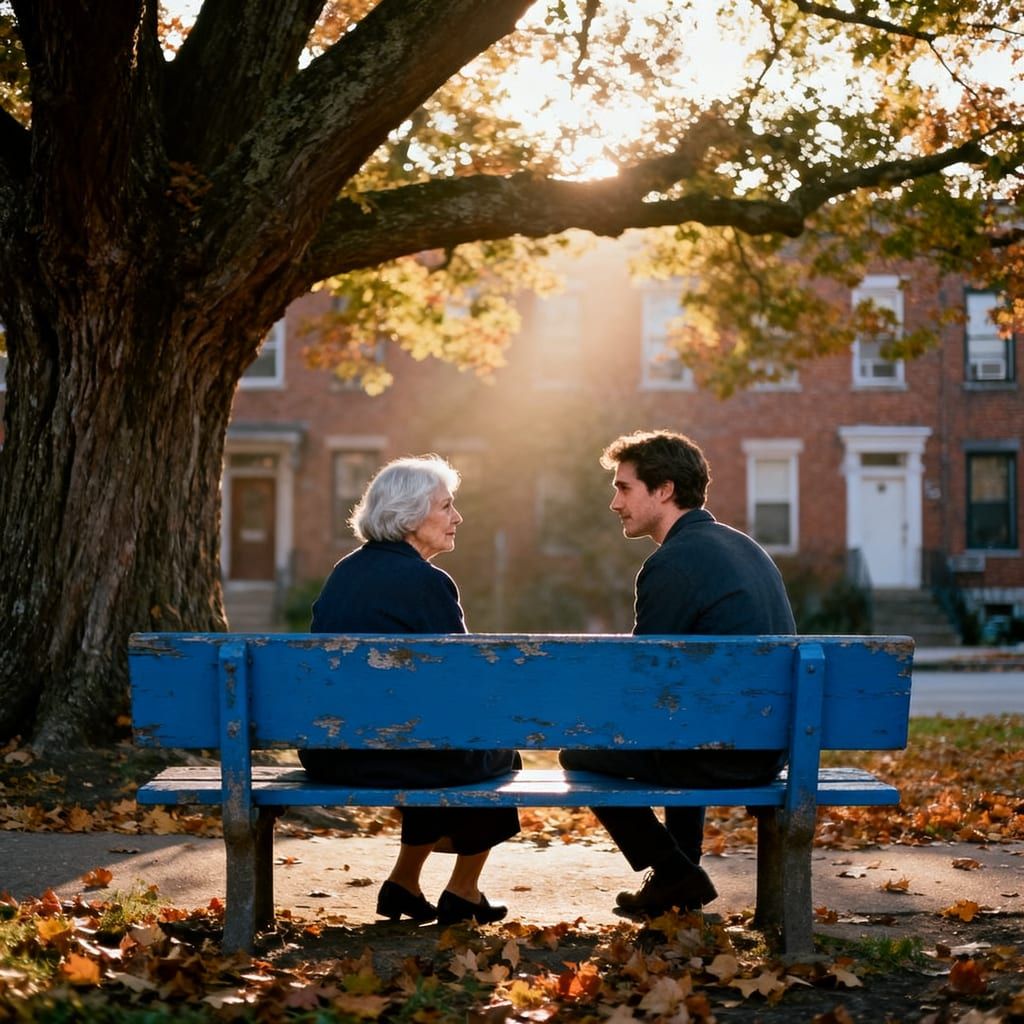
A blue bench, a bell, and a stranger who cared enough to finish a sentence
Read more →
Story audiobooks for children of all ages — a new one every day on Smarter Way Stories.