Two Houses and One Quiet Heart
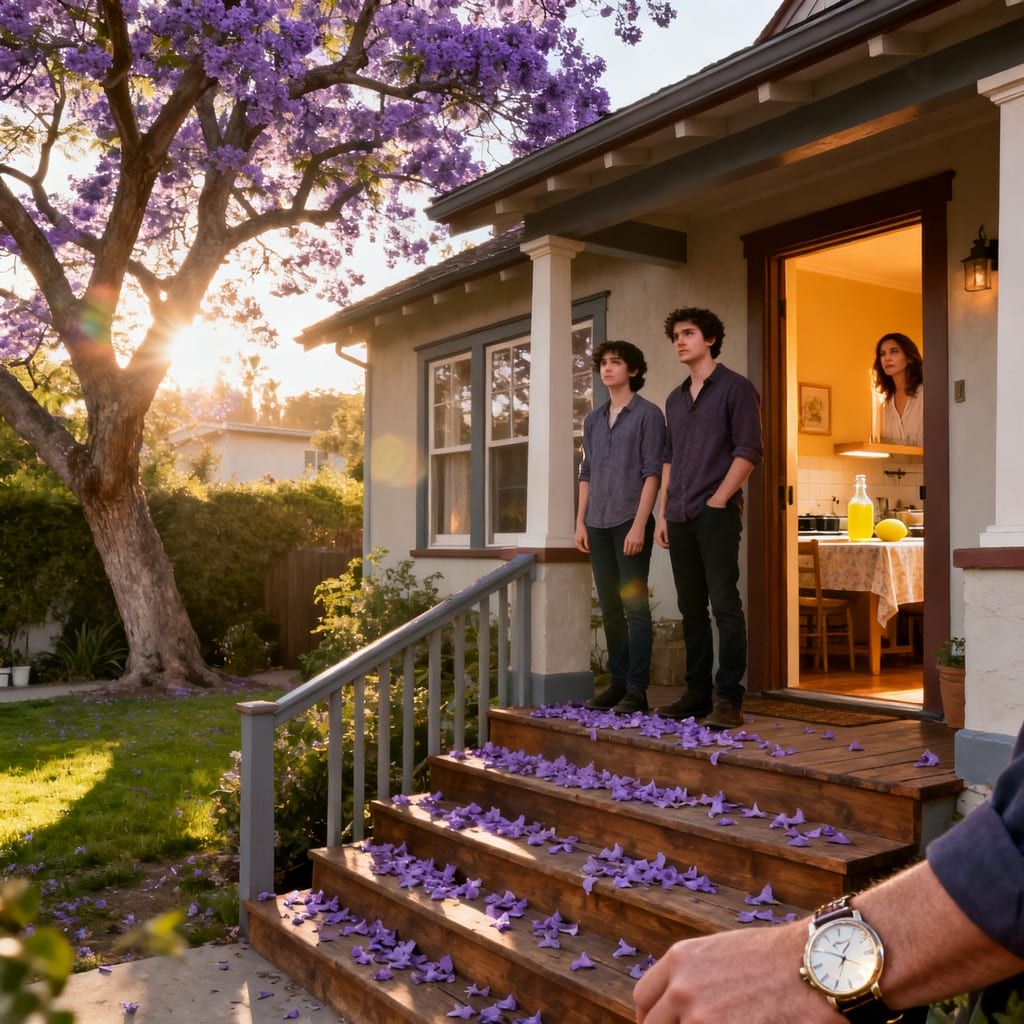
A daughter learns to read between the lines of a life split in two
Read more →
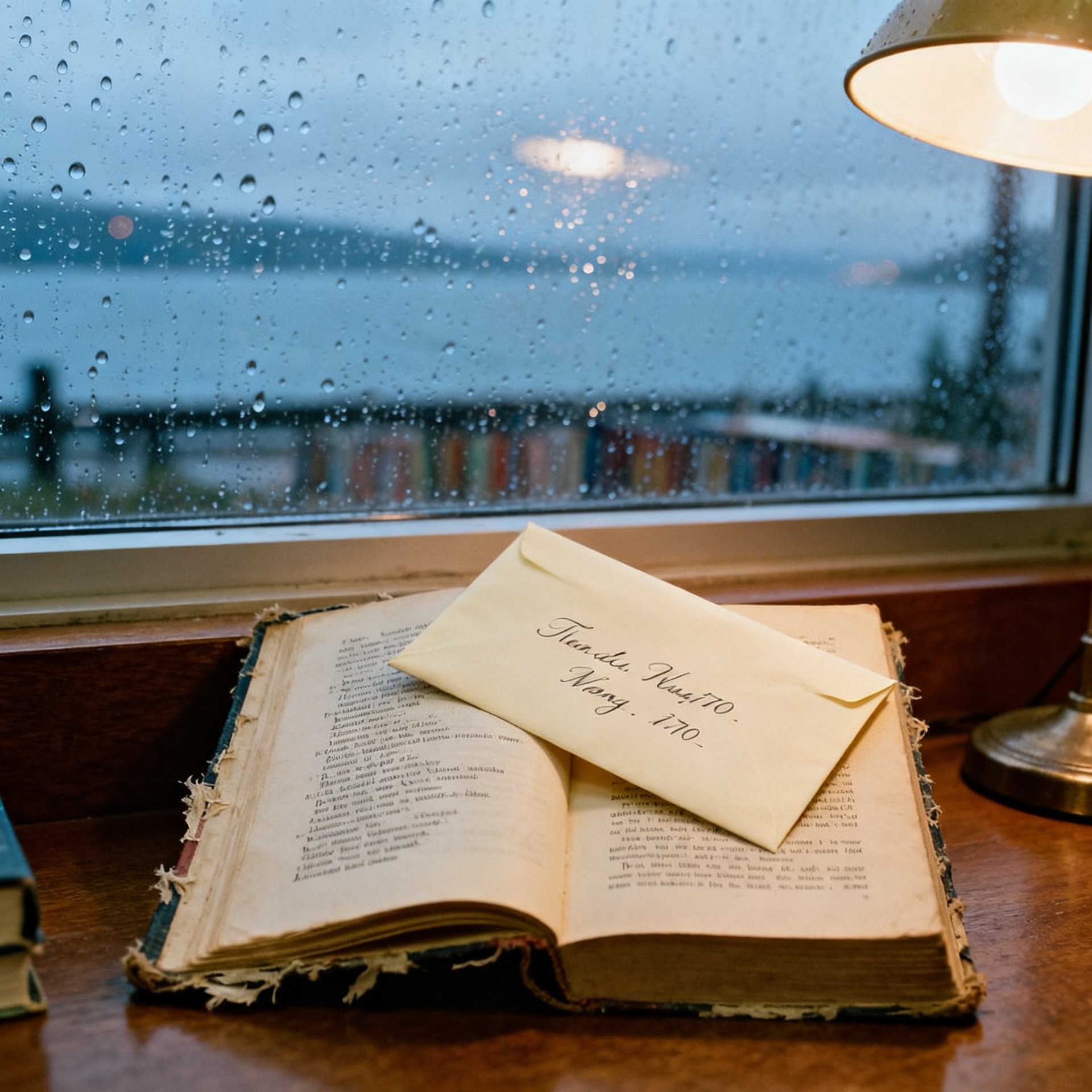
The spine gives with a soft crack, and something pale slips free, bowing to the desk like a bird in flight before it lands. A thin, cream envelope, its edges feathered with time, its face addressed in looping script: R. Park, 1974. No stamp. No return address. Just a seal the color of tea.
Maya stares, the hum of the library flickering behind her like distant rain. Story time ended twenty minutes ago. The children's mats are rolled, still perfumed with cracker crumbs and hand sanitizer. Outside, Seattle is practicing what it preaches-gray sky, salt air from the Sound threading in through the cracked window. She touches the envelope with two fingers, as if it might startle and take off.
She knows the rule. Catalog first, investigate provenance later. But this book-this battered anthology of love poems-has lived on her shelves since college, bought for two dollars at an estate sale on a rainy afternoon she barely remembers, a guilty indulgence tucked beneath textbooks. She has carried it from dorm to apartment to the small house she now rents above a Vietnamese bakery. It has always felt heavier than its pages.
Against her own rule-and the gentler one she carries about other people's secrets-she slides a fingernail under the seal.
The paper yields with a sigh. Inside, a single page. The handwriting is neat, uncertain as if written on a moving bus.
R.,
I'm leaving the city tomorrow. I'm afraid. I have been afraid for a long time. But last night-watching the ferries cut the dark, the wind taking the rain sideways-I thought of what it would be like to be braver. I thought of telling you the truth.
I love you. I have loved you across quiet rooms and loud ones, at tables with other people's laughter filling the spaces I wanted to fill. I love the way you listen, and the way you don't make promises you can't keep. Maybe I am writing because paper can hold what my mouth drops.
If there is one more chance-I will take it. I will meet you. Anywhere. I will be the person I wish I had been.
E.
Maya reads it twice, then again for the sound of it. There's rain in the words, the silver taste of the waterfront, a surrender that isn't tragic but brave. Her chest feels busy with wings.
"E.," she says under her breath, testing the initial like a seashell against her teeth.
She sets the letter down and looks at the book itself. The familiar chipped cover. The title in a font someone once thought was a good idea. Inside the flyleaf, a stamp-Fremont Used & Rare, a phone number missing its area code. In pencil below it: Park. And, faintly, a street address she could almost walk to on her lunch break. Something else falls from the back when she tips it-an old ferry schedule, sepia and soft as linen, with mid-'70s times printed in a grid like the bones of a day.
The librarians who taught her would say, We mind our own narratives. But the wordless thrum beneath her sternum has its own arguments. Curiosity is a kind of care. So is finishing what someone started.
That afternoon, between recommending dinosaur books to a boy in rain boots and explaining to a teenage couple that no, they can't stream horror movies at full volume in the Quiet Nook, Maya posts a photo-just the corner of the envelope, no names-to a neighborhood forum. Found in an old book. Does anyone know an R. Park from the '70s?
Replies eddy around it. Jokes about romance novels. A woman whose aunt dated a Park in high school. A link to a community archive. The historical society calls her back with the swift relief of people who love puzzles.
"We've got a Park family in the records," the volunteer says, voice brisk and warm. "Raymond. Born 1946. Worked at the ferry docks back then. You want a number for a retired deckhand who might know more?"
She does. Thirty minutes later, she's on the phone with a man whose voice is a buoy bell.
"Raymond?" he says, rolling the name as if testing for rot. "Yeah. Ray Park. Lives out by the water now. House with peeling blue trim, big hydrangeas that never give up. Lost his wife a few years back. Sweet couple. He's eighty-ish-no, wait, he'd tell you seventy-eight and give you the look."
Maya writes the address on a sticky note. The day outside is already half gray. She pulls her coat from the back of her chair and slides the letter into the book, the book into her bag.
As she locks up, she hears herself think, like a voice arriving from a room she left long ago: Call her. She blinks. The thought leaves as lightly as it came, like a gull turning out over the water.
The house finds her before the numbers do. Hydrangeas the size of small planets, a trim the color of summer sky someone meant to touch up and never did. The Sound is a long pewter plate beyond the low fence, ferries chalking their way across.
Raymond answers on the second knock. He is narrow and tall, with a sweater pushed at the elbows and hair that must have been a storm in his prime. His eyes, though-sharp, blue as old glass bottle.
"Can I help you?" he asks, not unkind.
"My name is Maya," she says. She holds up the book like a passport. "I work at the Maple Street Library. I think I have something that belongs to you."
His gaze goes to the spine, to the cover, to the paper peeking from the top. She sees it happen-recognition, then a pause that feels like the air just before rain. He steps back, gestures with his chin.
"Come in," he says. "Better to sit."
The living room is clean in the way of people who live alone and mind the small things. A photograph on the mantel shows a woman with dark hair, her head thrown back. The frame is silver and smudged perfectly where a thumb would go.
Maya places the book on the coffee table. She meets his eyes. "I found a letter inside. Addressed to R. Park. 1974. It was sealed."
He exhales, a sound that orbits grief and lands on another shore. "May I?"
She nods. He cradles the envelope in both hands, as if warming it. "I know this paper," he says softly, half to himself. "She used to buy the good kind. Said it made ink behave."
They sit while the house listens. Outside, a gull calls-a sound like laughter that never arrived. Raymond slides the letter free. His hands, for a moment, tremble; then, as he begins, they steady.
He reads aloud. His voice is low and careful, each word rinsed and held up to the light. When he reaches the line about the ferries, his eyes rise to the window, and it is 1974 there for a heartbeat: a man on a dock, a woman with a folded umbrella, the smell of diesel and salt and espresso from a new place two streets over.
"E.," he says when he finishes, looking down at the signature. "Eleanor." He looks up. "My wife."
Maya's fingers, clasped in her lap, have gone cold. "I didn't mean to-"
"No." He lifts a hand, palm open. "You did right. She-" He laughs, short and gentle. "She would have said fate and meant it sideways."
He leans back. The room seems to move a fraction, like a ferry hitting the wake of another. "We met," he says, "a few weeks after this letter's date. At a bus stop, of all dignified places. It was raining like it meant to erase the street. We laughed because there is nothing else to do when water makes fools of you. I lent her this exact book because the bus didn't come and conversation did. She never mentioned she'd written me."
His thumb finds the smudge on the silver frame without his eyes leaving the letter. "I remember the week we started to see each other for real. She was-light. Not giddy. More like she'd put something heavy down. I always wondered why."
He taps the page. "I think I know now."
Maya imagines a young woman in a wool coat at a table by a window, perfect paper, imperfect courage. She sees her write the words and-crucially-decide to mean them whether or not the letter ever finds its way. She sees her tuck it into a book handed across a bus stop, life hurrying them forward.
Raymond looks at the envelope again, tenderness in the way he doesn't try to smooth its frayed edge. "We were married nearly forty years," he says. "She died in spring. The hydrangeas were lying about what they could promise."
Maya swallows. "I-this book," she says, "I bought it at an estate sale when I was in college. It was raining that day too. I didn't know whose estate."
He smiles with one side of his mouth, the way of a man who has practiced finding the soft humor in hard news. "Ours," he says. "I can see it. Her books went everywhere. She would have liked that." His eyes crease. "And now it finds its way back. You see why I say she would have said fate."
He places the letter on the table and covers it with his palm. The quiet that follows is full of more than silence; it is full of a room correcting a story it has been telling itself.
"Would you-" Maya begins. "Would you like to keep it?"
He looks at her, then at the window, then back. "Yes," he says simply. "But I think you should read it once more. Some things like being heard twice."
So she does. The words move differently this time, as if freed from their long waiting. When she finishes, he nods, and the nod is not to her but to someone who is only elsewhere now.
He makes tea. They drink it without hurrying. He tells her about the first apartment-how the sink leaned like a tired man-and the summer they bought a canoe and never learned how to steer it without arguing, and how loving someone is mostly the practice of carrying the same joke across different years.
When she stands to leave, he walks her to the door. The hydrangeas have turned the color of old letters. The air tastes like the inside of a shell.
"Thank you for bringing her back," he says. "Or forward. Maybe both."
On the sidewalk, Maya checks the time and is surprised to find it has moved. She touches her bag where the book no longer is and feels its absence like a pocket without a key.
On the bus, rain finds the windows in soft commas. The city smells of wet wool and coffee and the particular electricity of early evening. Her phone sits in her palm the weight of a small choice.
The thought returns, no longer a gull but a hand at her back. Call her.
She does not call. She begins to type.
Hi, Li. It's me. I'm sorry it's been so long. I've wanted to say this for a while, and I'm afraid I'll mess it up, but I don't want to be afraid anymore. Can we meet for tea? I'd like to try again.
Her thumb hesitates. The bus slows at a light. Across the aisle, a child presses a sticker to the glass, the adhesive making a bright sigh. Maya feels her own exhale find the same shape.
She presses Send.
In a small blue house by the water, a man smooths a letter open and lays it beside a photograph, already part of the arrangement of his days. In a moving bus, a message lifts into the dark and goes looking for a sister who lives only a few stops-and years-away.
Outside, the ferries make their blunt white paths. The rain makes its old arguments with the city, and the city answers by holding. In a branch library where the air still smells faintly of crackers and glue sticks, an empty book slot waits to be filled by someone who has finished what they started.
Maya watches her screen, not demanding an answer. The courage is not in the reply but in the asking. The sound of the tires on wet road is steady, a heartbeat dressed as weather.
She leans her head against the window. The glass is cool. The letter she did not write has found its home. The one she did leaves a small, luminous trail through the rain.
Some messages take their time. Some arrive exactly when they should.
A daughter learns to read between the lines of a life split in two
Read more →
A fog-draped night, two souls found, and the quiet shape of a life
Read more →
Story audiobooks for children of all ages — a new one every day on Smarter Way Stories.