Two Houses and One Quiet Heart
A daughter learns to read between the lines of a life split in two
Read more →
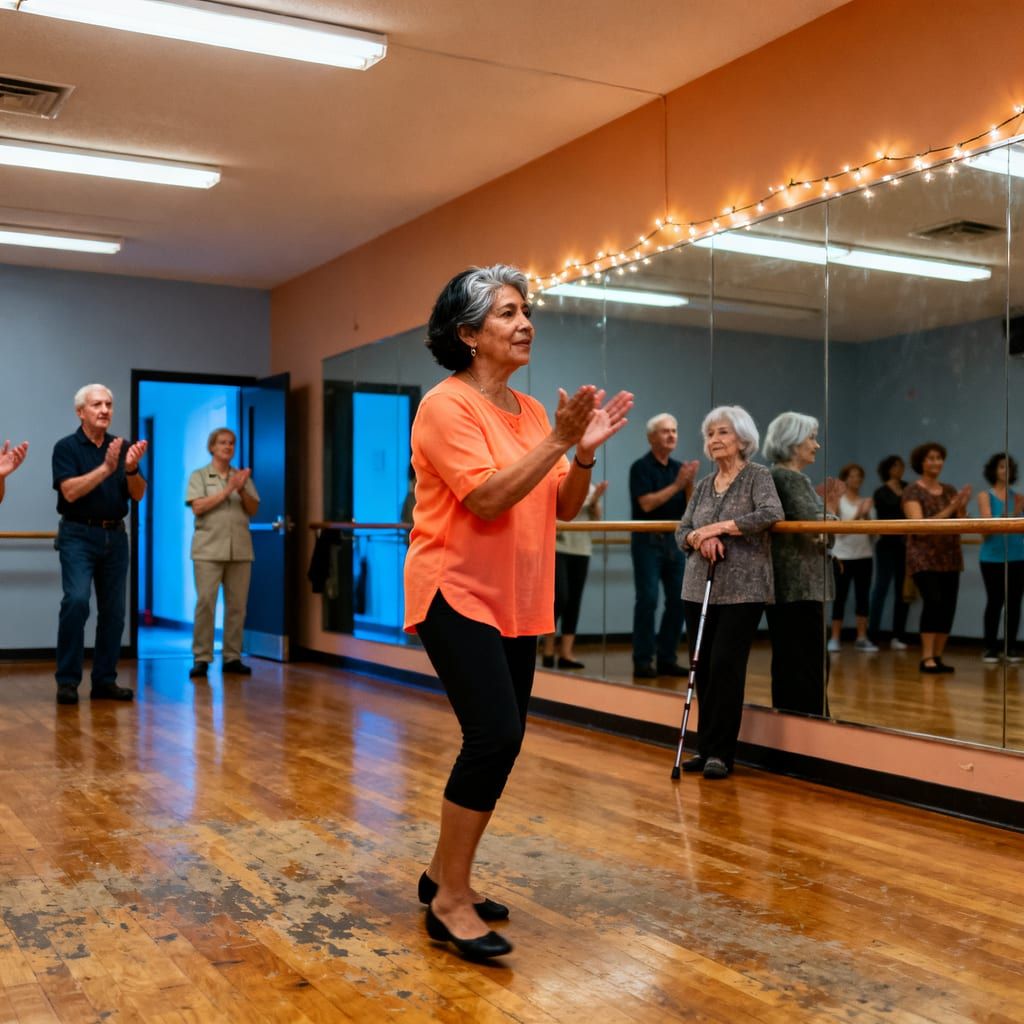
The mirrors did not blink. They made more of her-more collarbone, more elbows, more uncertainty. The community center's fluorescent lights flattened everything, even the hopeful flyers curling on the bulletin board: FAMILY SALSA NIGHT, SENIORS SWIM FREE, BEGINNER DANCE-ALL WELCOME.
Nora Alvarez stood in a line of strangers and adjusted her wristband pass like it was armor. Her sneakers squeaked when she shifted. She caught her reflection counting-lips moving. You're forty years late, a voice inside her teased. She pressed it down. The doctor had said, Movement might change your back. Your mood might follow. As if the body were a dog and the mind some obedient leash.
"Okay, friends," the instructor said. She wore a T-shirt the color of a good mango and a smile that wasn't a dare. "I'm Joy. Shake your shoulders. Yes, even you in the Cubs hoodie. We're going to mess up together. That's the fun."
Joy clapped a crisp four. Nora tried to catch it and fumbled, counting out loud, heel to toe, toe to heel. On the third count, her lace gave up, and she stepped on it-then stepped on it again, a stubborn dance all its own. Laughter bubbled somewhere near the back wall. Shame rose, a heat old as chalk dust.
Middle school smelled like sweat and citrus cleaner. Some bodies are made for sitting still, Ms. Kline had said once, barely looking at her. The words had settled like cement at Nora's ankles.
Now, the beat skittered across the floor like a small animal. She was always half a second late. By the end of class her cheeks hurt from clenching a smile that wasn't ready.
On the bus home, the city blurred-blue night and neon dragging their sleeves across the window. She turned the wristband around and around, letting the plastic bite into her skin. She didn't throw it away.
Her apartment smelled faintly of cumin and dust. No music. No audience. Just the thrum of the refrigerator and the little hum the sink made when it settled in the pipes. She toed off her shoes and stood with bare feet cool on linoleum.
Left, right, right, left.
She clapped the counter-soft at first, then a little sharper. Her father had slapped rhythms into Sunday mornings, batter whisked in one hand, radio fizz shivering the eggs. He'd never said dance; he'd just made a sound for her to step into.
Left, right, right, left.
Something loosened. Not much-a stubborn screw turning half a fraction. When she tried to smile this time, it came without her jaw locking against it.
She went back.
Each week, Joy began with breath. "In through your nose. Out through your mouth. Let your shoulders admit they're not staying."
Nora learned to let her hips eavesdrop on the room. To let her jaw soften like butter left on the counter. She found the beat hidden in ordinary things: the air conditioner's throat clearing, the squeak of someone's shoe, the collective inhale that came before a turn.
Once, she lost her balance and pinwheeled into a retired custodian who had been leaning against the doorway, hands folded over the slope of his belly. He caught her by the elbow with practiced gentleness.
"Careful," he said. His accent rubbed the consonants smooth.
"I keep leaning where there's no floor," she joked, breathless.
"Pivot on the ball," he said, demonstrating without thinking, his body stepping into an old memory. "Not heel. Watch."
They practiced in the hallway next to a bulletin board full of crooked staples. He showed her how to keep her eyes level, how to let the world rotate and still land where she meant to be. His name was Pavel. He'd danced folk steps long before arriving in Chicago, steps that involved skirts flashing and boots that meant business.
Joy added a practice circle on Tuesdays. "This is the part," she said, standing in the middle, "where everyone tries a thing. You stumble, we cheer."
The first time, Nora's feet turned traitor. She lifted the wrong one, then the wrong one again. Her face flamed. Then Pavel clapped once, loudly. Joy stomped a rhythm back at him. The circle closed around her with sound. Nora laughed so hard she had to bend at the waist.
It dawned on her like a quiet weather shift: bravery wasn't the absence of shaking. It was shaking and moving anyway.
They taped white lines on the studio floor to mark places. The spring showcase lived in schedules and to-do lists now: hair away from face; black bottoms, bright top; water bottle; Advil.
Nora's name, in much-too-large letters, appeared on the beginner group list. When she signed it, her hand trembled so fiercely the last z of Alvarez wavered like a flag.
At the final rehearsal, the door in the back swung open. A figure stepped in late, silver hair swept into a brave attempt at a bun. A cane leaned against the barre like a reluctant partner. The woman's eyes scanned the room and found the floor over and over-until they found Nora and paused, puzzled.
"Pick up from the sidestep," Joy called. "Don't think, just do."
The new woman tried. Her foot dragged, a beat behind. Her face flushed, panic bright and blotchy.
Something in Nora lifted its head.
After class, in the hallway where scuffed tiles recorded every impatient turn, the woman stood near the drinking fountain, fingers threading and unthreading themselves. Up close: the slope of shoulders pulled forward by years, a scar like a thin note along her right knuckle. She looked at Nora again and her eyes widened with recognition that moved like weather across her features.
"Nora Alvarez?" she asked. The voice took Nora back to a gym that had echoed with kicks and whistles.
"Ms. Kline?" The name tasted like chalk.
Ms. Kline's mouth worked around a memory. Then, unexpectedly, it folded on itself. "I've owed you an apology for-" She swallowed. "-for longer than it should've taken. I thought toughness was teaching. I was twenty-four and full of muscle and instructions, and no room for somebody else's fear. I said something I shouldn't. I've been trying to unteach myself ever since."
The fluorescent light buzzed like a nervous insect. Pavel passed with a mop over his shoulder and tipped it in greeting.
Nora waited for anger to present itself, costumed and ready. Instead, there was a strange weightlessness-like a crust someone had lifted from the top of a pie you hadn't known you were wearing. She exhaled and the breath went farther than usual.
"Some of us were made for sitting, you said," Nora replied, the words thin now, the way paper thins after sun. "I believed you."
Ms. Kline winced. "I'm sorry." Her voice cracked open at the seam. "I'm so sorry. I'm here to learn."
Nora nodded. Relief arrived not as a parade, but as a chair finally pulled out from under a burden. "Then we'll both be beginners."
Ms. Kline's mouth made a wet, grateful shape. "Deal."
The gym had been transformed with string lights that made everything gentler, like someone had put a soft filter over the past. Folding chairs creaked. Programs fluttered like small startled birds. The sound of toddlers negotiating the concept of sitting rose and fell, melodious and doomed.
Backstage, Joy squeezed their shoulders one by one. "You don't owe anyone clean. You owe them joy."
Nora tugged her bright top into place and stepped out into a floor that smelled faintly of orange cleaner-her childhood's counterfeit devotion. Pavel stood near the wing, hands already ready to clap.
The music began-counted them in-two eight-counts-and died. A collective groan wobbled into a titter. Somebody at the sound table banged a knob that had already given up.
Silence-or rather, the hiss of people trying not to make noise.
Nora felt the old wet sweep of panic rising. Then her body did something she didn't ask and that was the miracle of it: she stepped forward and brought her hands together.
Once. Then again. Then again.
Kitchen-counter loud. Sunday-morning confident. Her father's rhythm, the one that had always made a room out of nothing.
Pavel answered, palms meeting in a call-and-response that sounded like boots on wood. Joy's feet took up the beat, the sole of her shoe a percussionist. The audience-bless them-heard the invitation and gathered around it. Claps filled the gym like rain finds a roof.
The line of beginners-of worriers, of tremblers, of re-starters-found the seam of sound and slipped into it. Sidestep, pivot, turn. Laughter bloomed where counts had been. Nobody watched the sound table anymore.
Nora did not count. She listened. Then she answered.
Ms. Kline, on the wing with the cane hooked over her arm like an old friend, kept time with a soft heel tap. When Nora turned, eyes lifting, she saw the older woman watching not with authority, but with hope. It didn't sting. It steadied her.
They finished to a room warm with applause that had started as rescue and ended as celebration. Strangers hugged them with damp enthusiasm, deodorant and relief sharp in the air. Someone in a denim jacket said to Nora, "When the music died, I swear I felt something start."
Nora laughed until she hiccuped.
On the bus home, her sneakers didn't squeak. They hummed the way bus wheels hum when they thread a long, forgiving curve. Out the window, spring was deciding whether to be brave. A boy practiced jump shots against the brick wall of a church with more windows than God needed.
The class became a ritual, yes-Tuesdays and sometimes Thursdays, water bottle in the sink first to remind her not to forget it. But the freedom unspooled everywhere else: in the grocery aisle between tomatoes and paper towels, where she let her hips say yes to a trolley's crooked wheel; at crosswalks, where the red hand blinked and her weight shifted just for her; in her living room, radio low, the lamp throwing a modest circle of light she filled and refilled with movement.
Sometimes the beat was the washing machine. Sometimes it was the cat's impatient tail. Sometimes it was Ms. Kline, smiling from two spots down in the studio, shoulders not as forward, offering a small nod for courage.
When Nora stood barefoot in her kitchen at night, she clapped the counter twice-hello, I'm here-and the linoleum greeted her feet like a familiar partner who forgives the missed step because the intention is true. She didn't think of performance. She thought of space. How she had more of it now, not square footage, but the kind that gathers inside the ribs.
Every so often the mirrors at the community center caught her off guard, multiplied her again, announced her elbows. She still flinched. Then she remembered: shake, soften, listen. She let the room tell her how to move. She let her body answer.
In one of the plastic chairs by the back door, Pavel fell asleep between classes, hands folded, dreams probably full of stomps and songs from elsewhere. Joy taped a new flyer beside him: SUMMER SOCIAL-ALL WELCOME. The tape buckled, then settled.
Nora took the bus home, the city streaking by, wristband snug. She had not become someone else. She had become somebody willing-someone who, when the music cut without warning, knew where to find the rhythm anyway.
In her small kitchen she clapped once, then again. A door in her back clicked, not pain, but permission. Left, right, right, left. Her feet, finally, answered.
A daughter learns to read between the lines of a life split in two
Read more →
A fog-draped night, two souls found, and the quiet shape of a life
Read more →
Story audiobooks for children of all ages — a new one every day on Smarter Way Stories.