Circles We Draw in Winter
A Tuesday night for unsent goodbyes
Read more →

By the time dusk turned the apartment window into a dark mirror, Lina had stacked the last of the mugs in a grocery box. The one with the hairline crack-her father's favorite-she wrapped in the sleeve of an old flannel and set it on top as if that made it less breakable.
The place still smelled faintly of bleach and the lemon oil he used on Saturdays. Outside, gulls argued over a wrapper in the alley, thin cries cutting the salt-heavy air. When she stepped on the soft spot near the bed, the board sighed like an old dock taking weight.
She'd grown up with that sound. Nights he wasn't home, she waited for it: the creak and the release, his shoes lining up like quiet punctuation. Now she crouched and pried at the seam with a butter knife from the drawer, the metal slipping, the board stubborn as a jaw.
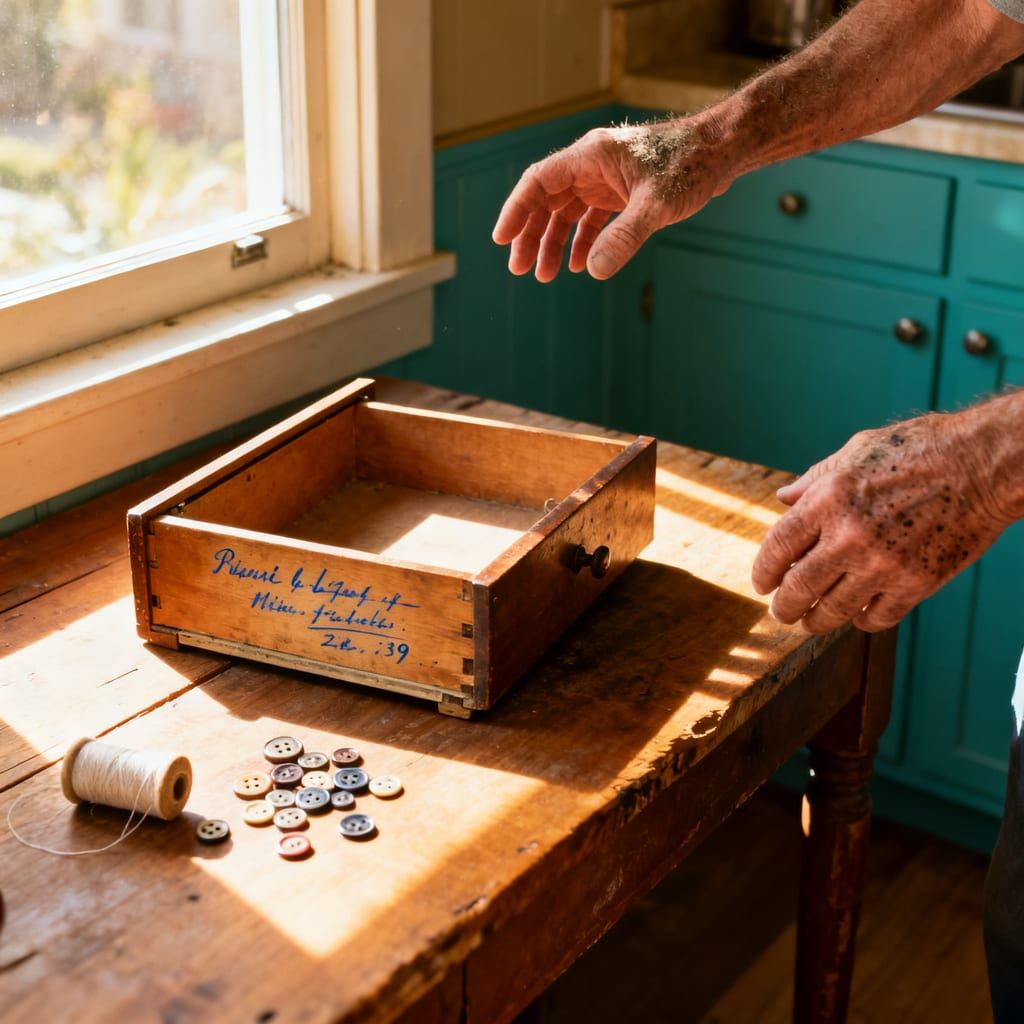
It gave all at once, and dust feathered her face. Beneath, a weathered shoebox tied with kite string sat like a small animal in a den. "Dad?" she said out loud, and then laughed-crooked and short.
The string was stiff. It resisted, then unfurled. Onion-skin paper whispered when she lifted it, carbon smudges lining her fingertips like she'd been handling moths. There were neatly stacked letters, clippings from the town weekly she'd grown up seeing at breakfast, and a faded library card with a blue stamp rubbed almost clean. In a cramped hand across the back: North Star.
Lina sat cross-legged on the rug. The bed groaned when she leaned her shoulder against it. She unfolded a letter.
A teacher wrote about waking already tired, about chalk dust and the clink of lockers and the way her voice sounded like it belonged to someone who had given up. A barista asked if moving three thousand miles for a person who made him laugh counted as love. A widower, three lines only, said his ring left a pale circle and asked if taking it off meant he was a traitor.
The replies were typed on a refurbished Royal, the letters pressed like small footprints. They were unshowy, patient. Tides and maps, he kept returning to them-how currents carry what they must, how a compass points without judgment. What if you didn't measure by endurance but by return? he wrote to the teacher. What if rest is a kind of curriculum?
She didn't need to read the byline to know. Her father, who worked nights pushing a broom across fluorescent floors and always brought home apples no one bought-the mottled, the small-had steered strangers with a hand you could feel but not see.
Her chest pressed tight, then loosened. In the kitchen, the clock over the stove clicked each minute like a polite cough.
She found a clipping announcing the end of the column-two years ago, just after he'd stopped insisting he was fine. "Due to changes in our writer's health, North Star will be signing off," it read, as if a constellation could pack up and leave.
Under the clippings, there were drafts. Some effaced with white-out, ghosted words hovering under the corrections. Notes in pencil along the margins: too clever-simplify. Say it like a hand on a back.
Lina threaded her fingers through the kite string and sat with the weight of time. She remembered being sixteen and angry at air itself. The week she almost quit, when school smelled like damp wool and cafeteria pizza and the counselors' voices were too careful. The night her father slid a second spoon toward her and asked if she wanted more rice, as if that were the whole problem and he could solve it in two scoops.
She had written to North Star then. She hadn't told her father, or anyone. It felt like dropping a message into a cold ocean and trusting the tide to know her address.
Her hand hovered over the bottom layer, as if these papers might sting.
The newspaper's back office was a narrow room with a radiator that clicked like it was counting coins. A retired editor named Ray met her with coffee that tasted like cardboard and concern that tasted like nothing.
"We thought about outing him," Ray said, tapping the cardboard sleeve against his palm. His glasses were clean in the way of someone who'd wiped them just to keep his hands busy. "When the column ended. We wrote and rewrote that farewell. In the end, we let him keep his shade. He said the point was the north, not the star."
Ray led her to a desk pressed against the wall, under a bulletin board punctured with thumbtacks that no longer held anything. On the desk, an ancient phone with a fat digital display blinked the number 17.
"Voicemail," he said. "It's been disconnected for ages. But the messages just... sat."
He pressed play.
A woman's voice, frayed with tears, said, "North Star, I took off the ring today. I thought the house would tilt. It didn't. I planted basil and didn't cry until I smelled my hands." A man with a soft stutter left halting thanks for the nudge that made him send a resume to a job he'd convinced himself was beyond him. A teenager mumbled about tomatoes, about measuring growth by roots instead of height.
Lina listened with her palm flat on the desk. The radiator clicked, clicks stacking like beads. She understood suddenly the scale of what one quiet life could hold.
"He used to drop off envelopes late," Ray said. "There'd be salt on his jacket and this smell-Pine-Sol and winter. He'd nod, like we'd just traded shovels."
She held up the library card. "This was him?"
Ray smiled. "He thought the name made people feel less alone in the dark."
On her way out, she stood in the doorway and watched the newsroom's few remaining reporters bend over their screens. The town was a body you could learn by touch-its pulse at the pier, its complaints at the diner, its small joys in the classified section where someone had posted, Free piano, one sticky key.
Back in the apartment, dusk had rolled to night. The ocean dragged its sleeve against the rocks below. She switched on the lamp with the shade that leaned and pulled the box toward her again.
The last bundle was tied with dental floss, mint green around the edges. Her name was on the top envelope-her own round teenage hand, so certain in its loops it almost broke her heart. Lina had addressed it to the paper, attention North Star, then decorated the corner with a star she'd shaded silver.
Beside it lay a draft on thin paper scarred with white-out, each correction like a small mercy. In the margins, pencil notes: Don't fix. Witness. Say it simply. Say it like a hand on a back.
His voice in the typed reply was the one that had reached her then, as if from a far shore. It had not told her to be strong. It had not told her to stop feeling like the floor was tilting. It had said: Sometimes the map is heavier than the pack. Ask a friend to carry it a mile. Ask a teacher to hold your place. Eat something warm. Tomorrow is still made of hours-you don't have to hold all of them at once.
She traced the lines not with her finger but with the space between. He must have sat at this table, bottle of white-out uncapped, the tip gummy, the paper softening with edits. She imagined him pausing, the apartment quiet enough to hear the refrigerator hum, the floorboard answering his weight like it had hers. She pictured him looking up at the kitchen door where she used to barrel in, backpack doing its own gravity, cheeks hot with the day's embarrassments, and asking, "More rice?"
He never claimed credit. He had handed her the letter the next day, tucked into the weekly like a receipt between coupons. She had read it leaning against her locker and thought: The world is not trying to drown me. It is holding me up the way water does when you let your bones remember floating.
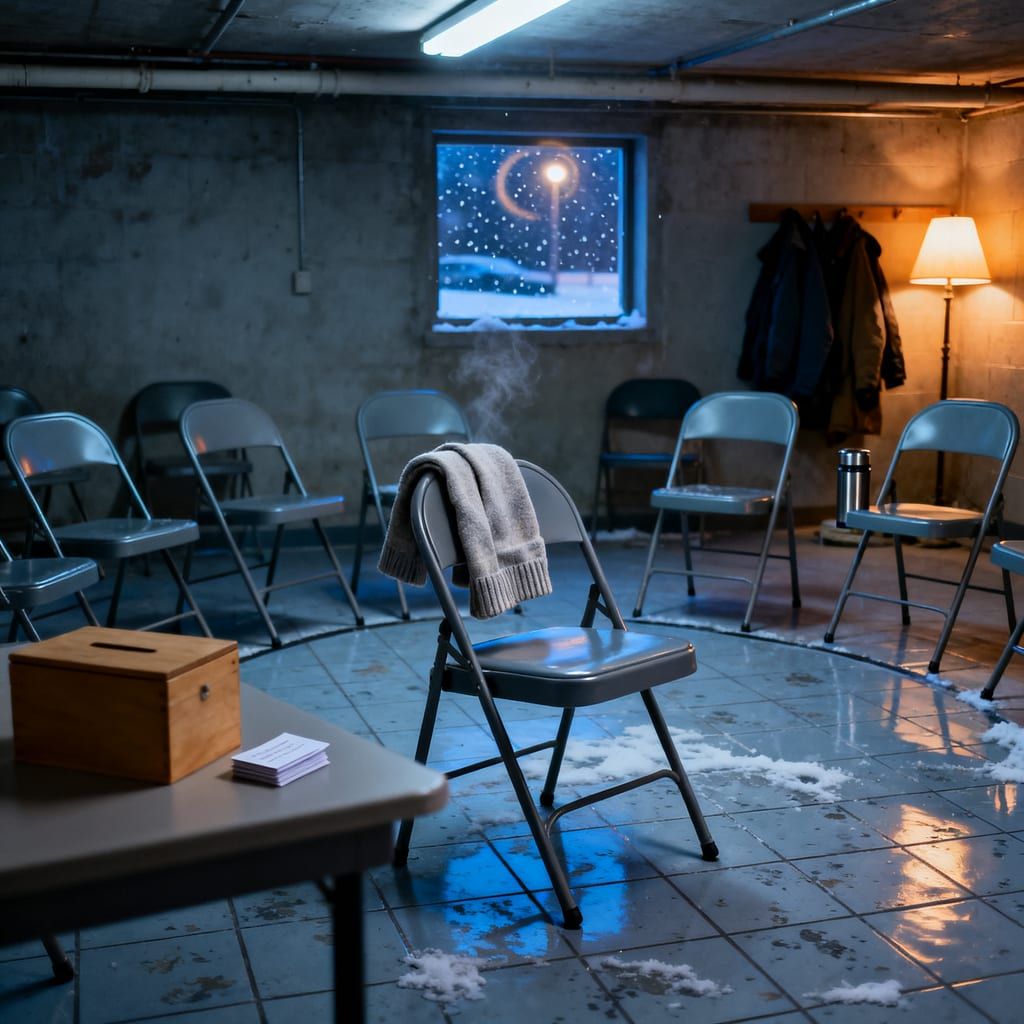
She printed a flyer on the library's stubborn copier. The headline was small. A Night for North Star. Below it: Bring a letter you kept, or a memory you didn't know you were keeping.
They came not all at once, but in twos and fours. Paper cups steamed in their hands. There were chairs that complained when they moved them, and a librarian named May who set out a plate of snickerdoodles with a pride that made Lina want to hug her.
Neighbors took turns at the mic that popped when someone breathed too close. A former teacher-hair now more white than brown-read aloud the paragraph that made her step down for a semester and then come back with a desk plant and a different way of grading. A man with a new tattoo peeking from his cuff laughed about tomatoes that finally took in bad soil because he stopped overwatering them. "Turns out giving something everything can drown it," he said, looking at his shoes.
A woman with a basil-green scent on her hands stood and pulled off her ring in front of them all. "Not a betrayal," she said. "A beginning."
Lina listened with her chin in her palm, the corner of the flyer crinkling under her thumb. She had brought the draft addressed to her sixteen-year-old self, the margins crowded with her father's soft penciled arguments with himself. When it was her turn, she stood.
"He wrote this first," she said, holding up the draft, "and then he wrote the one you might remember." Her voice, steadier than she expected, filled the library's low-ceilinged room.
She read his notes as they were, not polished, not rewritten: about the temptation to be clever when a person was bleeding, about the difference between a lighthouse and a spotlight. The final sentence had been circled twice, white-out crusted at its edge like salt. "Legacy is the map we draw by walking it with others."
Lina swallowed. The radiator exhaled. Someone in the back cleared a throat and then covered it with a laugh.
"My father was North Star," she said then, quiet as the rustle of a page. "He would have hated hearing his name attached to the shine. So-let's not extend a myth." A smile, small and true, tightened her mouth. "Let's close it with sunlight."
After, she sent one final column to the paper under his pen name, not to pretend at his voice but to invite memory's chorus. She wrote, If his words steadied you, pass that steadiness on. Buy two apples-the mottled, the small-and leave one on a neighbor's stoop. She signed it with the cardinal points and a thin line waiting for anyone who needed it.
Back at the apartment, she slid the board into place. The shoebox was empty now, its bottom bare as a rehearsed truth. She pressed her palm against the plank until it warmed.
The bed creaked when she stood. The room was ash-blue, edges softened. She washed her father's mug and left it upside down on the rack, a small tent catching the last of the day.
She wanted to tell him everything-about the librarian's cookies, about the man with the tomato tattoo, about the way people's faces looked when they recognized their own resilience spoken back to them. Instead, she listened to the clock and the ocean counting without colluding.
On her way out, she flicked off the lamp and stood a moment in the dark to let her eyes adjust. The window's rectangle was a dim compass, the alley's sodium light a patient smear. She locked the door and pressed the key back through the mail slot, the metal skimming the air like a flat stone over water.
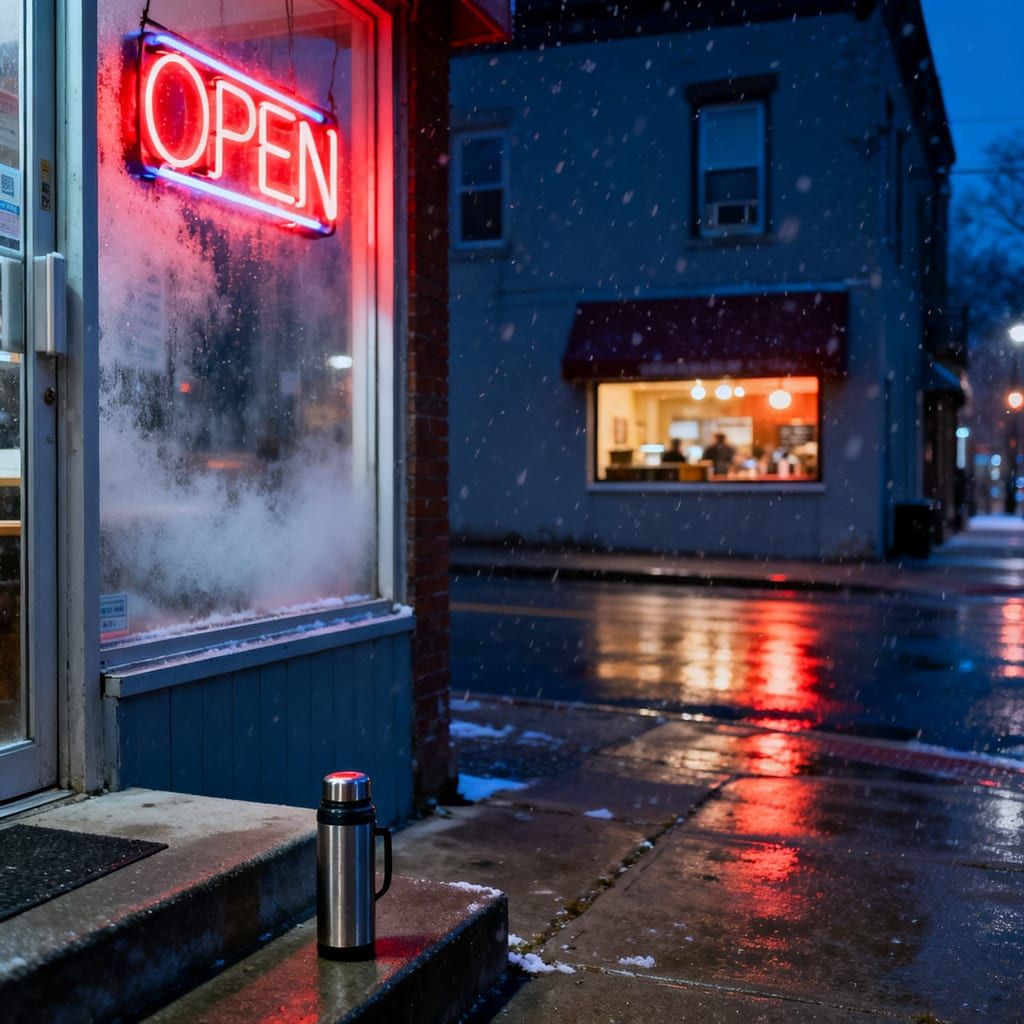
Out on the sidewalk, the town's breath met hers-warm pockets from restaurant vents, cold slivers between buildings, the easy gossip of distant waves. She walked without checking her phone, without building a list. Above her, unbothered streetlamps made small promises. Farther out, the real ones did what they've always done, indifferent and blessing, light traveling and traveling until someone, years later, finally looked up and said, Oh.
She did not need the shoebox to remind her. The floorboard would hold the secret the way a harbor holds boats-without comment, with room.
Some secrets are not about hiding. They are an invitation to notice how far light will go without asking to be named.
Story audiobooks for children of all ages — a new one every day on Smarter Way Stories.