The Counselor Who Waited
How we stand beside one another when the answer won’t fit in a sentence
Read more →
The alert blooms on her screen like a small, stubborn light: "New DNA Relative: Half-Sibling." Lina taps it, expecting a glitch, and watches the number beside "Siblings" flip from twenty-six to twenty-seven.
She hasn't told anyone she did the upload. It was a Sunday-night kind of boredom-tea cooling on the desk, a laundry timer buzzing, curiosity curling its finger. What could it hurt? she'd thought, the way you think about opening a long-ignored drawer.
The group chat is already busy when she joins, a river midcurrent. A pediatrician named Ro-a cautious voice-posts an article about false positives and the ethics of algorithms. A street photographer named Jaz keeps making jokes that land with a soft thud of unease. Mae, a kindergarten teacher, threads messages with dates and screenshots, the unofficial historian who remembers which clinic brochure used a sailboat and which used a sunrise.
And then there's Eli: thirty-four, a quiet gray circle icon, who doesn't type much. When he does, it's a soft landing. "Chicago meetup this Saturday? Same place as last time. New people often bring new pieces to the puzzle."
Lina hovers at the edge for an hour, thumb ghosting the keyboard. She composes five versions of hello and deletes four. Finally: "Hi. I'm Lina. I live in Andersonville. I can make Saturday."
A chorus of welcomes explodes, confetti through the glass. A few heart reactions, three coffee cup emojis, and a map pin from Eli.
The coffee shop is all brick and steam and the low hum of milk foaming. A bell chimes when she pushes in, and with it, a decision-someone at the back raises a hand.
"Lina?" Mae stands first, then Jaz, grinning under a beanie. Ro offers a careful smile. Eli is there too, a quiet yes in human form.
What surprises her isn't face shape or eye tilt. It's smaller echoes. The identical dimple laugh-three different mouths, same sudden crease of light. The way a trio lines their phones parallel to the table's edge like a ruler had passed through them. The synchronized counterclockwise stir of spoons, a small reverse galaxy in four cups.
They spread photos like cards. Baby pictures on shag carpets. A mother in a teal dress holding a clinic brochure in a gold frame-Mae's mom had done that. A two-mom family with a candle on a kitchen island every year for an anonymous donor's birthday. Jaz's single dad beaming beside a kid's soccer net, a caption about saving for an instrument instead of a second vial.
"I keep a list," Mae says, tapping her phone. "Who has what allergies, who got braces, who cried at 'Finding Nemo.'" She smiles at her own absurdity. "I know it's weird."
"It's a kindness," Ro says. "And practical."
Eli slides a napkin toward Lina like he's sliding a question. "First time in person is a lot," he says quietly. "You can tap out whenever you want. It's not a test."
He says it like someone who has walked into rooms prepared to take someone's temperature and instead taken their hand.
Later, at the tiny kitchen table of her small apartment, Lina asks her mother if she has anything from the clinic.
Her mother's hands pause over a peeled clementine, the scent of it sweet and clean. Her stepfather-Appa, though they are not bound by blood-turns off the TV without being asked. The quiet in the room is the kind that means something is being fetched.
Her mother opens the bedroom closet and brings out a shoebox scuffed at the corners. Inside: a folded donor profile, the pages softened by years of being touched and put back. A cassette tape in a yellowed plastic case, its label reading only a number and "voice sample." A crayon drawing-a lopsided house, a sun with too many rays-that Lina recognizes as her own.
"We mailed the clinic that drawing when you were five," her mother says, lowering herself into a chair like climbing into a memory. "They said they would add it to your file if... if the donor ever wanted it." Her laugh is small and apologetic. "It was silly."
Lina runs her thumb over the waxy sun. "It wasn't."
Appa holds the cassette between his palms like a fragile bird. "I chose the number," he admits, and the admission is a bridge. "Not for height or... test scores. Those lines all blended. But the nurse sent us this tape-two minutes of him reading some paragraph about favorite books. And your mother-"
He looks at her mother, who is already blinking fast.
"-she smiled listening. It filled the room like music. I picked the sound of joy."
The sentence lands quietly and doesn't stop vibrating. Lina cups it in her mind, heavy and light at once. She wonders what it means to select a life together not by genetics but by an expression you hope to hear again.
They play the tape on an old recorder Appa dug from a drawer. The voice is low, Midwest-flat around the edges, careful. Favorite books. An anecdote about walking to the public library in winter.
It ends. They sit with the hush. What she hears isn't a father; it's a starting note-tuning fork to a possible song.
As the weeks pass, new matches blink into their chat like weather alerts. The number edges upward; Mae updates the spreadsheet; Ro composes an email to a genetic counselor and drafts counterpoints to her own anxieties. Eli sends times and addresses with a patience that tells its own story.
Someone floats the question in the group: Do we look for him?
They unspool opinions. Some want medical history. Others fear a fracture in the fragile good they've built. There are legal considerations. There is a quiet note from a sibling who has a dad who raised them and doesn't want that to shift, even a degree.
Lina types and deletes. When she finally speaks, it is in the lane she knows. "What if we build a shared medical record?" she writes. "Simple, secure. Allergies, family conditions on our mothers' sides, anything we know. It's not a cure-all, but it's a step."
Mae posts five clapping hands. Ro adds a heart and a caution emoji. Jaz jokes about finally using Google Sheets for something other than budgeting for film.
Eli DMs her a thank you. "New people bring new pieces," he writes. "You brought a practical one."
Lina is populating fields one night-eczema, asthma, knee surgeries-when a new photo notification pings. Eli has posted something old. A blurry rideshare selfie from four years back. The frame is crooked, the skin under his eyes sallow with a night shift. The caption reads: "Driver talked me through a panic attack on Lake Shore. Refused a tip. Left me with a granola bar and directions for a walk. Whoever you were, thank you."
It would be easy to keep scrolling. But there, smudged in the reflection of the rearview mirror, framed by the arc of the steering wheel, is her face. Hair shorter, blunt bangs, the silver hoop she used to wear. The sweater with the tiny coffee stain she never got out. Her.
The memory floods in-not dramatic, just precise. The way his breath had built and toppled; the way she'd counted with him, palm pressed to the wheel like a metronome, guiding him toward the shoulder. The granola bar from her glove compartment. The way the lake looked that afternoon, slate under a white sky.
Her thumb hovers over the keyboard. Is this too much? A different life flickers-one where they pass again, unaware. But the thread is there now, taut and shimmering between them.
She messages him. "I think I was your driver that day."
A small silence. Then three dots, then a cascade: "No way." "Wait." "At Belmont?" "You had a song playing that sounded like rain." Finally: "I was about to move cities." And: "I didn't."
She tells him she was considering leaving too. She didn't either.
They both watch the line between past and present re-stitch itself, not as fate, not as prophecy-only as proof that connection sometimes exists before it has a name.
The group takes it in with a collective inhale. "Okay, universe," Jaz writes, "I see you gently vibing."
Ro, who distrusts algorithms but trusts bodies, posts: "Let's do something on his reported birthday. Not a party for a ghost. Something... useful."
They decide on a donation drive-blood, books, time. They book the community room at the library. Mae designs a flier with a line of cranes marching across the footer. Lina refactors the shared record for readability. Eli reserves folding tables and buys a box of pens because he knows most people forget them.
On the day, the room smells like paper and coffee. Neighbors bring paperbacks; a teenager rolls up a sleeve. Someone tapes "Take what you need, leave what you can" near a stack of canned beans. Jaz photographs hands, not faces. Ro organizes a first-aid corner with quiet competence.
Lina brings the cassette in her tote. She plays it once, the voice filling the corners, the library's ancient clock humming along.
Then she turns it off.
The rest of the day is the music. Laughing. The crisp slide of a donation receipt. A toddler clapping at a puppet in the children's alcove. The sound of things moving forward because people decided to move them.
Afterward, Lina and Eli walk to the lake. The pier reaches like a held breath into the darkening water. The city hums behind them, a soft metallic chord.
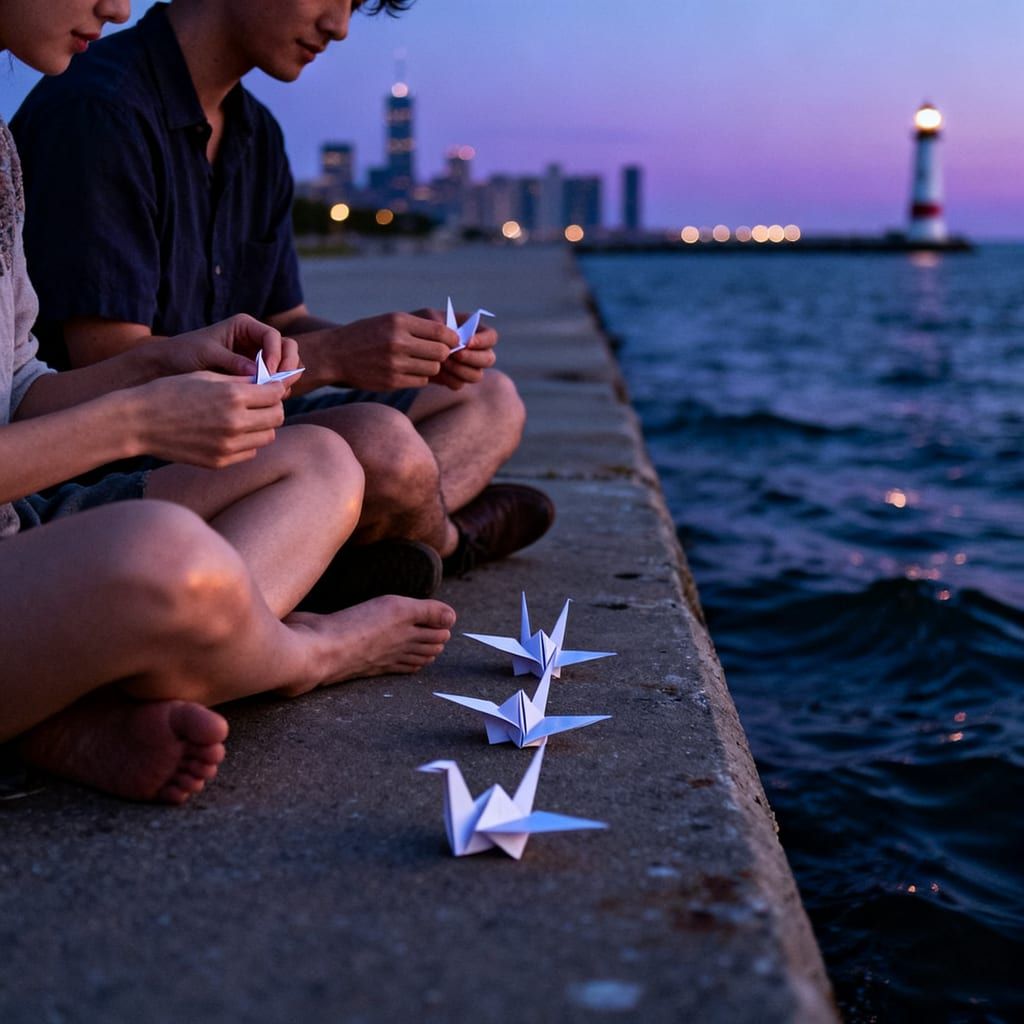
They sit cross-legged, paper in their laps. Origami cranes. Their fingers learn the sequence: square to triangle, triangle to kite, kite to bird. The paper resists then remembers.
"For our mothers," Lina says, and they fold two in blue.
"For Appa," she adds, and makes one in gold. When she thinks of his sentence-I picked the sound of joy-her chest goes tender.
Eli folds one for the kid he could've been and one for the man he is. He admits, in the way soft talkers do, that he's afraid of being claimed by a story he didn't write.
"Me too," she says. The cranes line up between them like small ships. "Maybe we just... write slowly."
"And kindly," he says.
They set the cranes on the concrete and watch the wind consider them. It lifts one. It hesitates over another. The lake takes nothing and everything. They don't need a sign. They are not waiting for a voice to name them.
The sky lowers into violet. Someone down the pier plays a song that sounds like rain.
Later, back at her desk, Lina updates the shared record. She adds a field she hadn't thought to include before: "What makes you smile without trying?"
She types her answer and imagines Appa listening to a cassette in a small apartment, choosing a number not for what it promised but for what it made present.
Her phone lights up. New DNA Relative: Half-Sibling.
She doesn't brace this time. She just leaves the door unlatched and the porch light on. Somewhere, a thread has always been waiting. Now, they pull it through-slow, chosen, and kind.
How we stand beside one another when the answer won’t fit in a sentence
Read more →
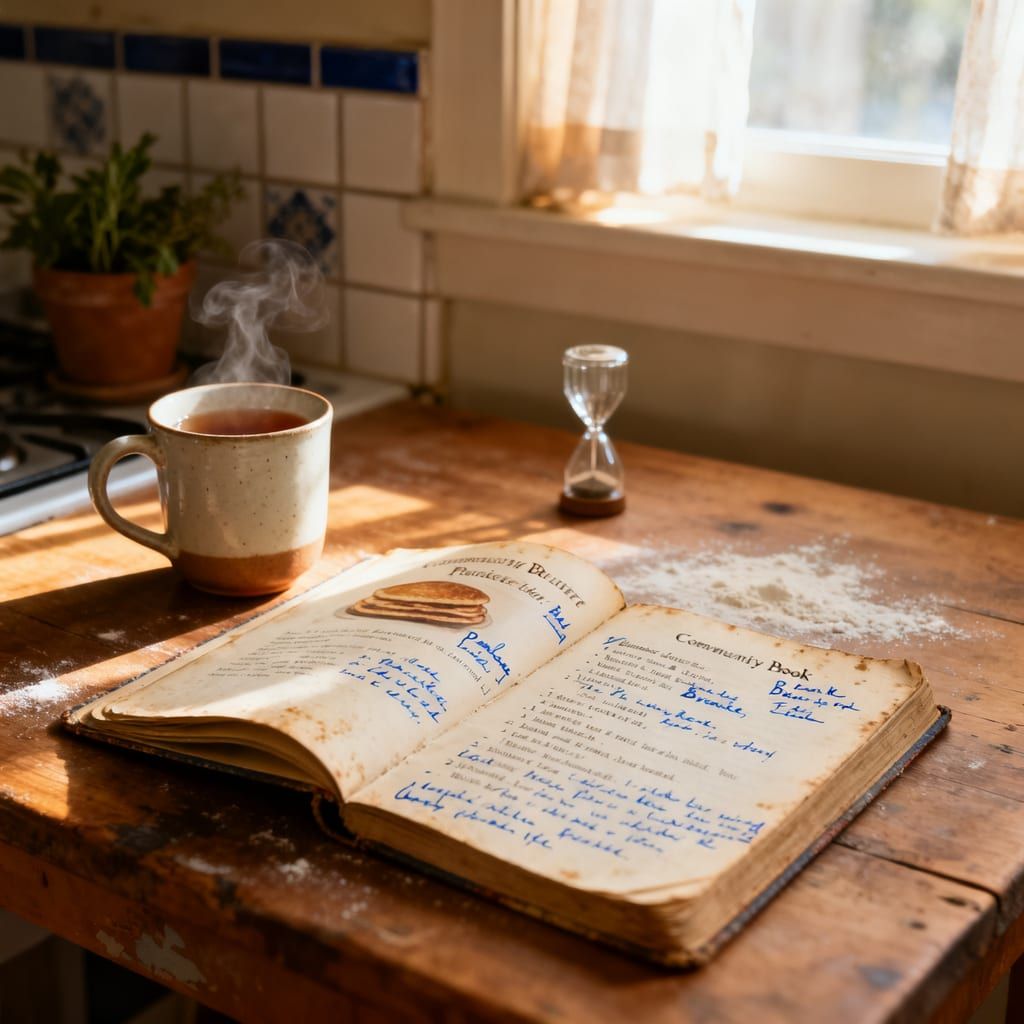
A thrifted cookbook, a phone number, and a kitchen that learns to breathe again
Read more →Story audiobooks for children of all ages — a new one every day on Smarter Way Stories.