We Move Slow Enough to Stay
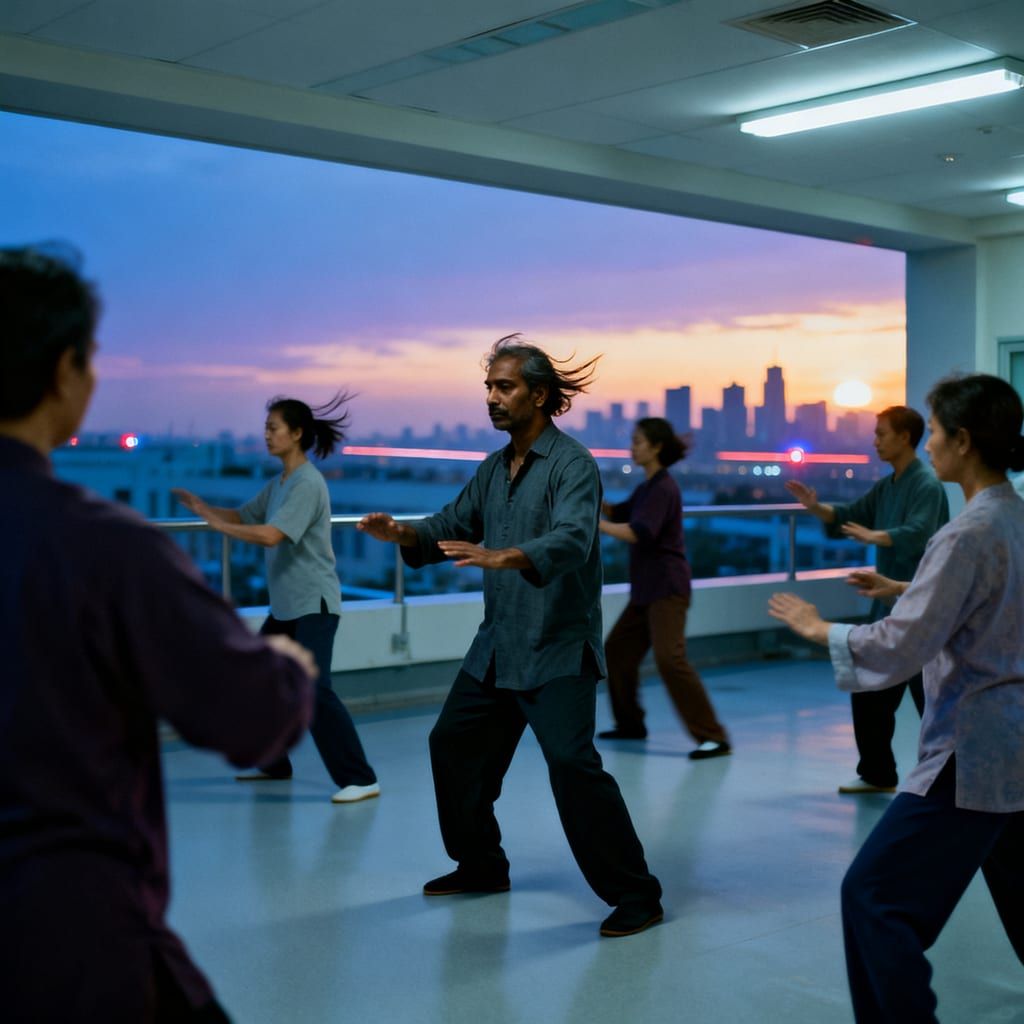
On a hospital rooftop, a class learns a new kind of balance
Read more →
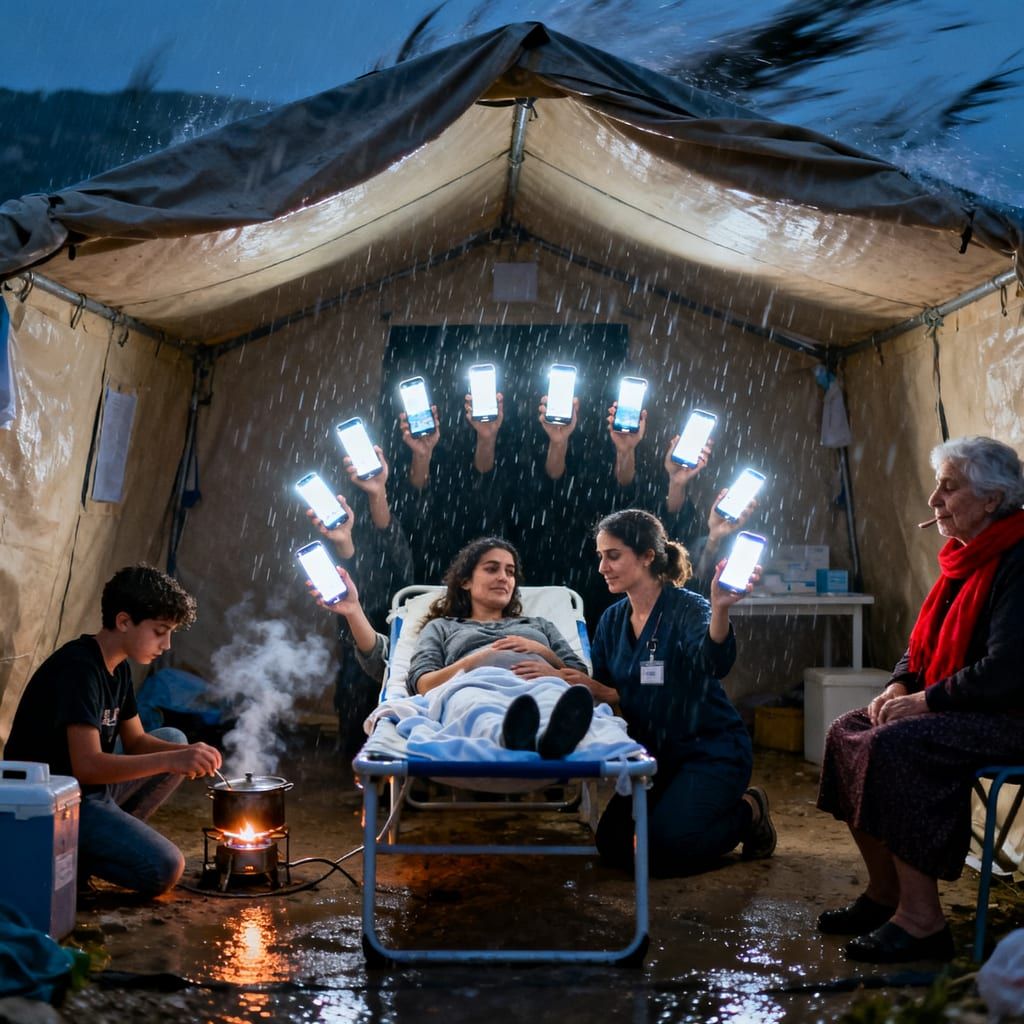
The wind found every seam. It pawed at the canvas walls, a restless animal, and made the clinic lamps shiver before they went out for good. The air smelled of damp wool, iodine, and the sea pushing its breath into everything.
Salma counted the seconds between thunder and the delayed slap of rain, one-two-three-almost automatic, the way a body counts its own heart without meaning to. She slid the transfer approval form deeper into the pocket of her scrub jacket. The ink had already blurred at the corner from being thumbed, considered, then put away again.
"Midwife!" The flap flew open, a rectangle of blacker black in the storm-glossed night. A teenage volunteer-Tariq, with chipped front tooth and eyes too old for his sixteen years-stumbled in, hair plastered to his forehead. "She's here. She's-" He couldn't quite find the word.
Behind him, a woman gripped his arm with both hands, her knuckles pale where the skin had been rubbed raw. First-time mothers often looked surprised by their own bodies, but this one wore surprise like grief. Rain braided her hair. Her name came out inside a contraction-Rasha-two syllables around a held breath.
Salma's hand was already on Rasha's elbow. "Shoofi-here. This bed. Breathe for me, habibti." The mattress was a slab under the thin sheet, springs biting through. The kerosene lantern on the counter threw up a small, stubborn island of light. Then it flickered as if shy and went out.
Darkness gulped the room.
Outside, someone cursed in Greek. The wind made the tent poles sound like someone drumming their fingers on a table, impatient. Within the muffled spaces between sounds came the quick, shocked noise of pain-Rasha being seized from the inside, tide dragged out and slammed back in.
"Power's down camp-wide," Tariq reported, voice trying to be steady.
Salma's body knew the map of this room in her bones. She didn't need light for her hands to find the box with gloves, the tray with gauze, the chipped mug they used for warm water when the sink sputtered air. "Stove," she said. "That camp stove-bring it here. Boil water. Two pots. Don't let the flame kiss the tent. And find me whoever can hold a phone with a torch."
He nodded and ran, leaving cold wet air in his wake.
Rasha's breath came in ragged scraps. "My husband," she said. "Registration line, they said we must stay-he's..." Another wave rolled through her and folded her in half.
"We'll send someone," Salma said. "But right now you and I, we make a small ocean. You and me and this baby. We breathe like rain."
She pressed her palm to the taut, working belly. The muscles knotted under her fingers, then surrendered grain by grain. She could feel the angle of the skull, the way the body knew to turn. The wisdom in it humbled her every time, even now, even tonight.
The flap opened again and the clinic filled with small lights-neighbors lifting their phones until each rectangle made a halo around Rasha's bed. They stepped back to give space, shoulders almost touching, a broken circle mended by proximity. Among them was an elderly woman with a red scarf knotted at her throat, her mouth already shaping a melody under her breath.
"You know that one?" Salma said, half-smiling.
"My mother's mother sang it," the woman answered in Arabic, her voice like a well-thumbed page. She began to hum louder, the tune curving around consonants as if swaddling them.
Tariq crouched with the stove in the corner, flame shivering blue. The pot pinged as the first bubbles let go. Steam rose and threaded through the cold. Someone handed Salma a roll of tape, a packet of cotton. Another, a watch with a cracked face. In the shifting glow of phones held high, their hands appeared and disappeared, each one bearing small reliances.
The storm made the roof heave. On the metal tray, instruments clicked soft as teeth. "Breathe with the rain," Salma said, kneeling so her eyes were level with Rasha's. "In when it quiets. Out when it hits."
"I can't," Rasha said, tears slicking the skin just at the hairline. "I can't without him."
The elderly woman's hum found a depth, a low note like the earth under everything. Tariq reached to refill the kettle, shoulder briefly touching Rasha's calf as if to say: you aren't alone, even if you feel orphaned from yourself.
"You can," Salma said. "You have been. Listen." She lifted a fingertip to the tent roof. The wind surged. Together, they inhaled. The rain slackened. Together, they let go of breath. They tried again. Again.
On the third contraction, Rasha's body remembered and took over. Salma moved with her, a quiet choreography learned over fifteen years and watered by nights without end. She could have named the sounds of each phase in a different life; in this one she did not name, she watched and adjusted. She set her palm, pressed, asked for the clean cloth, nodded to the boy with the pot. The phones recoiled once, then lifted higher.
"You are close," Salma said. "He is close."
But the husband remained a rumor at the edge of the tent. Someone had gone to the registration line and come back empty. Storm rules moved men and women like counters on a board; names bent under weather like saplings.
The head crowned, dark and slick like a drowned seed, and then the rest of the body poured, all at once, into Salma's hands. Warm weight. The room snapped to attention-the hum paused, the phones stilled as though breath bowed to a deeper breath. The baby's chest rose and fell in a stutter of effort, and then-nothing.
No cry.
The space between what should happen and what is feels like falling through a trapdoor you didn't know you were standing on. Salma's ears filled with the record-scratch of the storm.
She didn't look up. She rubbed the small back with the heel of her hand, firm and sure, tilting the chin, clearing the mouth. "Come on, habibti," she whispered, then, catching herself, "habibi-whichever you are, bring me your voice."
Silence stretched, thin and dangerous.
Rasha's eyes went wide and glassy. "No," she said. "No-"
Salma brought the baby to her forearm, head lower than body, fingers finding the sternum's delicate ladder. Two fingers. Measured pressure. A rhythm like walking up a hill. She leaned in until her mouth was near the small ear.
She began to hum. Not the lullaby the grandmother sang-a different one, her father's prayer for fishermen when the radio crackled and the boat stayed out past midnight. The tune had no words you could catch. It was a path laid down inside the chest.
The hum moved through her bones and into her palms. The elderly woman picked it up, her voice weaving under. A second voice joined-a teenage boy's, thin but insistent. From outside, a third, a fourth. The circle of phones trembled, a constellation made of human need and cracked glass, and the ring around the bed became a room, then a house, then a village with its windows lit.
A shudder ran along the baby's ribs. The mouth opened, contorted, found the ancient shape of outrage. Sound tore out, startled and furious.
The hum broke into laughter. Someone began to cry without making noise. Tariq, who had held himself at a discipline beyond his years, sat back hard on his heels and let out a name of God like an exhale into winter.
"Sabah," Rasha said, not yet knowing whether day had arrived or she was naming it into being. "Sabah."
"Morning," the grandmother translated, thumb brushing Rasha's temple. "Blessed morning."
They wrapped the baby in a swaddle stitched from donated fabric-a patch of sunflowers against denim, a strip from a T-shirt with a tour date from a summer long past, a square of something that looked like old curtains. The seams were a little crooked. The warmth was not.
After the first feed, after the soft quiet that follows the first thunder, the circle thinned. Phones went dark, screens blinking back to their private calendars. The storm settled into a steady hiss like pencil rain on paper.
Salma tidied the makeshift room-the pot ringed with lime, the basin clouded by steam-and reached to slide Rasha's bag under the cot. From its side pocket slithered a passport soft with handling. It fell open like a bird stunned on the ground.
Inside a faded stamp, at a different border three years back, someone had written a note in the margin in small, slanted English: Safe to travel; check prenatal iron. Next to it: S.D.
Salma stood very still. She knew the tilt of those letters as she knew the scar on her own left thumb. She could feel the day of that stamp-the tar smell at the crossing, the way the sun bounced off the white shade cloth, the woman with the toddler who wouldn't let go of her skirt. A clinic cobbled from pallets and stubbornness. Rasha thinner then, hopeful and fevered, maybe, or maybe another timeline braided into this one.
She looked up. Rasha was dozing, Sabah a comma against her collarbone.
"We met," Salma whispered, not to wake them-more to make the truth material in the air. "We met without meeting."
Before dawn, the flap opened again and a young aid worker burst in, cheeks salted with rain. "You won't believe this," she panted, holding out a phone like an offering.
On the screen, a short video: the circle of lights, Rasha's face in agony then awe, the trembling smile. A voice-over threaded through-not the aid worker's, not anyone in the room. Salma's heart caught on recognition before her brain did. The woman from four months ago-the one who had crossed the sea and then the long silence, whose voice had shrunk to a quiet that frightened people. She had birthed a boy here and not said a word for hours, then left a note that said Thank you in three languages and a drawing of a boat.
Now her voice was clear as a glass struck gently with a spoon. "To the one who brings the dawn," she said in Arabic, each syllable a steady place to put your foot. "To the hands that do not shake in the wind. We remember."
In the comments below: lantern emojis, fire emojis, actual offers. A flood of messages. Strangers asking where to send solar lamps, battery packs, midwifery kits, rides to hospitals when weather bars the sea lane. The internet's usual chaos had, for one minute at least, chosen direction.
Outside, the first tents began to glow. Neighbors passing lanterns along the mud lanes, each one a small sunrise. Someone rigged one under a tarp stretched between poles. Another hung a lamp from a piece of driftwood, its light swaying like a buoy in wind.
Tariq watched, face open. "They're... bringing them," he said, as if he couldn't quite believe the verb fit the world.
"They are," Salma said, and felt something shift inside her-a hinge that had been grinding on grit.
By the time the camp coordinator ducked in with his stiff posture and his clipboard, the sky had begun to pale like a bruise healing. He held a form. "Darwish," he said, not unkind. "Your transfer's approved. Ferry on Monday, if the sea allows. Mainland post. Quieter."
Salma took the paper and slid it into her pocket. She imagined the ferry-its diesel breath, the way it leaned into waves with a confidence bordering on arrogance. She imagined sleep without wind fingering her dreams, coffee not brewed on a camping stove, a pantry where things stayed where you put them.
Outside, the mud glowed with stitched-together daylight. Lanterns mapped the paths like runway lights, or like stars someone had tugged down to more useful heights. She could find her way anywhere among them.
She paused by the cot. Rasha stirred and blinked. The baby's fist opened and closed, practicing for some work in a future Salem could not foresee. "Sabah," Salma said softly, and the word warmed her mouth.
She thought of the passport stamp, a crossing folded back on itself. Thought of the girl who had lost her words and then found them again, passing them back like bread. Thought of the standing ring of phones, the way a loose scattering of tents had become a room with walls made of intention.
These weren't miracles. They were ordinary exactness-the right pressure at the breastbone, the kettle kept boiling, the steady hum you carry for when someone else stumbles and needs your tune to step into. Midwifery. Morning work.
Salma stepped out into the corridor of light. Wind still worried the guy ropes, but it did not threaten the rooms that lanterns made between tents. She looked at the clinic wall-a spatter-painted thing with thumbprints and tape residue-and pinned a new page there: a hand-drawn map of the camp. Each lantern sketched as a starburst, each starburst labeled with a baby's name.
She wrote the first one at the edge of the paper, just inside the flap of the clinic where drafts always found their way in.
Sabah.
When the dark came back-and it would-people could glance at the map, tap a point with a finger, and navigate by what they had made together.
The transfer form pressed against her leg like a polite child asking a question she didn't have to answer yet. "Another season," she said to no one, to the wind, to the hum that seemed to go on under everything now. "We'll stay for another season."
The camp exhaled. Somewhere a new lamp snapped on. The storm withdrew its hand from the tent roof by degrees, and in the margin between dark and light the baby named Morning slept on, dreaming whatever it is that new mornings dream.
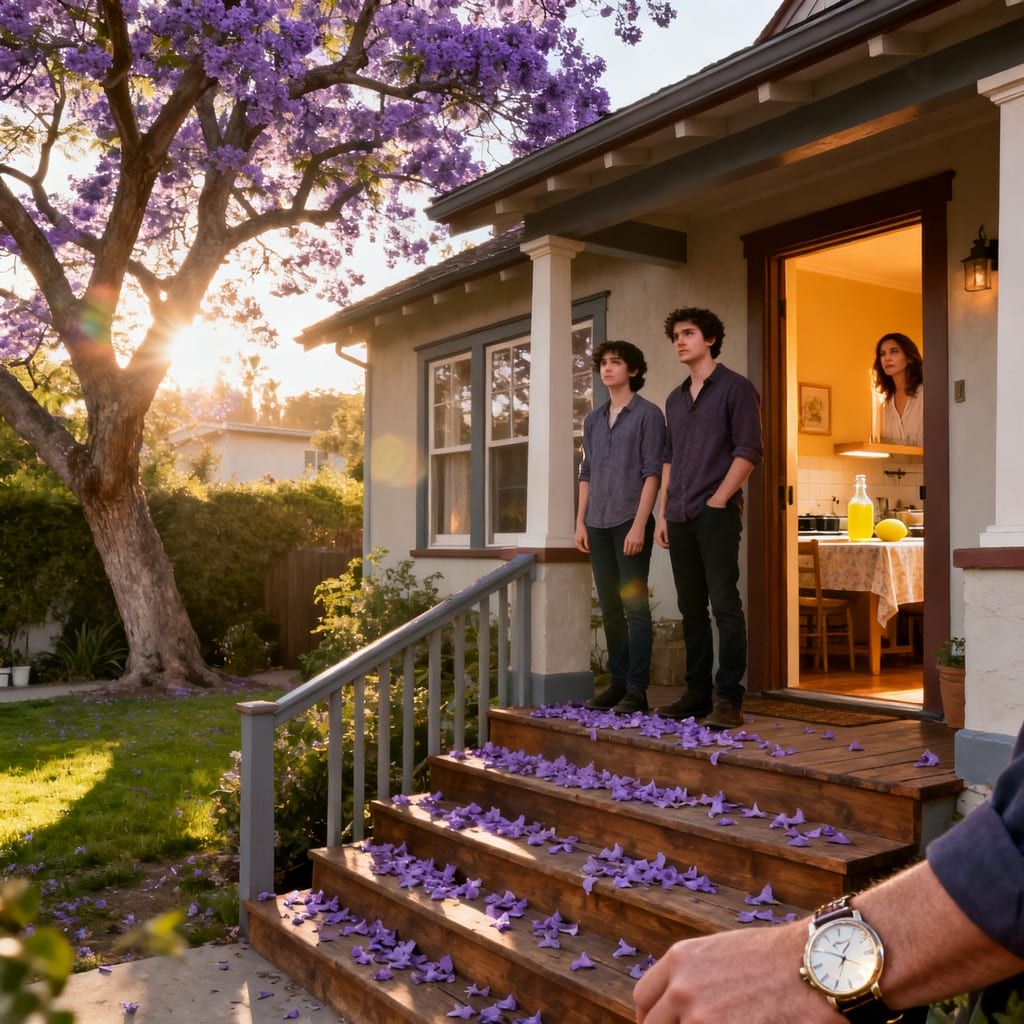
A daughter learns to read between the lines of a life split in two
Read more →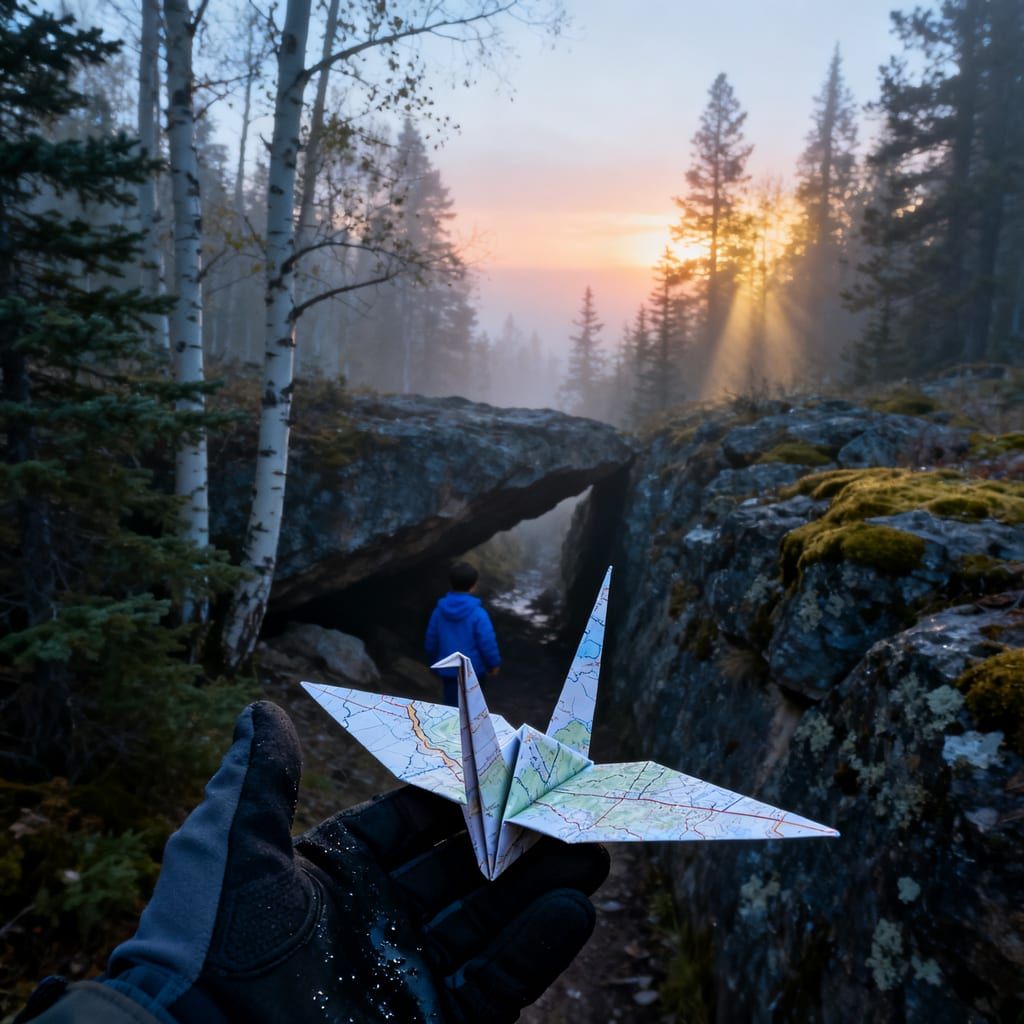
A fog-draped night, two souls found, and the quiet shape of a life
Read more →Story audiobooks for children of all ages — a new one every day on Smarter Way Stories.