A Different Name, The Same Heart
In Los Angeles, a daughter learns how to carry two lives forward
Read more →
The first thunder rolls over the hospital like furniture being dragged across a ceiling. Lila Noor shakes rain from her jacket and steps into fluorescent noon-coffee breath, antiseptic tang, the soft metronome of monitors. On the whiteboard, someone has drawn a smiley face with a contraction timer. Underneath: 4 rooms, 3 crowns tonight, be kind.
She clips her badge. The storm presses its shoulder against the windows and the night presses back, steady as a palm on a restless back.
In Room 1, a tech-startup couple has arranged ring lights like small moons. The partner in a branded hoodie counts followers between contractions. "We'll cut if it gets too... you know," he says, waggling his phone. The laboring woman, eyeliner unsmudged, breathes with a dancer's precision. Lila places a hand on her forearm. "When the wave comes," she says, "ride it. Don't narrate it."
The woman's eyes meet hers, dark and wet. She nods. The live-stream mutes, the room softens. The wave takes her quietly.
Room 2 carries a different weather: a sister with forearms like braided rope, standing guard beside an undocumented mother whose English is mostly eyebrows and breath. Papers and fears remain outside the door. Inside, Lila keeps a rhythm with her voice and hands. "Sí, así," she murmurs, the Spanish sliding back into her like a remembered song. The sister feeds shaved ice from a Styrofoam cup, crunching the slush like a metronome. When the mother moans low and long, the sister's hand tightens on Lila's sleeve. "It's okay," Lila says, and the word floats like a paper boat across deep water.
In Room 3, a nervous father practices breathing like he learned it from YouTube-four in, six out-until he turns faintly green. "Sit," Lila orders, a smile tilting one corner of her mouth. She fills a cup with apple juice and hands it to him. "You don't have to prove anything to your lungs." He laughs, weakly, and his partner pinches his knee, the smallest reprimand and the kindest, too.
Between rooms, the hallway glows glare-white. Lila moves the way she has learned to move-quick when needed, invisible when not. She listens with her whole body. The small music of labor threads the air: a hitch in a breath, the pitch change of a groan, the soft click of a cervical check snapping into place like a seatbelt. People say miracle like it's a one-time coupon, a thing you redeem and then the wonder's used up. Lila knows better. Wonder is a well with no bottom. You lower the bucket; it keeps coming.
At 2:17 a.m., the storm leans in, and the building exhales. The lights blink, hesitate, die. For a heartbeat the world is a black throat. Then the generator catches-one, two, three-rumbling itself awake. Emergency lights bloom amber. The machines' beeps return like distant lighthouses. The hallway hum settles into a thicker hush. Night shrinks to the circle of whatever you can touch.
"Everybody okay?" Lila calls, her voice soft but carrying. Heads nod. The tech couple's ring lights glow on battery, turning their room into a soft studio of mercy. The undocumented mother grips the bed rail and smiles at Lila as if to say, this is not the darkest we have known.
Lila breathes, hears the hospital find its backup heartbeat, and walks into Room 4.
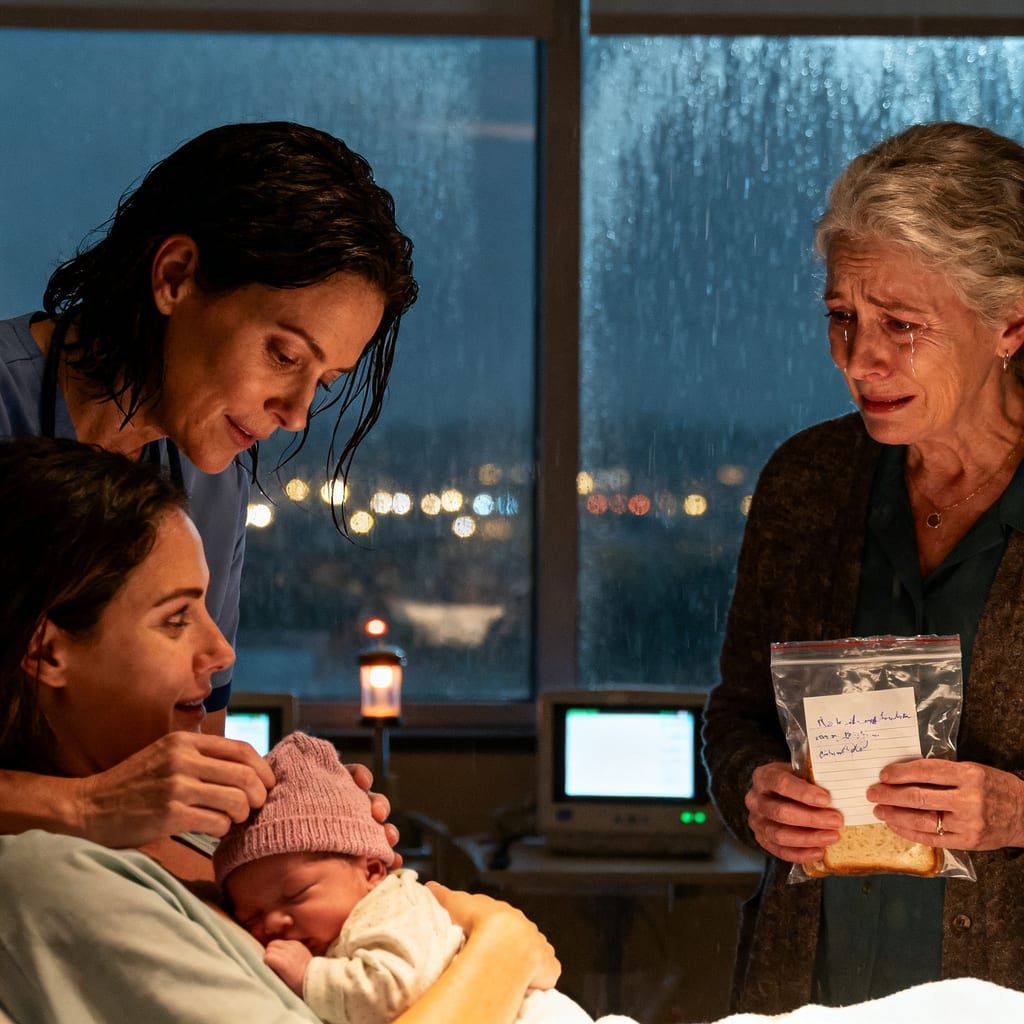
Alma Rivera is nineteen and clenched tight as a fist. Fear has its blade on both edges: the doing of a thing and the doing of it in front of everyone you've ever loved. Her grandmother, Rosa, arrives damp from the rain, hair escaping its bun in gray curls that glint like wires. Rosa carries a plastic sandwich bag with a faded knit cap inside-pink, uneven, home-made. A note is taped to the bag, the edges gone feathery with time.
"From when she was born," Rosa says, breathless. "I keep it always. Thought-maybe it could... you know." She shrugs, eyes shining.
Lila peels back the tape. The paper lifts like a leaf caught by a draft. The handwriting tilts at a familiar slant.
Welcome, Alma. Breathe, little moon. - L.N.
Years pull a chair and sit down. Lila feels the scrape of it across the tile. The fluorescent room narrows to the slip of paper in her hand, the three letters that used to belong to a girl who stayed late at a free clinic because the radiator there rattled like applause. December, a lifetime ago: a teenager gripping Lila's fingers as if they were the last rope left; a baby with hair already determined to curl; a grandmother crying into Lila's shoulder, smelling like Vicks and corn flour. Lila remembers drawing those letters-L.N.-in a corner, shy of the whole name, a trainee's signature.
She looks at Alma now-grown into herself, bracelet clacking softly every time her hand flutters, sweat shining on her upper lip. Something unclenches in Lila. Not nostalgia. Recognition. The line of a circle you almost forgot you drew.
"May I?" Rosa asks, fingers trembling. She holds the cap up as if showing a magician her own card.
"Not yet," Lila says gently. "Soon." She tucks the note back into the bag and slips it into the bedside drawer as if returning a small bird to its nest.
Labor is a tide with moods. Alma's contractions gather, crest, and then-without warning-flatten to a gray plate. Ten minutes. Twelve. The room does what rooms do when waiting goes long: it fills with other kinds of sound. The radiator's inhale. The rain's fingernails. Rosa praying under her breath, names and saints and recipes threaded together.
Panic is clever; it knocks softly. Lila sees it peeking from the corners of Alma's eyes. She sits on the edge of the bed and, without ceremony, begins to braid Alma's hair-three even hanks of darkness, the braid climbing steadily like something being organized out of chaos. She hums as she works, a tune that once climbed the stairs of her own childhood building, carrying laundry baskets and the smell of onions: a lullaby without words.
"You are not breaking," Lila says, threading hair through fingers. "You are opening."
Alma's jaw loosens. Rosa's prayer shifts into a hum and then into silence, as if the room has decided on one voice to follow. Lila coaches a side-lying release, a small roll of hips to coax a baby's head into a better angle, heat packs on the sacrum, soft counterpressure that makes Alma exhale as if something heavy has been set down.
The generator drone becomes a bass note, the monitors a thin harmony. Storm against glass. Breath. The small music finds its thread again.
"Okay, little moon," Lila whispers-not to the baby so much as to the room. "Come on."
When the surge returns, it does so like a forgiven friend-sudden, familiar, fierce. Alma bears down, face open, sound low. Rosa grips the bed, knuckles pale. The Emergency Department calls up for someone; Lila doesn't hear it. The rest of the hospital tilts away. There is only this bed, these hands, that aisle of air between one life and the next.
"Good," Lila says, voice like a railing to hold. "Again. Yes. There. Don't run from it. Ride."
The baby crowns, dark hair slick and stubborn. The head turns, the shoulders negotiate their old argument with the world and win. The rest slides into Lila's hands-wet, furious, perfect, full of ancestral outrage at having been evicted.
For a moment there is the great held breath. Then the first cry lifts and slices through the amber hum-clear, blue, threading the generator's thrum like a violin through heavy weather.
Lila places the child on Alma's chest. Skin to skin, heat to heat, electricity finding its old wiring. Alma looks stunned and then not stunned, as if a lens has clicked into focus. Her hands fly to the baby's back. Rosa makes a sound Lila has no word for, a keening turned inside out.
"Hi," Alma says to her daughter, as if greeting a neighbor. "Hi there."
Rosa holds up the pink cap, astonished anew by its existence. Lila dries the baby's head and slides the cap on gently, the knit stretching over a tuft of dark hair. The old yarn makes a small rustle, like a page turned in a book you've loved too long.
Paperwork is a liturgy with boxes to be checked and signatures nested like birds. The storm begins to lose interest in the windows. Alma nurses, awkward and then less so, the baby's jaw working with admirable purpose. The room smells like iron and soap and something sweet that belongs to no product anyone sells.
"Who wrote the note?" Alma asks finally, the question almost shy. Her fingers worry the hospital bracelet; it clacks its small rhythm.
Lila reaches into the drawer and slides the paper free. It has the softness of something that's passed through many hands. "I did," she says. "A long time ago."
Alma studies the slant of the initials. Her eyes fill and spill in the gentler way-the water that doesn't claw on its way out. She laughs once, breathy. "Full circle," she says, and Lila thinks: not a circle like a looped ribbon, but a record-grooves deepening each time the needle falls, the song better for being played.
Rosa takes Lila's hand in both of hers. "You stayed," Rosa says simply, as if Lila has been in this room for nineteen years.
Lila smiles. She thinks of the tech couple signing off their stream with tear-streaked cheeks. She thinks of the sister in Room 2, finally asleep in a chair, her chin on her chest. The YouTube father snoring like a tractor, one hand clasping the bassinet's edge even in dreams. She thinks of her own apartment waiting with a plant that always needs water and the quiet that sometimes feels like a choice and sometimes like a consequence.
She does not feel empty.
By the time the forms are filed and the baby's footprints have stamped themselves into a keepsake card-inky constellations of a life just named-the rain has thinned to threads. The generator eases, the main power inhales, the fluorescents blink back awake like someone startled from a nap.
Lila steps out into a hallway that has shifted from amber dusk to cheap noon again. On the whiteboard, someone has added: 4 rooms, 3 crowns tonight, 1 moon. A doodled cap in pink marker rests over the O.
Outside, the city is lit like freshly washed glass. The storm has left everything a little brighter for having been rinsed. Lila watches the morning make a pale hole in the lingering dark and feels the night settle in her bones the way a good weight does-a baby after a bath, a blanket over knees.
She passes the waiting room. The tech couple's partner is teaching their newborn a camera-free smile. The sister from Room 2 wakes, startled, then beams at a text she can finally send. The YouTube father raises his apple juice in a toast to no one in particular.
At the exit, Lila pauses. She presses her palm to the glass. The print fogs, then clears. Behind her, down the corridor, a cry starts up, new as bread. She turns her face toward it the way plants do to light.
People call birth a miracle like it expires at midnight. Lila knows different. You lower the bucket. It keeps coming. You show up with your hands and your voice and the braid you can offer. Again and again until the groove deepens, until the song feels like home.
She steps into the wet morning-no baby in her arms and yet not empty at all.
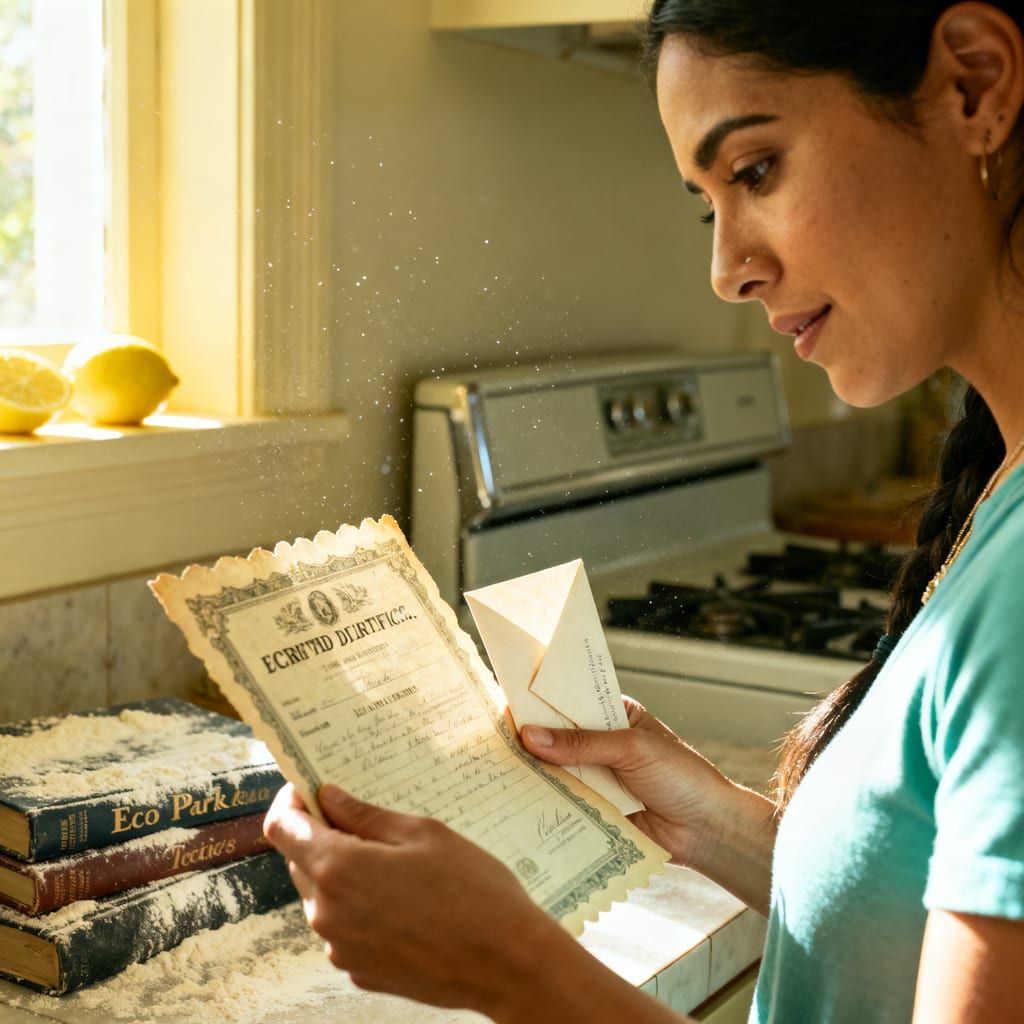
In Los Angeles, a daughter learns how to carry two lives forward
Read more →
In the soft hours before dawn, staying becomes its own kind of rescue
Read more →
Story audiobooks for children of all ages — a new one every day on Smarter Way Stories.