Two Houses and One Quiet Heart
A daughter learns to read between the lines of a life split in two
Read more →
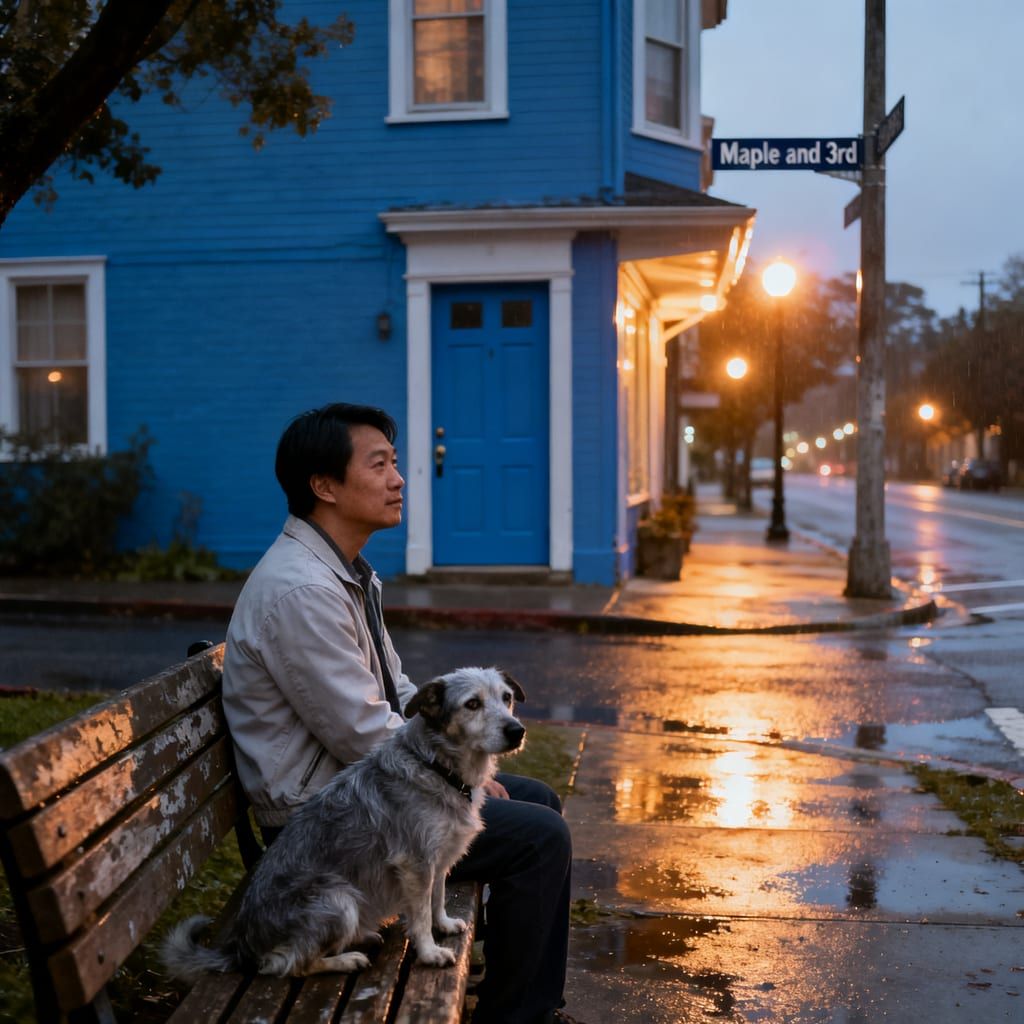
The rain started like a rumor and then meant it. By the time Jonah reached the crosswalk, his hood was slick and useless, the city smeared into watercolor-bus brake hiss, wet newspaper, the metallic scent of a storm turning honest.
He ducked into the first open door. Bleach, wet fur, a bell that didn't know if it was supposed to cheer. The front desk woman looked up, clocked his dripping jacket, and pushed a towel toward him with a kind smile that said, This happens.
"I'm not-" he started, then didn't know what he wasn't. A dog person? The kind of person who makes decisions in the rain? The towel was warm from a dryer cycle. He took it anyway.
Rows of kennels shimmered under humming lights. Faces pressed forward as he passed-hopeful, frantic, eyes that softened and rebranded your day as rescue. He kept moving because to pause felt like admitting he had space.
At the back, after the good dogs and the almost-good dogs and the too-loud dogs, a graying mutt watched him with an expression that read like punctuation. Not a question mark. A period. Above the kennel, a hand-lettered card: Senior: 11 years.
The dog didn't step forward. He didn't sell himself. He just blinked, slow, as if choosing which part of Jonah to look at.
"What's his name?" Jonah asked, surprising himself by hearing his own voice in this place where voices were wide with wanting.
The woman with the towel appeared beside him. "Harbor," she said. "He came in last winter. Good boy. Quiet. Likes routine." She squinted at Jonah's shoes, rain carving half-moons on the rubber toes. "You here to look, or-?"
"I came in to get out of the rain." He heard how thin that sounded. The dog kept watching him, old-patient, a gaze with edges polished by time.
The woman nodded as if that was the most reasonable reason she'd heard all week. "Take your time."
He crouched. Harbor's face was salted with gray that traveled into his eyebrows, a cartographer's line work of years. His left ear had a nick like a thought he'd almost finished. Jonah put his fingers to the chain-link. Harbor didn't lick them. He placed his paw, deliberate, as if they were sealing something he couldn't quite name.
The goodbyes at the shelter sounded practiced-voices calling names thousands of times, leashes clicking, doors swinging with the choreography of exit. Harbor's kennel was out of the dance. Jonah felt it like an ache in a tooth he didn't know was cracked.
"I'm not ready for heartbreak," he said, and Harbor regarded him the way sun regards a windowsill-present without effort.
By the time the rain gentled to a mist, he'd signed forms with hands that shook and initialed boxes whose legalese had a way of saying, Are you sure? He wasn't. He just couldn't stand the thought of goodbye being routine.
Harbor climbed the apartment stairs like a gentleman late for a train-steady, apologetic in stance but determined in purpose. In the living room, he circled once and chose the rug near the balcony door where light pooled in a square. He lowered himself, bones making small truth-telling sounds.
Jonah filled a bowl. The clink of the stainless steel against the counter sounded suddenly like the morning he hadn't had in months. He set the bowl down. Harbor ate without fanfare, as if this was both new and exactly what the world had owed him all along.
The next day shaped itself around the dog. Early walks in a gray that became pink at the edges. Coffee that tasted less like a punch and more like a permission slip. Emails Jonah didn't compulsively refresh. He drafted his resume and deleted the verbs that made him sound like a machine-optimized, scaled, executed-replacing them with words a person could say without running out of breath.
Neighbors materialized as if the leash tugged them into frame. Mrs. Alvarez from 3B with her slippers and the gossip about the building's hot water; the teenage boy with hair like he dared gravity, who asked if Harbor was "one-zero or one-one" and nodded solemnly when Jonah answered; a man who sat on his stoop each afternoon, elbows on knees, like he was remembering something that needed two hands.
The world shrank to the radius of a leash and, somehow, expanded. Flowers he'd never named were suddenly encountered and named by neighbors with soil under their nails. He learned the way sun moved across his floor like a slow apology to winter. His calendar emptied, then refilled with blocks labeled Walk, Walk, Sit and Watch People Be People.
On their third route, Harbor stopped. The block was quiet, rain-polished, cars wearing their puddle reflections. A rowhouse door, newly painted blue, sat in the middle of the line like a small sky.
Harbor planted his feet. Not stubborn-solemn. He tilted his head toward the door and held very still, as if listening to a memory hum to itself.
"C'mon, buddy," Jonah murmured, embarrassed when a cyclist clipped past and smirked. He tugged lightly. Harbor looked at him-not reproach, not request-and, after a long breath like a page turning, yielded.
It happened the next day. And the next. The blue door became a stop in their map, the pause a ritual without language. Jonah said sorry to the air-the invisible neighbors, the timeline in his head, the old dog who knew things and couldn't say them.
On the sixth morning, the door opened.
An older woman in a house sweater and wool socks stepped onto the stoop, hair pinned back in a soft, quick gesture that suggested she often forgot it and then remembered. Her eyes found Harbor and then did that thing eyes do when they recognize the past without permission.
"Harbor?" she said, kneeling, voice like the underside of a bell.
Harbor's tail lifted once, twice. Not a puppy's metronome. A greeting that had crossed a small ocean.
Jonah glanced between them. He felt suddenly like the understudy walking onstage mid-play, aware he did not know his lines.
"My God," she whispered, hands on Harbor's face like she was counting his breaths. "You stubborn, loyal thing." She looked up at Jonah. "I'm Ruth."
"Jonah," he said, and added because it seemed necessary, "We met at the shelter two weeks ago."
Ruth nodded, eyes bright and wet in the way lenses catch morning. "My husband-Cal-had Harbor. We had Harbor." Her thumb found the nick in his ear. "Cal got sick last fall. Hospice said no dogs. We thought-" She swallowed. "I thought he'd gone to a foster home. They said they had one."
She stood and opened the door wider in that hospitable way some people do, like making space is a reflex. "Please. I-there's something."
The house smelled like lemon cleaner and a pot of something that had been good yesterday. A mantel crowded with photographs and a clock that ticked as if it was trying not to. Ruth disappeared into the kitchen and returned with a small tin from a high cupboard, paint flaking along the rim like a coastline.
She set it on the table, hands trembling enough that Jonah wanted to reach out. Harbor settled on the cool tile near their feet, sighing the life-weary, satisfied sigh of those who have found their way to a floor they remember.
Inside the tin: spare buttons, a bent safety pin, a note folded small-shelter logo along the top edge, a pen's looped insistence across the page.
"To whoever finds my friend," Jonah read aloud because that felt truer than silence. His voice caught on the f, tripped, tried again. "Thank you for giving him another ordinary day. He loves warm laundry, the corner of Maple and 3rd at dusk, and anyone sitting on a step like they're remembering something. Harbor taught me to arrive late for everything except the important parts."
He held the paper with two hands as if it were a leaf he was afraid to crush. His palms were suddenly damp. The kitchen was suddenly louder with the tick of the clock and the murmur of a neighbor's radio through the wall.
Ruth pressed her knuckles to her mouth and let herself cry the way you do when a person has left you with both too little and exactly enough.
"Cal had beautiful handwriting," she said when she could, smiling into the wet. "He was a teacher. He wrote like he was still talking to fifteen-year-olds who needed him to be steady."
Jonah pictured a man with chalk dust on his sleeves and a dog asleep against his ankle. He pictured the blue door closing on the day they carried the dog bed to the curb.
"I'm sorry," he said, helpless and complete.
Ruth shook her head. "You found him." She knelt again, forehead to Harbor's forehead. "You came home the only way you knew how."
After that day, the route rearranged. Afternoons were divided: Harbor napped on Jonah's rug in a flood of light that drifted like a lazy river; he dozed on Ruth's porch while she read the paper aloud as if the dog were a constituent who deserved an update.
Jonah learned how to sit on steps and remember. The city thinned at that altitude-the traffic lost its point, pigeons asserted their quiet majesty, strangers became stories passing by with dogs that had favorite bushes and toddlers that waved with their whole bodies.
He updated his resume without bravado, put volunteer hours in a section that didn't apologize for itself. On Thursdays he went to the shelter with extra towels and his nerves, and he learned how to lower old dogs into warm water with a tenderness that made his chest ache. He dated a little and left early when he needed to. He called his mother back in the same day. He put Cal's note in the manual of his coffee grinder and sometimes read it before the beans sang.
Ruth told stories like throwing pebbles into a lake-light tosses that made rings that reached shore long after the pebble disappeared. Cal's lessons. The jokes he repeated until they were family furniture. The way Harbor had a thing about the blue door even when it was green.
And evening by evening, Maple and 3rd at dusk made sense-a corner that filled with a kind of mild gold, people finishing, people starting, the sky holding onto its color like it was not ready to go.
Spring arrived like a soft argument that it had never left. On a Thursday that smelled faintly of cut grass and bakery yeast, Harbor paused at the blue door and did not pull. He nosed Jonah's knee, not impatient-directing. The park bench across from Maple and 3rd waited, wood warming under the day.
They sat. Ruth joined without needing an invite, cardigan buttoned wrong in a way that made Jonah want to fix it and not. The corner did its evening thing. A teenager practiced kickflips. A woman in scrubs unwrapped her sandwich and ate like she was refueling a ship at sea. Someone laughed too loud, gratefully.
Harbor laid his head on Jonah's thigh and closed his eyes. Jonah counted breaths because that had become a way of measuring time that mattered. He did not try to hurry him.
In the weeks that followed, Harbor slept more, asked less. The radius of the leash became the span between couch and water bowl, door and sun patch. Jonah became fluent in slowness. He took calls by the window, voice low, hand unconsciously in Harbor's ruff. Ruth came over with Tupperware and good grief.
On a morning that began with birds rehearsing, Harbor woke long enough to look at him-really look-and Jonah understood a thing without language. He held the soft, graying muzzle and said thank you enough times for it to become a kind of prayer.
The apartment was too quiet after. The bowl on the mat felt like a question he could not answer. Jonah walked the same route anyway.
He stopped at the blue door. Ruth saw him through the glass and came out with two mugs. They sat on the steps and didn't say it and didn't need to. Maple and 3rd did its dusk and then its dark. The sky let go, slowly.
Two days later, Jonah went back to the shelter with Cal's note photocopied and folded twice. He wrote across the top in his neatest print: Senior: Please read. He slid it under a clip at the front desk. The woman with the towel was there, her face familiar in the comforting way of a person who knows routines and keeps them.
"Thank you," she said, and didn't ask for anything else.
He walked the back row because that was where the quiet animals lived, the ones who had learned the performance and opted out. He stopped because a pair of eyes met his with that old patience he now recognized in himself.
"Hi," he said, softly, like you speak in churches and kitchens after midnight. He crouched, fingers to the chain-link.
The dog-brown where Harbor had been salt, younger by a handful of springs-leaned forward not with a pitch but with a presence, as if to say, I won't beg. I'm here.
Jonah smiled, which felt like a door opening. He was not saving anything and he was. He had learned where to stand.
He stayed there a long time, hand to the cool fence, until the bell above the shelter door chimed and the world rearranged itself again, just a little, to make room.
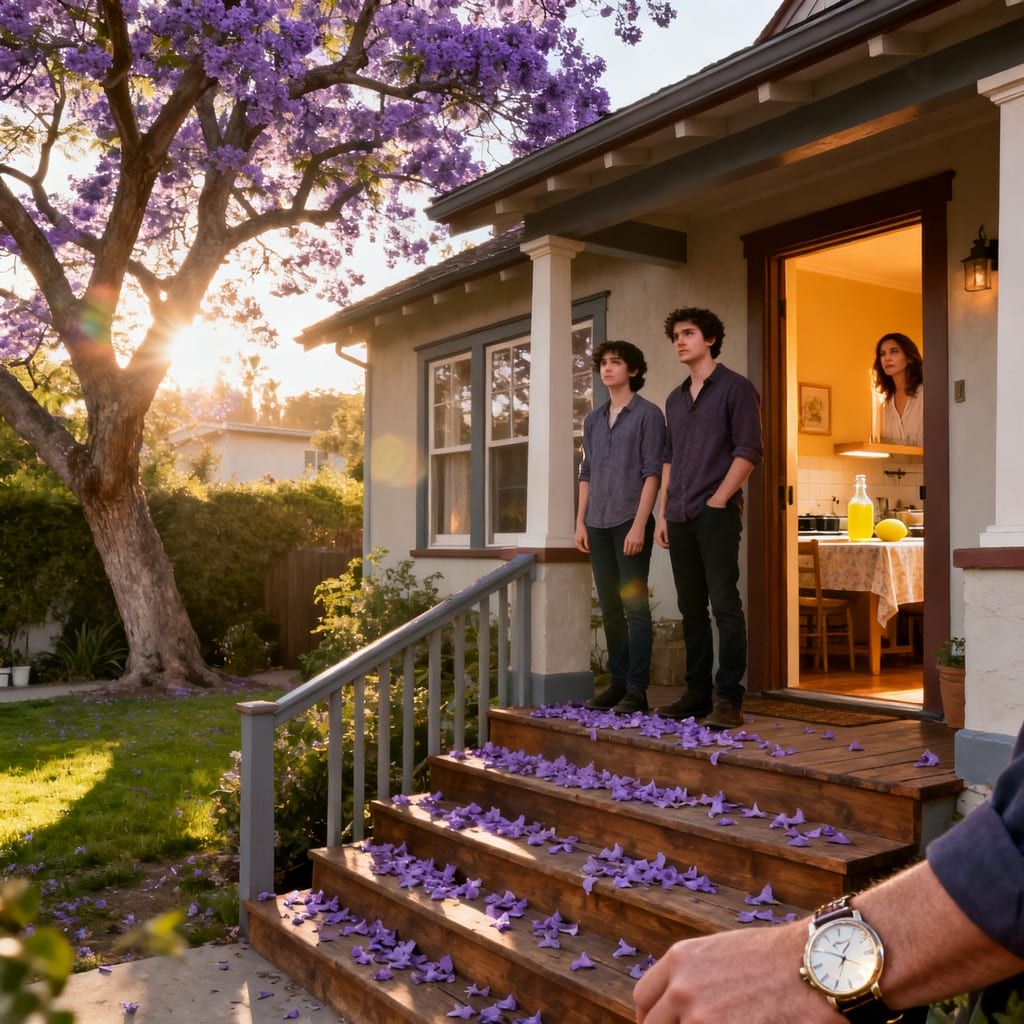
A daughter learns to read between the lines of a life split in two
Read more →
A fog-draped night, two souls found, and the quiet shape of a life
Read more →
Story audiobooks for children of all ages — a new one every day on Smarter Way Stories.