Paper Cranes on the Mountain
A fog-draped night, two souls found, and the quiet shape of a life
Read more →
At the podium, the pastor cleared his throat and read the obituary like it was a prayer written on a postcard.
"Antonio Morales, beloved father, landscape designer, gardener of hearts," he said, and the room hummed with the polite acoustics of mourning. A tidy paragraph. Seventy-one years condensed to the shape of a pamphlet that left out the Thursday nights, the untraceable withdrawals, the soft apologies he made without saying what for.
Lina sat in the second row, hair pinned back with the rectangle clip her father had once called "architectural," palms flat on the cold curve of the pew. People pressed tissues into her hand, shared stories about peonies and backyard patios. No one mentioned how he sometimes came home smelling like lemon oil and someone else's eucalyptus lotion.
When the service ended, she slipped the folded obituary into her bag. A neat life has corners that cut.
In her father's apartment, grief was a list. She turned his drawers into inventories: shirts hot with the memory of his shoulders, receipts that mapped a city of errands, a small velvet box that held the watch he'd stopped wearing.
In the desk, under a Ziploc of rubber bands and the slim ledger where he tracked seed orders in exact script, she found a key on a blue lanyard. The lanyard was sun-faded. Garden Receipts spelled itself across a shoebox lid in black marker.
Beneath seed packets and plant tags with names like 'Blue Elf Aloe' and 'Lady Banks,' beneath coupons for potting soil and a warranty for a leaf blower, there were photographs-matte prints curled at the corners. Her father stood in front of a small Craftsman house, hand on the shoulder of a woman she'd never met. Next to them, a young man with her own stubborn chin.
On the back of one photo, an address sat like a dare, Pasadena, a tidy street name, house number underlined.
Lina turned the key in her palm until the teeth bit her skin. The paragraph burned in her bag.
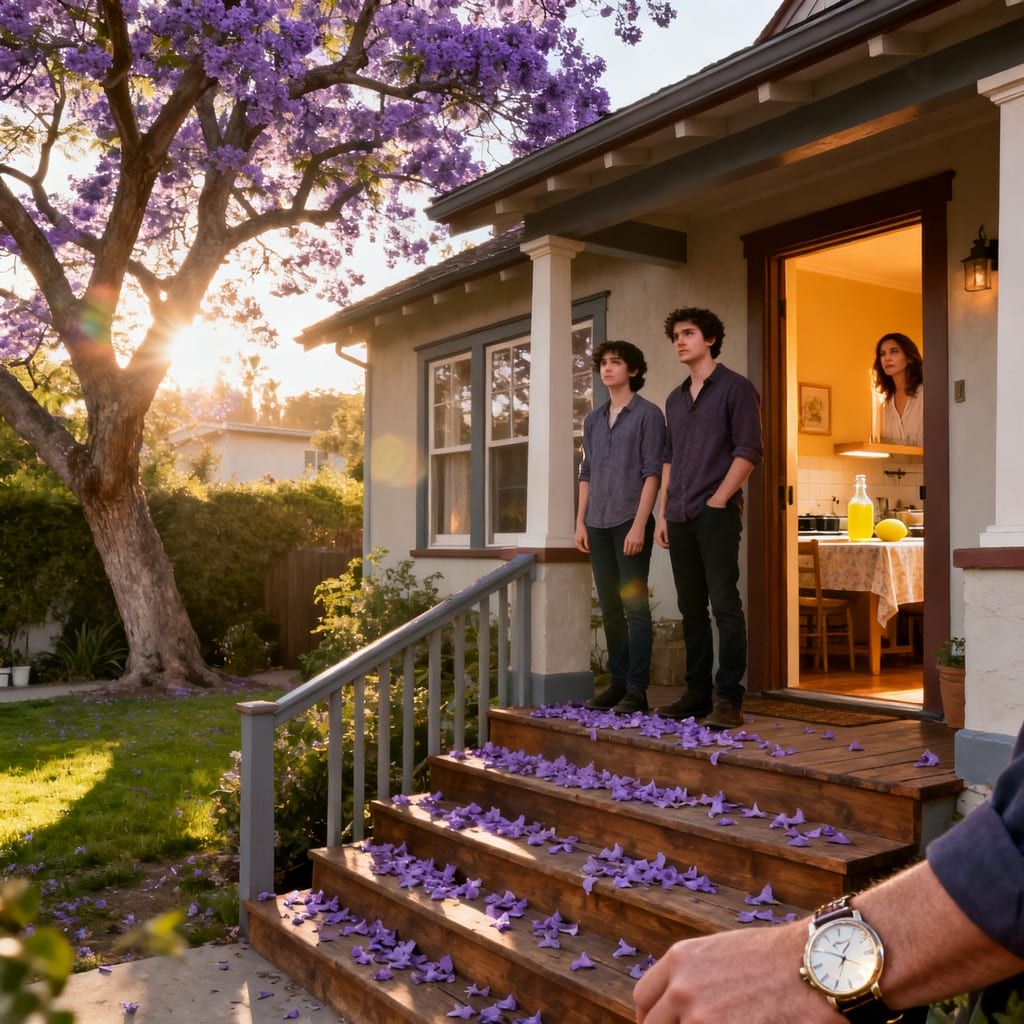
Pasadena was sun-crisped that afternoon, the heat rising off the sidewalks in a gentle blur. The Craftsman house had a wide porch shaded by a jacaranda that scattered purple across the steps. Wind chimes made a polite confession in the breeze.
She parked two houses down and watched a man lug a watering can across the lawn. Twenty-eight, maybe. Baseball cap. Tired kindness folded into the way he moved. The watch on his wrist was the one she'd thought of as her father's-thin-faced, tiny nick at ten o'clock.
She stepped out. The air smelled like cut grass and hot resin. "Hi," she said when he looked up, and her voice came out as a question.
"Hi," he said, wary but not closed, and then his eyes flicked to her face-something softened, recognition trying on a new name. "Can I help you?"
"My name is Lina Morales," she said. "I-" The word snagged, the way grief snagged on corners. "I think we have the same father."
He didn't flinch. He exhaled like someone set down a heavy box. "I'm Jonah," he said, and then, more quietly, "I always knew I had a sister over the hill."
A woman opened the screen door with the practiced ease of someone who'd opened it for decades. She wore a linen apron and had wrists like willow branches. "Eliza," she introduced herself, after a beat that acknowledged all the names she could have said instead. "Come in, Lina."
The kitchen smelled like lemon oil-the polite hush of it-and black tea. Lina held her cup, grateful for the hot boundary it drew around her trembling hands.
"He split holidays like a magician palming a coin," Eliza said, stirring sugar into her cup, the spoon chiming softly. "Always trying to be in two places at once and failing both."
Jonah pressed his thumb along the edge of a saucer, the way she'd seen her father press a cut stem flat before planting. "He used to leave Thursdays," he said. "We stopped asking why."
Lina thought of her mother waiting up with a book, the way the house felt different when the front door opened after midnight. She remembered apologies that wanted to be explanations but backed away at the last second. I'm sorry, mija. For what? For everything.
A drawer in the sideboard stuck halfway. Lina tugged. It surrendered with a sigh and revealed a stack of envelopes, rubber-banded together, addressed in her father's careful hand.
Her name. Jonah's name. The edges gone soft with time. Stamps affixed, never postmarked.
"Can we-?" Lina held one up. Eliza nodded, eyes steady. "They were his," she said. "But I don't think he'd mind them being ours now."
They read at the kitchen table, sunlight fracturing through the glass like a slow spill. He had tried to explain without saying forgive me. He detailed a plan-of all things-to meet at a tiny diner off the 110, a place with green booths and an ancient jukebox that played Otis Redding whether you wanted him or not. He described the menu like a man preparing a garden bed: get there early before the rush, order the pancakes because the bacon is always too salty, the server named Luz with the silver hoop earrings who'll call you honey.
"I thought I'd bring you both," he'd written, neat as a seed catalog. "I thought if you were both sitting there, I would not run. I thought I could hold one hand and then the other and be, for once, a whole man."
Lina pressed her finger to the inked groove of her name. Beneath all the omissions, a map.
Lina slept in her car that night until the sky went from navy to pale blue. In the morning, she found a bakery along Colorado, bought croissants as a peace offering, and returned to the house with the jacaranda confetti.
Eliza poured coffee. Jonah brushed crumbs from the counter with the back of his hand. They were, Lina thought, a small tide making room for a new moon.
"My mother's obituary," Lina said carefully, "didn't know about you. Or Eliza. It left out a whole city."
Eliza nodded, unoffended. "We had one printed, too," she said. "For friends here. It left out everything on your side. He was two men in two newspapers."
Jonah blew on his coffee. "A town divided by a median," he said. "Same road. Different lanes."
They sat with that. How the public version of a life can be a house with half its rooms locked.
They drove anyway.
Jonah took the passenger seat. Eliza followed in her own car, trusting their new shape enough to trail it. They retraced their father's routes as if walking the beds he'd laid out with string.
First, the nursery he built twice-once in their Highland Park rental, once here in Pasadena, both with his neat carpenter's hands. At the first, the room had been painted a shade of yellow that Lina remembered as a small sun. She could still hear the way her mother laughed when he couldn't decide between butter and marigold. At the second, the walls were robin's egg, soft as breath. Eliza traced the trim he'd installed with the pad of her finger. "He liked things square," she murmured.
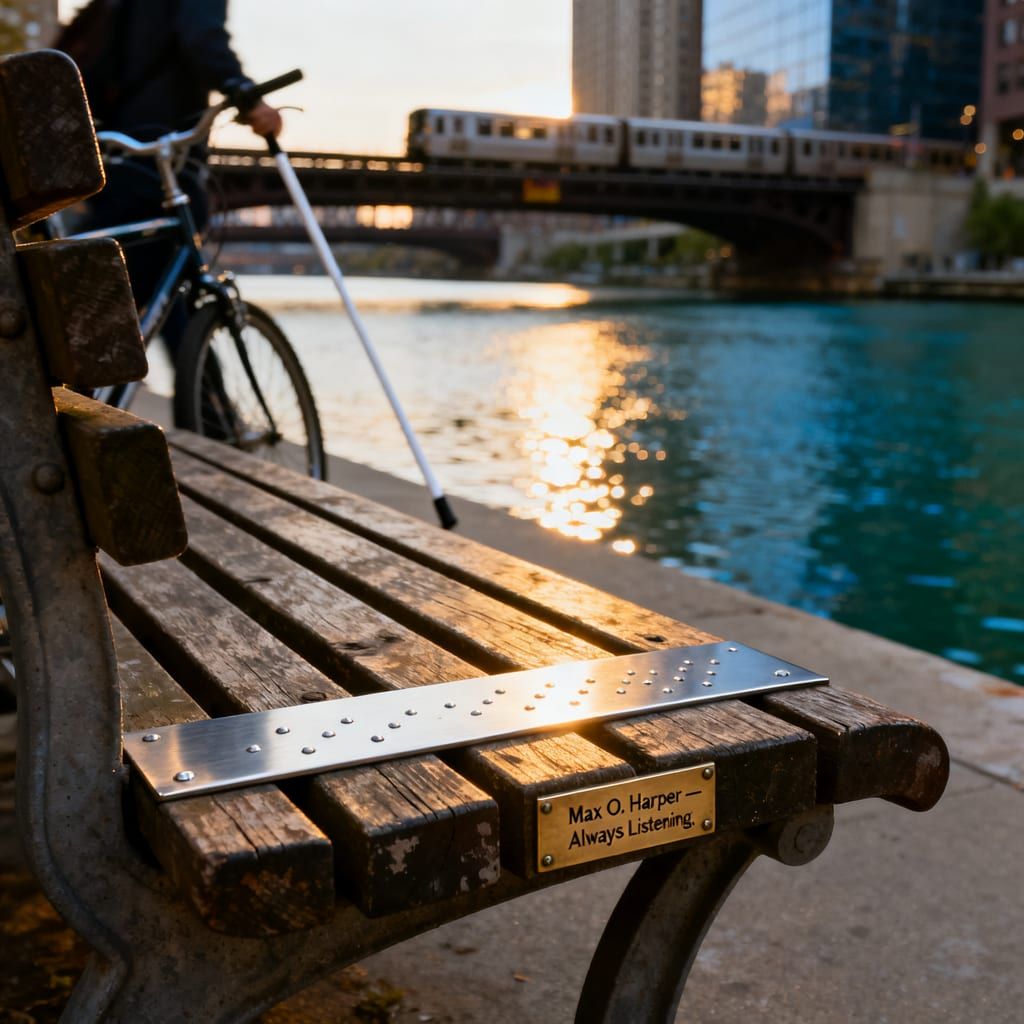
At a park downtown, they found a brass plaque screwed to a bench. The application had listed, in small type, two names. Lina read them aloud. Hers and Jonah's. The font carried the same neat insistence as his letters. She sat. The wood was warm. A bird shrieked and then made a better sound and then was gone.
On the freeway, the sun burned a pale hole into the smog. The 110 curved like someone's crooked arm. They followed the letter to a small diner with a faded sign and a parking lot that sloped a little wrong.
Inside, the air was citrus and burnt coffee. The booths were, indeed, green. A jukebox hovered in the corner, humming with the idea of Otis. A server with silver hoops eyed them kindly.
"Luz?" Lina asked.
The woman's face opened. "Honey," she said. "Where you been?"
They slid into a booth. Lina put her palms on the cool laminate and felt something like arrival-small, sober, strangely generous.
"He almost did it," Jonah said. "He almost brought us."
"He did," Lina said, hearing her father's pen scratch in the space between their breaths. "Just not the way he planned."
They met again the next week.
This time, Lina brought her mother. Teresa wore a blue dress and brave lipstick. Her fingers trembled until she wrapped them around a mug. Eliza brought her sorrow, which she did not pretend to hide. She and Teresa looked at each other like women at the same lake on different days.
They set a fourth place at the table for the man who had taught them both how to tell a plant by its leaves. Four forks, four napkins, butter in foil crescents sweating on a dish. Luz brought the pancakes unasked.
Conversation came in sips-school stories, favorite movies, the way Antonio insisted the gardenias were happiest near the kitchen window. Teresa laughed into her napkin when Eliza confessed he could never keep a basil plant alive. Jonah mimicked the way he'd pinch his lip when thinking. The jukebox, obedient, found Otis.
There were moments when the air tightened, a snag on a thorn. Teresa looked at Eliza and saw years of Thursdays. Eliza looked at Teresa and saw the holidays divided like contraband. But the tightness opened, not with apology-no one apologized for him-but with the small domestic truce of passing the syrup, of letting a story sit without adding a defense.
After, in the parking lot, the late light spilled gold down the car hoods. They stood in a loose square, unsure how to be a family that didn't have a template.
"Next week?" Lina asked.
"Next week," Jonah said. He touched the watch with his thumb, as if to set it. Eliza squeezed Teresa's hand. Teresa didn't pull away.
Back home, Lina drafted a new inscription for the bench, submitted through a city portal that still bore her father's saved password. Her fingers hovered over the keyboard, then moved with a steadiness that surprised her.
Beloved by many, forgiven by choice.
She didn't tell anyone she'd added it. She didn't know if it would be approved; the city had rules about sentiment. But she printed the form and slipped it into the shoebox marked Garden Receipts, nestled it among the seed packets and the faded tags, as if tucking a bulb into winter soil.
Weeks later, when the approval came, she walked to the bench alone at dusk. The brass was new, the letters ready for weather. People strolled past with their dogs and podcasts. The sky made a soft wash of the buildings. Her father's two lives met there without fanfare, without need for correction.
She sat, palms on her knees. The paragraph in her bag had softened, its corners dulled by time and use. She no longer carried it for proof. She carried it the way you carry a map long after you've learned the way by heart.
Somewhere across town, a jacaranda shed its purple. Somewhere else, a kitchen held the scent of lemon oil and tea.
Lina closed her eyes and felt the city breathe through her like a late summer wind, all its exits and entrances, all its bends. When she opened them, the bench waited, capacious as a diner booth, ready to seat whoever came.
Not a clean story. A living one.
A fog-draped night, two souls found, and the quiet shape of a life
Read more →
Story audiobooks for children of all ages — a new one every day on Smarter Way Stories.