Two Houses and One Quiet Heart
A daughter learns to read between the lines of a life split in two
Read more →
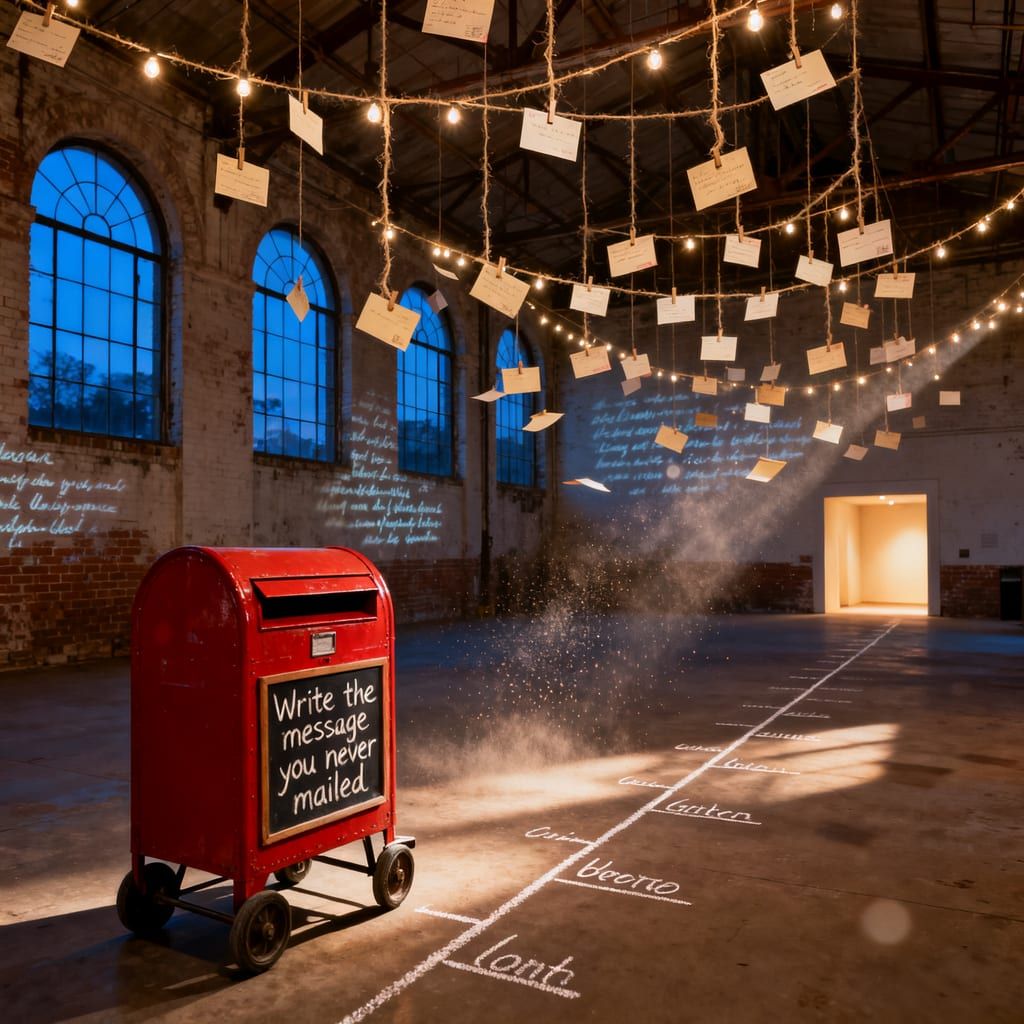
The first time Leena rolled the refurbished red mailbox onto the sidewalk, a gust took the chalk dust and made it snow. People slowed, curious, reading her sign: Write the message you never mailed.
She watched them from a metal café chair, coffee cooling against her palms. A woman in scrubs paused, hesitating like a swimmer at the edge. A teenage boy tugged his hoodie tighter, then leaned over the chalkboard, mouth moving as if practicing. Someone laughed softly. Someone cried behind sunglasses. The mailbox's slot, freshly polished, waited with the patience of old furniture.
Leena had expected a trickle. What came was a river.
By afternoon, she lugged the box home, its belly clinking with cards. On her kitchen table: stacks of postcards, some bought on vacation and never used, some lifted from museum shops, some cut from cereal boxes when money was memory-thin. The faces were of mountains and skylines, a pomegranate split open like a heart, a motel pool under desert stars. The backs carried ink pressed hard enough to leave ghosts on the neighbor cards.
She made tea, opened the first. To the barista who learned my name. Thank you for pretending I mattered when I didn't to anyone else. Another: Dear Jen, I'm sorry about the year I wasn't your sister. I'm still learning how to be.
Leena filed them into shoeboxes labeled in pencil: Almost. If Only. Still Here. She chose the gentlest lightbulbs she owned and sat in their hum, cataloging strangers' almosts while her own life-quiet breakup, unreturned calls to a mother who lived across town like a foreign country-hovered in the periphery like a smudge on glass.
She built a simple website-Return to Sender-white space and clean lines, an invitation that promised nothing but attention. By the end of the week, her inbox filled. The red mailbox traveled with her, bungeed to a dolly: parks, subway exits, a pop-up market under the overpass where violinists tried to outplay traffic. She chalked the sign anew each morning, hands dusted like a baker: Write the message you never mailed.
He was waiting under the scalloped awning the day she came to see the shuttered post office-Mr. Alvarez, caretaker by habit now that no one paid him to care. The building had been boarded for years, slated for demolition when someone remembered the permits were messy and decided to wait.
"You can pull back the boards for the weekend," he said, keys like small bells in his palm. "No open flames. City would have my head." He grinned, then softened. "Your thing-postcards. My wife used to send one from every bus stop when we visited her sister in Tampa. She thought it made waiting count."
Leena stepped inside. The air had that museum-cold smell-dust, old paper, rain held in stone. Brass postboxes winked in dim light; the marble floor was a scatter of fallen leaves dragged in by the wind. She could taste metal on her tongue.
She pulled out her notebook. "I want it to be more listening room than art show," she said. "Less look-what-I-made, more hear-what-we-couldn't-say."
Mr. Alvarez nodded. "Then let them walk it like a letter. Start at Tell, end at Keep."
They chalked verbs on the floor in crisp white: Tell. Forgive. Remember. Ask. Keep. She strung twine in gentle arcs from the ceiling, constellations for the cards to float in. The afternoon light poured through the high windows, golden and forgiving, catching the motes and making them dance.
At night she edited audio-scratching pens, breath before words, small whispers captured with permission in coffee shops where people had said, Yes, read it out loud if it helps someone. She tested a projector against the brick-handwriting rippling like waves across the wall, as if the words were learning to move again.
She wrote placards in her neat, steady script: If the message found you now, what would you do?
Installation day was a fumbling symphony. Twine tangled. Thumbtacks hid themselves. The soundscape stuttered, then smoothed, like someone clearing their throat.
"Too much?" her friend Riya asked, holding a garland of cards at arm's length. The cards trembled in the draft, as if about to speak.
"It's almost," Leena said, then amended, "It's right."
They hung cards according to pulse. The apologies went near Forgive, the last-chance loves near Ask. Remember became a hearth: notes to grandmothers, to a dog named Jupiter, to the boy in the band who moved to Denver and took the loudest parts of summer with him. The ones that didn't fit anywhere-strange, precise, like a tooth that doesn't match the jaw-she tucked along a quiet wall labeled Still Here.
There were cards she could recite: Dear Dad, I learned how to fix the carburetor without you. Dear Ms. P, you were right about the poem. Dear Maya, I wasn't brave. I am now.
When the doors opened, the cold came in with the people-breath clouding, coats whispering, the sound of dozens of strangers lowering their voices as if entering a church without rules. A child tugged his mother toward Remember, index finger leading like a compass. A man stood, hands in pockets, in front of Forgive for a long time without reaching out.
Mr. Alvarez took tickets at the door he had opened a thousand times before. "Welcome," he said to everyone, as if they were overdue.
The room filled with listening. People followed the white verbs like sheet music, crossing paths and doubling back. Handwriting drifted over brick, capital letters tall as trees. The sound of pen against paper threaded through the low rustle of coats.
A woman in a green scarf read aloud in a shaking voice: "To the nurse who sat with me while my husband slept. We never learned your name. You said you didn't need us to. Thank you for the way you handed me the cup of water like it mattered."
Leena hovered, not owner but steward, moving strings back toward their gentle arcs when drafts pushed them wild. She turned a card to face, adjusted a clip, caught a man's eye and nodded as if to say, Yes, you can touch.
It took a while for her to notice the neighbor-Mrs. Kline from the third floor-at the entrance, her wool hat still dusted with a few brave flakes. She carried a cardboard shoebox the color of stormwater and a look that said she wasn't sure if this was the right moment or if there was a right moment at all.
"Ms. Rao?" Mrs. Kline whispered, as if speaking loud might break something. "They cleared old storage this morning." She held out the box. "Yours, I think. Your last name was on the list."
They stepped behind a partition where the radiator clanked like distant cutlery. The shoebox exhaled an old air when opened. Inside: a bundle of yellowed postcards tied with a shoestring. The one facing up was Marine Drive at sunset-gold skimming water, buildings like thumbprints along the edge. Her father had loved that view, the city slouching into evening, the sea learning to hold light.
Leena knew the handwriting before her eyes translated it. Gujarati bowing into English, loops leaning forward as if to make up time.
L. Rao, the card began, addressed to a long-ago apartment. No stamp. In the message, the letters pressed harder in some places, lighter in others, like footsteps on a path.
I don't know how to be near without hurting what I hold. I am learning. If this reaches you, keep the postcard. I'll try again.
She sat. Her knees didn't trust the floor. For a breath she was sixteen again, inventing firmness in her voice to survive the weather of him-the sudden arrivals, the sudden departures; the cheap cologne like a coat the room had to wear for hours after he left.
Her thumb found the edge of the card and did a small, childish thing-it pressed, as if warmth could travel backward.
"Do you want me to go?" Mrs. Kline asked, voice the softness of laundry just finished.
Leena shook her head. He tried. The thought made a hollow sound, then filled, a shell becoming a bowl.
The exhibition was other people's messages; that had been the comfort, the shield. But here, finally, was hers, arriving late like the train everyone jokes never runs on time and still, when it pulls in, people stand.
She returned to the hall with the card cupped in her palm the way you carry a chick. She walked to Forgive and stood a long time that looked like nothing but felt like crossing a rope bridge. She clipped the postcard at eye level, reachable, the twine humming faintly under its small new weight.
A man beside her wiped his face with the heel of his hand, embarrassed by the wet. He was staring at a goodbye to a brother: a last hospital door never opened, a coffee bought and thrown away when the text came. He noticed her looking and offered his rawness without words.
They read each other's steadiness. They traded silence like you might trade the seat near the window because the other person needs it more.
"Can I-" he gestured to her father's card.
"Yes," she said. "Read it."
He did, mouth shaping the words with care, as if reading to a child in a storm. When he finished, he didn't say anything about fathers or about late things. He just placed his hand on the twine next to the card for a second-nothing dramatic-then moved on toward Remember, eyes trying to be brave.
Somewhere behind them, a laugh cracked like a stone in a fire and then turned into crying. Mr. Alvarez tilted his head back to look at the ceiling like a man who knows the pipes.
Leena drifted to the little desk near the entrance where a stack of blank postcards waited in a wooden tray. She sat and turned one over. The clean side made her think of snow. Her hand hovered.
Not to her father. The line had crossed itself without her help. She wrote to her mother instead, the way you might put your foot on the first rung of a ladder without counting how high you'll need to climb.
Mom, I would like to try again. If this reaches you, keep it.
She stared at the words until they steadied. She turned the card over to the photo-a lighthouse standing against a sky the color of dishwater just before it clears. She photographed it for the site, for Return to Sender, for the record that something had been said. Then she tucked the physical card into her coat pocket where warmth could find it.
Closing time came like a dimmer, not a switch. The projections slowed their waves. The murmurs thinned to threads. People left in twos and in ones, touching the doorframe like a promise as they went.
Leena walked the verbs, checking clips. Tell. Forgive. Remember. Ask. Keep. The floor chalk had smudged under so many careful feet and looked, somehow, more like what it meant.
At the door, Mr. Alvarez waited with his keys turned in his hand. "How'd it go?" he asked, low, the way you talk in a room after a baby's fallen asleep.
"We mailed what we could," she said. It felt right in her mouth.
He nodded at the ceiling constellations. "Stars don't mind being late," he offered. "They take their time getting here."
When the last light clicked off, the building held itself like a breath. The old brass and marble remembered what it was to be a place where messages began-where people believed the distance between hands could be managed with stamps and hope.
In the dark, the twine lines hummed, a barely there sound, as if tuning. The postcards hung in their small galaxies, each one a world that had almost been lost and was, for now, found.
Leena stood at Forgive one last time. She didn't touch the card. She didn't need to. She felt for the postcard in her pocket, its corner pressing into her palm-a presence, not a thorn.
Outside, the late-autumn night shuffled its cold. She stepped onto the sidewalk and the city let her in, the way it does when you've said something true and the air understands. The red mailbox waited by the door, chalkboard leaned against it, letters already smudged by the damp.
She picked up the chalk. For morning. She added a thin line beneath the words and a small arrow toward the handle-like an instruction, like a dare.
Write the message you never mailed-
and then, under it, smaller, as if to herself: Keep what reaches you.
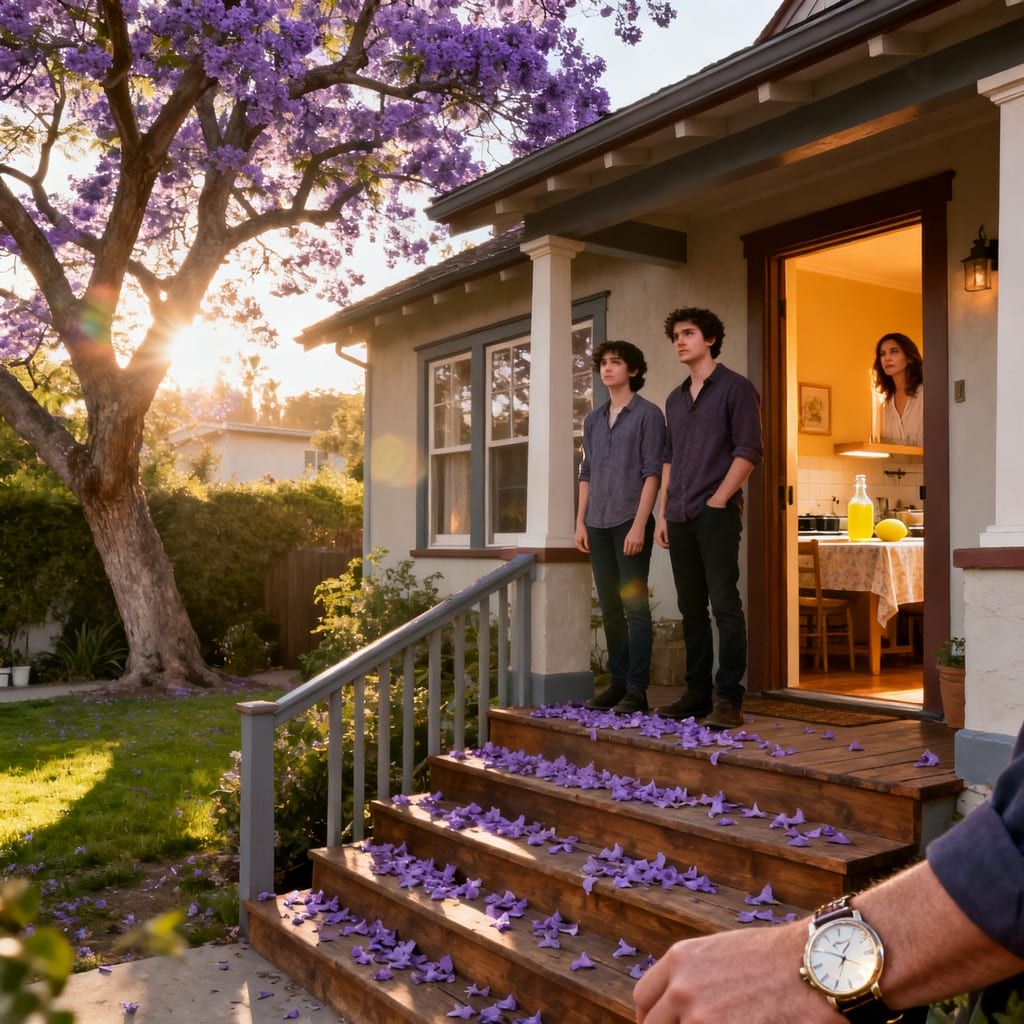
A daughter learns to read between the lines of a life split in two
Read more →
A fog-draped night, two souls found, and the quiet shape of a life
Read more →
Story audiobooks for children of all ages — a new one every day on Smarter Way Stories.