Two Houses and One Quiet Heart
A daughter learns to read between the lines of a life split in two
Read more →
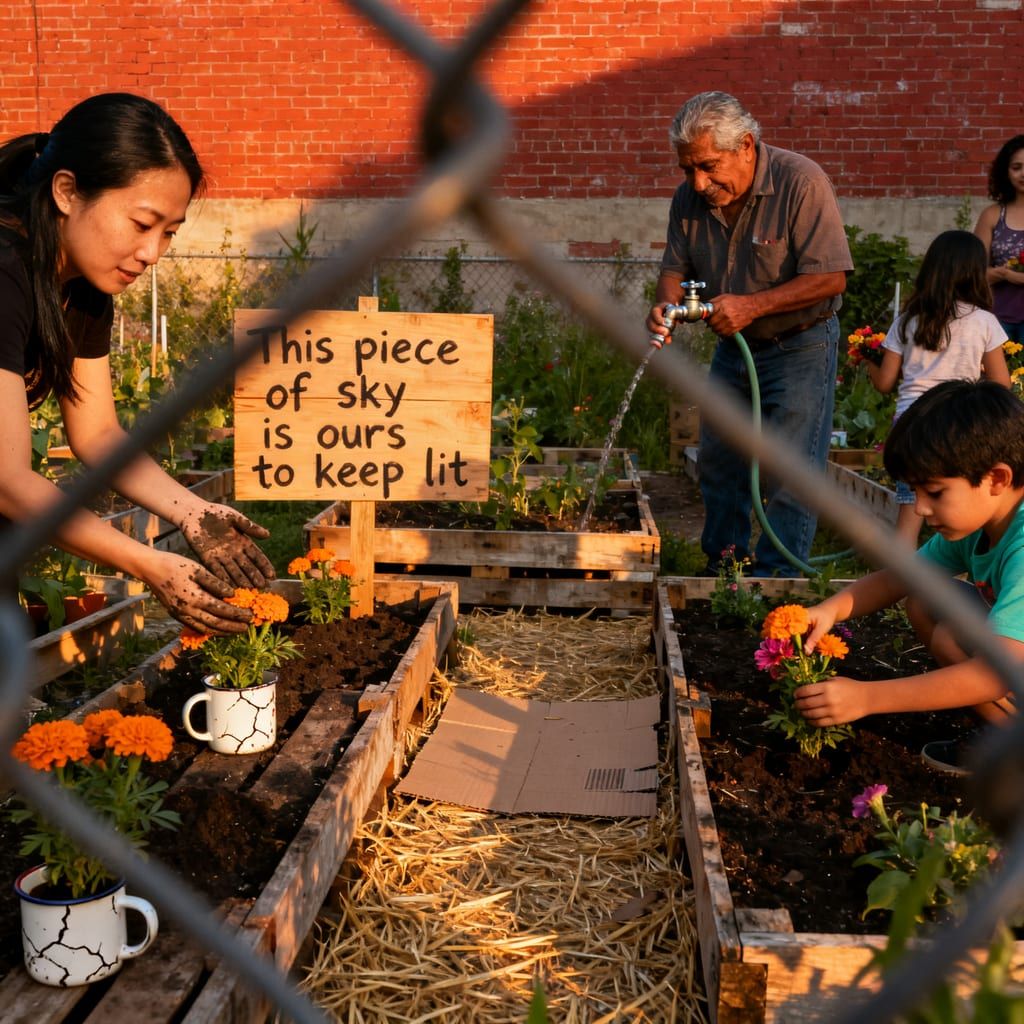
On the second Saturday after she lost her job, Elena Park stood at the curb and studied the lot that took up half her block. Chain-link leaned like defeated shoulders around its edges. Crabgrass clawed between broken glass and sun-bleached bottles. The cherry trees two doors down were throwing their petals like confetti at a party the lot refused to attend.
She'd meant to be errand-running, apartment-organizing, future-planning. Instead, she held a paper envelope of heirloom tomato seeds she'd bought out of muscle memory, because last spring she'd grown something on a balcony she no longer had. The envelope went soft in her palm with sweat. She looked at the lot again, then at her keys, and then at the small, stubborn thing in her chest that had been asking all week: What if you started here?
She came back with gloves, a black trash bag, and a trowel the color of toothpaste. The gate's chain had rusted to lace. She lifted it and wriggled through. The air smelled like damp cardboard and winter's last breath. When she crouched, the soil had give, as if it had been waiting.
She pulled weeds that surrendered and weeds that fought. She filled one bag, then another with crumpled soda cans, a pilgrim's procession of tiny liquor bottles, a cracked watch. When she found a whole bottle, light still trapped inside, she held it to the sun and laughed.
By noon, a patch the size of a welcome mat lay cleared. She planted one tomato, teeth clenched in a mix of faith and defiance, and pressed a hand-lettered stake into the soil: If you water, you're welcome.
"Not bad for a first pass," a voice said from the sidewalk. A man with a gentle slouch leaned on the fence, gray at the temples, grease still holding the shape of past labors under his fingernails. "You'll want a splitter."
"I'm sorry?" Elena brushed hair from her forehead, leaving a clean stripe of dirt.
"For the spigot on the corner building." He nodded with his chin toward a brick rowhouse with a side tap. "I'm Mr. Rivera. Retired, but I still know my way around anything threaded."
He returned ten minutes later with a hose splitter in one hand and a story about soil in his pocket. "This dirt's got memory," he said, twisting brass to brass. "You see the way it settles? Compacted, but not dead. People used to turn it here. Before the fence. Before the bottles."
"Used to?" Elena asked, kneeling, pressing her palm flat to cool earth.
"Long time back." He attached the hose like a man blessing a font. "You'll want mulch. And marigolds for the nematodes, if we're lucky enough to have nematodes and not just broken dreams." He smiled with half his mouth.
They watered in silence, the hose's hiss like a sigh. The tomato plant trembled, leaves catching droplets as if this were the first soft rain in years.
On Sunday, a girl in pink leggings came down the sidewalk carrying a chipped mug cradled like a baby bird. Marigolds, orange and unapologetic, thunked against ceramic. Behind her, a boy pushed a toy truck with three wheels and solemn purpose.
"For the bugs," she said, setting the mug beside the tomato and stepping back. "My abuelita says they're guard dogs with petals."
Elena looked at Mr. Rivera. He lifted his palms: See? Memory.
On Monday at dawn, a grocery bag sat next to the gate. It was tied with a careful bow and damp at the bottom where coffee grounds bled through. A note in tidy block letters read: Compost. Night shift. Keep going - L.
The post appeared on the neighborhood app Tuesday afternoon: Anyone seeing the little garden start on Henderson? Who is doing this? The comments piled up with hearts and opinions and someone declaring a pallet delivery "inbound." When Elena came home from an interview that wasn't an interview so much as a reminder she no longer had title or tether, three strangers were measuring the lot with a tape that kept flopping, laughing like old friends when it bit their thumbs.
"Paths," one of them said to her, gesturing with a pencil held like a wand. "We thought straw over cardboard. Like arteries."
No one asked her if it was okay. They asked, "Where does the water reach?" and "Do you like basil or is that just me?" The lot sorted them, not by résumé but by what they'd brought: a bundle of stakes, a jar of saved seeds, a two-by-four with the nails hammered out and the rust left, a story about a mother who made salsa with too many peppers and a laugh that made the telling safer.
By Thursday, pallets leaned into raised beds like rough-drafted sentences. The chain-link was patched where it sagged, not to keep people out but to hold something together. A list appeared on the fence in permanent marker: Water M/W/F - Elena + Mr. Rivera. Compost: L. Pallets: Kerry and Jo. Seeds: Anyone.
When a fight flared between two teenagers at the corner, it fizzled at the fence. They stood watching, leaning shoulder to shoulder, throwing in their opinions about cucumbers like it might matter to someone who would pick them in August. An old woman in a housecoat came to the gate with a chair and declared it a good place to sit and watch "the stupid, beautiful world."
A week in, their shoes found the paths before their eyes did. Two weeks, and the lot began to say people's names back to them. "Morning, Kerry." "Thanks, L." "Save me a row, I've got beans."
Elena came home from not-getting a job on a cloudless morning when the world had chosen blue with unnecessary conviction. She found a pot of basil on the stoop. No note. When she carried it to the garden, she felt something novel pricking: being expected.
The tape was the same harsh yellow as crime scenes and cautionary tales. It crisscrossed the gate in an ugly X that made the words harder to miss: NO TRESPASSING. DEVELOPMENT PLANNED.
A silence followed like a held breath. The next door slammed harder than usual. The old woman in the housecoat didn't bring her chair. A bag of compost arrived, but it sat outside the fence, suddenly homeless.
Elena peeled a corner of tape and knuckled the dizziness behind her eyes. "Maybe it's a mistake," she said, softly, to the marigolds who did not believe in mistakes.
"It's not," Mr. Rivera said from the sidewalk, his voice less a sound than a settling. "Larson owned this lot for years. He tried to sell it twice. No takers. Parking's money now." He drummed fingers on the fence post. "He's got a son runs the properties. Doesn't live here."
A meeting sprouted the way all urgent things do-overnight. The back room of the church on Third smelled like coffee and damp hymnals. Someone had printed the notice and taped it to the old cork board with fresh pins that made an eager pop going in.
Elena sat in the second row with dirt under her fingernails and a to-do list in her bag she hadn't opened in three days. The room was full of faces she knew in the ways that mattered now: whose mother had arthritis, whose dog ate tomatoes off the vine, whose hours ran midnight to seven.
A man walked in late with the unhurried posture of someone who has never been asked for proof. Miles Larson was mid-forties with a suit that fit and a gaze that didn't settle. He stood in front and said liability more times than he said people. He said "nuisance complaints" and "trespass" and "uneven surfaces." He didn't sit down.
Elena felt her throat go tight. I belong here more than I do anywhere else right now, she thought, and it sounded both dramatic and like a simple, damp truth.
"Mr. Larson," Mr. Rivera said from the back, where he'd chosen a chair you couldn't surprise. "Before you pave our most interesting conversation, hear something."
Late that morning, Elena had distracted her hands by sifting a corner for glass. Her trowel knocked something that thunked instead of chimed. She pushed aside soil and pulled up a rust-colored coffee tin, lid sealed with a thick band of wax gone the color of nicotine. The seams had held through rain and disinterest.
She opened it with the gentleness reserved for old bones. Inside, seeds nested in yellowed paper packets like sleeping birds. A note, brittle at the folds, unfurled in block letters that tried to be neat and failed halfway through a sentence. For whoever keeps this piece of sky-my hands are tired. Please don't let it go dark again. -M.L., 1979.
Her chest had filled in an unfamiliar way, like a door swinging to let weather in. She'd slipped the note into her jacket pocket and walked around all afternoon with its heat against her heart.
Now, in the fluorescent church room, she stood and held up the letter with two fingers because her hand was shaking. "We found this," she said, and her voice did the small cracking thing she hated. She crossed the space between metal folding chairs and liability speeches and handed it to the man who would decide.
Miles took it with a sigh like paperwork, then read. He did not read quickly. He did not roll his eyes. Quite suddenly, the room shifted around him, a flock of starlings turning at once. He looked older, or younger-it was hard to tell. He ran a thumb over M.L. like it could smear.
"That was my mother's initial," he said, not to the room but to the letter. "Marjorie Larson." He laughed once, a short sound. "She used to drag me someplace where my shoes got ruined, my father said. Dirt under my nails like I was somebody else's kid." His face did an unfamiliar thing. "I didn't know it was this lot."
Silence again, but this one was fuller.
He looked up, his jaw working like he was deciding whether to swallow pride or spit it. "Look. This lot is a line on a spreadsheet, but it's also... apparently a page in a family I got wrong." He cleared his throat. "I can't promise a fairy tale. But I can stop the bulldozer for a year. A trial. If-" He lifted a hand as voices rose. "If you form a group. Stewardship, bylaws, insurance. No midnight parties; I'm not getting cited because your cucumbers got lonely. You keep it safe. You keep it clean. We'll talk again before next winter."
Applause started reluctant, like a muscle not used in public, then gathered enough hands to sound like rain on a summer awning. Mr. Rivera, who had lived long enough to know terms are made of teeth and patience, nodded slowly.
They named themselves, which was the first test: Henderson Common Ground. They learned bylaws from a woman who had chaired three PTAs and could coax clarity from a paragraph like a magician's scarf. L-the nurse with the compost-spoke softly but with the kind of authority that comes from waking through other people's emergencies; she found an insurance agent who said, bewildered, that they were the nicest risk he'd taken in months.
Keys were stamped with numbers. A schedule bloomed on the fence like a rotating prayer: Who watered, who unlocked, who picked up the pizza boxes on movie night when a single whisper of grease could summon raccoons and ruin a week. Someone salvaged a white sheet and a projector, and on a night thick with July, they watched a film that made them all cry at different parts. A widow who'd worn grief like an invisible uniform arrived with hot sauce in unlabeled jars and laughed at herself when it made Mr. Rivera hiccup.
One afternoon in August, in the aisle of beans that had grown into a tunnel where children learned to whisper, two neighbors who hadn't spoken since a parking feud in April reached for the same tender runner. Their fingers brushed, and something unknotted itself, slow as a vine curling toward sun.
Elena learned to share a hose without apology, to ask for help pounding a stake without feeling like a problem, to put a jar of saved seeds on the table and let someone else take them home. She learned that belonging was less a thunderclap than the sound of other people's keys at your lock.
When her phone rang with an offer for a job in a company that said it cared about users the way people say they care about rain-grateful when it comes, impatient when it doesn't-she listened. She looked at the garden. She said yes, but she didn't pretend it would be the thing that made her a person again. She'd already found that, kneeling on the ground with strangers who were becoming difficult to differentiate from friends.
They picked the last tomatoes just before the first frost, hands numb and triumphant. The fruits were ugly as knuckles and sweet enough to make Elena wince with pleasure. She bit into one, juice running down her wrist, and the taste folded time-balcony summers and childhood kitchens and this present moment where someone was calling her name without apology.
The sign on the fence had started as a scrap of wood and a question. By October, it was a proper board, sanded by Kerry, painted by kids with tongues out in concentration, lettered by a tutor who had taught half the block how to write their names with flourish. Together, they stood in the chill and watched the words dry.
This piece of sky is ours to keep lit.
Mr. Rivera touched the corner and said, "Your mother would have liked this," to Miles, who had stopped by on a Saturday in a coat too nice for dirt. Miles didn't answer right away. He put his hand around the fence post, the way you might hold the edge of a memory to steady it.
Elena locked the gate that evening with a key that wasn't just hers. The lot sat quiet under a bristling sky, paths pale as bones, marigolds holding their orange like a last, stubborn sun. She turned once to look, because you always do, and watched her breath make brief ghosts in the air. Across the street, the old woman in the housecoat lifted a hand from her chair and waved.
Elena waved back. Then she tucked her hands in her pockets, felt the soft, worn fold of an old note she had started carrying as talisman, and walked home slowly on a block where she knew the cracks in the sidewalk well enough not to trip.
Some nights, you hold the match. Some nights, you are held by the light.
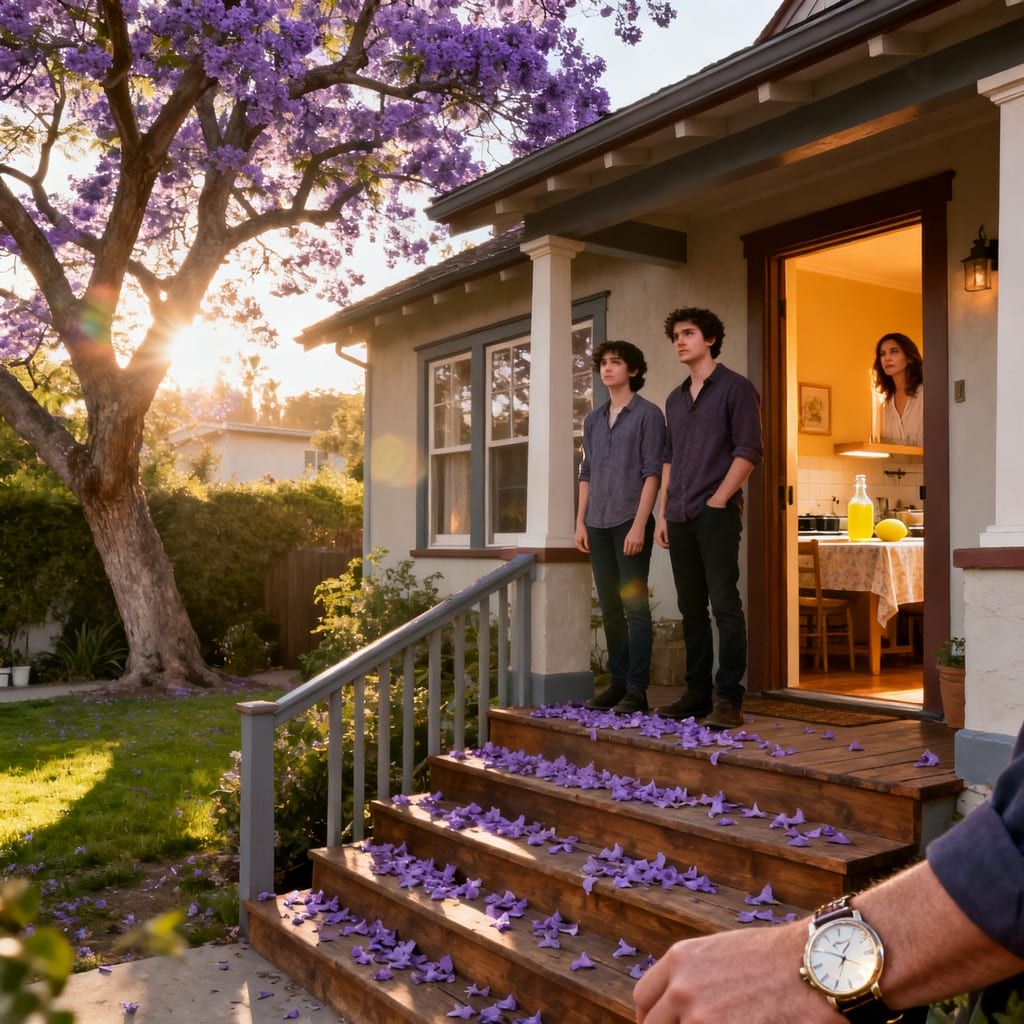
A daughter learns to read between the lines of a life split in two
Read more →
A fog-draped night, two souls found, and the quiet shape of a life
Read more →
Story audiobooks for children of all ages — a new one every day on Smarter Way Stories.