Two Houses and One Quiet Heart
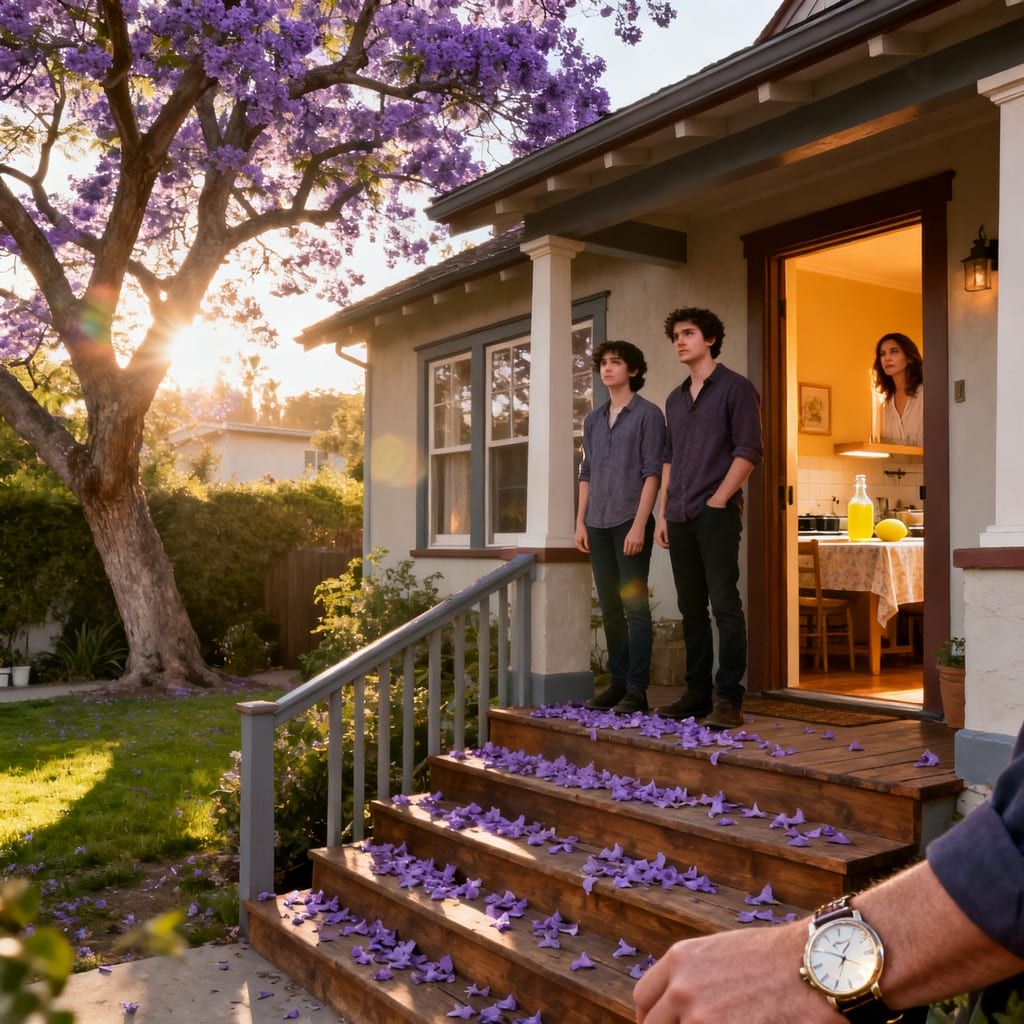
A daughter learns to read between the lines of a life split in two
Read more →
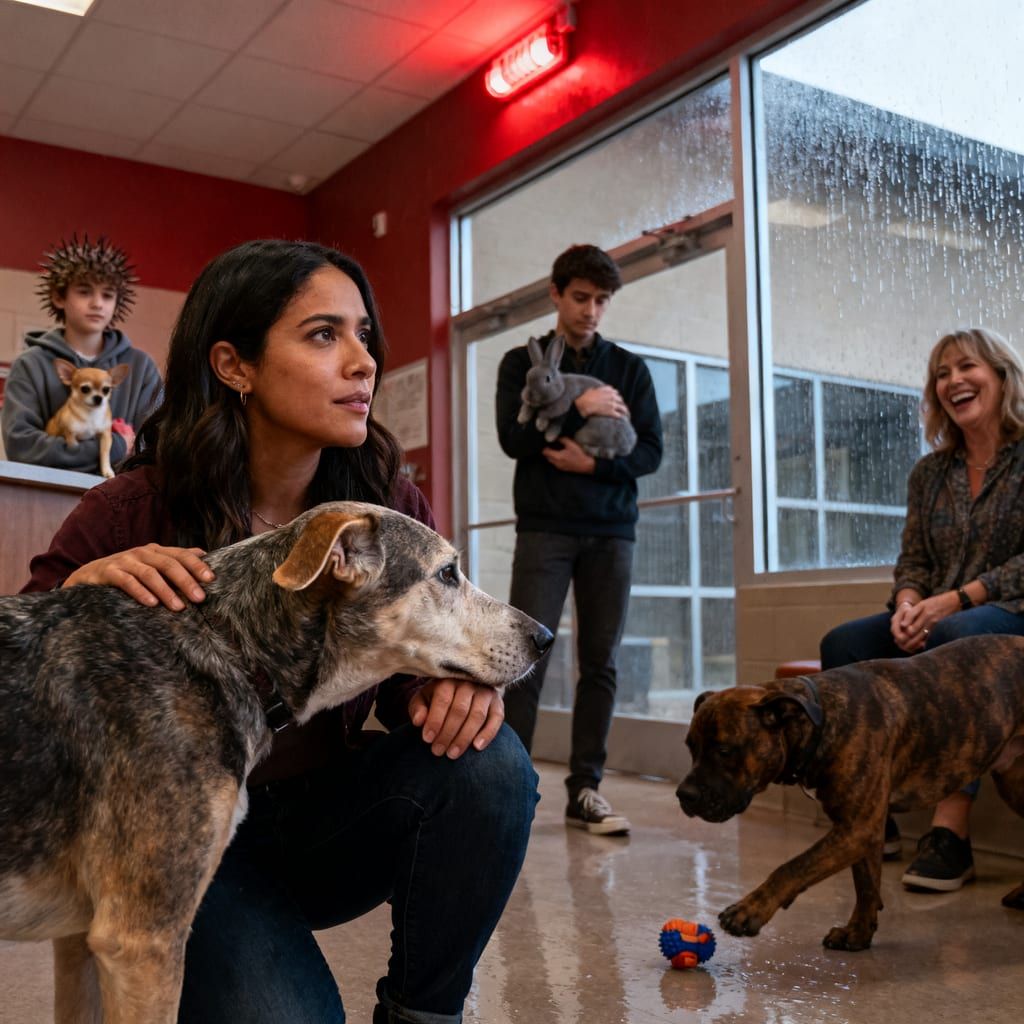
By the time the thunder reached the shelter, the lobby smelled like wet wool and popcorn. Children fought over the squeakiest toys; someone's latte left a cinnamon comet on the sign-in sheet. Elena Ruiz stood behind the folding table, pen poised, watching clouds belly against the skylight like something heavy deciding.
"Hi, welcome-give me a minute," she said to a couple dripping by the door. Her eyes swept the room the way they always did, tracing quiet shapes: skittish calico, gentle reader; lean heeler, runner who kept eye contact; rabbit with ears like prayer, a person whose apartment was also a library. It was math with breath.
A crack split the sky. The lights hiccuped, then the music from the Bluetooth speaker-some bouncy playlist a volunteer swore would boost adoptions-sputtered into hush. The hum of the rows of kennels fell a notch, as if even the dogs recognized the drop-off.
Then the power went.
Dark, and then the emergency lights woke up in red-glow strips. A toddler clapped, delighted. Somewhere, a cat hissed like a match.
"Stay calm," Elena called, calm already woven into her voice. Her laptop screen, mid-form, blinked to black. The digital profiles-family recipes she'd memorized, where the comma went in a dog's anxiety about skateboards-dissolved.
A volunteer barreled in from the back with a bin of paper tags, breathless. "Everything reset. I grabbed what I could. It's... a lot."
Tags spilled like leaves across the table. Names-Waffle, Mango, Freddie-mixed into unfamiliar constellations.
Elena exhaled. Fate, she'd always joked in orientation, was lazy storytelling. Ask better questions. Look for the way a person holds their silence. Do not believe in lightning bolts.
Lightning cracked again, loud enough to rattle the biscuit jars.
She picked up a purple tag, wiped rain from its corner. The shelter's front windows filmed with water. The world simplified to breath and beat and the slick squeak of shoes.
"Okay," Elena said to the room, and to herself. "We do this by attention."
Without profiles, the lobby became a map of gestures.
A girl about fifteen skulked behind her mother's shoulder, hoodie up, eyeliner like parentheses. She watched a kennel the way some people watched doors. Inside, a chihuahua pretended to be part of his blanket.
"Name?" Elena asked.
The girl shrugged.
"Of yours, not the dog's."
"Rae," the girl said, a challenge in a syllable.
"Do you like quiet?" Elena asked. "Or do you like being left alone enough to hear quiet?"
Rae's eyes flicked to her, surprised into truth. "Yeah."
Elena knelt at the kennel, slid it open slow. The chihuahua's tremble was its own weather system. Rae had a hand in the pocket of her hoodie, thumb tracing a loose thread.
"Let him choose," Elena said softly.
The dog slid out like a secret. He sniffed Rae's shoe, then went still, and then-without permission-climbed into Rae's hoodie as if it were a cave made for him. Rae startled like she'd been touched in a dream. The dog's head popped out under Rae's chin. His breathing ticked into her collarbone.
Rae didn't smile. But her shoulders went from iron to linen.
"His tag says... um, Muffin?" Elena squinted. Another paper said "Cricket." Everything wore the wrong name. But Rae had already scooped the dog against her ribs, both of them narrowing the world to a two-person hush.
Across the room, a man in a blazer hovered, damp curls pasted to his forehead, phone in hand, email notification strobing. He finally set the phone facedown on the table with a sound like surrender. He stopped in front of the rabbit pen. Inside, a ball of dignified gray breathed slowly, nose a metronome.
"Do you... do you have to, like, walk it?" the man asked.
"It's a him," Elena said. "And no. You sit with him while your heart rate finds the floor."
He huffed something between a laugh and a cough. "I don't remember the floor."
"Try." She opened the pen. The rabbit regarded the man as if to say, here are the terms. The man crouched, then winced. Knees, pride. The rabbit ambled over like a small, heavy thought and tucked under the man's arm. The man's shoulders unclenched. The phone, that needy rectangle, stayed facedown.
At the window, a woman in a raincoat read a pamphlet titled Low-Maintenance Pets while blinking hard against exactly one tear per eye. She stood on one foot and then the other, untethered.
"Hi," Elena said, coming over like you would to the edge of a pool. "Looking for... nice quiet, no fuss?"
The woman nodded, then shook her head, as if disagreeing with herself.
Behind them, a pittie with a smile like a broken-open sun dropped a rubber donut at the woman's feet with the insistence of a full sentence.
"Oh," the woman said, the vowel made of rain and something loosening. She stooped. The pittie wiggled with such sincerity he nearly folded himself. Someone laughed.
It took a second for Elena to realize the laugh came from the woman, and that it didn't sound careful. It sounded like a door finally landing in its frame.
Two days later the city dried at the edges, gutters vomiting leaves and bottle caps. The shelter hummed with its usual battery of beeps and the low, conversational bark of dogs complaining about squirrels.
Elena's inbox lit with updates, little lanterns.
From Rae's mother: He sleeps in her laundry basket while she does homework. She says it helps her breathe. He won't go to my room, only hers. Thank you thank you. A picture-Rae on the floor cross-legged, hair in her face, the chihuahua a comma against her.
From the man in the blazer-Amit, she learned-subject line "Current status": We have instituted quiet rabbit time. Fifteen minutes before dinner: no screens. Yesterday I ate without my laptop on the table. He thumps when I slouch. We are negotiating. A blurry photo of a gray rabbit lording it over a yoga mat.
From the woman in the raincoat-Dahlia: Sunrise walk. Who knew I had one in me? He does the silliest dance when I put on shoes. It's like we're syncing up. A video where the pittie's paws went click-click on tile, then a beat later, Dahlia's feet matched it.
Elena leaned back, the office chair complaining like an old friend. She'd always said the work was in the questions. But her hands remembered the storm-cool fur, how attention had filled the room, how in that red emergency light people and animals had made their own good math. Maybe "fate" was not lightning at all. Maybe it was the habit of showing up and seeing what was already leaning your way.
On her desk, a Polaroid she kept propped against a stapler stared back: her and her father on a concrete stoop, their knees knocking. He had his mailman's shorts on, sock lines crisp, a red mailbox perched over his shoulder like a sentinel. He'd called that mailbox his sidekick. She remembered the storm the night he didn't come home. Sirens lifting and falling, the long quiet after.
The bell over the front door dinged-a real bell, not a digital chirp. A man swept in with the weather clinging to him like an argument. He held a flyer: Waffle in curly letters over a brindle puppy whose ears had not learned the rules of standing.
"Sorry," the intake volunteer started, gentle. "Waffle went home this morning."
The man's face fell but not all the way apart. "Oh," he said. He did not leave.
He drifted down the row of older dogs with a kind of unpracticed patience. At the last kennel, he stopped. Domino-ten, maybe eleven, body like a tired loaf, one ear folded like a page corner-stood up, then sat like it had been his idea all along. His eyes were the color of wet bark. He gave the man a look like they'd met before and were catching up.
Elena came up beside him. "Domino," she said. "We don't know if that's his real name. He came in years ago."
"He's got presence," the man said, the word landing without irony. He glanced at Elena's desk and did a double take. "Is that... that's your dad?"
Elena followed his gaze to the Polaroid. Her throat did the thing it did when someone said her father in the present tense.
"Yeah," she said. "He-he delivered mail in Sunset Heights."
"I know," the man said, voice tipping into soft. "I'm on route four now. Used to be on two, back then. That night it stormed? Took me forever to finish. I remember that red mailbox." He pointed, not to the photo, but to the scar behind it, the way the memory sits under the skin. "There was a dog under it. Shivering. I coaxed him out with half a granola bar. He wouldn't go, then he did, like he decided. I brought him here. Didn't know what happened after."
Something clicked in Elena's ribcage, a tiny geometry aligning. She looked at Domino. Domino looked back, the look dogs give when they have been watching longer than you think.
"Do you remember what he looked like?" she asked.
The man stared at Domino's bent ear. "One ear bent," he said. "Like-" He gestured a page corner with his hand.
Elena's hands were already pulling Domino's intake folder from the file drawer, the cardstock slick where the power outage had dampened everything. She scanned. The intake date was stamped in blue. The number felt louder than the room.
Her finger pressed the page. "This is the night," she said, not trusting her voice with the rest of the sentence.
On Domino's run sheet for the week, someone had tied a red bandana with a number Sharpied on it: 47. A bin tag that had never been switched back after the outage. Her father's lottery number, the one he played with a wink and a quarter, the one he taught her to spot in street addresses, bus lines, the backs of jerseys.
"Hey," she murmured, kneeling. "Domino."
He padded out of his kennel like a creature not in a hurry, the dignity of age around him like a coat. He came straight to Elena and leaned his heavy chin into her knee as if he were finishing a sentence she hadn't noticed she'd begun.
The man-his name tag read M. Ortega-stood with his hands open, as if to catch the shape of the moment should it tip.
Elena felt foolish and precise and entirely awake. For years she had curated other people's yeses. Now something old and quiet had been waiting at the edge of her routine, head tilted.
"I can fill out the form," Ortega said tentatively, misreading the way her hands shook.
She shook her head, a small laugh escaping. "No," she said. "I mean-yes, we'll fill it out. But this one's mine."
She printed the adoption form. The machine clicked and hummed like it had opinions. Her hands shook not with doubt but with recognition, a current that ran not from above but through.
On the desk, the Polaroid watched. The red mailbox looked like punctuation. 47 looked like a wink.
"Name?" the form asked.
She wrote Domino in the space and then, in parentheses, 47. It made her feel nineteen and thirty-three at once.
Ortega laughed softly. "He's going to like your stoop," he said.
"I think he already knows the way," Elena said.
Domino stood, then angled his body so the weight of his head could keep touching her. He smelled like cedar shavings and the deep-down of a kennel. When she glanced up, the storm-scrubbed light through the front windows made his eyes shine like wet bark, the same as the night a mail carrier had bent down with half a granola bar and a soft word.
She remembered telling new volunteers that matches weren't magic, they were mirrors. Ask better questions. Pay attention. She didn't take it back. Attention had put a chihuahua into a hoodie like a refuge. Attention had slid a rabbit under an arm and convinced a laugh out of a raincoat.
But standing there, pen hovering, Domino leaning into the vowel of her knee, she understood the rest: patient attention made a net. Time did the catching.
She signed. Domino exhaled a sound that was almost a sentence.
It was only four blocks, but they made it a procession. The rain had rinsed the city into truer colors. Domino kept his pace inside hers, the leash a suggestion, not a tether. At the corner, a puddle held a slivered sky. Domino paused and looked inside it like a habit.
They passed the bodega where her father used to buy scratchers and oranges. Mr. Morales came out with a broom, then did a double take. "Elena," he said, the surprise in his voice an old song. "Mira ese perro."
"Domino," she said, as if introducing someone her heart had been waiting to speak of.
On her stoop, the paint on the railing had peeled into a map. Domino climbed the steps and then turned, waiting until she was there, like manners learned before weather. When she opened the door, he stepped inside and stopped in the narrow entryway, head tilted at that angle that meant an old question remembered.
She set his bowl on the kitchen mat. He drank like someone who'd read the instructions. He sniffed the living room rug, approved, and sank to the floor with a sigh that emptied the room of something heavy.
Elena sat cross-legged. Domino shifted, placed one paw-careful-against her ankle. The Polaroid on the shelf caught the afternoon light, and for a long breath the red mailbox glowed.
"Hey, Dad," she said under her breath, not expecting anything, not demanding. Just attention, just time.
Domino's ear-his page-corner ear-flicked, as if someone had turned to a chapter she knew by heart but hadn't read in years. Outside, a mail truck rolled past, low and human and ordinary. Inside, Elena smoothed the bandana where 47 bled through red.
Some rescues you plan. Some find you anyway.
And sometimes, if you watch closely enough, you learn to say yes to the right one when it leans in.
A daughter learns to read between the lines of a life split in two
Read more →
A fog-draped night, two souls found, and the quiet shape of a life
Read more →
Story audiobooks for children of all ages — a new one every day on Smarter Way Stories.