Two Houses and One Quiet Heart
A daughter learns to read between the lines of a life split in two
Read more →
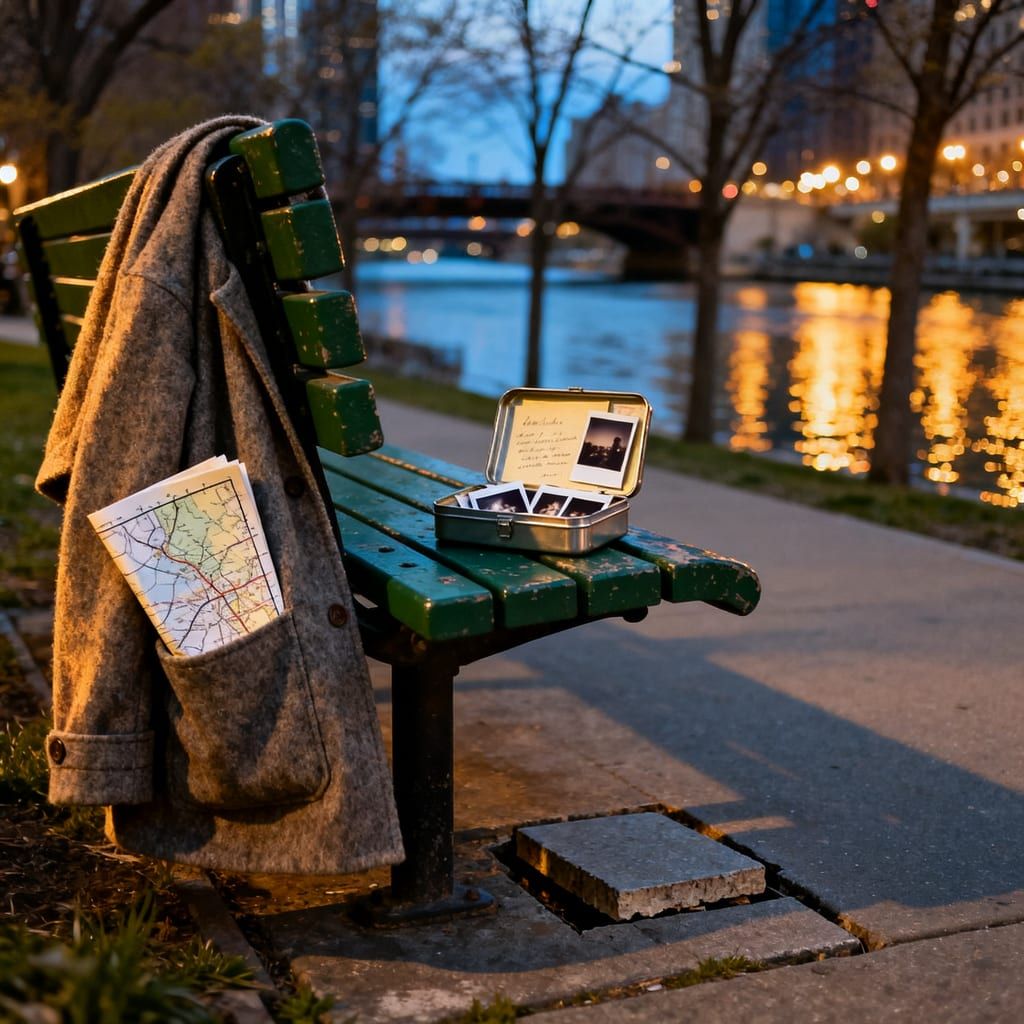
The coat smells faintly of cedar and someone else's winter-a whisper of cologne, a hint of dust. Noah tries it on in a thrift store where the bell above the door complains each time the wind shoves inside. The price tag reads twenty dollars in blue ink. He rolls the cuffs once, twice, pretends he isn't checking his phone to avoid his mother's name lighting the screen.
Outside, the cold is the kind that flosses your ribs. He tucks his chin into the collar and feels something rasp his wrist from the lining. A paper insistence. He digs and coaxes out a folded sheet-creased and softened, edges bruised by pockets. A hand-drawn map breathes across it: bus routes in pencil, coffee rings stamping intersections, little arrows that meander like polite invitations. An X sits beside a thin blue line-the river-quiet as a held breath.
He could laugh. He could throw it away. Instead, maybe because it's Saturday and he has nowhere to be and because grief has turned his days into gray rooms with no furniture, he takes the next bus.
The first dot on the map is a bakery with a sugared window. Inside, heat hums and a radio plays a cumbia soft as steam. The woman behind the counter has hair like a cinnamon bun and flour on her knuckles.
"Cold today," she says, laying a napkin under his scone as if it's a small animal. "First one on the house if you have a story."
Noah almost says he doesn't-only severance paperwork and unanswered emails. But her eyes wait, and the bell keeps announcing strangers, and the scone is warm in his hands.
"My coat had a map," he says, as if auditioning a line. He shows her.
Her face folds into delight. "Another one! Haven't seen one in a while. A man used to bring them in-Arjun. Traded me a story for a dozen. He'd ask what kind of day you were having, then make it into a legend. He made everyone a little taller in his telling."
The name hits like stepping in a puddle when you aren't looking. He feels the cold in his socks.
"Arjun," he repeats. The syllables are round in his mouth. His father's name.
"He did the volunteer crew photos too," she adds, pointing to a bulletin board near the restroom. "Big hands, blocky handwriting. Haven't seen him in a bit."
Noah turns the map over with his thumb, as if something new might appear. Blocky handwriting. The rumor of his father floats up in the sugar-scented air and will not dissipate.
He breaks the scone in half and eats with careful small bites, as if he might accidentally consume a clue.
The next mark on the map sends him a few stops south. The bus groans through slush and salted streets. The city is a chorus of gray-pigeons puffed like fists, the river a tight-lipped bruise. His phone vibrates again. Ma. He silences it, shame skittering under his ribs like a mouse that won't be caught.
At the bodega, the door chime is a single sad beep. Shelves lean with cans and dusty tea tins. A photo by the register shows a dozen people in orange vests beside a mountain of black trash bags and, inexplicably, a Christmas tree in April. At the center: a man smiling with his whole face, a banana peel on his shoulder like an epaulet. The handwriting along the bottom reads: River Clean-Up Crew, Year 3 - bring your own jokes. The A in Arjun's signature is a stubborn tent.
"You looking for him?" the clerk asks, catching Noah's gaze on the photo.
"I don't know," Noah says, because it's true.
"He made everyone sign the back," the clerk says, lifting the frame and turning it. "Said we'd forget we were proud if we didn't make it official." He squints. "Haven't seen him. But that map-he and a couple neighbors cooked those up. Left them in coats and books and on that community board down the block. Said people needed a reason to bump into each other."
Noah thanks him, buys a pack of gum he doesn't want. Out on the sidewalk, he unwraps a strip with his gloves still on. The gum tastes like evergreen and memory.
At the community board the paper layers are thick enough to be bark. Flyers bloom and curl: yoga, lost cats, English classes, a church potluck with a chili pepper wink. He peels back a corner and finds, stapled half-hidden beneath a notice for piano lessons, an index card drawn with tiny squares-a code for bricks? A note in block letters: For when the wind is too much, there's a place to lean. Beside it, the map's penciled river bends like a wrist. The X sits under a penciled sun, nothing theatrical, just a small insistence.
By the time Noah reaches the riverside park, light is sliding off the buildings in slow gold sheets. Children's voices ricochet from the playground swings, a chorus of double-dares. The wind has teeth. He pulls the coat tighter, grateful.
The bench waits where the path curls near the water, its slats painted a bureaucratic green. Ordinary as a bus stop, the kind of bench that exists to be ignored. He sits. The metal is cold through the coat, an honesty he appreciates.
He looks down. The bricks beneath are arranged in a grid, one corner slightly cocked as if winking. He tries to lift it with his bare fingers, fails, swears softly, then uses his house key as a lever. The brick gives with a gritty sigh. Below, a tin box winks-mottled, but intact.
He hesitates, palms cupped like he's about to catch something fragile. Then he opens it.
Inside: letters bundled with a ribbon the color of tea. A stack of Polaroids, edges frayed, capturing block parties where kids hold water balloons like eggs. A paper crown on a streetlamp. Tomatoes so fat they split with pleasure. A photo of the bodega clerk ten years younger, the banana peel still committed to its bit. Notes with small, generous handwriting: If you need a scarf, take the blue one. If you have extra, leave it here. A pair of wool gloves, one thumb mended clumsily with red thread.
At the bottom, an envelope sealed and addressed in blocky letters: Noah.
For a moment he thinks his heart will jerk from its moorings. He hasn't seen that handwriting in a year; it arrives like a train exactly on time, which feels like a magic trick. He breaks the seal with his thumb.
The letter smells like paper and a drawer kept shut. The voice inside is his father's even when the words don't speak aloud.
Beta, it begins. The word is an ache and a palm on his head, both at once.
If you've found this, I'm grateful and a little afraid. I helped make a map like this with friends. We lost track of who needed it most, so we left them in the city like seeds. Not to make people go somewhere, but to help them land near each other. Maybe you're angry with me. I don't blame you.
I am no good with what needs saying quickly. Your mother said once that I talk like bread rises. I don't want to excuse that. The silences hurt you. They hurt me too. I learned to tend what grows slow-neighbors, saplings, a spice garden in winter light. Dignity lives in the long work you cannot hurry. I meant to give you this when we could talk without breaking each other's plates.
Plot 17 at the community garden is in your name. I paid through next spring. Grow one thing without a deadline. If an old man named Leo grumbles at you, he's soft-hearted. Bring him mint-he'll forgive anything if you share mint. When you're ready, tuck the map somewhere a stranger can't help but find it. If you can't, that's okay too. Just sit on this bench and look at the water. It's going somewhere it decided on a long time ago, but it takes every turn it's given. I love you the way it moves-constant, even when it looks still.
- A.
Noah's eyes salt. He hears his mother's laugh in a different room, his father counting lentils as if sums are comfort. He sees the ways anger became an occupation between them, how he polished old arguments like silver no one uses.
He folds the letter back into itself, then unfolds it again, unwilling to let it be only folded or only read.
He returns to the park the next morning and the morning after that, the box heavy with its own weather. He meets a retired teacher named June who tracks sparrows at five a.m. with a small notebook and a pencil sharpened to a point you could sew with.
"Five nests already," she tells him without preamble, peering over her glasses. "They don't wait for permission." She notices his letter's corner peeking from the coat and taps it with her knuckle. "Yours?"
He nods. She smiles like opening a window. "Good. It's your turn to keep time."
A nurse named Caro tucks a pair of hand warmers into the tin-"For fingers that want to hold the world," she says, laughing at her own earnestness.
A man with a trimmed gray beard and a new pride in his posture hovers until Noah looks up. "I used to sleep right there," he says, pointing to the bench, then to the garden across the path. "Now I water Plot 4 at dawn. Watch who shows up. It tells you something about what a place believes."
Noah walks to the community garden under chain-link and sky. Beds lie like promises under straw. A painted sign lists plots by number. 17 waits between a grandmotherly patch of collards and a child's experiment labeled SUNFLOWR!!! in permanent marker. A laminated stake reads: PATEL.
He squats and presses the soil with his palm. It is cold and complicated. He feels ridiculous and devout. He buys packets of seeds from a hardware store that sells snow shovels and inflatable pools side by side, because this is a city that believes in both futures.
Back at Plot 17, he plants sugar snap peas and arugula, presses thyme into a corner like a secret. Dirt moons his cuticles. He doesn't remember when the sound in his chest softened, but there it is-a lessening, like a coat finally warming to the body it's wrapped around.
Neighbors call him by name. He tells them to use Noah, and when they say Patel anyway, it doesn't sting.
Weeks spool. The wind loses a tooth at a time. Noah learns the garden's gossip: that Leo blusters until someone hands him a sprig of mint, whereupon he becomes a grandfather to the neighborhood; that June names the sparrows after poets; that Caro carries extra gloves because her grandmother taught her to leave the world with fewer cold hands in it. He learns to wait for the small, holy punctuation of a seedling's first green hook.
He leaves a pair of his own gloves in the tin when his fingertips remember warmth. He tucks the map into a library book of short stories and watches a kid with a pink backpack check it out, then panics and retrieves it two hours later, then stalls a day before slipping it into the pocket of a coat at the thrift store where this began. He writes at the corner of the map in his less-blocky hand: The X is a door. Don't worry if you knock softly.
Late one afternoon he sits on the bench and reads his father's letter aloud, quiet enough that only the river answers. A shadow falls across the page. June stands with a paper cup and steam.
"You're doing it," she says.
"What?"
"Letting time do some of the work." She hands him the cup. "Sip. It's cardamom."
He tastes it and thinks of his mother's kitchen, the brass tins labeled in a script his wrist never learned. Sun hits the water like a handful of coins, bright and ridiculous.
He pulls out his phone. His thumb hovers. He lets the ring go only once before hitting call.
"Ma," he says when she answers. He swallows. "I'm by the river."
"You're eating?" she asks, practical as ever, love disguised as a grocery list.
"I am," he says. "And I planted peas." It sounds silly until it doesn't. "I... I found something of Baba's."
There is a breath on the line that contains a decade. "Ah," she says. "He was always hiding kindness like a squirrel."
They talk until the sky turns lavender and the park lights click awake. He promises dinner on Thursday. She sighs relief so sweet he can taste it through the phone.
After he hangs up, Noah tucks the letter back into its envelope and the tin into its place beneath the brick. He pats the ground as if tucking in a child.
On his way out, he stops at Plot 17. Tiny green arcs break the soil-exclamation points too small to shout. He crouches and touches one leaf with the tip of one finger. The world answers with the faintest springy give.
At the gate, he looks back at the bench. Ordinary, bureaucratic green, ridiculous in its ability to hold this much.
He lifts his collar against the softening wind and starts home, pockets light. The river keeps moving, unhurried, knowing exactly where to turn.
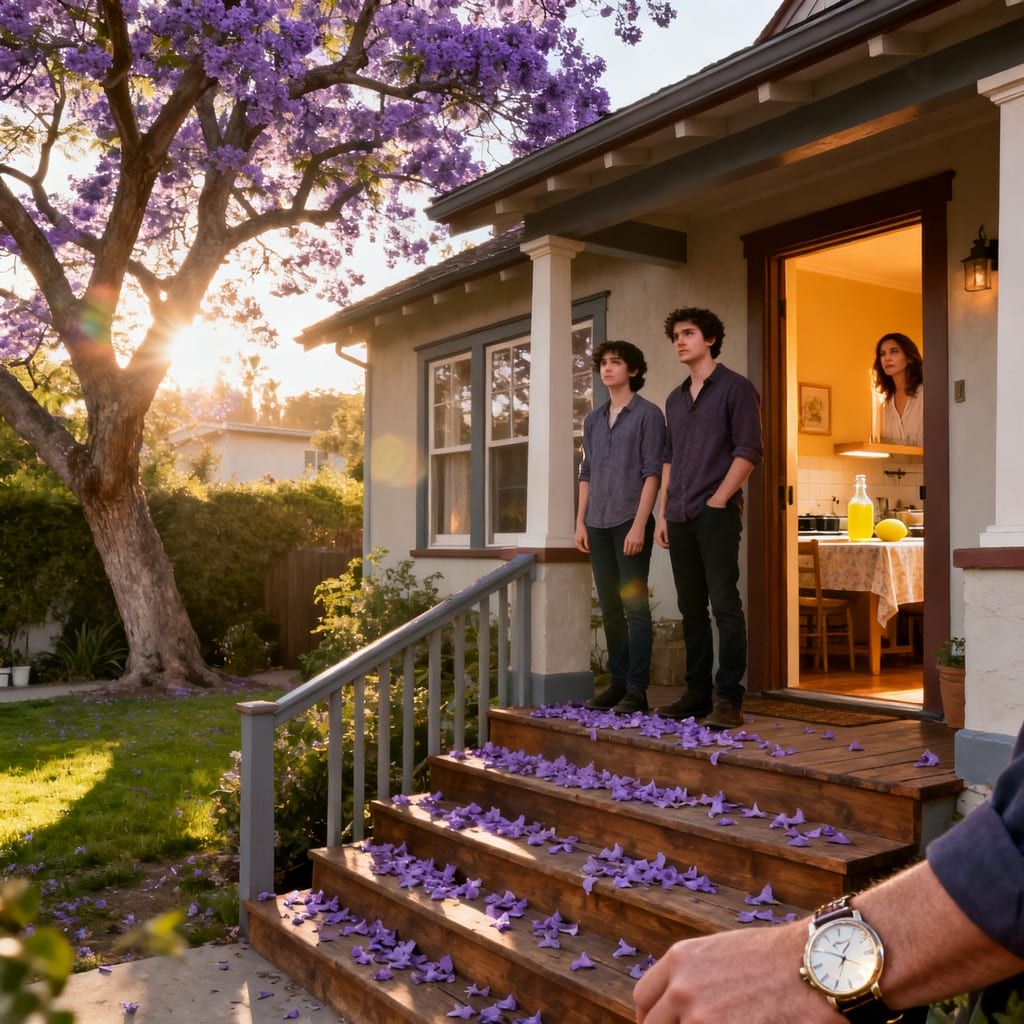
A daughter learns to read between the lines of a life split in two
Read more →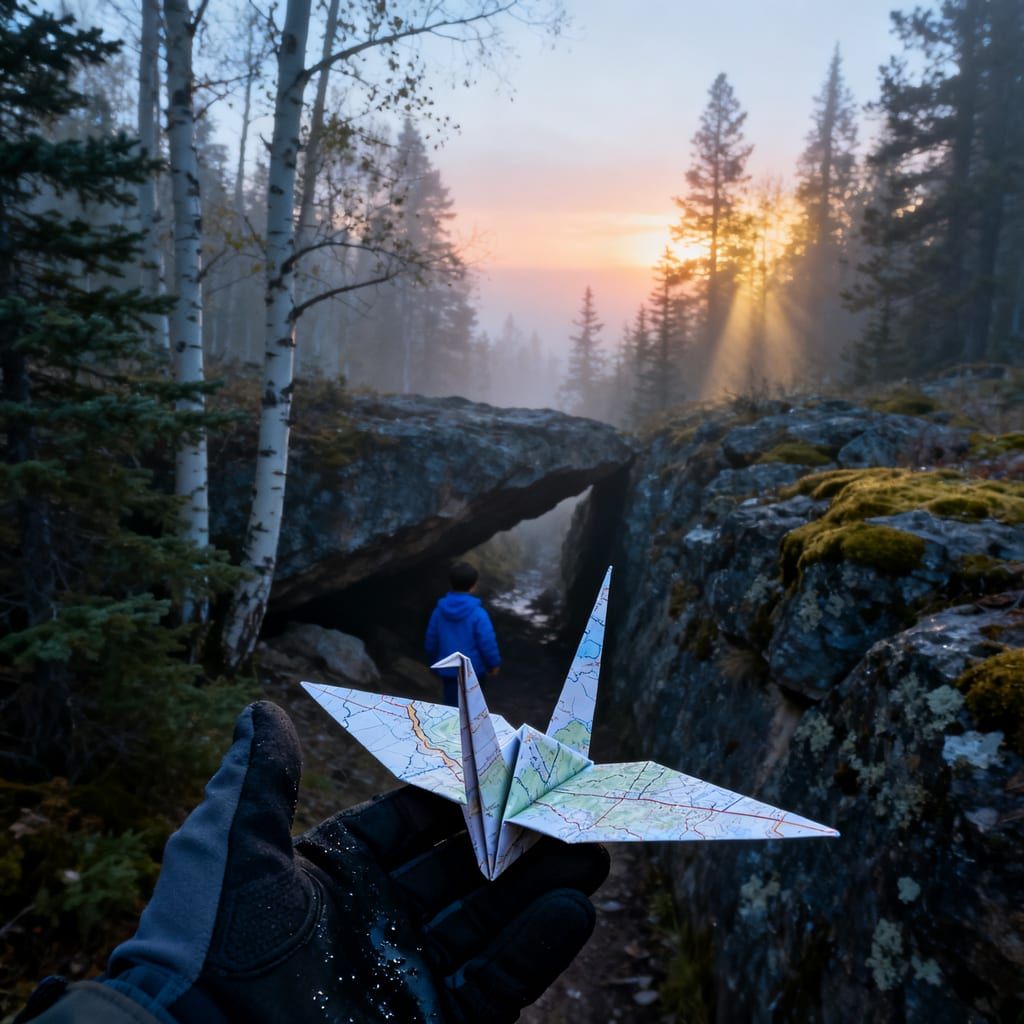
A fog-draped night, two souls found, and the quiet shape of a life
Read more →
Story audiobooks for children of all ages — a new one every day on Smarter Way Stories.