What the Mirror Couldn't Hold
A frame, a note, and the rooms they make inside us
Read more →
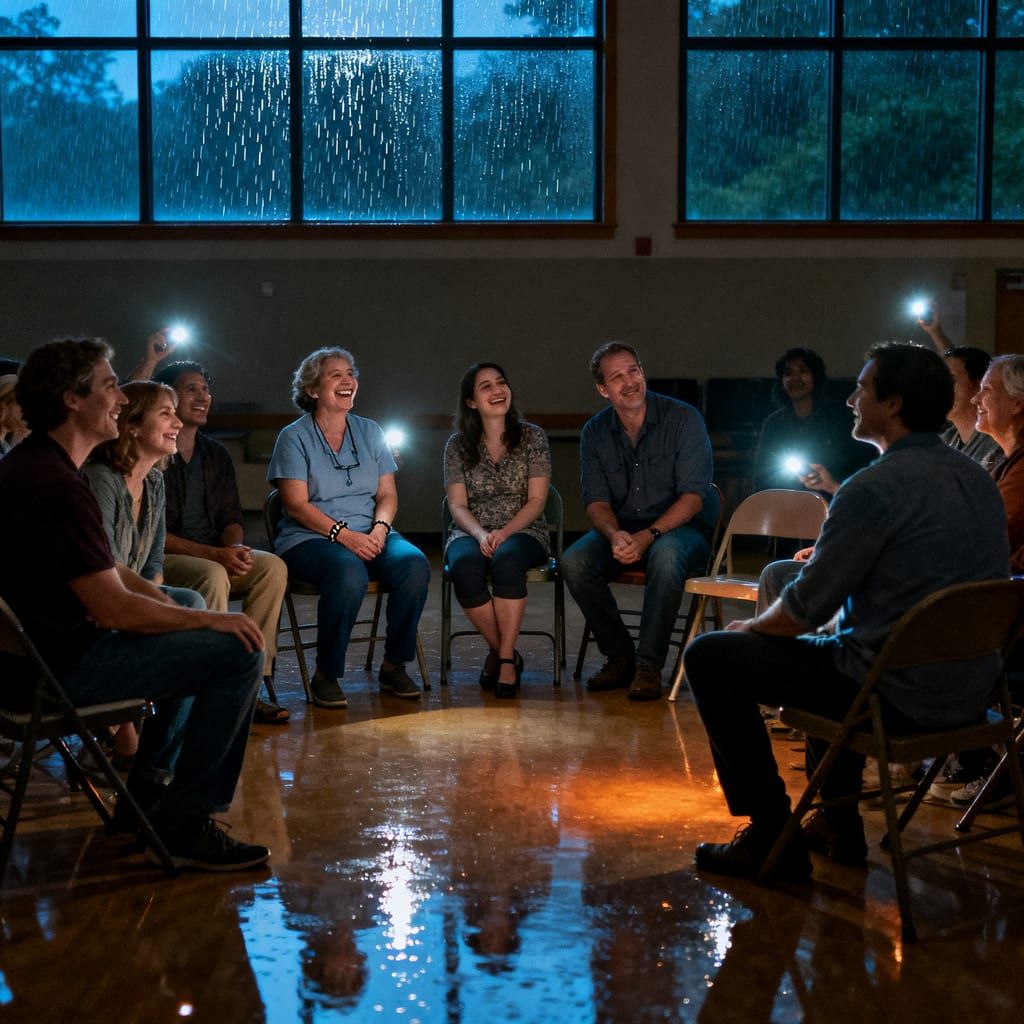
Eli Navarro arranged the chairs like you might arrange stones to redirect a stream-half circle, feet hooked around legs, no sharp edges. He dimmed the lamps to the exact wattage he'd tested with a light meter app, enough to flatter without hiding. On the whiteboard, his handwriting leaned careful and square: Quiet Stage, Week 10.
He could feel the jitter behind his ribs the way a dog hears thunder miles before anyone else. He smoothed a stack of cue cards until the corners aligned. In his pocket: a seating chart, a backup order of games, and a backup for the backup in case someone lost their voice or their nerve.
"Is this too close?" Lena asked, nudging a chair with the toe of her sneaker. Her scrubs were folded into a backpack beneath the coat rack. She could intubate a stranger in a hallway. She kept a string bracelet around her wrist like a quiet alarm.
"It's perfect," Eli said. He meant: it is measurable, and that is mercy. Out loud he added, "We'll start with introductions, thirty seconds, no names-just your favorite breakfast." The script for spontaneity.
Arun hovered near the bulletin board, rereading the flyer as if it might have rewritten itself while he blinked. He wore a T-shirt with a constellation he could name and a hesitation you could not. "Do we still do the one-word switch if someone freezes?"
"Yes," Eli said. "And-" the familiar phrase landed like a stone in his mouth-"I'll be front row. I'll spot you."
Mariah arrived with a diaper bag though her baby was home with her sister. She kept patting her pockets as if a sentence might be hiding there. "I was going to bring muffins," she said, "then the baby slept and I forgot how to bake." Her laugh creased something tender in the room.
Eli clapped once, the soft thunderclap he used when a surprise laugh crossed their circle. "We'll warm up in here, then open those doors and let them in. Six guests each. No pressure, low stakes, pants optional-kidding." He felt himself grin at the right moment. He had rehearsed that grin in his bathroom mirror; he had indexed smiles by use-case.
They moved through gentle games like swimmers finding the edge of the pool with their toes. Word-at-a-time stories. Object transformation. Yes, and. He could sense the points where panic usually flared-names, spotlights, silence-and guided them around the rocks.
He made eye contact with each of them the way you would hand someone a cup of hot tea: steady, not lingering. A gift you did not drop.
The rain started as a rumor against the windows, then became a metronome. Umbrellas shook out in the lobby. Six friends for Lena-coworkers with hospital badges tucked away. Six for Arun-engineers who hugged like they were finishing an equation. Six for Mariah-neighbors passing wipes and gossip.
Eli stood at the door and performed his practiced greeting. "Welcome to Quiet Stage. We're so glad you're here. Programs on the left, exits... there and there. Phones to silent, expectations lower than that." A chuckle where he'd predicted it. He breathed on the laugh like kindling.
The room filled with the humming quiet that precedes a new thing. He nodded at the tech booth-Dawn with her finger on the dimmer. The opening bit lay face up on a card in his palm: Three Chairs, Two Hats, One Word.
He placed the card on the stool. He did not look at the one underneath it: Emergency Plan C.
The first flicker was almost pretty. The lights braided themselves thinner, drew up into the ceiling like someone was unwinding a thread. The emergency strips glowed red along the baseboards, then shivered out. The rain's metronome had become a drum.
Something animal rose at the base of Eli's throat, heat and old breath. He could hear his own pulse counting down to a blank he could not plan for. He reached for his pocket to anchor himself and found only paper. So many words and not one he could use.
In the dark, Lena's voice arrived with the kind of calm people trusted even when they bled. "We're going to do this in the dark," she said, steady as if announcing pills on a cart. "Yes-and you're going to tell us a sound you love."
A chair scraped. Someone in the second row said, "Rain on tin." Another voice offered, "My kid's hiccups."
"Pots clanking in the morning," from the back.
"The squeak right before a swing lets go," from somewhere left of the exit.
They said it like prayer beads. "A vinyl crackle." "A match strike." "That little click when you lock a bike."
"Keep them coming," Lena said. "We're building a kitchen, a porch, a summer. Yes-and if you hear your sound, add to it."
Feet stilled. Bodies listened. Eli sensed the arc of the room tilt forward, a ship leaning into its own wake.
Arun's voice, thin at first, found weight. "I'm the kettle. I whistle when someone forgets me."
Mariah, soft: "I'm the fridge door. I sigh open at 2 a.m. and pretend not to judge." Laughter, gentle, the kind that knows itself.
A grandfather in the front row became a creaking porch swing; a teenager took up the sound of rain on a metal awning; someone on the aisle clicked their tongue like a bicycle chain. The room stitched itself from noises and breath. In the dark, they were fabric instead of faces.
Eli felt the panic animal sit down. Not gone-just leashed by listening. He swallowed and found his mouth again. "Yes-and I'm the screen door," he said. "I slap back into place because I'm scared of mice." The laugh landed, surprising him, and he clapped once before remembering no one could see it.
They moved through a scene made entirely of sound. A kitchen woke. A storm flirted with a porch. Someone's hiccups hiccupped the timing of dinner. A pair of hands silenced a match and then lit it again. The audience leaned in because the only way to see was to hear.
Between beats, while the chorus breathed, Eli heard himself say into the dark, "I've been cheating." His voice surprised him. It had the texture of a raincoat-slick, then honest.
Silence, but the warm kind.
"I scripted our spontaneity," he said. "The prompts. The orders. I've been... scared. That if we really let go, we'd drown." He could feel the cards in his pocket like talismans going useless. "I wanted to keep you safe. Or me. Maybe both."
A rustle. Someone shifted. No one left.
"Yes," Arun said, a thread stretched across the space, "and you taught me to ask for a second take on my own life." His laugh, which always arrived a second too late, arrived on time.
"Yes," Lena added, "and I intubated a man in a stairwell last week." A ripple. "You can't plan stairs. But you can steady your hands."
Mariah cleared her throat. "Yes-and yesterday my baby threw up in my shoe. I said, 'thank you for delegating.' We're improvising all the time, Eli."
From the dark behind them, Dawn called out, "Yes-and the power company says forty minutes." The room groaned and then smiled about it.
Eli laughed in a way that unhooked something between his shoulder blades. He could feel their faces without seeing them. He could feel how they were holding him the way you hold a secret, gentler than you hold glass.
"Okay," he said, the word simple and unadorned. "New rule. Mistakes are doorways."
"Yes-and we walk through together," someone said from somewhere.
They abandoned the running order. They invited the audience to play. A child made herself a cat and prowled under chairs, her meow a punctuation mark. An older woman confessed she'd always wanted to pretend to be a lighthouse; three people hummed a foghorn and she turned her palm in slow safety circles.
They invented a game called Echo-one person whispered a sentence they needed to hear, and the room sent it back, a little truer. "You are not late to your own life." "You can apologize when the words are ready." "You are allowed to forget muffins." The darkness made them brave. It was not absence; it was cover.
Eli found he didn't need to clap to mark a laugh; the laugh found itself. He kept losing track of where his hands were and discovered they were resting, open, on his knees.
At some point-time untethered when you couldn't see its teeth-the lights lifted into being, humming to themselves. They returned like a friend who'd run to the car for a sweater. Faces bloomed back. Cheeks were flushed. A woman in the aisle wiped tears and then caught Eli watching and shrugged: I didn't expect this either.
He could see everything now. How Lena's bracelet had soaked up rain and darkened. How Arun's shoe was untied and he didn't care. How Mariah's eyes held the kind of tired that isn't defeat, just proof of love.
The rehearsal program lay useless on the stool. Eli put his palm on it and kept it there for a moment, like a goodbye.
They bowed without music. People stood without being told. Applause felt less like noise and more like a long exhale they'd all been holding and now could share.
In the spill of conversations, Eli found himself beside the corkboard where earlier he'd watched Arun read in case of updates. The animal in his throat had gone quiet. It wasn't dead. It was fed.
He cleared his throat. "I'm sorry," he said to his students. "For not trusting you with the mess." He looked at them as if handing them hot tea. "Thank you for... for turning the lights back on without the lights."
"Yes," Lena said. "And next time I'll bring a spare headlamp."
"Yes," Arun said. "And I'll tie my shoe before we run a lighthouse."
"Yes," Mariah said, shifting her bag on a shoulder. "And if anyone wants muffins, I'm taking orders for Thursday. Barring, you know, life."
They laughed. They lingered. The lobby smelled like wet coats and rain breath and something baking somewhere else in the building that had nothing to do with them and everything to do with how places layer into themselves.
When the last guest left, Dawn clicked the real lights to off-on-off in a small celebration, then went to call her dad back. Lena waved, hitching her backpack. Arun took a picture of the empty chairs even though he'd never post it. Mariah kissed her fingers and pressed them to the stool like a blessing.
Eli stood alone with the cards. He pinched the corner of the stack and felt the microfiber of ink and paper. He slid the top one into the garbage and then, reconsidering, tucked it into the lost-and-found. Safety didn't need a funeral. It could go on being useful somewhere else.
He retired the seating map. He started every class with one moment he did not plan. Sometimes it was a question he didn't know the answer to. Sometimes it was an empty minute.
He learned the taste of silence and stopped seasoning it too quickly. He let pauses stand on their legs. Once, when a siren stitched itself down the block and someone flinched viscerally, he said, "Yes-and let's name where we are," and they did, city and body both.
He still wrote out orders on cards. He still tested lamp wattage. Fear didn't vanish; it upgraded. He made room on the circle's rug for both.
On a Thursday, muffins did arrive, lemon with sugar caps. The joke of it smelled like festivals. Mariah bit into one and closed her eyes the way you do when something is finally both sweet and possible.
"New rule?" Arun asked, a crumb on his lip.
Eli thought of the dark room, the cat under chairs, the lighthouse turning slow, the chorus of people who had made a kitchen with their mouths. He thought of that old animal sitting down like it belonged.
"Mistakes are doorways," he said. "Yes-and sometimes when you fall, it's not a hole. It's a trampoline."
Lena clapped once. This time, he let the sound echo.
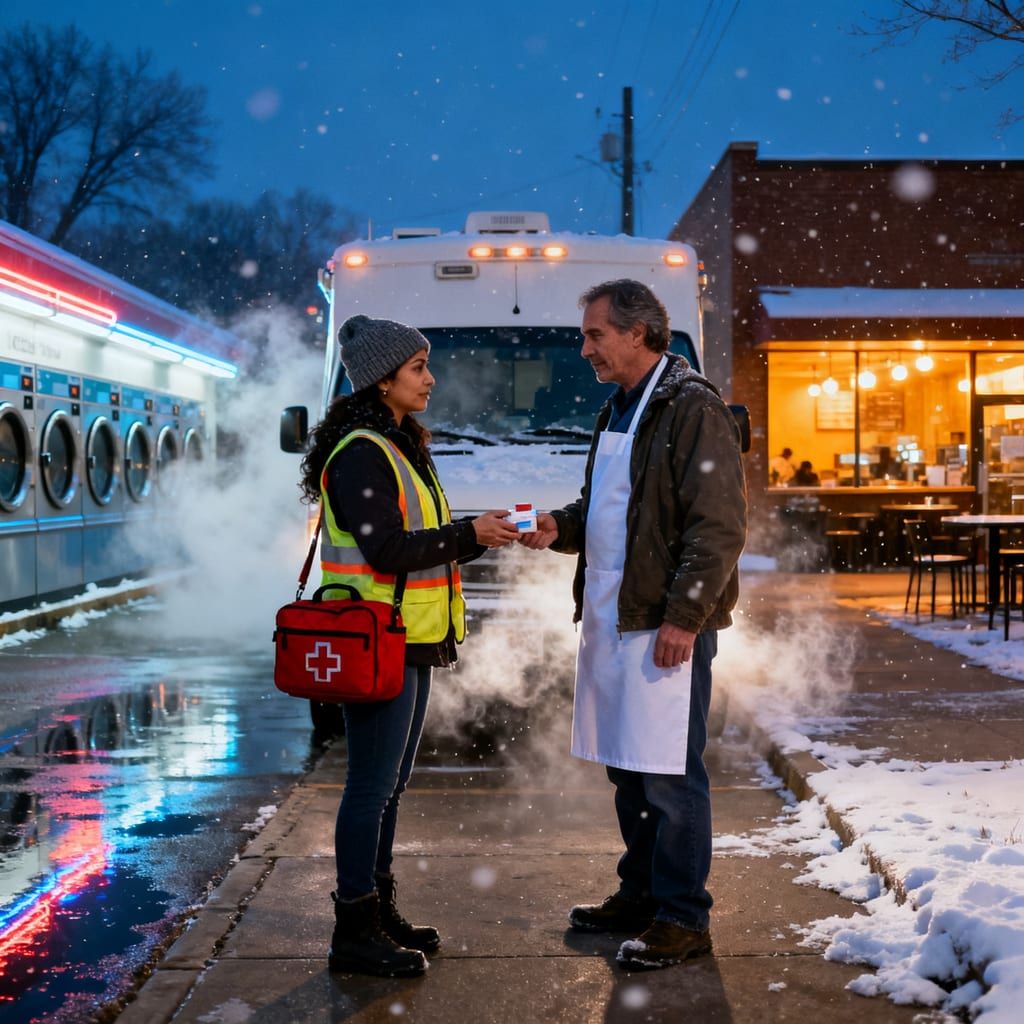
Between a laundromat's hum and a café's light, a van keeps score another way
Read more →
Story audiobooks for children of all ages — a new one every day on Smarter Way Stories.