Two Houses and One Quiet Heart
A daughter learns to read between the lines of a life split in two
Read more →
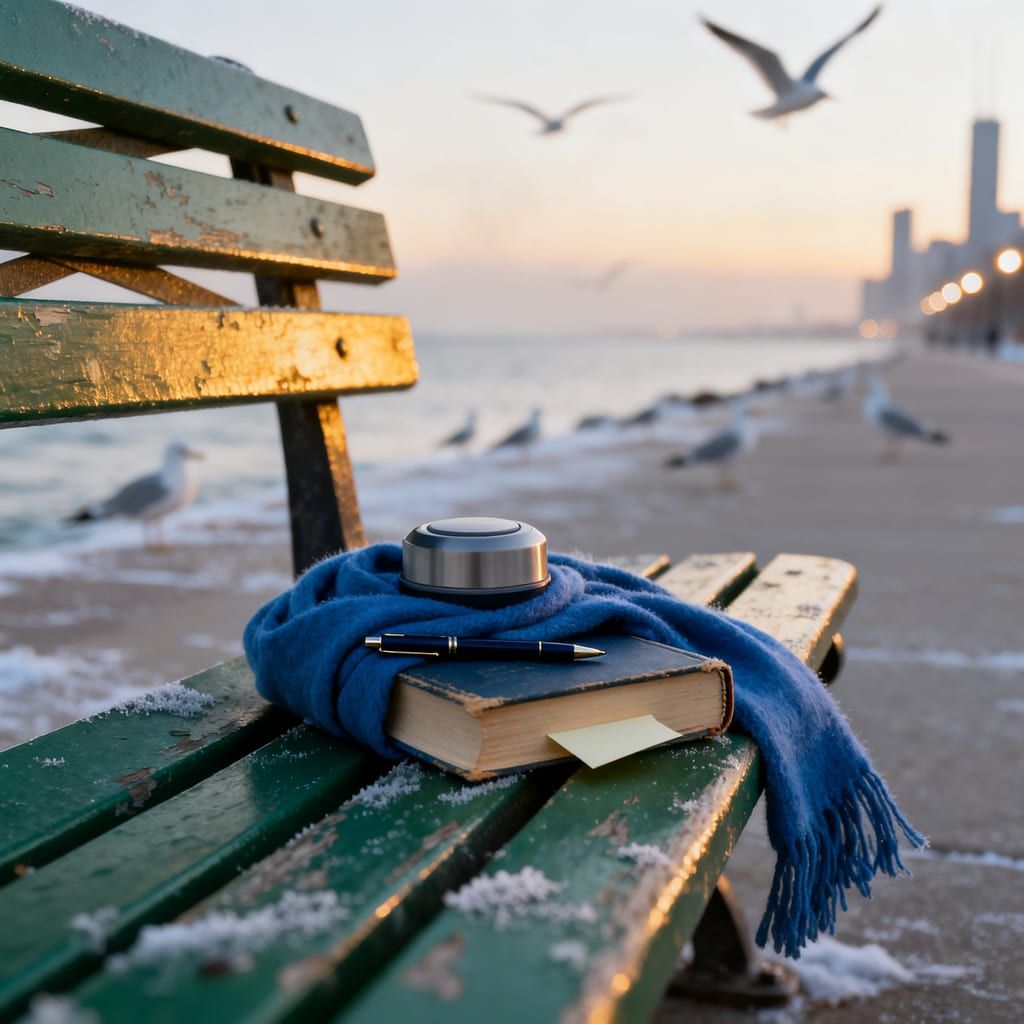
The first book went down on a Tuesday, spine tired, paper soft from other hands. Elena set it on a green-painted bench that faced the lake, the water working its wintermood-steel, then blue, then a glint that felt like a kept secret. Wind needled through her coat. Gulls flared and settled like torn letters.
She tucked a note inside the front cover, a square of cream paper in her mother's old stationery tin scripted with lemons. Her own handwriting bobbed a little on the page. If you needed this today, it's yours.
Her phone vibrated with a calendar ping: 1:00 PM-Campaign Touch Base. She ignored it. Five more minutes.
As she walked away, she didn't look back. She told herself she wasn't waiting to see who would pick it up. Still, she felt the tug, a thread tightening from bench to chest as if the book had buttoned the day closed.
At her desk, Elena wrote about phones that would change your life and shoes that could make you someone else. She warmed her hands on a paper cup of coffee and deleted a sentence she'd liked because it was true rather than on-brand. The office hummed-heat vents, the murmur of edits, the slack thread of laughter that always trailed the sales team back from lunch.
Her father's store had smelled like dust and citrus wood oil. The sign-Morales Books, Buy-Sell-Trade-had swung in the lake wind for twenty-two years. Now the sign sat on his apartment floor, leaning like a tired man against a wall, the chain curled on top. Her mother's scarf lay on the back of a kitchen chair, the knit catching sunlight as if it remembered how to hold a body.
At 5:38, her father texted: Dropped off the last box at the donation center. Place looks empty.
She typed: You okay?
He answered with a photograph-an aisle with no shelves, a ghostly rectangle of lighter paint where a case had stood for decades. She could feel the echo in it, the way a room's breath changes when it has been cleared of conversations.
She sent a heart. Then: I left a book today.
Good. he wrote. They find their people.
One became two, and two became a habit. Lunch breaks and commutes were now threaded through with small ceremonies. Elena carried a canvas tote with frayed straps and a soft clatter of spines. She learned the benches the way some people learned shortcuts or lovers-by the way they took light.
The lakefront bench with paint rubbed off where thighs made contact-perfect for stories that asked for forgiveness. The bus stop on Damen that glowed at dusk-a place to leave comedies for the man whose shoulders always hunched as if braced against a punchline. The slatted seat outside the coin laundromat where the heat leaked through glass-memoirs for people waiting on spin cycles and second chances.
She chose with intention. A book about caretaking, dog-eared and honest, left near the hospital with a note: How a person can love and still feel like they're failing. A slim novel about siblings put on a bench outside juvenile court, page thirty-two marked with a paperclip: It is hard to look at the person you were and not flinch.
Within a week, books disappeared. Sometimes they reappeared, chaperoned by different rubber bands, a new crease like a laugh line. Once, she found a pressed ginkgo leaf used as a bookmark. Once, a transfer stub tucked into the middle with a date circled twice in faint pencil: 11/07.
Then came the reply.
Folded into the back flap of a paperback she'd left near the laundromat, a square of graph paper, careful loops of script: Your note found me on a night I'd decided to leave a thing I loved because I wasn't sure I was any good at it. This story made it easier to stay one more shift. -K
She read it twice on the sidewalk, breath clouding. The handwriting had patience in it. A person who drew each letter to last.
K wrote again, and then again. Pencil lines in margins. A bus receipt clipped to the title page like a tiny flag. Short sentences that felt like someone breathing into paper:
Elena read the last line twice, a cold astonishment opening in her ribs. The window that faced the el tracks. The words rubbed against a memory-her mother's last week, the way the walls of the hospital had gathered light and released it in a thin, kind wash. She remembered the whistle that had threaded through the room at intervals, soft as a lullaby. She'd been in the hallway when a train groaned through and then-she'd been at work. Or home. Or both. The days were a smear around a single bright point she avoided looking at head-on.
She began to map her drops like constellations. On a folded transit map, she inked blue stars where a book had landed. Lakefront. Damen. Roosevelt. Outside the hospital: three overlapping circles, because she kept going back there with different titles, stubborn as tide.
On mornings when snow hovered but didn't commit, the city smelled like coins and bread. She tucked her scarf higher and talked to herself under her breath as she walked-little lists, small prayers. Comedy for the couple arguing in low voices near the bus stop. Poetry for the man who brings his palm to his chest each time a siren passes.
In the office, the holiday campaign tightened like a vise. "We need more sparkle," her manager said, clicking through slides, the word sparkle sharp as frost.
"Sparkle's not a verb," Elena murmured, and then apologized to the room for not being more fun.
At night, she spread the notes on her dining table, the wood her father had sanded, the grain running like water. K's careful loops, the dates, the small confessions-each one tilted toward not just being read but being answered. She started leaving questions back, not directives but open doors.
What did this story change for you?
Where do you keep the things you can't say out loud?
Who taught you how to leave?
Replies bloomed on the backs of transfer stubs, napkins, the edge of a takeout menu. You can live with a mistake long enough that it turns into a room you decorate. The supply closet. Myself, badly at first.
When the wind hardened and the benches wore thin hats of snow, Elena switched to thermoses of tea and mittens and thicker rubber bands. She layered notes into the pages like quilts.
Her father called. "If you still want the cash register, I think the neighbor kid's eyeing it for a prop."
"Take it," she said. "Let it make new stories."
He was quiet. "Your mother used to say the city was just a big book being rewritten. People walk around editing each other in kindness."
Elena looked out the window. The el rattled by, lights like moving punctuation. "She did?"
"She did." His voice softened. "You sound better. Are you... okay?"
In the pause, she met her own reflection in the glass. Hat pulled low, eyes tender as if newly woken. "I'm... being edited," she said, and made him laugh.
On the anniversary of her mother's passing, the sky was fragile as porcelain. She packed her canvas tote with reverence: her mother's favorite novel, the one with the gold-embossed title rubbed thin by thumbs; a blank card; a pen clipped to the cover as if to say, Here. Your turn.
She walked to the hospital bench, the one tucked under a bare-limbed elm. The automatic doors hissed and released warm air that smelled like antiseptic and oranges from someone's pocket. Across the street, the el sang its run.
She opened the front cover. Her note, small and sure: To the one who keeps watch in the quiet hours: you were there when I could not be.
She laid the book down and rested her palm on it a second longer than she meant to-like blessing, like apology. Snow started in thin threads she could barely see but could feel on her eyelids.
Three days later, she came back. The bench held a parcel: the novel wrapped in a blue scarf she recognized as store-bought but chosen with care, the thermos lid nested on top like a hat. She pressed her fingers to the knit before she untied it, the gesture bringing back the muscle memory of winters with her mother-how they'd always found a way to make cold into company.
On the inside flap, a sentence in K's hand that steadied and then opened something wide in her: Your mother asked me to tell you that the last thing she heard was a train and she smiled-K (the night nurse).
Elena sat down. The bench was cold, and then it wasn't. Warmth rose, not the hot stab of tears but a filling, steady as tea poured and held. She pictured the window, the tracks, the smile. A loop finished. A message finally delivered, years late and mercifully right on time.
"Thank you," she said aloud to nobody and to a city that, suddenly, was listening.
After that, she kept leaving books. But now each one had a blank card and a pen clipped to the cover, ink like a promise. Her notes grew shorter because the city had found its voice.
On the Damen bus stop bench, someone had written: I forgave myself here on Tuesday. The handwriting was messy, the pen blotting in the cold. A second line appeared a day later: I forgave you on Wednesday. The same hand? A new one? It didn't matter. The bench kept both.
Outside the laundromat, a romance novel carried a shopping list on the back of a receipt-milk, bread, call Mom-followed by a question: Can I learn to want again? Underneath, different ink: Yes. Try opening the windows even when it's cold.
By the lake, a dog-eared poetry book collected jokes in the margins-bad ones, the kind you tell to keep a kid awake on a long car ride. In the hospital courtyard, a child's drawing of a train was slipped between pages, the cars colored with ferocious care, a smile sharp as sun drawn in the air above the engine.
Elena started to recognize the weight of a pen on paper. K's loops appeared every so often like North Star sightings: The vending machine finally ate my dollar today, and I decided to take it as a sign to drink water. Or: The patient in 4B refused pain meds until her son arrived; we listened to the train together, both pretending it was ocean.
When she finally wrote K directly, it was on a blank card clipped to a collection of essays about paying attention. Thank you for carrying a message no one else could have carried.
A week later, tucked behind the author bio, K's reply: Thank you for building the road where I could walk it to you.
January rasped in on dry boots. The benches wore salt dust and the crooked halos of melting snow. Elena learned to tuck the pens deeper so they wouldn't freeze. She learned that sometimes a book vanished within an hour and sometimes it sat for days like a shy guest, and both were fine.
Her father came with her once. He lifted a paperback and weighed it in his palm like an apple. "We always said the good ones want to get back out there," he murmured. A woman in a red knit cap sat and read a page near them and then, with a small startle of a laugh, wrote something on the card tucked inside. She left the book and walked away, shoulders a fraction looser.
Back at Elena's apartment, they ate soup, and he set the old store sign against the wall behind the kitchen table. "Maybe it wasn't an ending," he said, tapping the wooden M where the gilt had flaked, "just a plot twist."
She grinned into her spoon. "Are you saying that because you miss the discount on author events?"
"I miss people finding the thing they didn't know they needed," he said. "Looks like you found another way."
She thought of the blue scarf, the thermos lid like a cap, the steady hand that had written her mother's last heard world. She thought of benches talking to each other across neighborhoods, of strangers editing each other in kindness exactly like her mother had said.
On her way to bed, she paused with her palm on the doorframe, the habit of a person checking whether something's real. Outside, the el rubbed along the tracks, a lullaby line drawing itself over and over where the city's heart looked like steel but sounded like home.
In the morning, she packed her tote. Books, cards, pens. The cold lifted a little, as if the day had decided to meet her halfway. On the lakefront bench, she left a slim book with a green cover and a note that simply said: If you needed this today, it's yours.
She didn't look back right away. But when she did, a gull landed on the bench's far end, tipped its head as if reading. The water kept its secret, then offered it again.
The city turned another page.
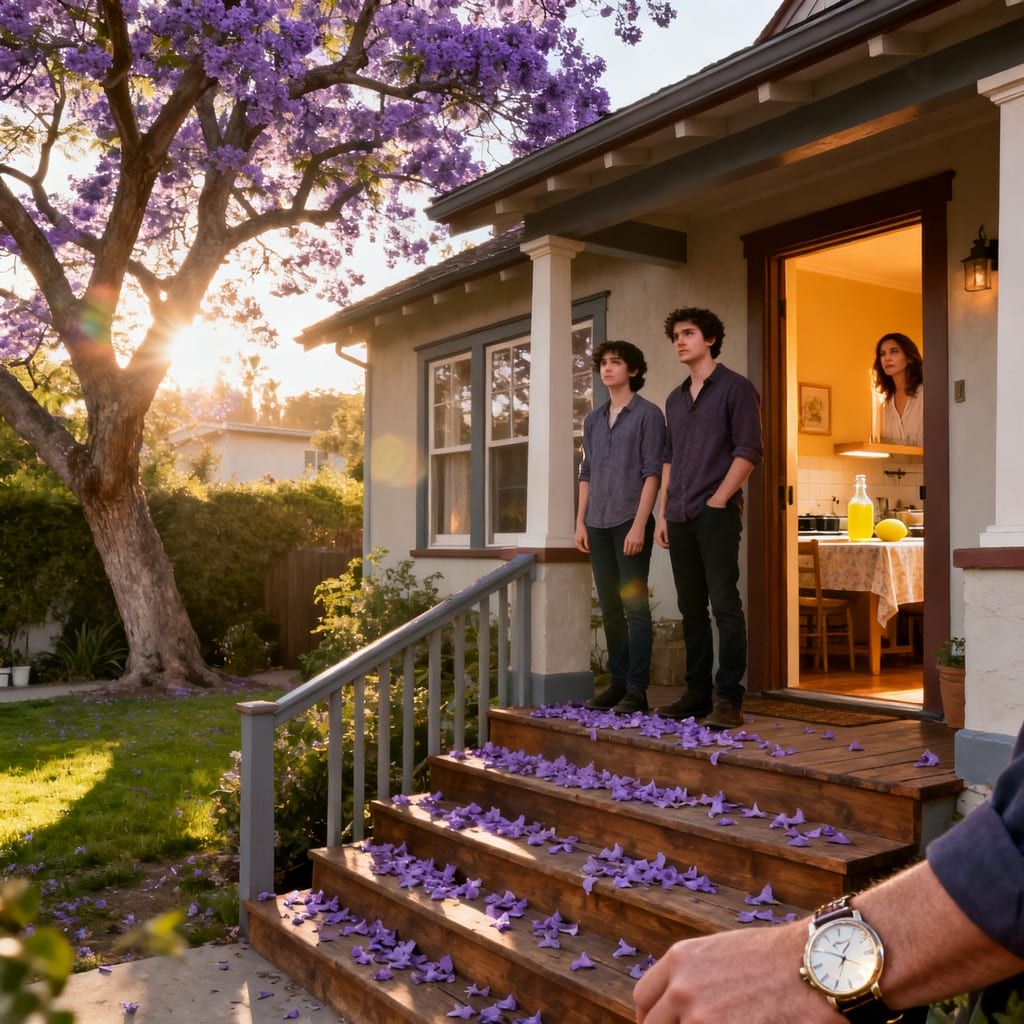
A daughter learns to read between the lines of a life split in two
Read more →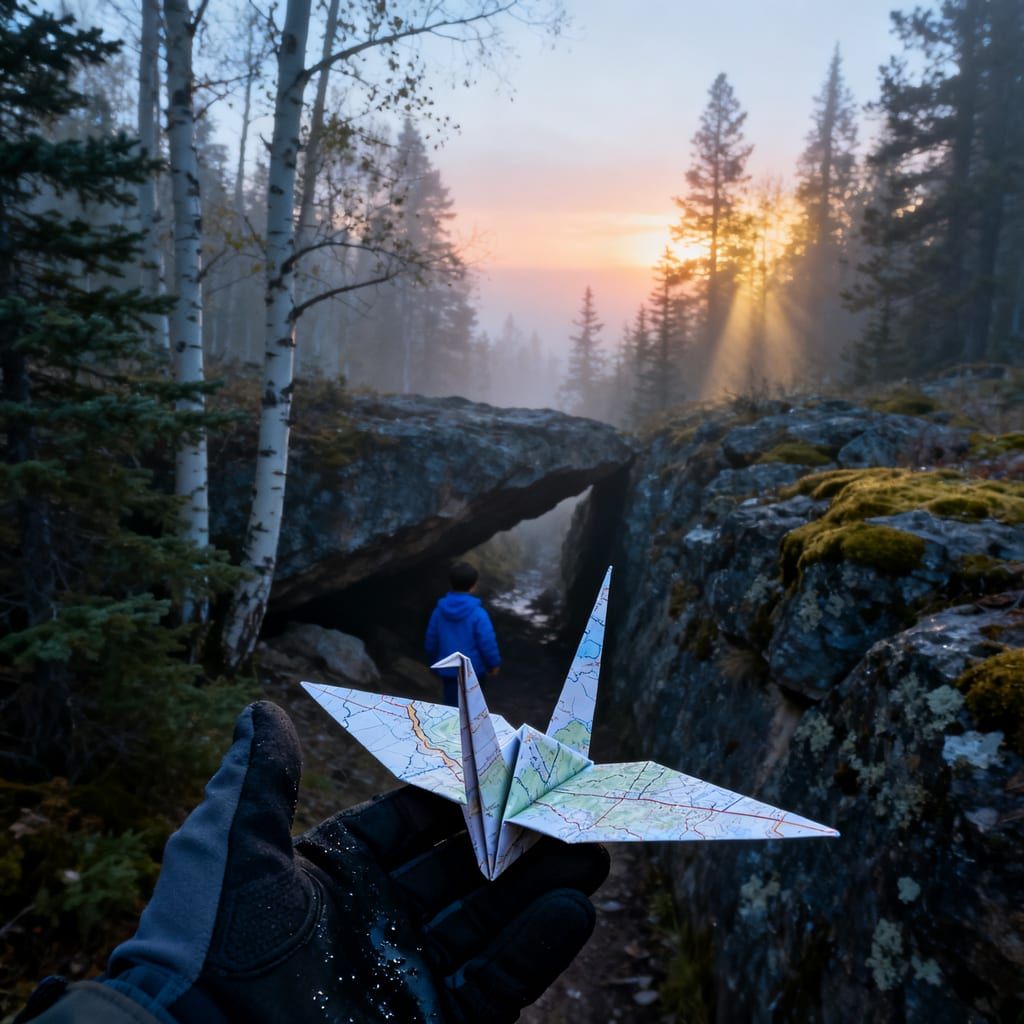
A fog-draped night, two souls found, and the quiet shape of a life
Read more →
Story audiobooks for children of all ages — a new one every day on Smarter Way Stories.