What Darkness Taught the Photographer
A class without sight teaches a way to see
Read more →
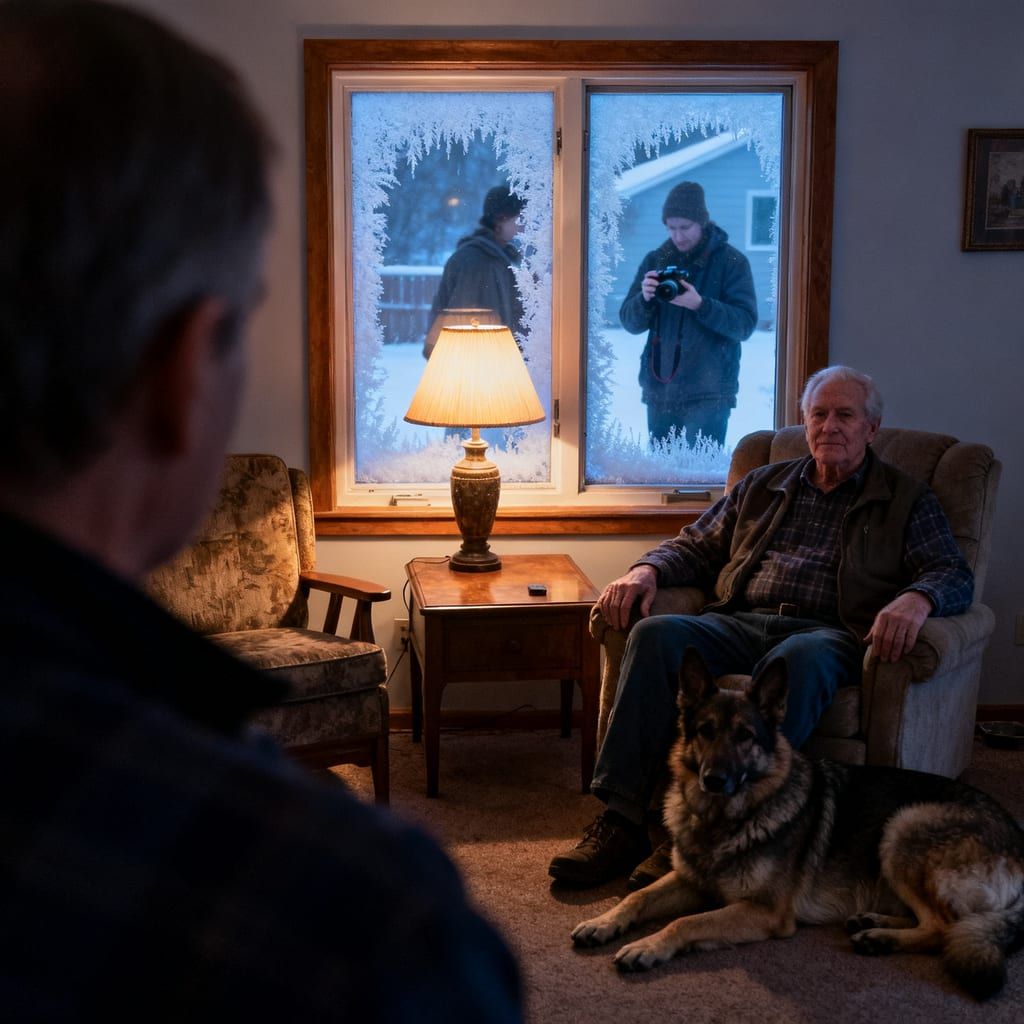
The phone rang just after dark, when Minneapolis turned to glass. Snow mapped the sidewalks in a thin, tired veil. Noor pressed the device to her ear, listening to the nurse's measured voice-hospice room, bungalow off Hiawatha, daughter named Mara, father named Ethan-and answered yes before the last syllable landed.
She slid her DSLR and the pack of Polaroids into her bag. She checked extra batteries, wiped a lens with the corner of a cotton shirt. A quiet rule threaded through each motion: she would not pose the dying. She would not use flash. She would ask about a favorite song. These anchors steadied her, old pilings in a current she'd learned to cross.
Mara opened the door with a kind of brittle care, like she feared the knob might come off in her hand. The foyer smelled of wool and cinnamon. The living room was smaller than Noor expected-two lamps, a piano shouldering the far wall, a window curtained in frost. Someone had set a mug on the sill; the rim had been kissed and left.
"Hi," Noor said softly. "I'm Noor."
Mara nodded, almost a bow, then stepped back. "He's-he's in here."
Ethan sat in a recliner angled toward the window, the kind of man who seemed closer to his jacket on a hook than to his own body. His cheeks were winter-thin, but his eyes were the color of checked denim and very present. A dog-an old shepherd mix-rested at his feet with a braided patience.
Noor took in the room as if it might spook: the threadbare throw, the water glass with a lemon seed at the bottom, a small oak side table bitten with rings. She clicked off the lamp nearest Ethan's face-too glaring-and tugged the shade of the other one until its light ran soft along the wall.
"No flash," she said, half to them, half to herself. "I like to borrow what's already here."
Mara's mouth was a blade. "We don't want anything fake."
"Of course." Noor smiled, then glanced at Ethan. "Is there a song you love? Something you always came back to."
Ethan looked out toward the wavering blue dusk. "Bill Withers. 'Hello Like Before.' Used to put the record on Saturday mornings. Pancakes would burn." The corner of his mouth lifted. "Right, Mare?"
Mara's fingers pinched a crease in her sweater. Mare. The old name made something jump in her throat. "Yeah," she said, and her tone had soft skin under it for the first time. "Yeah. I can-hang on."
She vanished down the hall, and Noor heard the old ritual of a Bluetooth speaker waking. In the living room, Ethan's hand went to the throw and worried a stray thread. The dog watched the hand, then closed its eyes, committing the motion to memory.
Noor moved like water around furniture. She never told anyone where to stand. She waited for their bodies to arrange themselves around what mattered.
Mara came back as the opening bars found the room. Noor felt the song brush her ribs. She lifted the camera, inhaled, and watched.
Mara leaned to smooth the sleeve at her father's wrist. Ethan's thumb kept tugging at the tiny rope of fabric, a habit making itself useful-busy, alive. On the bookshelf, a frame leaned at an angle: a girl at a lake, hair sticking in ribbons to her neck. Next to it, a wedding picture that looked like it had been printed in a kitchen. Noor filed it away-the texture of a maker.
She took one picture of Mara's hand on Ethan's shoulder, the exact weight of a daughter who knows time is unthreading. The shutter hummed into the room, a small breathing animal who was allowed here.
"May I-" Noor reached into her bag, held up the Polaroid. "Sometimes it helps to hold something. Right away."
Mara, skeptical, nodded. The film rolled out with its soft whir. They watched the image ghost up-first outline, then meadows of gray, then the slow rise of detail. Mara looked down as her hand bloomed into focus on Ethan's shoulder. For a moment, her face broke open and resealed so quickly Noor could've imagined it.
Ethan smiled. "That's it," he said to the ceiling glass where the dark was beginning to pool. "That's the whole story. You see?"
Between the song and the slow march of light, the room found its own pace. Noor knelt to get the dog's muzzle near Ethan's slipper. She rose to catch the nick of laughter when Mara realized the pancakes in the story had always been a little burnt on purpose, Ethan liking the edges.
He watched her work with a familiar attention. "I used to-" He coughed, small and apologetic. "I used to take pictures. Family stuff. Vacations up on Superior. Darkroom in the basement when Mara was little. It always felt like... like making a box for time. So it doesn't go spilling everywhere."
Noor lowered the camera. "You built albums."
"Built," he repeated, and his eyes sweetened. "I worry no one will keep at it. After." He said the word like setting down a glass.
Mara's mouth thinned again, anger flashing like a fish beneath ice. "We can keep at it."
Ethan lifted a hand, then put it back. "Mare, you have other things. I just-" He pulled the thread again, then stopped, as if the fabric might give. "I want the story to keep getting told." He looked at Noor, not asking yet.
Noor heard the clatter beneath her sternum-the old, untouched room where her father's final days lived without pictures. No camera had been there. Only the shape of a chair by a window, always remembered wrong.
She lifted the Polaroid camera again, shot another frame. Then the DSLR. Then she closed the space between them and sat on the piano bench, facing. "You've made a strong story," she said to Ethan, quietly. "It can keep."
He wasn't satisfied. "Would you teach her? Just a little. Now." He nodded at Mara, a nudge without a shove. "So she can keep making pictures later."
The ask touched Noor like a cold stone pressed to the back of her neck. She had a boundary-witness, not participant. She lived by it. She was the person who arrived, held a room steady, left. Do not become part of the scene.
Mara stiffened, as if the request were a burden in disguise. "Dad. Not now."
"Now's all we have," he said gently, which should have sounded like a platitude but didn't coming from his thin mouth, busy hands. He looked to Noor with the unfussy command of someone who had held a camera and coaxed sisters and cousins and toddlers into a soft circle of light his whole life.
Noor hesitated. Somewhere under her ribs, the simple burners of fear and propriety flared. Then died down. She stood and crossed to Mara.
"May I?" she asked, hand extended not to take, but to offer.
Mara's eyes were terribly bright. She nodded once, briefly. Noor placed the DSLR in her hands and came to stand at her shoulder. Their bodies tipped-two women leaning over the same small machine that turned light into memory. Noor guided Mara's fingers to the focus ring. The ridges pressed into their skin.
"Breathe," Noor said. "Wait a beat after the inhale. Don't chase the moment-let it come to you."
Mara exhaled shakily. The song on the speaker had turned. Outside, a plow sang down the street, snow hissing like tired applause. Ethan's face flickered through worry and softened into curiosity.
"Where do I look?" Mara asked.
"Where it feels like there's warmth," Noor said. "Where the story tugs."
Together, they tracked the small universe of Ethan's hand finding the dog's ear. The focus moved-missed, found. Noor felt the heat of Mara's shoulder through denim. She realized suddenly that this was what her father had missed giving her, a hand steadying hers at the threshold of parting, showing her what to hold.
"Now," Noor murmured.
Mara pressed the shutter. The sound was almost nothing and everything.
Ethan closed his eyes as if blessing a ship.
They made a few more frames. The room thinned with time. The dog sighed and tucked its paws under. Noor felt the session's shape begin to close.
"One more," Ethan said, opening his eyes. "With you in it."
Noor laughed, reflexive, the no already rising. "I don't-people don't need-"
"People should see who stood with us," he said. "We forget the hands that hold the last light." He glanced toward the window. "Then let the window do it."
Noor paused, the sentence in her spine. She stepped toward the glass. The outside was a pocket of blue. Inside, two lamps made islands. She positioned Mara again, this time not with touch but with a soft word. She lifted the camera and nodded toward the pane.
"Stand here," she told Mara. "Angle just so." She pointed. "You'll catch me and you without trying."
Mara's mouth quirched, a shadow of humor coming back. "You're really going to be in our picture."
"I'm going to be in your picture by accident," Noor said, and the room smiled.
The shutter clicked. In the corner of the glass, Noor saw a pale echo of herself beside Mara-two women bracing a camera, light ringed like a tiny halo off the lamp's line. Ethan looked both at them and through them, content.
When the last frame was made, Noor packed her bag slowly. Mara walked her to the door and stopped, hands swallowed by sleeves.
"Thank you," she said in a voice that had been rung through everything and come out clear. "I didn't-" She bit her lip. "I didn't know we could do that."
"We can," Noor said. "We did."
The snow had deepened. The cold took her breath like a polite thief.
A week later, when the city's gutters were black with melt and the sun came on without warmth, a small package arrived in her mailbox. The handwriting on the label leaned and stumbled-uneven, familiar from consent forms and a note taped above a bedside table that said simply: check pills.
Noor carried the box to the kitchen. She stood by the window where plants went to survive, the pothos defiant, the thyme resigned. She turned the package in her hands. On the corner, inked like a dare, he had written: For when it's quiet.
It was quiet. The radiator ticked like a careful metronome. She opened the box.
Inside lay a small print, matte, the blacks soft as velvet. The texture made her catch her breath-the tooth of real paper born in chemical dark. He had managed it after all, with hands that had fought him.
The picture was the room. The window reflected two women-Noor and Mara-leaning into the camera together. They looked like kin, or conspirators. The line of a lamp dropped down between them, making a clean, ordinary halo. Ethan was there in the seat, his head turned, his mouth just lifting toward a smile neither of them could see then.
On the back, in the slope of that unsteady hand: You were in the family, even then.
Noor sat, the chair legs complaining on tile. Something in her, carefully scabbed over for years, cracked and let through a small weather. She remembered her father in a hospital chair by a window she can only reconstruct. She remembered not taking a picture because there was no rule for how to be, because no one had told her she could belong to the moment she was trying to save.
The print was proof. She had been seen. She had been, however briefly, held in the frame.
That weekend, Noor took a pen to the index card in her camera bag, the one where she had copied her own small laws.
She kept the first: Never pose the dying.
She kept the second: No flash.
She kept the third and underlined it twice: Ask about a favorite song.
Then, beneath, she wrote a fourth in smaller letters, like something that might grow: If a family offers a place in the frame, step in long enough to steady the focus.
She tucked the card back and slid Ethan's print behind it, where it would catch at her fingers whenever she reached for the camera.
The next call would come-someone's living room would turn into a studio of lamps and borrowed light, someone's hands would tug a small thread, a dog would learn to be still. Noor would arrive with her bag, her breath, her quiet knowledge that ending and beginning were simply two ends of the same shutter.
And when a daughter's hand trembled at the focus ring, she would lean in-not to own the picture, but to be the warmth the camera could find. The window would do the rest. Later, when the light left the room, some part of it would stay-caught in paper, yes, but also in the proof of a witness who stood close enough to belong.
In the city's long winter, this was its own kind of heat. She carried it between houses, in a bag that clinked, in hands that had learned to hold the last light without hoarding it.
Story audiobooks for children of all ages — a new one every day on Smarter Way Stories.