The Sparrow Street Postcard Cipher
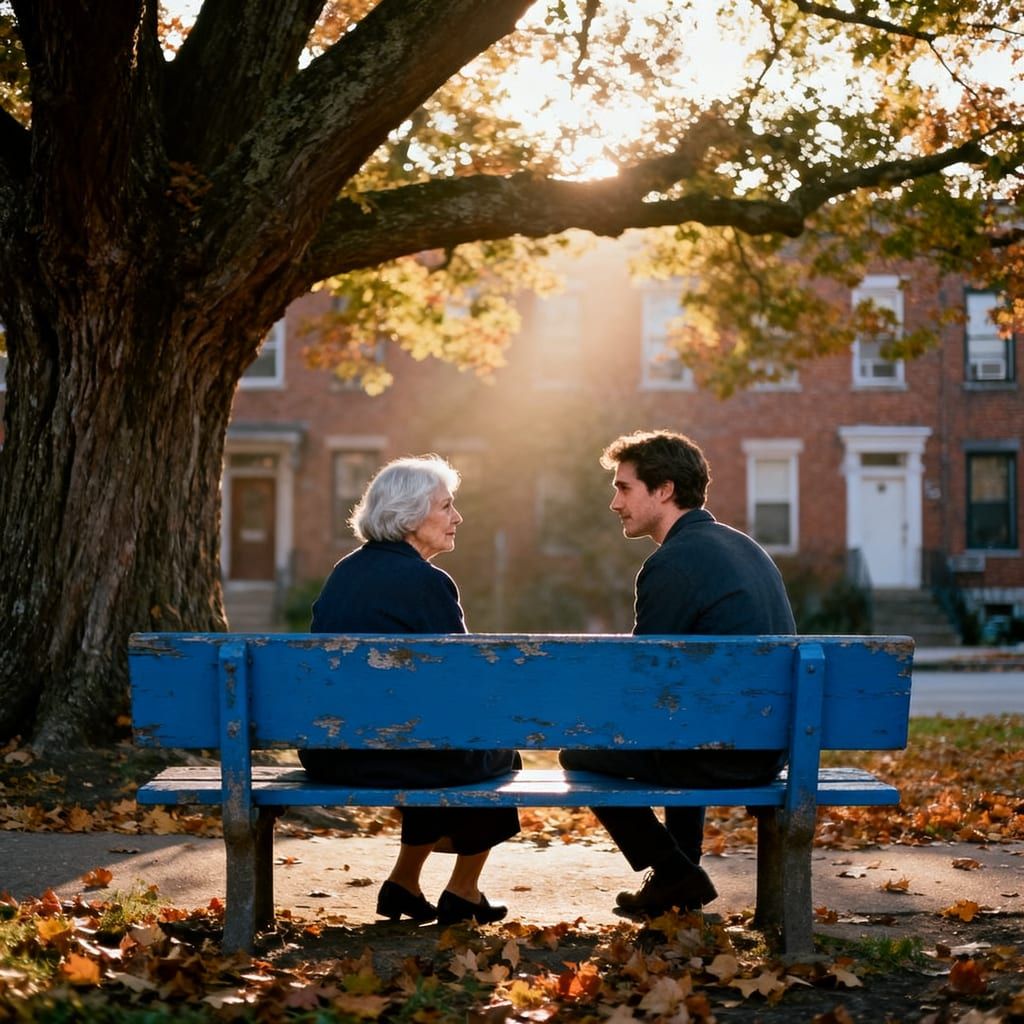
A blue bench, a bell, and a stranger who cared enough to finish a sentence
Read more →
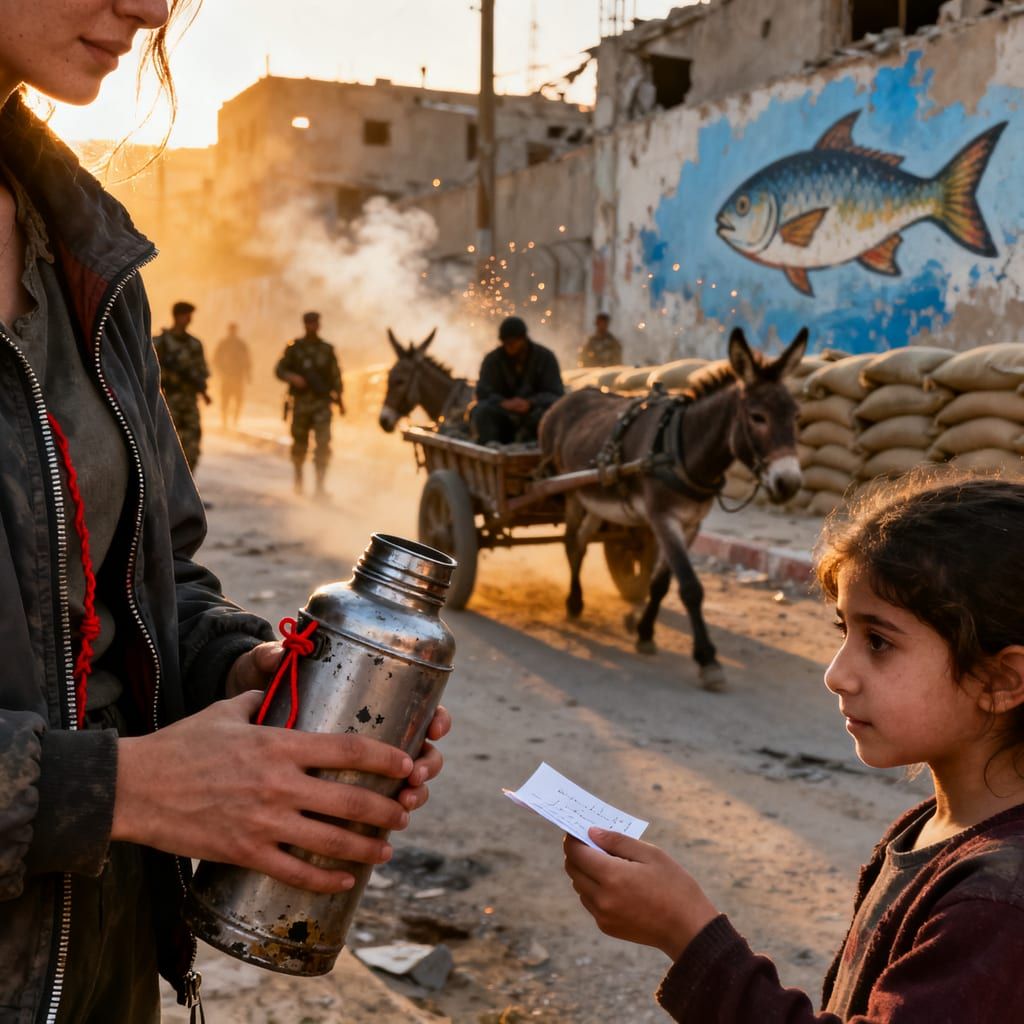
The first time the guard at West Gate waved her through, Lina's hand shook so hard she spilled cardamom tea down her sleeve. The scent-sweet green pods bruised open, steam rising into dust-hid the cordite for a heartbeat. She wiped her wrist, tied the red string back to her jacket zipper, and lifted her notebook like a passport.
Names filled its margins, each vowel spelled the way a child might sound it out. Beside them: small debts, small favors, birthdays, the name of a grandmother who made the best pickled turnips on the west bank. Her handwriting looked calm. Her throat was raw.
From a sandbagged stairwell, she caught two bars of signal and a blue-lit cascade of messages. Farid: careful with the east road, the donkey carts only manage the gaps by the pomegranate stand. Farid: the checkpoint boss likes his tea strong-no sugar. Farid: the boys at West Gate can be soothed with a shared song.
She sipped her tea, tasted the heat, the ghost of citrus. Outside, the city breathed like a sleeper with a broken rib, made of alleys that doubled back on themselves and shells of buildings full of shadows and dishes still stacked in sinks.
Lina Awan, thirty-seven, wore her body like an apology: compact, steady, palms open. She tucked a strand of hair under a scarf that had once been ivory, now the color of rainwater. At checkpoints, she showed her red string, raised both hands, waited for eyes to meet hers. If someone shouted, she didn't shout back. If someone swore, she nodded like they had told her the weather.
"I'm not here to take your guns," she said more than once, voice level. "I'm here for old people and babies. You can keep your arguments."
Half the time, they believed her.
She worked out of safe houses and stairwells and, once, a bodega with a roof made of mismatched doors. She spoke to commanders who changed their aliases like shirts. She wiped coffee rings off maps with her sleeve. She sent WhatsApp voice notes when the signal held, hand signals when it didn't, and always-always-she kept Farid's text thread open like a compass.
They'd never met in daylight. He preferred shadow; the front line shifted too often to risk a face. But he knew the music of this place: when a football match would quiet a street, when a prayer would hold a man's temper in his chest long enough to say yes.
The first corridor that week threaded through a clinic spitting dust and sirens. Windows shot out like missing teeth. The generator coughed, stuttered, protested-then, with a groan, took a breath. She counted heads: nineteen patients, four nurses, three infants with fist-sized hearts. She touched shoulders, murmured names like favors. She tied a scarf around a woman's hair. She pressed the thermos into a nurse's hands long enough for the woman to drink and cry and laugh all in the same minute.
They made it to the trucks.
"Go," Lina said, and the word came out soft but had steel under it. The convoy rolled. A man leaned from a rubble pocket and shouted something Lina didn't catch. She lifted her red string and smiled until he did, too.
She didn't exhale until the driver radioed in from the far roundabout: clear.
She slept two hours on a floor that hummed with inherited fear, phone under her cheek, thermos cradled like a relic.
Morning brought a corridor with the texture of ash. The map was a whisper, the ceasefire an unraveling sweater. A rogue unit-boys with nicotine-stained fingers and eyes too old-opened fire early. It happened the way dangerous things do: suddenly, and also as if it had always been waiting.
A driver jerked, chin to chest, hands slipping the wheel. The truck slammed the curb. Someone screamed in a language Lina recognized and at the same time didn't. She dropped to her knees behind a concrete planter that had once grown geraniums and pressed her face to the grit. Her tea thermos rolled, dented itself again, came to rest by her heel.
Later, they carried the driver-Kamal; he liked crossword puzzles; his mother folded her bread into quarters-to the clinic they had just emptied. He bled into the same sheets an old man had warmed with fever a day before. He didn't make it.
The ceasefire dissolved in the mouth like spun sugar.
Back in the stairwell, Lina's chest felt hollowed out with a spoon. She sat with her notebook open to a page newly freckled by plaster dust and something else. She wrote, then scratched out, then pressed the heel of her hand into her eye socket until stars bloomed.
"Maybe I'm theater," she said aloud, and it surprised her how flat her voice sounded. A joke without a laugh.
She drafted an email to Istanbul: reassign. She listed reasons like grocery items. She closed her eyes and saw Kamal's mother's hands.
Her phone, facedown, buzzed against concrete. Once, then again. She didn't move. On the third buzz she turned it.
Farid: west side side street passable. The one by the mural with the fish. Donkeys can do it if you keep the load light.
Farid: West Gate guard-Hatem-he grew up in your logistics officer's village. Mention the apricot grove. It will distract his pride.
Farid: I drew a map. Arrows are not to scale.
A tiny map bloomed on her screen, pixelated arrows tracing an alley that wasn't on any official plot. In the caption: Forgive my drawing. I am a poet of sidewalks, not of lines.
Beneath that, a final note: If you can promise Abu Nidal at Old Checkpoint a cuff for his mother-her pressure has been troubling her-he will keep his men steady two hours. He is a son under all that armor.
Lina laughed, actually laughed. It surprised two pigeons out of the stairwell.
She deleted her draft to Istanbul. She boiled the last of the water and let the tea steep until it stained the air.
In the corridor's opening minutes, she did not breathe. She watched breath happen to her.
Hatem at West Gate was taller than she'd expected and had a scar that drew his eyebrow into a question mark. "Apricot grove," she said, as if it were a common password.
He blinked, then lifted his chin as if smelling the fruit. "You are from there?"
"My logistics officer is. He once hid from a neighbor's goat there."
Hatem wheezed laughter and signaled his men without looking at her. A small permission slid loose of a big knot. Cars moved. A grandmother pushed a wheeled suitcase as if it might float.
In the alley by the fish mural, a boy in a Barcelona jersey tapped his foot to a song leaking from a cracked phone. Lina hummed the chorus-something from before the shelling-and his shoulders dropped. He pointed with his chin. Correct street.
At Old Checkpoint, Abu Nidal's beard had gone white the way river foam does at the rapids. He spat to the side, watched her with a hunter's calm.
"My mother," he said, like an opening gambit.
"Will measure her mornings," Lina said, holding up the cuff like a prize. "If you measure this street for me now."
Two hours is an absurd amount of time in a place where trust has the tensile strength of wet bread. But sometimes absurdity is the very bridge you need.
They eased through. Donkey carts-a patient orchestra of hooves and sighs-took the loads trains couldn't. A man in a velvet blazer handed bottles of water as if at a wedding. A little girl in slippers dragged a plastic bag of school notebooks like a wedding train.
Lina walked with her palms out, a metronome that kept time better than the ceasefire. Whistles rose and fell. Someone whistled the song she'd hummed earlier and suddenly the alley was a memory instead of a wound.
She checked her phone between steps. Arrows, reminders, gentle lies that smoothed the parts where pride snagged. Farid's messages braided possibility out of details no diplomat would write into a brief.
When the last cart passed the roundabout and the last man with a borrowed cat carrier lifted his palm in thanks, Lina leaned her forehead to the cool side of a truck and exhaled so slowly it felt like prayer.
Silence is never true in a city like this. But after the convoy turned to the safer roads and the men with too many patches on their sleeves unfolded to smoke and argue about nothing, there was a pocket of something like quiet.
Lina found her thermos by the step where she had set it down for a moment-dented twice, lid taped where it had cracked last week. A small hand held it out to her.
"Miss," the owner of the hand said. A girl, twelve maybe, hair frizzing into the humidity, T-shirt with a cartoon fox washed to a ghost. She had eyes that missed nothing.
"Thank you." Lina took the thermos, wiping dust with her sleeve as if it were crystal.
"There is a note," the girl said. "I didn't read. It is yours."
A page, folded in four like a secret. Inside: Thank you for letting us be useful. -F.
Below, in a hand trying very hard to be an adult: My father died two days ago. I am Mira. I finished his messages so you would not stop. He said you listen with your hands.
The words did what grief does-they rearranged the furniture of Lina's body in one instant. The space behind her ribs changed shape. She sat, because her knees misjudged the weight of air.
Images shuffled: Farid's jokes about sidewalks, his insistence on tea without sugar, the way he never used exclamation points. A space-ghost of a man who had held one end of a rope she didn't know a child had grasped when his fingers let go.
Mira stood very still, as if any wrong move would undo what they had just threaded.
"You did this," Lina said, throat pulled tight like a seam. "The map. The reminders."
Mira's shoulders did a tiny shrug she probably learned from watching too many adults hide their fear. "Baba taught me the city. He said the men with guns forget things when they get scared. Songs help. So do cows. And blood pressure." She glanced at the cuff peeking from Lina's bag. "My grandma had one. It made her feel like a queen when we pumped it."
Lina wanted to collect every loose thread of this city and knot them around the girl's wrists, a promise of safety so dense it would glitter. She handed Mira the thermos cap.
"Hold this," she said. "It's going to smell like cardamom for days."
Mira lifted it to her nose and smiled without showing teeth. "It smells like our kitchen when the plane flew low and my mother burned the rice."
A siren sounded far off, thin as a violin string. The pigeons shifted. Somewhere, someone laughed too loud.
"Will you... still do it?" Mira asked, voice riding the space between brave and pleading. "The corridors?"
Lina looked at the girl, the city lined up behind her like a ledger of loss and meals cooked anyway. She saw Farid in the particular carefulness of her phrasing, in the way she planted her weight on both feet like a person ready to carry something heavy.
"I will," she said. "But not alone."
Mira nodded like she had expected the answer. From her pocket, she produced a small stub of pencil, its wood chewed, its lead flattened. "There is a name you should write," she said. "Hatem's cousin's wife-she makes apricot jam. If you ask about it, he smiles."
Lina opened her notebook. She found a patch of margin not yet freckled by shrapnel. With care that felt ceremonial, she shaped the letters: M-i-r-a.
Below it, she wrote: apricot jam; fish mural; donkeys can manage if the load is light.
She lifted her head and met the city's gaze, which was metal and rag and kindness folded into calloused palms. She could feel, absurdly, the weight of her dented thermos like an anchor and a bell.
The week stretched and looped. Ceasefires broke like meringue under rain; conversations started with shouts and ended with stories about weddings. Lina moved through it not as a savior but as a clerk of mercies. She delivered the cuff, watched Abu Nidal look away to rub at his eyes. She asked Hatem about apricot jam and learned his cousin's wife had cut her hair when the heat came early and had been praising the relief ever since.
She learned that pigeons scatter less if you lift your hand slowly. That diesel has a song. That the shape your hands make when you ask for a pause is not so different from prayer.
At night, she woke to Farid's last note as if to a child's cry. She answered messages that began with photographs of doorways and ended with jokes about cows. Sometimes, when the connection held, she would send a voice note, and hours later a reply would arrive: a laugh like a pebble skipping a pond. Mira's laugh. A new timbre holding the old thread.
In the margins of her notebook, between bullet holes like small moons, she wrote more names. She underlined the ones children had spoken. She circled Mira's until the paper went thin.
On the fifth day, a man at a checkpoint she'd never seen before looked at her red string and said, "You again."
"Me again," she said.
He squinted at her notebook. "You keep all of us in there?"
"I try," she said. "But you keep each other."
He thought about that longer than most men thought about anything under a sun like this. Then he lowered his rifle and waved her through, and the city, creaking, found a way to fold itself another inch toward the middle.
The tea in her thermos cooled. She took a sip anyway, for the taste of cardamom and the memory of kitchens, and moved forward, step by small step, following arrows that were not to scale and bridges built from quiet words.
A blue bench, a bell, and a stranger who cared enough to finish a sentence
Read more →
Story audiobooks for children of all ages — a new one every day on Smarter Way Stories.