Two Houses and One Quiet Heart
A daughter learns to read between the lines of a life split in two
Read more →
On the first morning of her sabbatical, Ana stood in a slant of sun outside a café that smelled like citrus peel and espresso. The street was busy enough to blur-heels clicking, a skateboard rattling the curb, a barista's laugh spiking the air.
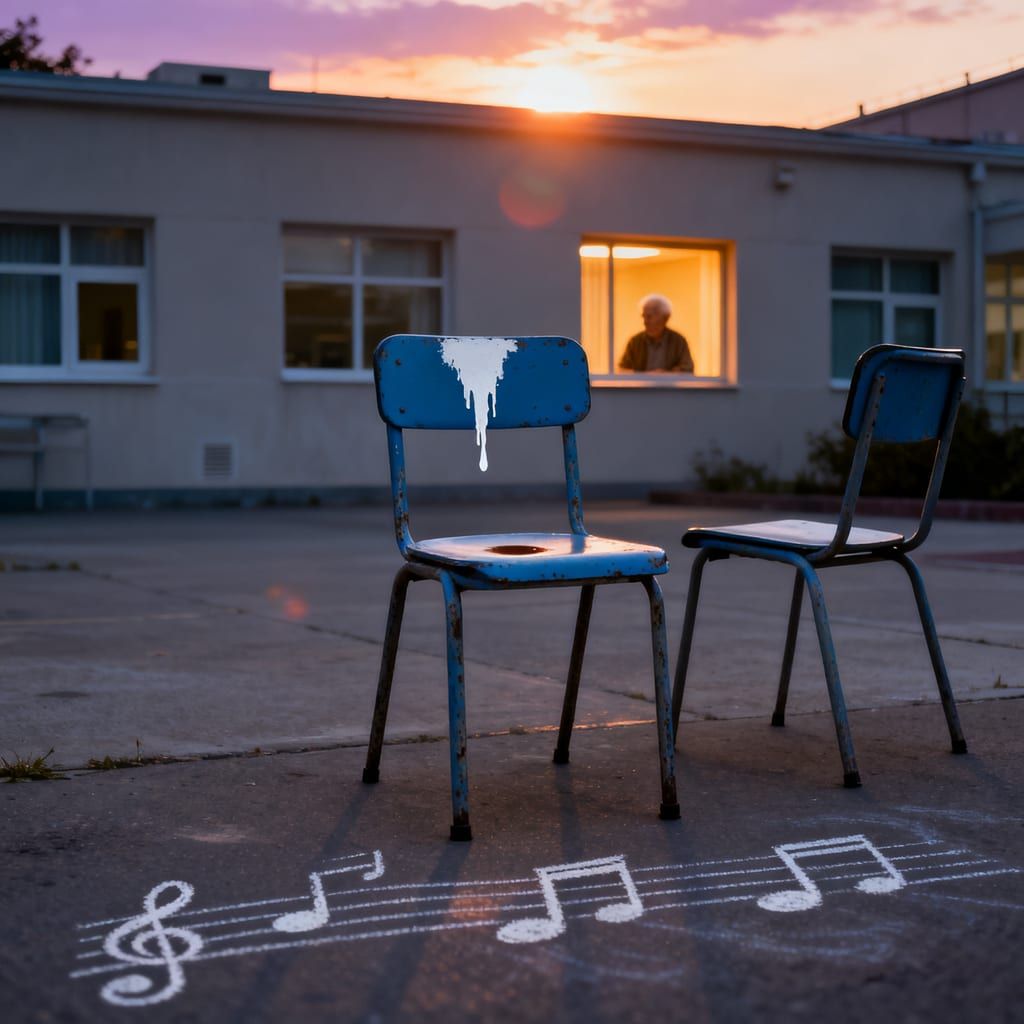
Between two crowded tables sat a single blue metal chair. Empty. A coffee ring ghosted its seat. A white drip of paint ticked the backrest like a metronome had miscounted.
She lifted her phone. Framed it. The hollow in the city, right there.
She posted it with a caption: Who didn't make it today?
Her fingers trembled and stilled. The chair waited. Someone brushed past, apologizing over their shoulder. The world kept pouring by.
By noon the photo had traveled further than she had planned. Pings folded into a small storm-heart icons, comments from strangers who said the empty blue felt like the shape of a person they were missing. The attention was modest, but it had a hum. A sustained note.
Ana hadn't meant to start anything. She had meant only to make the day hold still long enough for her to step off it.
Burnout had unspooled her work into late-night grading and breath that lived at the top of her chest. The breakup had been so quiet they never even cried; they just set their shared pan back on the rack and turned to their separate sinks. When the sabbatical letter arrived-a reprieve in institutional font-she stuffed it in a drawer and then, weeks later, took it out with both hands.
Now, in sneakers that remembered softness, she walked.
She began looking for chairs in the city the way you learn a new language-by listening for a familiar vowel. A park chess table with one seat tugged back as if a player had just leaned away. A hospital courtyard's sun-bleached bench with a rectangle of less-faded wood where a plaque had been. A rehearsal studio's folding chair tipped to one leg like a dancer catching breath.
She printed small cards with a QR code and the same question. She left the cards where she took the photos, tucked under chair legs, slipped into slatted backs, light as confession.
At night, her inbox opened like a window facing a lit street.
A woman who missed her job interview to sit on a hallway floor with a neighbor whose hands shook so hard she couldn't find her door key. A father stuck at the NICU-We took turns leaving the bedside to remember the world had sky; the chair by the vending machine is where I took my breaths. A hairdresser who set a chair for a client who never returned after chemo; the cape still draped over it on Thursdays.
Ana edited the stories into quiet, lyrical posts, trimming them like fringe until they moved.
Morning light, soft sneakers, the click and hum of the city-the project became a ritual. For the first time in months, she slept through a night and woke up with a body that felt like hers.
Two weeks in, she saw it again. The same blue metal, the same nick along the rim of the seat where a bolt had once kissed wrong. But this time it sat by the riverwalk, facing the slow green drag of water. Chalk music notes scrolled across the pavement nearby, smudged by shoes.
She took a photo, half-believing in coincidence, and walked on.
Three days later: the chair at the base of a brick church. The choir inside ran scales, vowels opening and closing like windows. Chalk clefs curled at the steps.
A week after that: the chair on a corner where two teens huffed into dented trumpets. A circle of pigeons attended like ushers. The chalk this time was a splatter of four-beat measures, boxy and sure.
The hair bristled on her arms. It's the same one, she thought, startled by the certainty. The same coffee stain dark as a thumbprint. The same white paint drip measuring time down the back.
She started scanning peripheries. Looking for blue in the weave of the city.
She found him outside a community rehearsal studio, working the chair through a doorway not built for stubborn metal. Late afternoon heat softened the air. The corridor smelled like rosin and floor wax.
"Need a hand?" she asked.
He turned. Late seventies, maybe, with carpenter's hands and a face that had spent time with unscripted light. He smiled at the chair as if to apologize for it.
"Stagehand habits," he said, voice soft as felt. "Always think I can get one more thing through a narrow space."
They coaxed the chair inside and he set it where the basses stood. Music stands rose around them like slender, shy birds.
"Is it yours?" she asked, hearing how personal the question landed.
"No," he said, then amended, "Not really. It was behind a theater, forgetting itself. I carried it home. My wife would've called it a stray." He patted the backrest. "We give it work."
"Ana," she said, offering her name like a bridge.
"Leon." He held her look without keeping it too long. "You're the one with the chairs."
She blinked. "How-"
"My niece follows your site. Sent me the picture by the river. Said, 'Uncle, this looks like your mischief.'" He shrugged, the corner of his mouth hooked. "Guilty."
"Why this one?" she asked. "Why music?"
He nodded toward the rehearsal hall. Someone was running a slow passage on violin, the same bar smoothed until it found its own voice.
"Miriam taught piano for forty years," he said. The name opened something in the room. "She could find middle C in a stranger's laugh. When the cold came this winter, no one played outside. Her hands went quiet too." He lifted his palms, showing their empty centers. "I set the blue chair where she would've wanted to sit. Music needs a listener. So I lend it one."
He said it without decoration, like a stage cue: lights up, scene change.
They stood there, the scraped chair between them, music working its way toward beauty from the next room.
"Would she have liked you doing that?" Ana asked.
Leon's eyes warmed. "She'd have said it was sentimental and then sent me back out with a scarf."
They laughed. The rehearsal door opened; a cellist squeezed by sideways, apologizing, the bow like a second arm.
"Come by tomorrow night," Leon said. "Rooftop concert over on Lexington. Kids from the conservatory and a few ringers. I'll put the chair right where the air cools."
Ana said she would. For once, she didn't let the promise hover. She gave it a landing place.
The next afternoon, her phone lit up with a message through the project site. A nurse, profile photo of a stethoscope and a sunbather's hat, wrote in brisk sentences and one soft one at the end.
"Leon fell this morning. Hip and pride. He's stable but not going anywhere tonight. He speaks of a blue chair and a woman who collects stories."
Ana's chest went tight around the words. She texted three people who had written about music in the comments and posted a note on the site: "Rooftop canceled. Another venue tonight." She rode the bus to the hospital and watched her reflection flicker in the window when the bus dipped under the overpass.
In the courtyard at sunset, the sky worked through apricot to bruised plum. The hydrangeas were stuck between blooms, the color not committing. A janitor hosed a path in wide passes that sounded like someone ironing a dress.
Ana set the blue chair in the middle of the square of shade, then pulled a second chair from the stack by the door. She placed it beside the first. The act felt ceremonial, the way you set an extra plate without speaking who it is for.
People began to arrive. A handful who had replied to a QR code with one story and brought the rest of themselves. A teenage violinist with acne-scar constellations and a case as long as his attention span. A woman in scrubs whose shoes had clouds of powder ground into the knit. A man with a tool belt on, off shift but not out of habit, his fingers trying different rests against his palm.
Ana printed out the stories people had sent for Leon and Miriam on her way-printers making short work of the heart, one sheet at a time. She handed them out. Strangers bent over paper that bore the weight of other rooms.
They formed a circle and began to read.
"My mother taught me to count fruit in Spanish by clapping-"
"We left the window open all winter, so the piano wouldn't feel boxed in-"
"I am learning to sit still without checking a phone-"
A teenage boy with the violin lifted his bow and found Ave Maria, wobbly but unafraid. The janitor hummed harmony without deciding to. A chaplain in the kind of cardigan all chaplains own kept time on her knee. Somewhere above them, someone leaned on a windowsill.
Ana lifted her eyes. One square of hospital windows was full of a man bolstered by pillows and tubing and the stubborn insistence of still being here. Leon raised two fingers and tipped them like a tiny cap.
She felt it then, the nudge she had been stepping around all summer. She had been chronicling absence like a stenographer of the gone because sitting in her own life felt louder than she could bear. Every empty seat she'd framed had given her permission to keep moving.
Ana set her camera down. The strap swung once like a slow pendulum and rested.
She pulled her second chair a breath closer to the blue one and sat. Not to capture. To belong to the square of air cut by music and stories and the hiss of the hose rolling itself to sleep. The cold of the metal seeped through her dress.
Leon watched. He put his palm to the glass, and she lifted her hand in answer, skin to sky to pane to skin.
The boy's final note floated and broke apart on the brick.
They didn't clap so much as exhale together.
At dawn the city creaked awake-delivery trucks backfiring, pigeons negotiating ledges, a man in a suit running late to a job that required two coffees. Ana walked the familiar route in her soft shoes. She felt the lesson in her muscles: absence mapped, presence chosen.
She set the blue chair under a plane tree that shed bark in puzzle pieces. She pulled a second chair beside it. The leaves made a sifted light that found the rims of both seats and held there.
She took one photo. The blue chair with someone finally next to it.
She didn't caption it.
She posted, her thumb shaking just enough to remind her she had a body. Then she slid her phone into her bag and stayed where she was.
A bus hissed, a dog shook water from its fur, chalk dust lifted under a sneaker and erased a quarter note someone had drawn yesterday. The morning carried on, unshowy and exact. The chairs made their small promise to the day: room, if you want it. Room, even if you don't know yet.
Above the hospital, a window darkened, and somewhere a metronome clicked back on.
A daughter learns to read between the lines of a life split in two
Read more →
A fog-draped night, two souls found, and the quiet shape of a life
Read more →
Story audiobooks for children of all ages — a new one every day on Smarter Way Stories.