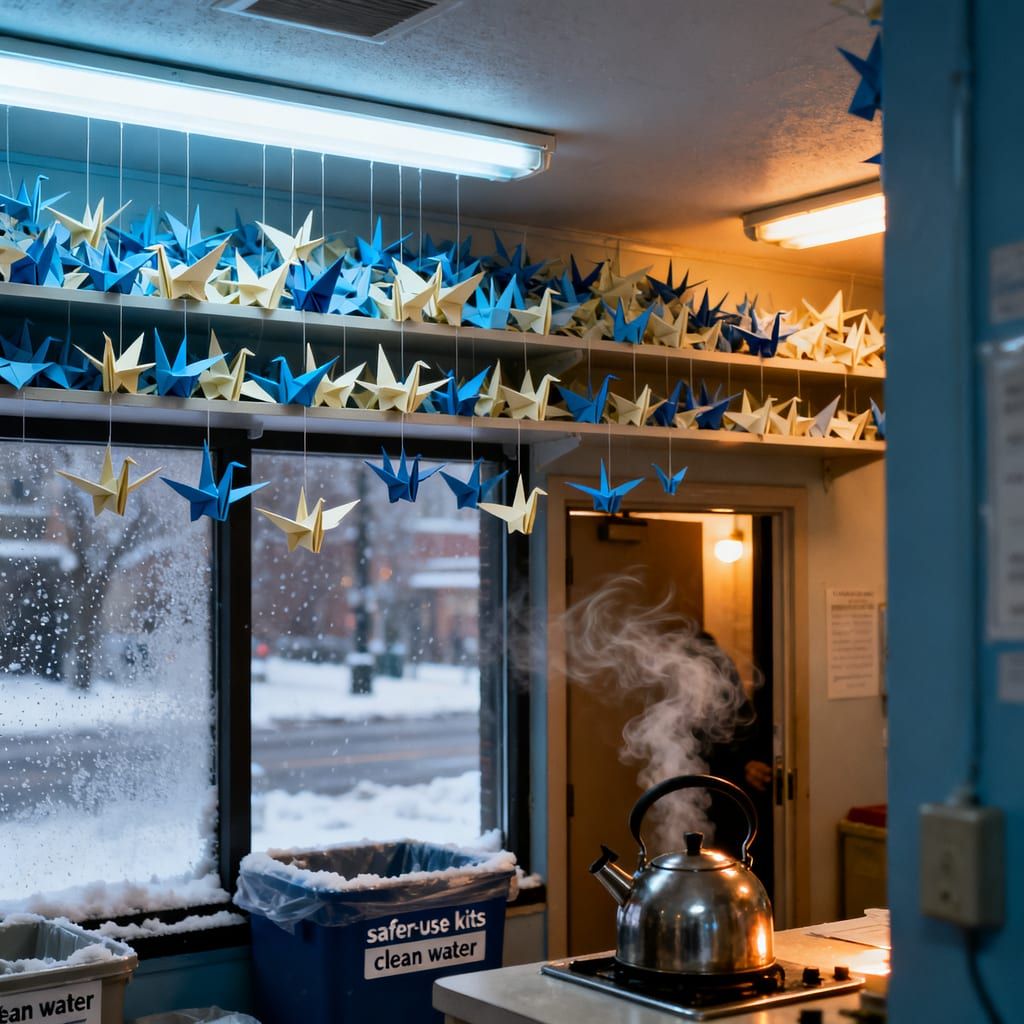
Paper Cranes at Shift Change
A winter of small mercies, folded and kept
Read more →

They come in twos and threes, jackets over arms, canes tucked like shy companions. Lena sets the chairs in a circle-metal legs squeaking on old linoleum-and lets the speaker breathe a low hum into the room.
"Step, shift, smile," she says, as if it were a single word. As if a sentence could be a hand at the small of the back.
Ruth, with her white bob and mathematician's gaze, numbers beneath her breath. "One two three four, one two three four," a metronome only her tongue can hear. Amir keeps time on his thigh with two fingers, the soft pat-pat of remembered weddings. Grace, blazer folded on the back of a chair, stretches through her ankles like a young attorney cross-examining gravity.
Lena demonstrates a fox-trot that leans more toward fox than trot, curious, light. The floor takes their secrets, absorbs them into scuffs and shine. She keeps her left hand on the back of a chair longer than she needs. In quiet rooms now, it trembles. Here, with the music and the counting and the scrape of chairs-the orchestra of ordinary-nobody notices. Or maybe they do and decide to love her anyway.
"Think about shifting weight," she says, shoulders rolling. "Don't think 'perfect.' Think 'possible.'"
The old voice taps her skull like a ruler on a desk: Straighten. Clean lines. Stillness. Certain. She turns the volume down by asking Ruth what she had for dinner.
"Soup," Ruth says, warming. "Three vegetables and the number pi."
Amir laughs, the sound wearing its tuxedo. "I used to announce the couple with my drum when the DJ flaked. Never failed."
Grace smiles without showing teeth. "Car alarms still make my hips twitch. Pavlovian jurisprudence."
Their histories sit beside them heavier than a costume rack. Lena loves them first by refusing to pity them. Second, by never rushing their pauses.
They are mid-turn, a slow unfurling, when the speaker hiccups and dies. The room stops-the kind of freeze you can see and the kind you can only hear when a throat forgets how to swallow.
Lena's hand goes still not by choice. She can feel old choreography rising, goose-stepping toward panic. If I can't keep the beat for them, who am I here?
Amir's bottle-cheap plastic, brand half-peeled-becomes an instrument. He taps the ribbed side with wedding-night tenderness. The sound is small and certain, like the way you say the name of a street you grew up on.
Ruth's counting slips into the tap's pockets. "And two three four-and two three four-" Numbers knit into fabric, not judgment.
Grace hums. Not a song you'd find on a radio, but the kind a grandmother might hum while folding sheets. It threads the room, tucks the edges.
Something in Lena loosens, a knot that had learned the shape of its own fist. She watches where sound comes from when the official source is gone-knees, hands, breath, the shy applause of shoe to floor.
"Okay," she says, not to fill the space but to meet it. "We don't need the box. We have each other."
"Always did," Ruth says, and counts the silence like it's currency.
They begin again. Amir's tap: step. Ruth's numbers: shift. Grace's hum: smile.
Midway through, without rehearsal or consent, Lena's left hand trembles. It's not a flicker this time. It's a small earthquake felt through a tea cup. Eyes lift. She swallows heat.
"I should tell you something," she says when the last hummed note dissolves. The room looks at her the way kind people look when the bus is late and it's raining and they part their umbrella anyway.
"I have a tremor," she says. "Left hand. It's new. Not diagnosed. Not... labeled. I'm thirty-six." She hates the number for a moment for the way it sits beside her. "I didn't want to say anything until-I don't know when. Until it went away?"
Grace steps closer, steady as legal precedent. "Do you want us to pretend we didn't see?"
Lena laughs without humor and then with it. "No."
Amir taps the bottle softly. "We make music with what we've got," he says. "Sometimes the power goes. You light a candle with your phone."
Ruth nods at Lena's hand, not unkindly. "Let it count too," she says. "Call it signal instead of error."
They decide-there, among chairs and scuffs and the moth-eaten curtain someone once called stage left-to build something out of the shake. A choreography for uninvited guests.
"Tremor means shift weight," Lena suggests. "Wobble means reach. A pause means breathe and look for someone to hold."
Grace tests it, intentionally making her knee soft. The group watches the wobble bloom into a long arm extending, palm open like a question that expects love. Ruth's mouth moves: "One two-breathe-three four."
They try again. Amir taps bottle to bench to radiator, gathering textures. The beat is never one thing. It is always this-and-now-that. A rhythm like a neighborhood.
They call it Small Earthquakes, because they are not interested in big tragedies today. Just the tiny continents that rearrange themselves under a wrist.
On the whiteboard, Lena writes cues in slanted green: tremor-shift; wobble-reach; pause-look and breathe; smile-proceed. She adds, italicizing in her head: You are allowed to be here exactly as you are.
"Spring showcase is in May," Grace says, voice casual, eyes not. "We could share it in the park."
"We?" Lena hears the fear make itself plural, softer that way.
Ruth claps once. "Math loves an audience. People think it doesn't, but it does."
Amir leans back, taps the bottle rim, a rimshot for good measure. "I know the park. The geese don't answer to any choreographer."
"They can be extras," Grace says, and for the first time since her diagnosis, her laugh doesn't argue with her breath.
Lena looks at her left hand. It thinks about shaking and then does. "Okay," she says. "We'll share it." She waits for the old voice to scold. It only sighs and sits down.
Thursday nights grow fat with practice. Chairs in a circle, then pushed back for space, then pulled close again for rest and warmth.
"Step, shift, smile," Lena repeats until the phrase sighs into muscle. She keeps time now not only with music but with eyes. She watches for the small quiver in Ruth's jaw that says her right foot is losing confidence, for the way Grace's humor sharpens when fatigue does, for the shadow that crosses Amir's face when the room tips toward past tense.
They learn to hear each other's earthquakes.
When the speaker works, they play old standards at a volume that allows for gossip. When it quits, Amir's bottle and the heel of Ruth's shoe and Grace's hum build a house you'd be proud to come home to.
"Pause and look," Lena says during one rehearsal; her hand shakes, and she lets it cue the room. Ruth turns her face toward the nearest pair of eyes, and there is a small, ordinary miracle: attention not as spotlight but as bridge.
"You see?" Lena says afterward. "We don't fix the shake. We let it start the sentence."
Grace nods. "Objection overruled," she murmurs, smiling into her water cup.
On the day of the showcase, the park is a green rumor of summer. Vendors set up under bright tents. A line of strollers forms a quiet army near the splash pad. The geese perform their insolent promenade, leaving opinions in their wake.
They borrow a speaker from the teen hip-hop class. It works on the walk over. It works through two numbers: the line dancers in neon T-shirts and a trio of ballerinas whose buns seem to have been sculpted by compass.
Lena's group steps onto the chalked rectangle that passes for a stage. She sees neighbors, strangers, a child with grape juice staining his lip the color of bruised twilight. Her hand trembles, small and honest.
The wind lifts and the speaker quits. A gasp moves like a school of fish through the audience. The emcee's mic feeds back and dies. Someone swears into a linen napkin.
Lena feels the first cold lick of panic. Then she finds her circle. Ruth's lips already counting. Amir's fingers poised. Grace's chin lifted, eyes catch-lighted with a dare.
"On the hush," Lena says. "We start on the hush."
Amir taps the back of a metal bench. The sound is cleaner here, a little bell inside a drum. Ruth falls in, numbers soft as moth wings. Children on scooters slow, ears bending. Grace hums a line that isn't a melody until it is and then stops calling itself anything at all.
The city brings its instruments. A jogger claps on the off-beats because that is the only place his palms know. A couple in denim whisper-counts along, wrong and devoted. A kid drops a coin into a coffee cup and it sings like the idea of luck.
Lena's hand shakes and there it is-the cue. She lets the tremor move her foot. Shift. Grace sees and steps. Reach. Ruth pauses mid-count, breathes, looks, and in that held second the circle remembers itself. They move without music because the park is making it for them.
They do not perform. They connect a series of decisions until it looks like grace.
The geese ooze through the far corner of the chalk rectangle. Amir smirks and folds them into the rhythm, his tap scolding their honks with humor. Someone's dog decides this is his favorite number, sits at Ruth's heel and watches, ears pricked like question marks.
The last count fades not as a finality but as a door gently closing. No curtain. Just breath. Sunlight finds the line of Lena's jaw, slides down the throat she once kept tight, lingers at the pulse that used to race too fast for living.
There is applause, yes-hands slapping hands, whoops thrown high-but there's also that other kind of ending: a silence that has changed its mind.
They regroup near the bench that still holds the shape of Amir's rhythm. The borrowed speaker sits between them, impassive, as if it didn't almost ruin them and then accidentally hand them a better story.
"You were magnificent," Ruth tells the geese, who ignore her with professional focus.
"Encore," Amir says to the bottle, tapping a tiny coda. It obliges by being plastic and present.
Grace looks at Lena's left hand, which trembles once like a curtain call. "How's our metronome?" she asks.
"Honest," Lena says. "Bossy sometimes."
"Good," Grace says. "Keeps us on time."
They sit. They sip water. People come by with words and gratitude and questions that are less about disease and more about permission. Can I move like that if my knee does this? Can I still dance if I don't know how? Can I count wrong and keep going?
"Yes," Lena says, again and again, not from a pamphlet but from the place behind her ribs where the music stored itself when the power failed.
Later, when the park begins to close itself for the evening, when vendors fold their tents like secrets, Ruth pulls from her bag a small square of graph paper.
"I made you something," she says, handing it to Lena. The grid is filled with numbers and arrows and tiny notes in tidy pencil: tremor-shift; wobble-reach; pause-breathe. At the bottom, a little equation: fear + rhythm = something like joy.
Lena laughs. "That's not how math works," she says.
Ruth shrugs. "It is today."
Amir drums the staccato of a train in the distance. Grace hums the arrival of evening. The park answers with wind in leaves, a dog's bark, the click of a bicycle freewheel, a child's last protest before bedtime. Everything counts.
Back at the community center, on a Thursday as inevitable as gravity and as kind as the hand that steadies you, they set the chairs in a circle.
"Step, shift, smile," Lena says, and her left hand trembles once, a small seismic hello. No one flinches. Someone's phone buzzes and someone's shoe squeaks and someone laughs at nothing. The music works. Or it doesn't. They'll begin on the hush if needed.
Lena wanted once to be watched. Today, as the circle opens like a door and they choose-again-to move on purpose and together, she understands why she stayed.
Not for the stillness. For the aftershock.
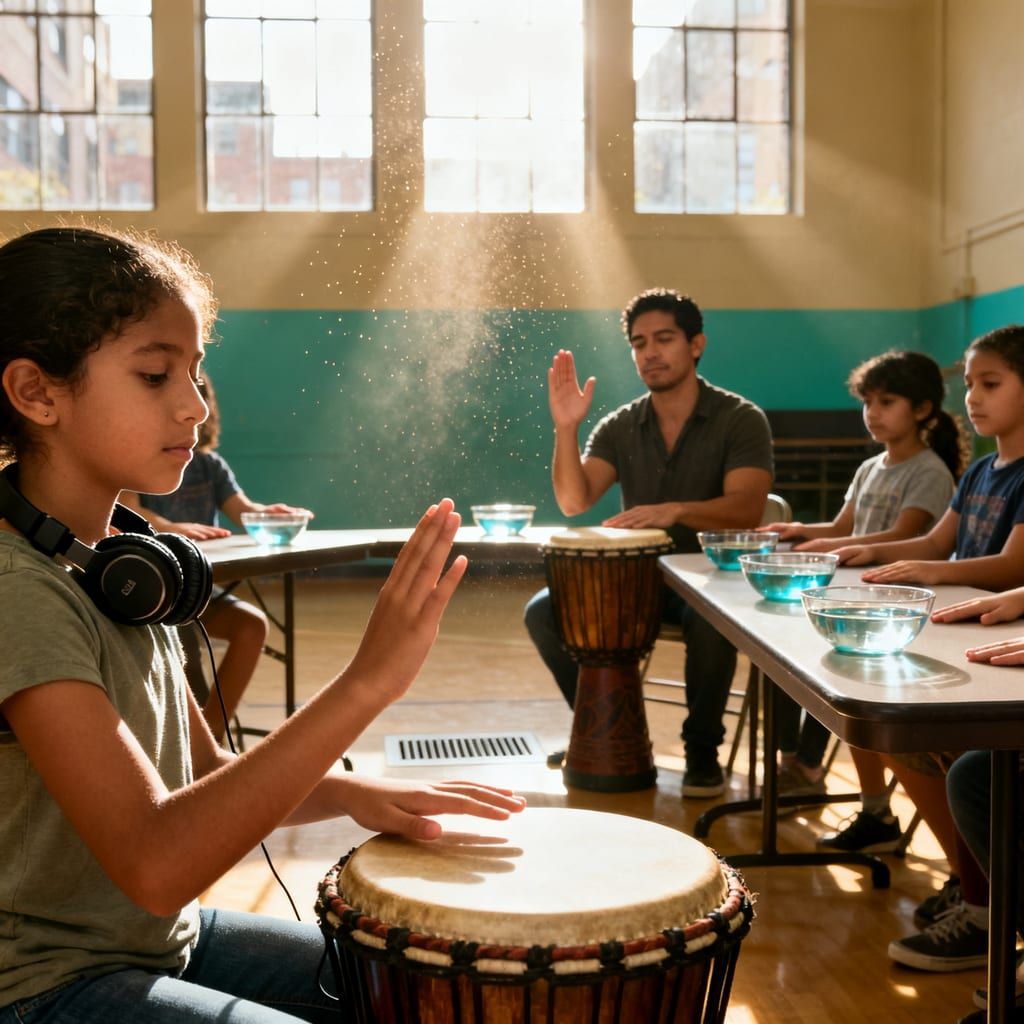
A drummer learns to listen for the rhythms you can't hear
Read more →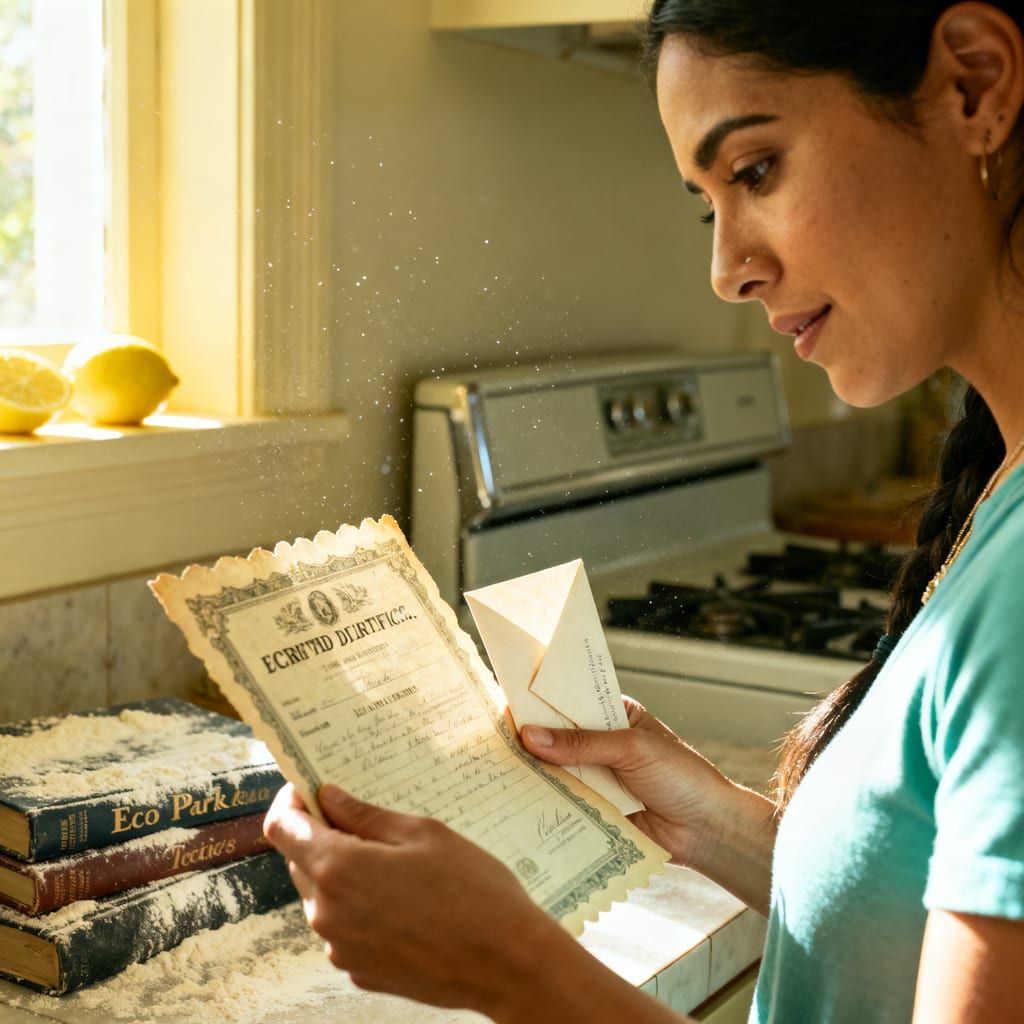
In Los Angeles, a daughter learns how to carry two lives forward
Read more →Story audiobooks for children of all ages — a new one every day on Smarter Way Stories.