Two Houses and One Quiet Heart
A daughter learns to read between the lines of a life split in two
Read more →
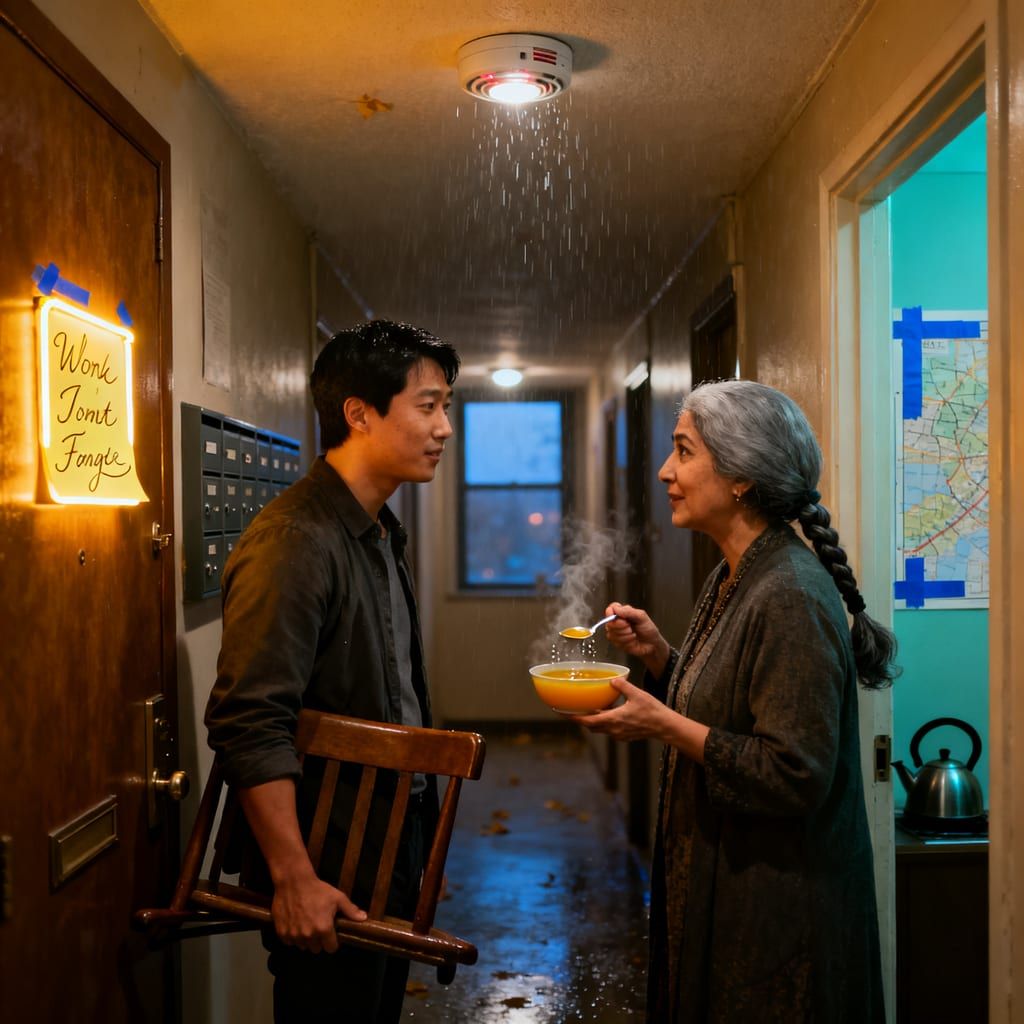
By the time the chirp starts, the hallway smells like rain and something sweet that doesn't belong to October. Evan has his keys in his mouth, collar up, avoiding eye contact with the sprinkler head as if it might ask him questions. His door waits like always-unreadable, blank.
A neon sticky note interrupts him. Slanted handwriting: "Sorry for alarm. Cooking. New neighbor. Nasrin."
The smoke detector down the hall chirps again-an impatient cricket caught in a tin can. Under it: a chair, abandoned. Above it: a small plastic circle insisting it is the center of the universe.
He swallows his keys. "Okay," he says to the empty corridor, and goes for his own chair.
He knocks with the chair tucked under his arm. A beat, then the door opens to steam and coriander and a woman with a gray braid pinned like a question mark. Her eyes take him in quickly, the way people do when they're measuring a problem they intend to solve.
"Evan," he says, pointing to his chest. "I brought-" He lifts the chair, mimes the Olympic sport of ceiling reaching. "For the-" He flutters his hands upward. Beep. Beep.
The woman laughs from deep in her throat. "Nasrin," she answers, placing a hand to her heart. "Welcome." She seems to hear herself, shakes her head, tries again. "I am-new." A careful pause between each stone. "Sorry." She touches her note on his door with two fingers. "Cooking."
"It's fine," Evan says quickly. "I mean, it's your home. The detector is just-overzealous." The word tastes like the legal work his ex used to do. He climbs the chair, stretches, and waves a folder at the alarm. The steam is visible, a ghost escaping a pot. The world quiets.
They stand in the silence of a small miracle. In the kitchen, soup bubbles in a pot, the color of sunrise on a cloudy day.
"Thank you," she says. Then, without ceremony, she dips a spoon and offers it to him like a test you can pass simply by tasting. He hesitates-stranger, hallway, germs, Chicago-but the apartment smells like a story he can't name. He takes the spoon.
Saffron first, then chicken, then a gentle heat that arrives late to the party and stays. "Wow," he says, and feels twenty percent less alone for no good reason.
She watches his face carefully, as if there might be a quiz later. "Good?" she asks.
He nods too many times. "Good." And then, because awkwardness is a kind of muscle he's trained, he adds, "Much better than my smoke detector soup."
Nasrin laughs in a way that warms the air. "We make map," she says, touching her temple with a spoon. "Slow."
After that, the building changes scale. The mailbox becomes a mouth that swallows letters and refuses to spit, a thing to be approached with coaxing and small prayers. The bus is a grinning animal with rules nobody wrote down but everybody knows.
Evan begins a list on his fridge: Bus 22 north-press the yellow tape before your stop. Aldi app-don't wait to scan. USPS box-slam the door twice.
He writes in block letters, adds phonetic breadcrumbs: "Ashland (ASH-land). Kedzie (KEHD-zee)." He labels rice, salt, cumin in thin loops of ink. They stand at her counter while he tapes "COF-FEE" to a glass jar and "SUG-AR" to a canister that once held tea and a grandmother's stories.
Nasrin offers tea in return, and fruit left out until it is exactly itself. She pours into little cups that clink like ideas meeting. "In Farsi," she says, "we say: Two birds-one seed." She taps the counter. "You help me, I help you."
He smiles, and then she looks past him at the cardboard boxes stacked like unplayed Tetris in his living room.
"You have... long moving," she says carefully.
He shrugs. "Yeah. The boxes are... they have commitments."
She doesn't push. She opens a drawer, pulls out a postcard of Cloud Gate-the Bean bending Chicago into an alien. She places it on his table. "Everywhere is a little difficult at first," she says. "But we draw a map. Then we walk it."
A white envelope with blue letters appears in her hallway a week later, stern as a hall monitor. HOMEOWNERS ASSOCIATION-NOTICE. The sentences inside are the kind that punish you for breathing on them wrong. Misfiled move-in form, fees, compliance.
Nasrin sits on her couch and reads aloud in a slow tide. "Per... our... bylaw... seven-" She stops, exhales. Her jaw works like a student at a blackboard.
"Let me," Evan says gently, and they draft something measured, a letter with its hands open. They reference clause numbers like they mean it. He learns the shape of her maiden name as it's meant to exist, writes it in ink that won't smear.
At the DMV, the questions are written by someone who loves riddles and hates people. Nasrin squints at a screen that insists pedestrians are simultaneously king and invisible. She fails the first time by two questions. "They twist the words," she says, holding the printout like it might bite.
They study. He makes flashcards and tapes them to everything-Yield goes on her kettle, Right of Way on his fridge. Stop is on her door; Go is on his path to the laundry.
She sets her kettle hissing. When he reaches for a marker, she sets a gentler assignment on the table: "You call your sister," she says, not a question. "Today. You say: Hello."
He chews the cap. "We don't really-"
"You say: Hello," she repeats, softer. "Then you say what comes."
He calls. It goes to voicemail. He says hello. It fills the room anyway.
On her third try at the DMV, Nasrin returns to the car with a rectangular smile laminated in plastic. Her photo is stern in the way all official photos are stern, but her eyes are laughing. They take the certificate home as if it might catch a cold.
They celebrate with tahdig that shatters like glass and releases butter. Rice studded with barberries the color of rubies. In the small kitchen, they perform a private dance of teacups and spoons. Evan learns to listen for the rice when it begins to sing against the pot. He learns his own kitchen can smell like this, too.
Word spreads without anyone meaning to. A neighbor knocks to ask if anyone knows how to reroute a package the USPS insists was delivered to the moon. Another asks to borrow a stroller and returns it with a pie that breaks into summer when you cut it. Someone tapes a handwritten recipe in the pie tin's margin like a secret shared under a blanket.
One Saturday, Evan spreads butcher paper in the lobby and draws their streets not as Google would, but as lived by feet. Nasrin adds landmarks with a precise pen: the kind cashier at the corner store, the park bench that gets morning sun, the librarian who loves mysteries. They label the crosswalk with the uneven brick that will trip you if you text. They post the Welcome Map with blue painter's tape and watch blank doors begin to earn names.
When Evan helps Nasrin frame an old photo of her classroom-rows of students turned like sunflowers-he assumes nostalgia.
"Want it over the dining table?" he asks, hammering a nail into the plaster with tentative taps.
She studies the wall as if measuring wind. "No," she says at last. "The hallway."
"The hallway?"
She nods. "I want to be a person with pictures on the wall here." She touches the frame, then the newly bruised paint. "Past is good. But this"-she looks around her small apartment like a scientist with a newly named star-"this is now."
He tastes the sentence the way he tasted the soup. It rearranges something behind his ribs.
Then his phone rings in the soft, unremarkable hour between dinner and dishes. His father. A fall. The words clatter: imaging, observation, out-of-network. The airline website opens like a mouth too full of teeth. He freezes at the ticket portal, cursor blinking at the field labeled Last Name as if it's the hinge of all the world.
Nasrin sits with him at his kitchen table. She slides her hand onto the wood near his, not touching, an anchor offered but not pressed.
"In Farsi," she says, "for nervous," and she presses two fingers to her throat, "we count the air." She inhales, steady. "Yek." Exhales. "Do." Again. "Se."
He mirrors her, filling his chest to numbers she names. The edges of the screen soften. The cursor's blink unhurried itself. Together, they read the fare rules like scripture. Together, they book the seat by the aisle so he can stand when he grows too big for the air around him.
He goes. The hospital room is all beeping compromise. His father looks suddenly old around the eyes. The conversation they have is not cinematic. It is stilted, real. He says hello. He says what comes. It is enough to survive a plane ride home.
When he returns, a second note waits on his door in the same precise hand: "Tea is hot. Welcome back."
He stands there with his suitcase in his hand, imagining the kettle set to sing, the small apartment across the hall warm with saffron and cinnamon. He knocks. She opens. No questions. Just a cup pressed toward him and the relief of a room that knows the shape of him.
The building's smoke detector in the lobby chooses this moment to begin a new opera. Chirp. Pause. Chirp. The sound ricochets off junk mail and potted plants.
By the time they get downstairs with a chair, three other neighbors have arrived with their own solutions-one with a pie, inexplicably; one with a drill he wields like a lightsaber; one with a baby on her hip who laughs every time the alarm complains.
"Battery," someone says.
"Battery?" someone else repeats, tasting the T like a new consonant.
Evan steadies the chair while Nasrin holds the flashlight on her phone. The drill wails; the baby coos back, fluent in nonsense. Someone offers the pie as currency for patience. Laughter pinballs down the hallway, hits the closed doors, finds the cracks.
He looks up at the map they taped in the corner last week. It has grown noodles of ink since he left-new names, arrows, someone's annotated star over the laundromat: Best machine is #6. Under The Good Bench, someone has added: After rain, worms.
Evan slides the old battery into his pocket, warm from the friction of being needed. The detector hushes. The lobby exhales. For a second, nobody moves-they listen to the quiet like a song they all know but haven't sung together before.
He catches Nasrin's eye. She gestures with her chin, small, satisfied.
"Map," she says.
"Map," he agrees.
They sit on the edge of the lobby table and share the pie with spoons stolen from pockets. The baby decides Evan's nose is funny and announces this in a language everyone understands. The neighbor with the drill shows a small scar on his wrist and says, "Tenants' meeting, 2018," and a new story enters the record.
By the time he goes upstairs, the stairwell smells faintly of cinnamon and machine oil and rain. He stops at his door and looks at the boxes that have been watching him back for months. He opens the top one, pulls out a frame-nothing precious, a photo of Lake Michigan in winter, gray as an old t-shirt. He hammers a nail into his wall, crooked, and hangs it anyway.
When he steps back, his apartment feels infinitesimally different, as if the lines of a drawing have been darkened. The framed classroom photo in Nasrin's hallway glows in the corner of his eye when he passes, right where she wanted it-present tense.
He pours water into his kettle and waits for its little hiss, that first inhale before the boil. Outside, the bus grins by and someone on board presses the yellow tape early. Somewhere downstairs, beneath the hush, the building carries the low, steady hum of a place learning its own language.
He thinks of the first spoon of soup, of letters and phone calls and rice that sings. He thinks of a map drawn in borrowed ink and taped to a wall, filling with the signatures of the people who will read it, add to it, become it.
The kettle begins to sing. He counts with it-yek, do, se-and when he lifts it from the flame, the room answers back.
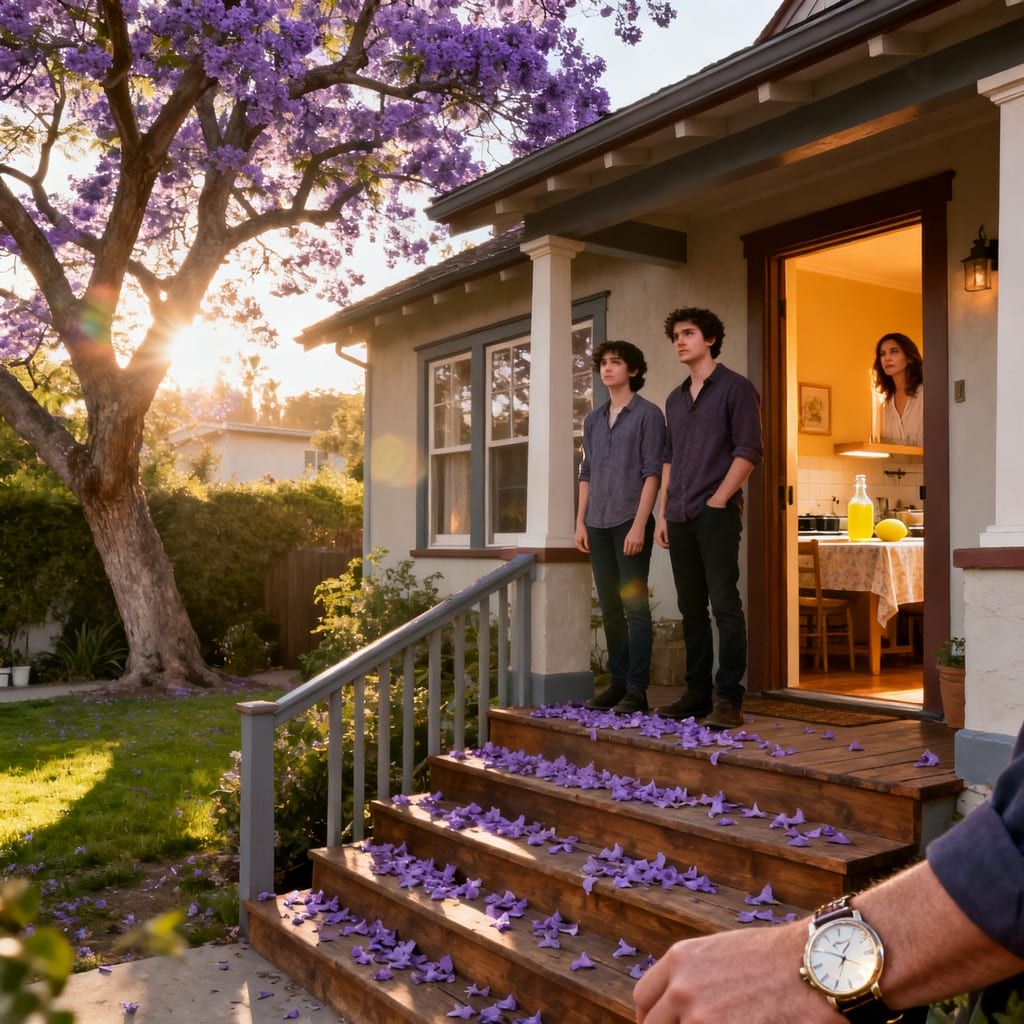
A daughter learns to read between the lines of a life split in two
Read more →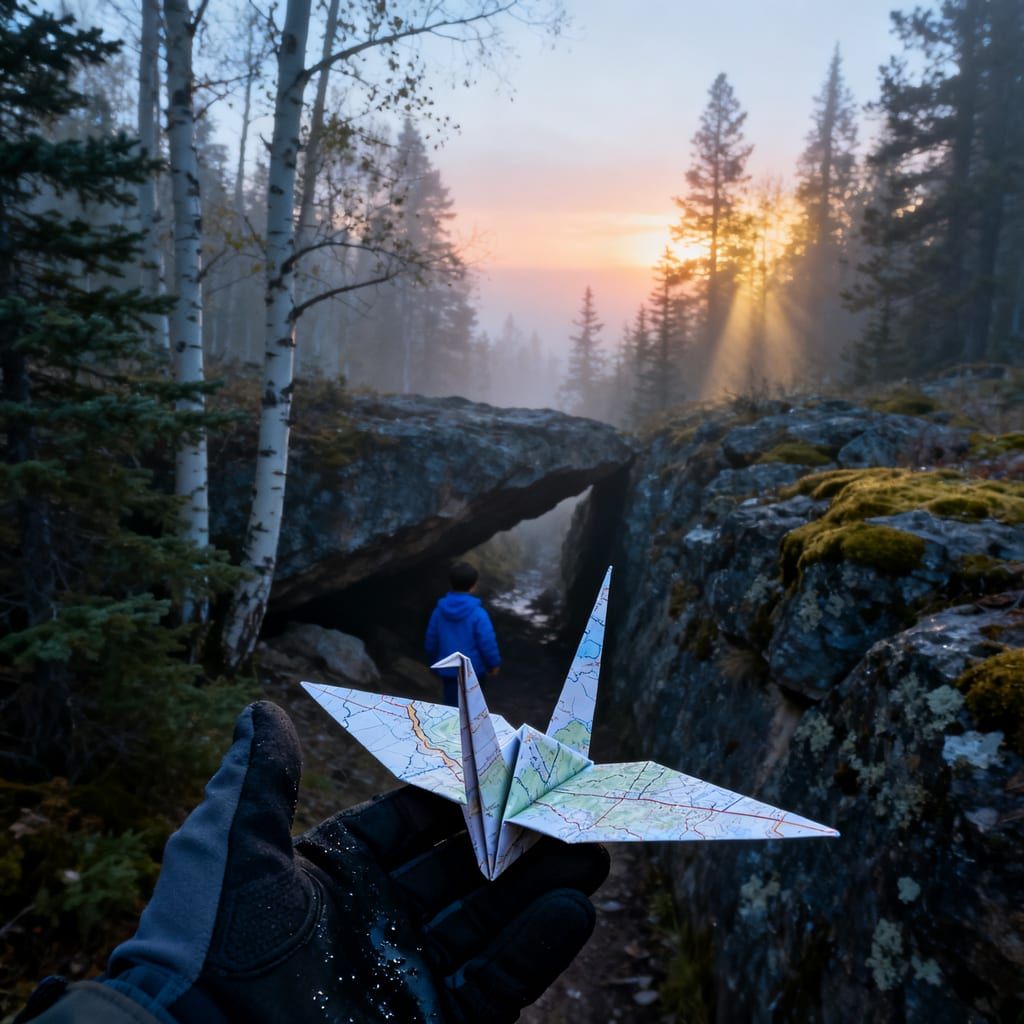
A fog-draped night, two souls found, and the quiet shape of a life
Read more →
Story audiobooks for children of all ages — a new one every day on Smarter Way Stories.