Two Houses and One Quiet Heart
A daughter learns to read between the lines of a life split in two
Read more →
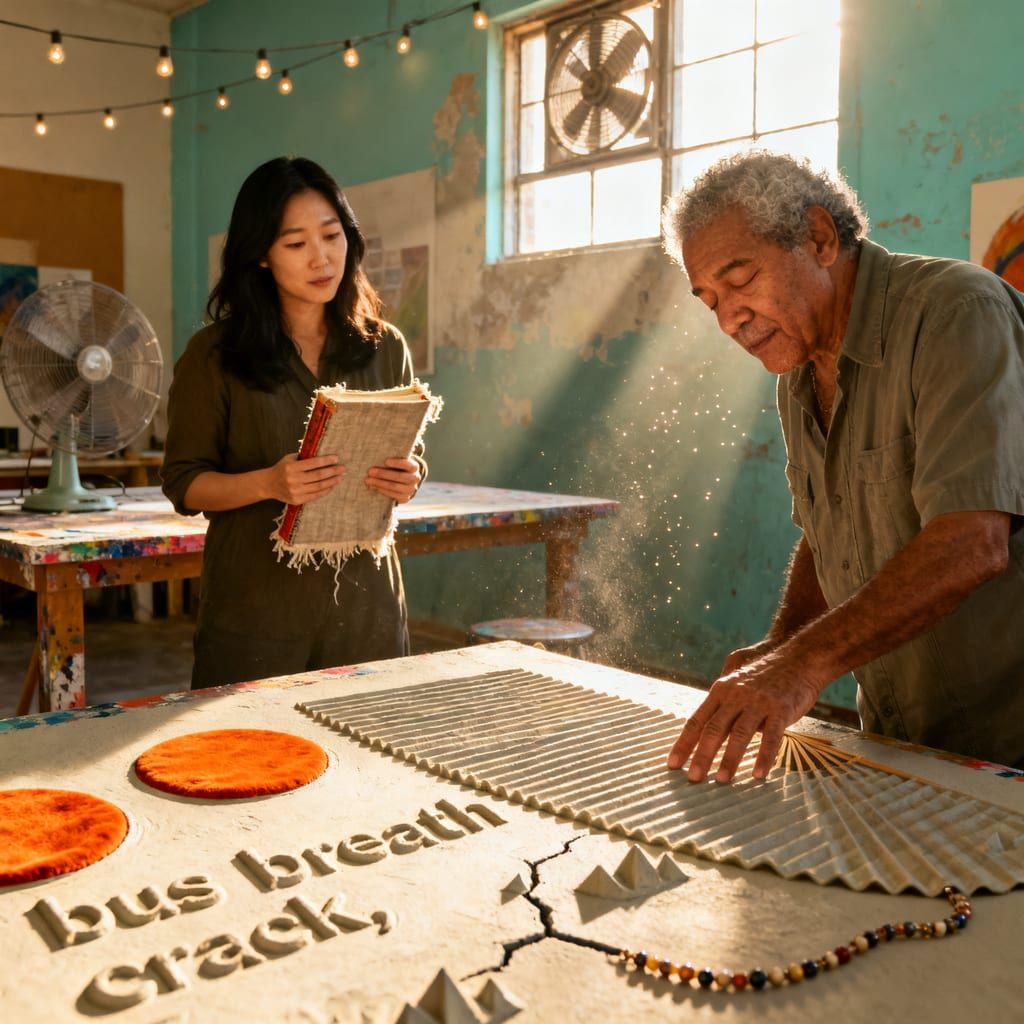
The first time I met him, he ignored the first sentence.
"Start with the cover," Mr. Sousa said, palms resting on the closed book as if he could will it open. The room's window fan rattled like loose coins. Somewhere, an old radio hummed a bossa nova that never quite reached the chorus.
"I thought you wanted me to read the novel," I said. I had practiced the name of the author on the bus, rolled it around so I wouldn't stumble.
"The cover," he repeated, mouth soft with amusement. "Tell me where it's been."
I held the clothbound book. The corners were frayed into tassels. A thumb-smudge darkened the lower right-habit embedded in grease. Along the spine, the cloth had bubbled, like blisters after rain. I pressed it to my cheek without thinking. "It's...warm," I said, embarrassed. "From my hands."
"Good," he said. "Now the room."
"The room?"
He nodded toward the window. "Where are we before the story begins?"
I froze. This was not in the volunteer guidelines. "There's a fan," I offered. "And-paint?" The word caught, too blunt. "Turpentine. Faint, like it lives in the wood. The light-" I reached for the rest and it slipped away. The light was wrong for me, always. It arrived in patches I couldn't quite name: olive that was maybe brown, brick that leaned toward rust.
He smiled into the inside of the book. "You'll learn."
I came every Thursday at four. By week two, he'd banished summaries. "Names later," he said. "First, what the object remembers." He asked for the fringe of the rug, the way the chair complained when I shifted, the grain of the table under my forearms. When I stumbled over color, he offered other doors.
"Red," he said, tapping the table, "is brass warmed by the sun."
I tried the idea on my tongue. "Green?"
"A cool hand on a fever."
"And blue?"
He tilted his head, listening for something beyond us. "What quiet does after a long day."
I wrote these in the margins of my planner, a matrix of columns and drab boxes that had kept me obedient for years. At work-an endless drumming of metrics, bonuses tied to everything quantifiable-I began to pause my screens and name the air. The bus exhaled when it knelt for a stroller. Late oranges at the grocery wore a lazy shine, a lull of rind. My apartment's cracked tile mapped a river I'd never seen, tributaries reaching toward a drain that wasn't there.
When I read to him, he asked sly questions that turned my facts into stories.
"Who bought the bouquet with the broken stem?"
"I don't know-"
"Guess. Guess with care."
"A man in a too-clean shirt, holding a limp tie in his pocket."
"Why is your coffee always half drunk?"
"I forget it," I said. "I think the heat will wait for me. It never does."
He chuckled, then lifted the book and held it like an altar. "We'll make the heat wait."
By the fifth week I told him about my job without telling him. I told him about the parking garage, how the elevator sighed at every floor; how the warble of the fluorescent lights quivered in the soft part of my skull. I told him about an email that began with hope and ended with "circling back," how the line of my mouth changed as I read it.
He ran a hand along the table's edge, found the nick he'd learned by touch. "It sounds like a room that steals verbs."
"It steals," I said. "It files. It stamps. I measure what the company loves and it isn't people." I hesitated, the words trying to wriggle back into their safe drawer. "I turned down a promotion last year. My boss wanted someone with 'vision.' I said I didn't have any."
Mr. Sousa's thumbs pressed into the cloth of the book. "Maybe you didn't have their word," he said. "Different animal."
I didn't tell him how, at my father's funeral, I'd stood at the back and traced the pattern of the carpet to keep from looking at my sister's hands. How she'd waited for me to speak and I'd counted ceiling tiles. After, I had packed my grief into bins labeled "deal with later." I had not called her back. Every week the phone sat heavy in my bag, a bell I refused to ring.
He didn't ask about the funeral. He asked about the cracked tile river.
"Does it have a mouth?" he asked.
"It stops behind the fridge," I said. "Like it decided not to meet the ocean."
He grinned. "Stubborn river. My favorite kind."
I began to practice naming the world on purpose. I lingered at crosswalks and eavesdropped on pigeons jockeying for bread crusts. On Beverly, a woman in a lime scarf-if it was lime; I hated that I had to guess-argued with a parking meter as if it had insulted her shoes. The sidewalk outside the center had a hump where a root had insisted on living. Children squeegeed chalk into rivers and, after the sun, their drawings dried like maps of small storms.
I arrived early and told him everything as if we were tasting it.
"The bus driver wore a ring with a missing stone, and he kept touching the empty place," I said.
He nodded, amused. "He loves someone who left."
"And the oranges at Mercado Los Amigos-they're weary now. The ones left at the end of the day are a softer tired. When I lifted one, it had a thumbprint from someone else. We shared a fruit we hadn't eaten."
He leaned back, a smile cracked open. "That line can be hung on a wall."
Sometimes he interrupted the book altogether. "Listen," he'd say, and tilt his head until I followed. Siren, then silence. A distant train that wasn't really a train but the steady exhale of a delivery truck. The particular rhythm of shoes on the hallway-heels, pause, rubber soles, drag. He labeled them with me until the room had a shared grammar.
Once, when the fan refused to start, I stood on a chair to pull its cord and felt ridiculous and brave at once. "The light is thick today," I said, surprising myself. "It feels like once-baked bread."
He tapped the book. "Now you're cooking."
At the end of summer, flyers bloomed on the bulletin board: annual showcase. Volunteers and students and retired men with careful hands would display what the center had midwifed. I assumed I would clap for someone else.
The room that night was hot with bodies and acrylic paint, a good kind of trapped. String lights fell like pearls, a little too festive for the scuffed floor. When I found Mr. Sousa, he had shaved that morning; his jaw felt smooth when we hugged hello.
"Ready?" he asked.
"For what?"
He lifted his chin toward a canvas covered with a sheet. Assistants hovered-people I'd seen before with aprons stitched by hand. The director tapped a microphone, the room gathered itself, and the sheet was pulled like a sigh.
The mural was not flat paint but a topography. Ridges rose under my fingers-thick swaths of raised line, stippled braille aligned in curves. A bus's breath swelled in a corrugated sweep of rubber against curb. The oranges were sewn with small circles of velvet, soft as a shoulder. The cracked tile river ran, a jagged line in smooth plaster, ending where a miniature refrigerator bulged. There was the ring with the missing stone-a hollow set with a concave dip. In the lower left, a fan's chain was rendered in tiny linked beads you could count like a rosary.
A small placard read: Painted from Hana's eyes.
I heard my name before I felt it. The room tilted-in awe or panic, I couldn't tell. I found the table edge and held it, then Mr. Sousa's hand found mine. The pressure was firm and ordinary and exactly what I needed.
"You thief," I whispered. "You were stealing what I said."
"Borrowing," he said. His grin went sideways. "You can have it back."
I laughed, and it came out as a tear I tried to hide and failed. The mural had been listening when I thought I was speaking to a single man in a small hot room. The city had been translated into a language his hands could read. Mine, too, apparently.
People came and traced the river with their fingers. A boy whispered, "It tickles." A woman pressed her palm to the velvet and closed her eyes. I stood next to the placard like a clerk who had lost the receipt.
"Do you see now?" he asked, his head tilted toward me the way you lean toward a known smell.
"I think I'm starting to," I said. "It scares me."
"Good," he said. "Name it anyway."
The next morning, the elevator at work sighed at me again. I stared at my reflection in the brushed metal-ghosted, almost green in the fluorescent. I thought of the stubborn river. Of heat that wouldn't wait. My resignation letter was only three sentences long. It fit inside a mouth without choking.
I walked out with my mug-half full, cooling-and called my sister on the sidewalk. Cars swam by, wet with new sunlight. When she answered, her breath was a held thing. We had a hundred wrong words between us and still I started.
"I'm on Wilshire," I said, as if the street could apologize for me. "There's a bus kneeling for a stroller. The driver wears a ring with a missing stone." A small silence. "I kept thinking I had nothing to say. I was wrong."
She laughed from a long way off and then closer. "Tell me the rest," she said. "Tell me everything."
In the afternoon I stopped by the arts center and taped a sign-up sheet on the bulletin board: Reading the Margins-Walks Through the Neighborhood. Wednesdays at six. Bring nothing, especially your certainty.
On Thursday, I found Mr. Sousa by the window with the fan that sometimes behaved. The city made its muffled orchestra below us. He held out the book without opening it.
"Before we begin," he said, "what is the morning like?"
I went to the window and pressed the heel of my hand to the warm glass. The light came up the street softly, lifting lids. A man swept a storefront and pulled the broom close like a dance partner. A bakery cracked open its door-the sound a cheek makes when it frees from a kiss. Somewhere, a kettle insisted.
"It's the kind of morning," I said slowly, "that loosens everything. The buildings stretch their shoulders. The sidewalk is cool on a dog's belly. The air tastes like someone peeled a clementine and left the skin in the trash, sweet and faint."
"And the light?" he asked.
I closed my eyes and let the warmth press through my lids, a soft insistence gathering on my face, on my throat, along the tender collar of my shirt.
"It's what a hand does," I said, "when it lifts your chin to say-look."
He leaned back, satisfied. "Read me the cover," he murmured, and then, like a footnote, "and then the first line."
I held the book. It was still warm from both of us.
I began.
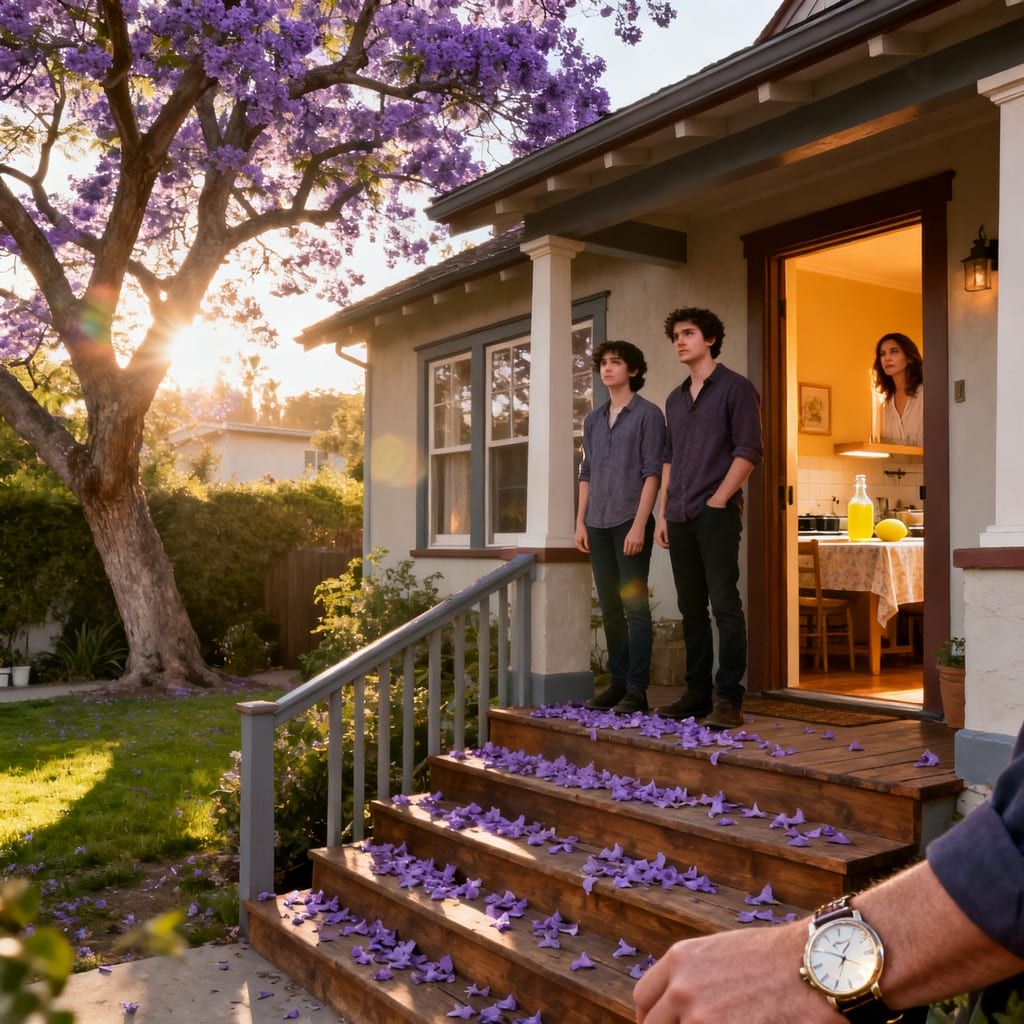
A daughter learns to read between the lines of a life split in two
Read more →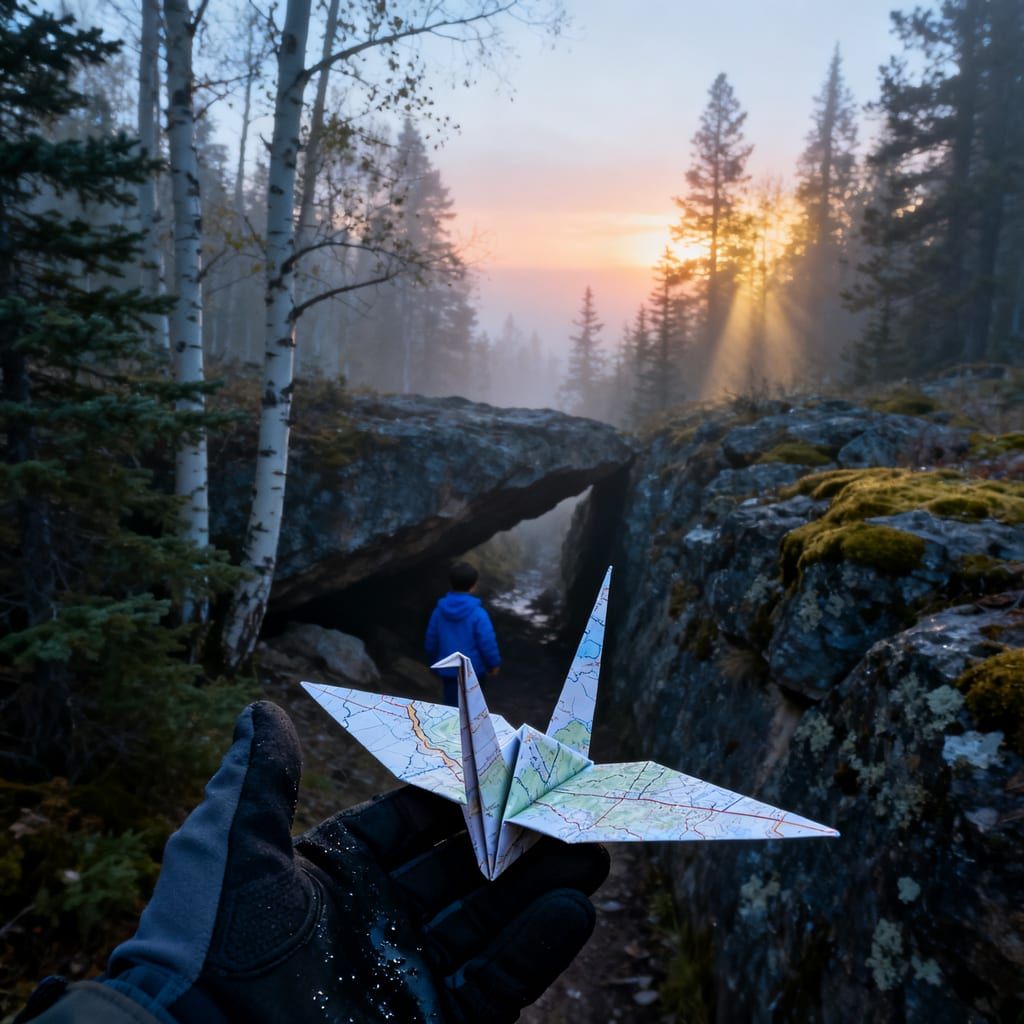
A fog-draped night, two souls found, and the quiet shape of a life
Read more →
Story audiobooks for children of all ages — a new one every day on Smarter Way Stories.