Two Houses and One Quiet Heart
A daughter learns to read between the lines of a life split in two
Read more →
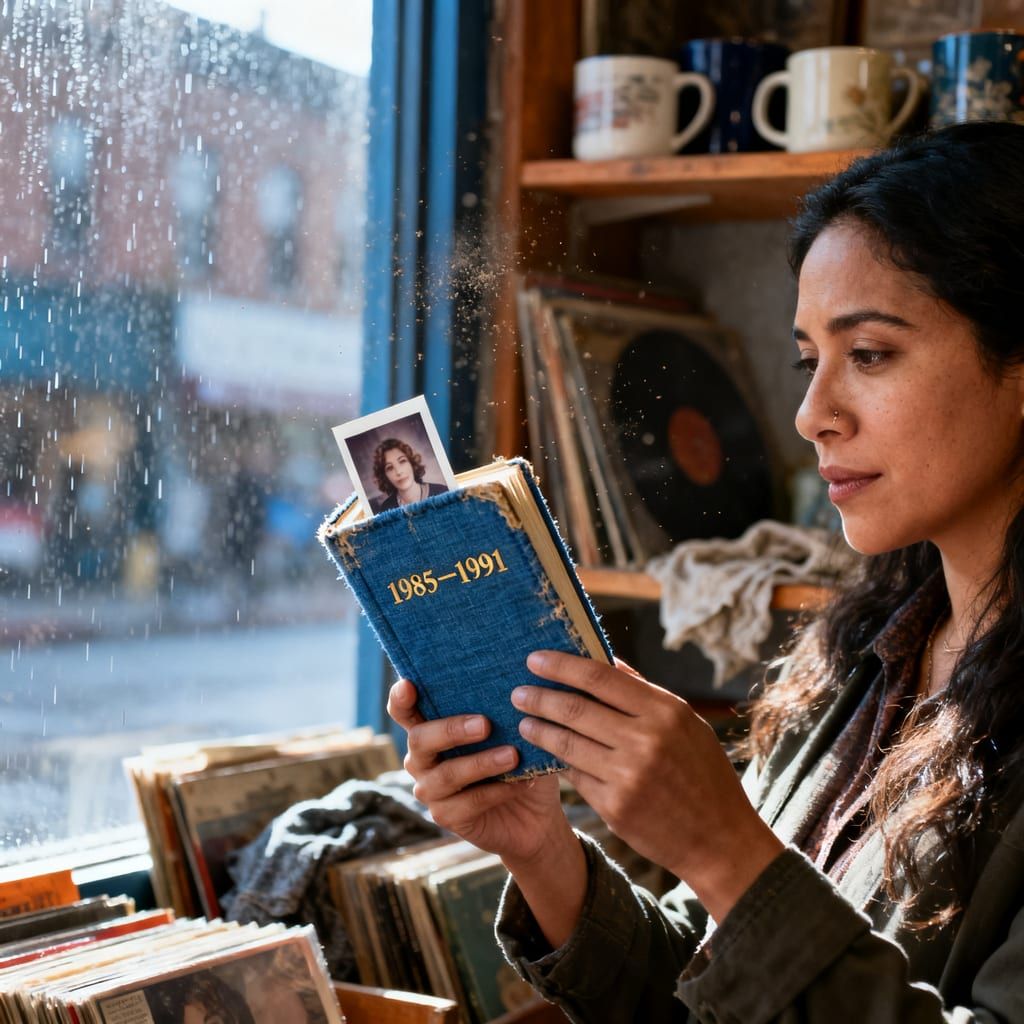
The thrift store smelled like dryer lint and old cedar. Nina ducked in to borrow twenty minutes from the rain and the calendar, a client call toggling on her phone like a small, impatient heart.
She drifted aisles the way you drift a city you half-know-records in cracked sleeves, a carousel of chipped mugs, a wedding dress collapsed in plastic. Her fingers paused at a short stack of books near the register. Clothbound, blue, the cloth rubbed pale at the corners. 1989-1991 pressed in gold.
The handwriting was steady and teenage. Elena M. dated each page in neat loops that looked like the train schedules Nina used to memorize when she still rode them with someone. The first entry: a dance scholarship and a mother who braided hair too tight. A brother who listened at the door. Philadelphia that smelled like pretzels and rain.
A dry-cleaning stub folded like a paper tooth. A disconnected number. A library card stamped with a branch that had been a daycare for years now.
Between pages, a Polaroid slid out-three girls, arms tangled, a cardboard sign: We march because she can't. The one on the right wore hair pulled high, eyes like warm coin. Something pricked at the soft tissue under Nina's ribs, a half-memory that refused a name.
She put five crumpled singles on the counter. The cashier shrugged, tore off a receipt that would curl in her pocket like a tide line. Outside, the rain had thinned to a mist that made the streetlamps bloom.
Back in her apartment, the call over-rescheduled, the time reclaimed-Nina read by the window until the gray sky turned the room a thoughtful blue. Elena wrote about practicing turns until the world steadied, about a teacher who told stories with her wrists, about skipping lunch to save bus fare.
Nina's thumb traced the ink as if heat might lift from it. She hadn't written anything with her hand in months. Everything lived in screens-edits at two a.m., invoices, a spreadsheet of what she had and what she owed.
She Googled the address Elena had scribbled inside the cover: 244 W. Cambria, Apartment 2R. The map offered her a different name for the building now, a music store where there had been walk-ups.
"Of course," she told the air. She put the diary in her canvas bag like a fragile animal and took the Number 3 bus up Broad.
The music shop was narrow and humming. Guitars hung like bright fish against a blue wall. A bell chimed when she entered, and a man looked up from restringing a violin.
"Can I help you?" he asked, and his voice had the gravel of someone who'd smoked for years and given it up like a promise to someone else.
"I'm looking for a family who used to live upstairs. Marquez?" She slid the diary forward, a shy confession.
He turned the cover carefully, as if old words could bruise. "Elena. Yeah," he said, eyes traveling some remembered staircase. "Her mother ran a comb like a metronome." He smiled at the old ache of it. "Dance folks. There's a studio now-Alma Vieja-on 9th. The daughter runs it. They used to sweep our stoop when the wind was mean. Tell them Manny sent you."
Outside, the air felt washed. Nina walked past a bakery's sweet exhaust and a kid dribbling a damp basketball, past stoops collaged with old flyers and new rain.
The studio's front windows held the city like a second mirror-rowhouses softened at the edges, a boy on a scooter carving the afternoon. Inside, the sprung floor gleamed. A woman with her hair in a clouded bun was coaxing a stereo that kept insisting on 2008.
"Maya?" Nina asked, half-guessing.
The woman laughed. "Always, when the wires pretend I'm a DJ." She wiped her hands on her leggings and offered one out. "How can I help?"
"I think I have something of your mother's." Nina held out the diary. The room quieted in a new way.
Maya's face opened. "Oh," she said, like the word was a stair she hadn't seen in years. "We boxed so much last year. My father-" She stopped, the sentence turning a corner. "We must have donated a batch when we moved her in with me. She's in Studio B. Slow class today-she says the slowness is where the truth lives."
They walked down a narrow hall lined with recital photos. Arms like wings, small mouths counting beats. Somewhere a heater clicked itself back to life.
Studio B was sunlit and full of careful movement. A handful of seniors traced arcs with their feet. At the front, a woman with silvered hair and a scarf tied neat at her neck stood very straight, her hands trembling slightly but sure in their intention.
"Mami," Maya said softly. "A visitor."
Elena turned, and the years loosened off her face in a way a good laugh does. "Hello," she said, her voice informed by time but not reduced by it.
Nina stepped forward and offered the blue book. "I found this at a thrift store. It felt like it wanted to come home."
Elena held it the way you hold a sleeping bird. "Ah," she breathed. "Mi cuaderno." The cover fit her palm like a fact. She stroked the frayed edge with her thumb. "I thought I had lost you," she murmured to it, and then up to Nina: "Thank you."
They sat on a bench under the window. Dust motes floated like small, private snow.
"I wrote in blue because it looked like borrowed time," Elena said, flipping gently through the pages, stopping at the Polaroid. She laughed once, surprised, then squinted. "Look at us."
Nina leaned in, the photograph a tiny window. The girl on the left lifted her chin toward the lens with a cocky, tender defiance. The girl in the middle had celery-green nails. The girl on the right-
Her mouth formed the word before sound arrived. "Mami," she whispered. Her own mother on newsprint-thin film. Younger. Alive in the way you are when the future hasn't yet introduced itself.
Elena looked at her. The same pause, then the same soft recognition. "Lourdes," she said, and the room shifted its weight. "She always brought extra water and jokes. She tucked band-aids in her sock. She could laugh a policeman into sighing."
"I-she died when I was fourteen," Nina said, a thin rope of truth she hadn't pulled in years. "I didn't expect her here."
Elena's hand found Nina's forearm and rested there, present but light. "Then she found you and me both," she said. "We marched for someone who couldn't come that day. And here we are." She tapped the edge of the photo. "Arms tangled. Look at that sign."
Nina blinked, and the moment did that trick time does-expanding and collapsing at the same time. The dancers stepped through a slow turn behind them, a shared exhale.
Elena turned to the final page, the blue ink deepened to indigo where the pen had lingered. "Read with me?" she asked. The tremor in her hands seemed less like a flaw and more like a metronome keeping time across a difficult measure.
She read aloud, voice careful and spirited at once. "July 17, 1991. Today I almost left for New York. I had one bag and twenty dollars and the idea that if I moved fast enough, the ground would never turn to boxes. I stayed. I made arroz with Mami and we danced in the kitchen, and the radio told me it was okay to take the longer route. Dear future me: keep moving even when the floor is cardboard. You are allowed to carry and to set down. If I forget, if I lose this, please return me to the girl I was. She still needs me."
She closed the diary and pressed it to her chest-not drama, just the simple habit of keeping warmth where warmth belongs.
Maya leaned in the doorway, her smile damp. "She's been telling my students that for years," she said. "But to hear it from that ink."
Nina breathed, deep as a dancer's prep. She thought of her apartment's blank notebooks, gifts from well-meaning friends who believed paper could sponge up a life. She thought of the unspoken apology she still owed her own hands for letting them fall still.
"Would you like to keep the photo?" Elena asked, already sliding it free of the page. "Take it. Your mother would have insisted. She was bossy in the generous ways."
Nina shook her head, even as her fingers reached. "I can't-"
"Please," Elena said, and flipped the Polaroid over. On the back, a dot of blue ink. "We have our faces in here," she said, patting the diary. "You have her laugh in yours. Let her ride home with you."
Nina let the small square warm in her palm, the chemical gloss catching the window's light. Behind them, the slow class clapped once, a sound like a seal.
"Come back," Maya said. "We do a community class on Saturdays. No steps too slow."
"I will," Nina said, hearing the truth in it arrive at the same time as the words. She stood. "Thank you. For letting me carry her back."
Elena squeezed her hand. "You carried yourself, too," she said, as if it were the easiest thing.
Outside, the day had clarified into blue. The bus sighed and shouldered to the curb, and Nina let herself be carried. She watched the city flick past-stoops like stages, a dog nosing a rain-sunk newspaper, teenagers sharing a headphone cord, the music a private river between them.
At home, she put the Polaroid on the table and made tea the way her mother had, over-steeping it into a stubborn strength. She pulled a fresh notebook from the drawer, the nice one she'd been saving for a day she felt more like someone who deserved it.
She found a pen with blue ink at the bottom of her bag. It took a second of coaxing to flow. The first sentence wavered-she let it. The second steadied.
Dear future me, she wrote, and the page answered with the smallest shiver, like a person recognizing their name from across a room.
The rain returned in a softer register and tapped the glass. She thought of Elena's steady voice, of a march thirty years ago where three girls had tangled their arms and said a thing out loud. She thought of boxes that turn to floors, and floors that remember how to hold you.
She kept writing until the tea went cold. The blue ink stitched a thin, honest line from the woman at the table to the girl in a photograph who looked like she could outrun weather.
When she paused, she turned the Polaroid over and wrote a date-a now to face a then. The city outside smelled faintly of pretzels and rain.
Somewhere across town, a small blue book returned to its shelf. Somewhere between the pages, a girl promised a woman that they would keep moving. Nina capped her pen and rested her hand on the notebook, warm on warm, the ink drying into a quiet, durable shine.
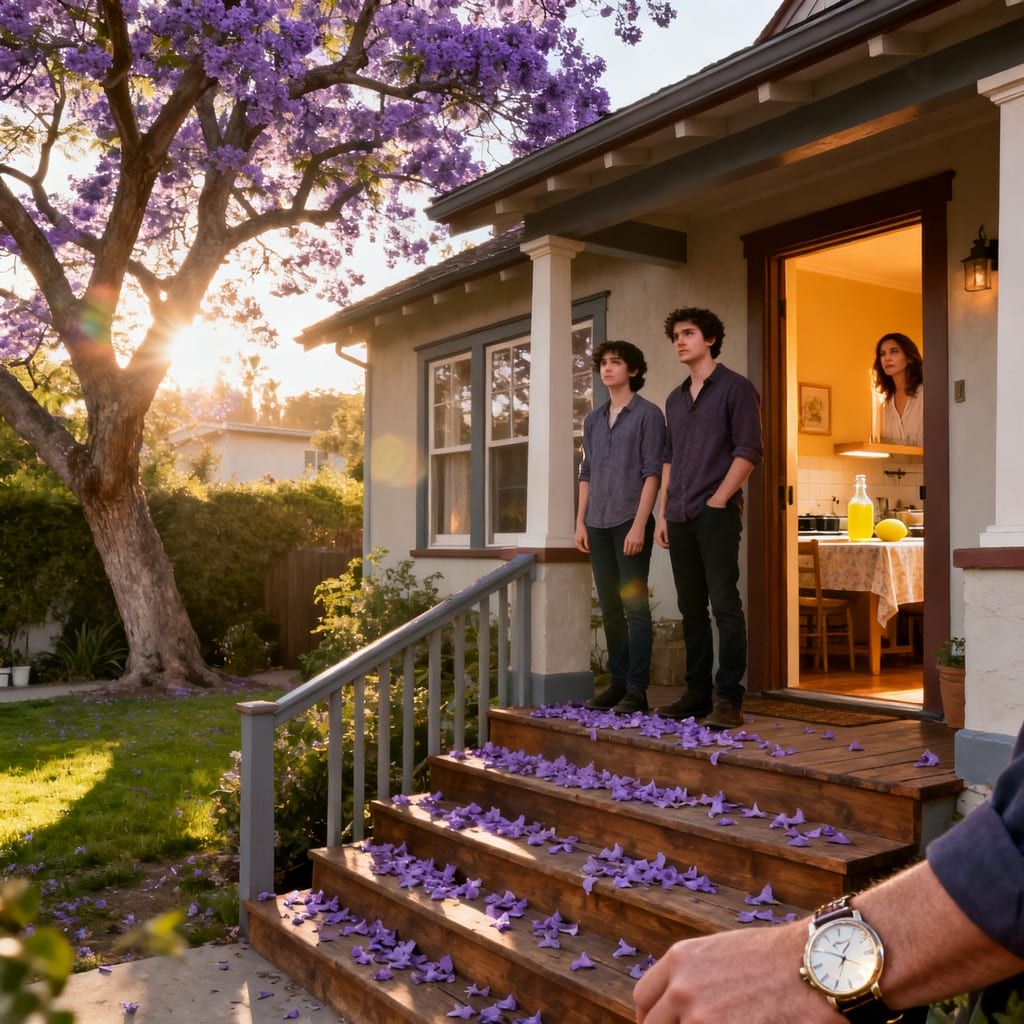
A daughter learns to read between the lines of a life split in two
Read more →
A fog-draped night, two souls found, and the quiet shape of a life
Read more →
Story audiobooks for children of all ages — a new one every day on Smarter Way Stories.