Paper Cranes at Shift Change
A winter of small mercies, folded and kept
Read more →

Aria pressed blue painter's tape to the cool cinderblock, smoothing it with the side of her thumb. The sign she'd lettered upstairs trembled in the laundry room's draft before sticking-Lend-A-Hand: Borrow. Repair. Return.-two lines in her careful block print, a third in smaller script like a quiet promise.
The smell of detergent and hot lint wrapped her. Dryers churned like low thunder. She hung the pegboard next, the holes forming a honeycomb of possibility, then fed the label maker: hammer, stud finder, Allen keys. Her red toolbox, its corners nicked with other apartments she'd lived in, landed on the folding table with a thud that felt-she couldn't help it-like a first offering.
If you want neighbors, be one. The thought bumped against her ribs as she opened her laptop and titled a Google Sheet. "If it's too earnest," she said to the empty room, "at least it's useful."
By Wednesday there were checkmarks and initials, a mess of them-K. from 3B grabbing the level, someone with a dragon avatar taking the spade "just for an hour"-and faces, new ones, collecting in the steam of tumbling towels. Aria learned first names with token stories: Ms. Alvarez on six, who made her own sofrito; Layla with the twins who never slept; Trevor whose bike chain sang when he stopped at the light.
On Friday afternoon, the cordless drill was supposed to come back at two. By three, it was marked "en route." By dinnertime the cell-signal heat of the building's group chat was thick with emoji and accusation.
who takes without asking? wrote 5D's anonymous profile photo, three angry faces.
might be gone for good lol, wrote someone else.
Aria's face went tight, a wash of secondhand shame warming her ears. This was my idea. The red dots by her own name pulsed like sirens. She typed, deleted, typed. She wished for an in-person shrug she couldn't perform in a chat window.
By morning, she was sliding apology notes under doors-Sincere apologies for any confusion. Please bear with us; still ironing out kinks-when a text pinged: saw mr k. w/ tool bag yesterday fyi, from Trevor with the singing bike.
She climbed three flights, breath a little ragged from nerves more than stairs. The third-floor hallway buzzed with a radio-low, a woman's voice singing in a language like water over stones. Aria knocked on the scratched doorframe. "Mr. Kovacs?"
No answer. But out the back window: a hunched figure on the rear stairs, wool cap pulled low despite the mild day. He was kneeling, shoulders set, his hands steady in the patient way of someone who had fixed things longer than she'd been alive. He looked up when she eased the window open.
"You must be Mr. Kovacs," she said. "I-"
He frowned, the lines in his cheeks deepening. His eyebrows were thick, like someone had sketched them in bold. "The railing," he said, accent heavy on the r. "It is not safe. The mail girl almost-" He gestured downward, a splashy, helpless motion.
A chill of embarrassment moved through her. "I thought you might have the drill. There was... confusion."
He blinked at her. Behind him, a red toolbox sat open, its metal edges softened by use. Along the inside of the lid, letters were etched with something sharp: Lidia. The name looked like a signature left in wet cement.
Words, suddenly, were useless. "Can I-do you need a hand?"
He grunted. "Light."
She held her phone above the wobbling spindles, her wrist buzzing as the group chat continued to clamor without her. The beam caught dust and mouse droppings, the rusty threads of a bolt that had stopped believing in its job. Mr. Kovacs worked by touch as much as sight, jaw set, breath small. He didn't talk, and she stopped trying to fill the quiet.
When the last screw bit into the wood with a satisfying squeal, he sat back, exhaled, and wiped his hands on a rag that had once been a T-shirt. He didn't apologize. He didn't explain. He flipped the latch on the toolbox and pulled out a shoebox instead, the cardboard soft at the corners.
"Here," he said, and passed it to her as if tests results were inside.
The index cards were the color of old teeth. Black fountain-pen loops marched across them in tidy lines: hammer-Miguel 4/12; push mower-S. Green 7/02; pressure cooker-return by Tuesday please. On the top card, someone had stamped a name that made her chest pull tight: Borrow Barn, 1979. The B's were squared off, familiar somehow.
"My Lidia," he said, tapping the lid with a nail as thick as a lug nut. "Everyone, they borrowed. They returned. We ate together in hallway."
Aria slid a card between finger and thumb as if it might dissolve. She saw the modest revolution of it-tools leaving and returning, a building set in motion by need and trust and the kind of courage that looks like an open door.
"I'm sorry about the fuss on the chat," she said. "People-"
"People forget," he said, not unkindly. "You remind."
A storm came like a mouth opening, quick and full-throated. By two in the afternoon, the sky over the rowhouses had turned the strange Baltimore-cream of a bruise. The first boom rattled the glass in her living room; the next took the power. Elevators shuddered to stops between floors. Someone down the hall shouted, "Hold on!" as if saying it made it true.
Aria's phone screen was a brief moon. She went straight to the laundry room.
She looped paracord from a pipe to a lint trap and hung her camping lanterns-two cheap ones from a weekend years ago when she'd tried and failed to be someone who enjoyed hiking. The room filled with a syrupy light. The dryers, dead, offered their wide mouths as benches.
"Open," she taped to the door. "Bring what you got."
They came, first in ones and twos, then like tide. Layla with a thermos that smelled of cinnamon. Trevor with solar chargers splayed like metal flowers. Ms. Alvarez clucked and shook her head and sat with Aria's list in her lap like a general going to war.
"Generator?" someone asked.
"Basement," Mr. Kovacs said, from the doorway, lifting his chin the way men do when words are unnecessary. He carried the red toolbox and, improbably, a shoebox under his arm. "It is stubborn."
They hauled it up on a dolly, its wheels complaining, its paint scarred decades deep. "Hasn't started in a year," K. from 3B said, shrugging. "Two?"
The group chat was now a chorus of battery emojis and proclamations-who had soup, who had phone books, who had candles with wicks too short to light-but here, breath turned to steam as they exhaled together. Someone brought a stovetop kettle that looked like it had outlived three kitchens. Another person produced jumper cables with teeth like small crocodiles. A teenager with chipped blue polish MacGyvered a headlamp to a broom handle and called it good.
"Ms. Alvarez on six," Aria said, and three phones wobbled their light in assent. "Check on the elevator, between floors two and three," someone added, and a path formed like a decision.
They boiled water for baby formula on a gas burner pulled in from a balcony. They wrapped the contents of a freezer in towels and lined the tub with bags of ice like sacks of winter. Doors that had been decorative opened. Names that had been screen names became the weight of bodies carrying, bending, laughing.
"Pull the choke," Mr. Kovacs instructed a boy in a hoodie whose mother held a baby, the baby's hair a soft crown. "No, more. Your hand, it feeds the machine with..." He searched for the word, found it. "Patience."
They pulled. The generator coughed, sulked, decided to be alive. A cheer flurried into the staircase, where the mail carrier sat clutching a paper cup of Layla's cinnamon drink, nodding at the now-solid railing as if it were an old friend who had just returned from a journey.
In that lantern light, Aria felt a click inside, not audible but real-the feeling of being part of the machine. She took inventory in a notebook because the Sheet was black rectangle now. She wrote names to the right of items, and lines connected in her head: this person to that person, this thing to that, the ways we tether ourselves.
Later, as the storm spent itself and the building smelled like wet wool and ginger, someone rolled in a piece of wood with brass letters greened at the edges. "Found it with the Christmas bins," Trevor said, breath clouding as he set it on the folding table.
LIDIA KOVACS, read the plaque, For What We Hold In Common.
Silence folded itself around those words in a way Aria had only ever felt in churches and grief kitchens. She looked at Mr. Kovacs, whose eyes had become two small seas.
"She had a rule," he said, voice thin. "On the card." He didn't need to tell them; he set the index card on the table as if revealing a map.
USE TOGETHER OR NOT AT ALL, it read, like a dare and a blessing.
The lights returned slowly, indignant at first, then sure. Someone whooped two floors down; someone else clapped once like a punctuation mark. The lanterns became decorations, their light suddenly quaint.
By morning, the pegboard in the laundry room had grown new labels like buds in spring. Not just objects: skills. sewing machine-lessons Sundays 2-4 (Layla); bike brakes-adjustments (Trevor); soup-Fridays (rotating); window caulk-call Mr. K. A sign-up sheet for Ms. Alvarez's empanada workshop made its way alongside a QR code that actually worked.
Aria typed with careful joy. The spreadsheet brightened: color, tabs, a tab for skills, a tab for repairs done, a tab for "needs checking on." It wasn't hers anymore. It was alive the way compost is alive.
She knocked on 3F. A loaf of banana bread waited on the doormat like an apology's body double. A Post-it stuck to the cling wrap: sorry, i took the drill for too long. panic shelves. i fixed them. it helped. -nora 3F
Aria lifted the bread, tore off an end, ate it still warm. She carried the drill down, thumbed the switch to hear it whir like a small promise.
At the meeting they called in the hallway because meetings belonged there now, they voted. It took two minutes and a piece of masking tape stuck to the plaque.
"Co-stewards," someone said, gesturing to Aria and Mr. Kovacs with a flourish that might have been sarcastic if it hadn't been sweet.
"You sure?" Aria asked him, low, so he could decline without spectacle.
He looked at her for a long time. The radio downstairs hummed softly through the floorboards, a familiar woman's voice again making vowels into water. "We do together," he said. "Or not at all."
By month's end, the waiting list for the orbital sander looped down the page like a river. The group chat, still pocked with gripes about recycling bins and a mysterious whistler at midnight, now swelled twice as often with questions about leftover soup, with offers to walk a dog during night shift, with "can anyone show me how to use a miter saw?"
Aria folded a blue tarp on the laundry table with attention that bordered on reverence. Around her, the room had changed without changing-same hum, same lint-and yet it had the braided feeling of a place used well. She ran a fingertip over the groove in the red toolbox lid where Lidia's name still bit the metal, then over the plaque's pocked brass. Not invention, she thought, smiling. Invitation. Memory with fresh batteries.
A child in dinosaur pajamas clattered in to return a screwdriver, mother in tow. "We made the bookshelf," the mother said, tired and luminous. "He did the measuring. I did the hovering."
"Hovering is a skill," Aria said, and wrote it on the board, the black letters shiny until they dried.
She paused, listening. Somewhere above, a radio murmured. Somewhere below, a kettle sang. She could feel the through-line of both, a polite insistence carried on plaster and pipe.
Outside, the block wore its ordinary gray like a well-loved sweater. Inside, the laundry room-cinderblock, concrete, a camera's eye ever seeing-held what they had decided to hold: clamps and kindness, socket wrenches and standing invitations. She capped the marker and set it down with care, as if returning a tool, as if returning something to someone who had waited long enough.
Later that night, she watched the group chat flicker with small practicalities-has anyone seen the T25 torx?-and small mercies-got extra milk; porch drop okay?-and thought of the first time she had set her red box on the table, chest full of hope and static. She hadn't been wrong. She just hadn't been first.
The radio upstairs turned a page on a song. Down the hall, a child's laugh unspooled like thread. Aria slid the lanterns off their hooks one by one and stowed them, knowing now where they lived and why-and that, when the next storm came, and it would, she wouldn't be a person waiting in the dark alone.
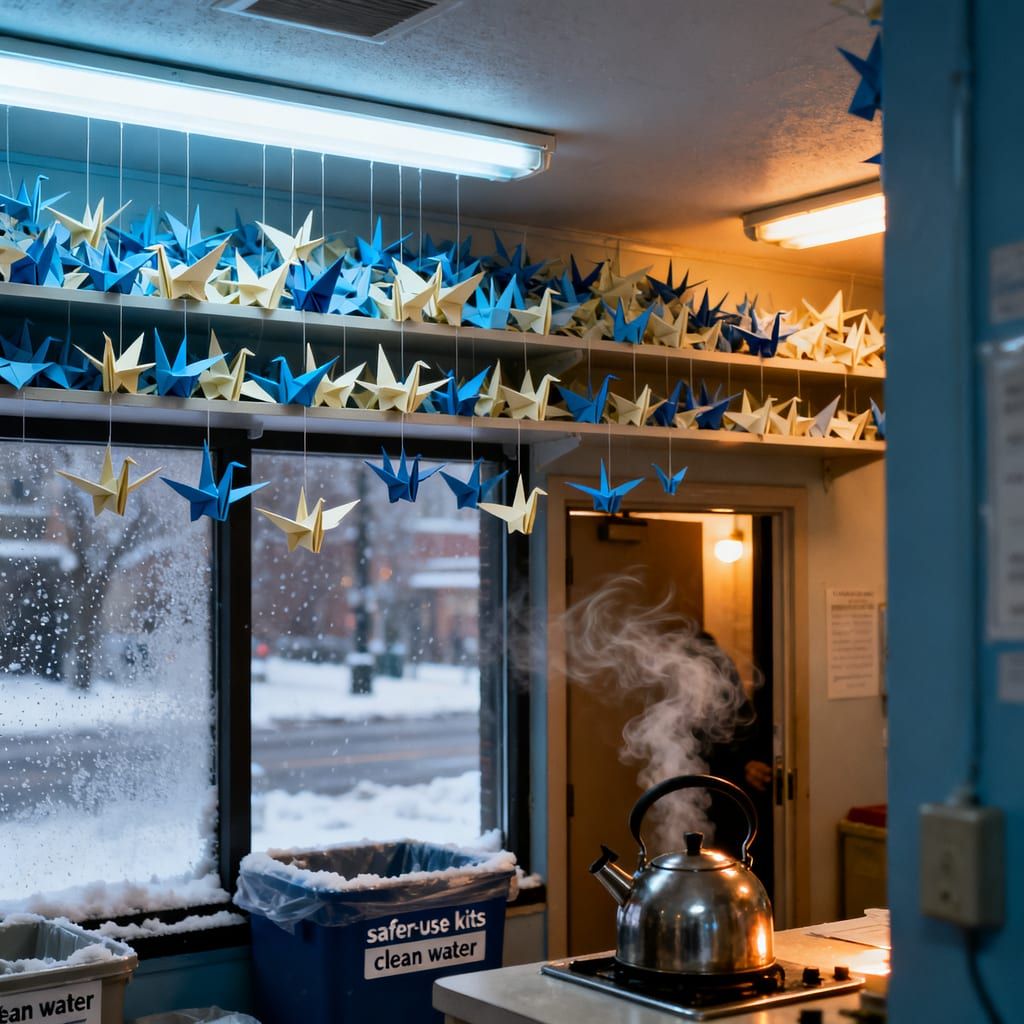

A drummer learns to listen for the rhythms you can't hear
Read more →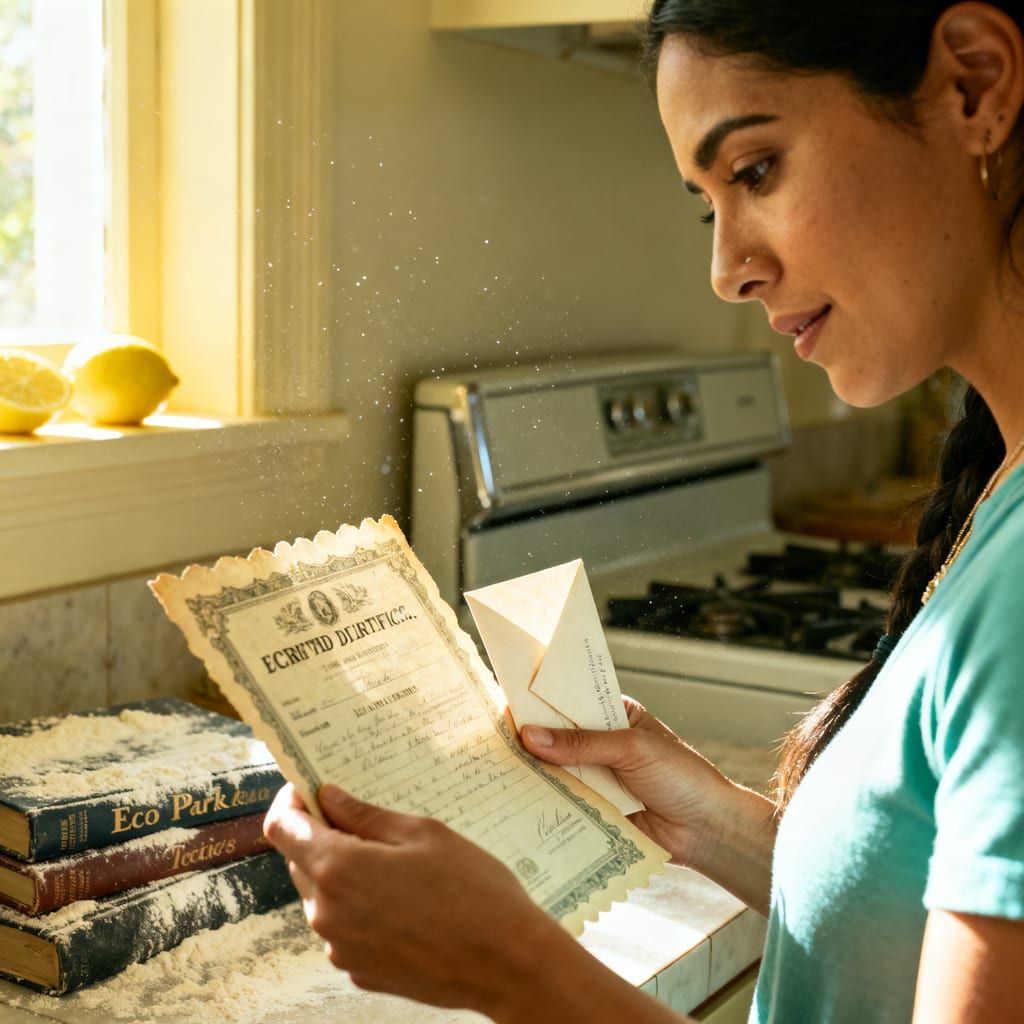
In Los Angeles, a daughter learns how to carry two lives forward
Read more →Story audiobooks for children of all ages — a new one every day on Smarter Way Stories.