Two Houses and One Quiet Heart
A daughter learns to read between the lines of a life split in two
Read more →
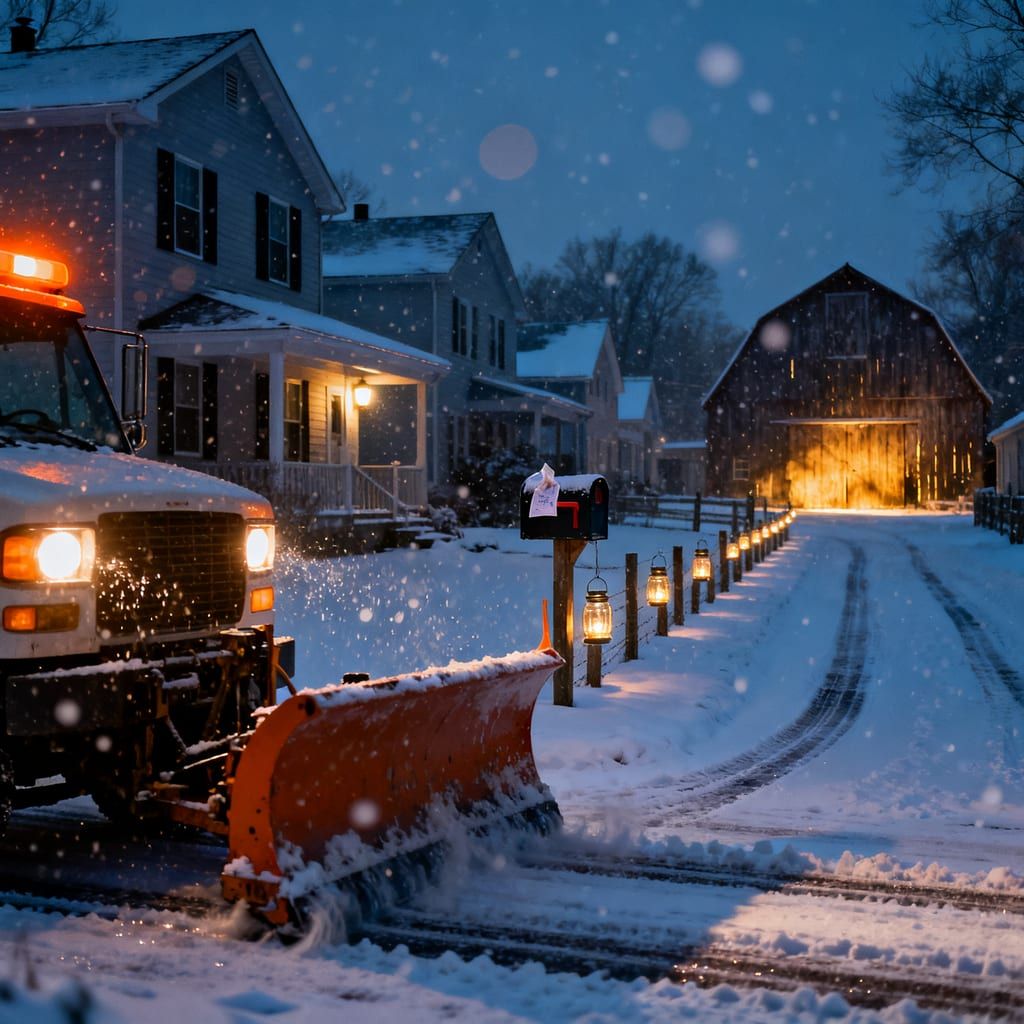
The storm has a sound-like a radio just off the station, voices somewhere inside the static. Eli rides the blade into it. The windshield wipers chop their metronome, the orange strobe tints the world a feverish amber, and the plow chews forward, curls of snow rolling off like surf.
He knows this route the way a hand knows its scars. Left at the bait shop, incline past the water tower, down into the grid of row houses whose porches grow ice like beards. He keeps a steady twelve miles an hour-no more, no less-and breathes warm grit through a coffee that's gone cold. Headlights, blade, amber flash. The town shrinks to those three.
At the cul-de-sac where he won't go, he swings wide and keeps driving.
"Copy on First and Beech," the dispatcher says in his ear, voice frayed from a hundred calls. "You got any luck on-"
Static floods the cab. Eli taps the earpiece and gets the storm instead.
Fine. Just him, the blade, and a night that won't end. He lowers the plow and sends another ribbon of street into view. Houses are lit like ship windows, then dark, then a single stubborn porch bulb doing its best.
At the third block, he spots a slip of paper taped to a storm door, edges icing into lace. He rolls down his window, reaches from the cab, gloved fingers clumsy with cold. The ink bleeds but holds: Check on Mrs. Alvarez-insulin in fridge.
He hears his father's voice, as if carried in by the draft when he cracks the door. You don't leave a drift in front of a stoop, son. You don't bury what someone else has to lift.
Eli raps with the backs of his knuckles. "Ma'am?" he calls, mouth close to the frame, breath making its own indoor weather. "You got someone coming?"
A chain slides. A woman peers out, hair in hot rollers, blanket around her shoulders. "You the plow?"
He nods. "I can get you to the clinic if you need."
"I'm okay till morning." She points to the note with a shaky hand. "Neighbor left that. I've got doses till eight. If the power stays-"
"Generator?" he asks.
"In the basement a hundred years ago."
"I'll tell the clinic you're on their list," he says, though the radio is dead and the list is him. He makes a mark in his head: Alvarez-dawn.
When he climbs back into the cab, the seat exhales a puff of warm vinyl. The storm swallows the house almost as soon as he pulls away.
The notes start to appear like a scavenger hunt of worry. Two kids here, heat out. Generator in barn-need gas. If you're the plow, God bless you.
He moves like a courier, blade down, reading scraps by headlight. He knocks with his glove-no bare skin on metal tonight-and reads out loud to doors that open two inches, to faces gone soft with sleeplessness. He makes promises he is not sure he can keep. He watches shoulders lower anyway.
On Oak, a figure in scrubs flags him into the drifted middle of the road. She looks like she stepped out of a bright room into the wrong century, legs bare beneath a coat, clogs sprayed with rime.
"Clinic," she says. "I'm supposed to relieve nights. My car died two blocks back. I can walk if you can get me a lane."
"Climb in," he says. He bumps the plow just enough to fold the drift's lip, cuts a channel to the clinic's emergency bay, and sits while she goes inside. When she comes back, her mouth is a grateful line.
"We'll check on Mrs. Alvarez," she tells him, cheeks glowing. "We'll send someone. Thank you."
It lands warm in him, surprising as a match struck against his ribs.
He backs his way down a single-lane alley where dumpsters are ghosted into smooth, white boulders. A delivery truck is teetered at an angle, its rear tires skyward, exhaust coughing like an old man. The grocer, hatless, breath steam-thick, paces and curses softly in a language Eli only half knows.
"Easy," Eli says. "I'll nudge you."
He angles the blade like his father taught him, kisses the bumper, and lifts the truck free of its icy cradle. The driver throws both hands up and then presses a greasy paper bag into Eli's chest. Heat bleeds through his coat.
"For you," the man says. "Empanadas. You saved me."
The smell is cumin and onion, meat and something sweet. Eli eats one over the steering wheel, crumbs freckling his coveralls, the cab humid with spice. For a moment, the storm is a gray movie playing outside someone else's car.
On Juniper, a Prius sits skewed at an angle like a sleek animal that's forgotten how to run. Inside, a young couple huddles, faces done tight against cold and resolve.
"We tried," the guy says, his smile all apology. "We thought-"
"Back up a hair when I push," Eli says. He taps the blade to the bumper and eases them into motion. They cheer like a crowd of eight.
He's already climbing back in when the woman taps his window with a mitten.
"Coffee," she says, shoving a thermos into his lap. "And can you-" She scribbles on a scrap torn from a grocery list. Your porch light's still on. She presses it into his hand. "For Mr. Dugan. Next door. He falls sometimes."
Eli nods and tucks the note with the others. He is beginning to feel like a man being pieced together by paper.
The sky holds nothing but new snow. The radio remains a tomb. Time balloons and then cinches down. The blade sings its iron song and he chases it street by street, notes clipped to the sun visor where parking tickets once lived.
The cul-de-sac squats on the map like a thumbprint. He has steered around it all winter, hands doing the same petty miracle every night. Habit is a shape as strong as a drift-it takes a shove to change it.
He means to pass it again. He almost does.
On the first mailbox is a plastic sandwich bag, taped into shining armor against the freezing air. Inside: a single line in block letters. If you read this, follow the lanterns.
He pulls the truck into the turn and sees them-mason jars along the fence posts, a breadcrumb trail of small breathing lights. The wind takes their flames sideways, but they hold. He drives by them slowly, like a man filing through a lit church. The snow gives a little under his tires, grudging, and then the lane curves into the dead end where a barn bellied from age hunches under a crown of ice.
Light leaks from its seams. The generator's thrum is a second heart.
Eli kills the engine. The silence that rushes in is so complete he hears the flakes ticking against his jacket.
Inside, the barn has been cleared into chambers of warmth. Quilts hang like stage curtains, holding dawn at bay. A cluster of cots hums with bodies, neighbors whose names he knows and, achingly, those he has never learned-faces elbowed by cold into their true shapes. On one cot, a child lies under an oxygen mask, cheeks lifting from gray to pink with every patient breath. His mother holds the machine's cord like a tether to shore. When she looks up at Eli, the relief in her eyes is a heat lamp.
At the far end, hands black with diesel, eyes raw-rimmed and sleepless, stands Luke.
His brother doesn't smile. Neither does he. They tip their chins, a nod pulled from the marrow of an older language. The space between them is crowded with their father-his belt of wrenches, his stories about winter, the argument after the funeral that tried like hell to make a single night responsible for a lifetime.
"You strung the lanterns?" Eli asks.
Luke slides a look past him, at the jars fighting wind outside. "Couldn't find a better spotlight." His voice is hoarse. "Towers went. People panicked. I had paper."
Eli's stomach answers with the smell of diesel, the memory of empanadas, the thermos of coffee cooling against his thigh. Notes. Lanterns. A way through the white.
"We've got a kid who needs the clinic," Luke says. "Oxygen's running, but the generator's thirsty. Fuel truck's delayed somewhere near the bridge. I've been sending folks to check on each other. Had to ask for help any way I could."
There isn't a hug. No thaw-by-decree. They move instead. Work is a kind of prayer they both remember.
"Give me five minutes," Eli says, already backing out, already seeing the cut he'll make.
"Take the alley past Keegan's," Luke calls. "It drifts less there." He slaps a jerrycan into Eli's hands with the old accuracy.
What they do next is what they used to do when they were boys, before grief learned their last names. Eli carves an artery from barn to clinic, slicing through the belly of the cul-de-sac and out to the main, blade hissing like a kept promise. Luke shoulders gas cans, flags down a neighbor's nephew with a snowmobile, ties off a rope with hands that don't forget. They don't talk about the thing that broke them; they let the work hold it for now.
By the time the child is buckled into the back of a Subaru with heat on high and the oxygen concentrator humming, dawn is a violet smear behind the lake. The Subaru fishtails and then steadies as Eli gives it a corridor to run. The mother presses her palm to the glass in thanks as they pass him. He raises his hand, palm out, which is not a wave and not not a wave.
Back in the barn, the night has loosened. Someone hands him a mug of broth. The quilts stir. The generator coughs, thinks about complaining, then steadies with a new can of fuel.
Luke appears with an old map, edges furred from being folded and unfolded a thousand times. He holds it the way people hold photographs they keep in wallets.
"Found this in Dad's toolbox," he says. "Been meaning to show you."
Eli opens it. Familiar streets run like veins-but every turn is labeled with a name. Quinn's Porch. Ms. Alvarez's Steps. Birdseed Lady's Walk. The back lane at the funeral home is marked Mr. Diaz's Dignity. The school crosswalk is underlined where Mrs. King fell in '96. His own house is not there-their father's handwriting takes a left two blocks before.
As he reads, a small, hard thing in his chest dissolves like sugar in hot tea.
"It was never asphalt," Luke says quietly, as if they both need permission to say it out loud. "He taught us people."
Eli doesn't answer. He doesn't have to. He looks toward the door where the mason jars throw their small galaxies against the snow and hears their father in the spaces between the generator's breath. The route didn't expand tonight-it remembered itself. He is the one who had made it fit the size of his shift, his grudge, his grief.
He tucks the map into his jacket like a heat pack.
"I've got to widen for the fuel truck," he says. "Bridge is going to be a mess."
Luke nods. "I'll keep them warm." He wipes his hands on a rag. Diesel smears into a darker gray and disappears.
At the door, Eli peels off a piece of yellow legal paper worked soft from his pocket. He writes in his tight, electrician's hand: Back soon. Keep the lanterns lit.
He pins it under a nail where the barn wood remembers other nails.
When he climbs back into the cab, the seat sighs like someone who trusts him again. He starts the engine and pulls into the white that has become less of a wall and more of a hallway. The mason jars string the way in reverse, each flame bowing in the wind, each small light holding steady as he returns to the route that has been waiting for him this whole time.
Outside, the storm still hisses. Inside, he hums the tune his father used to whistle when it was too cold to speak.
He drops the blade and makes a road where there wasn't one yet.
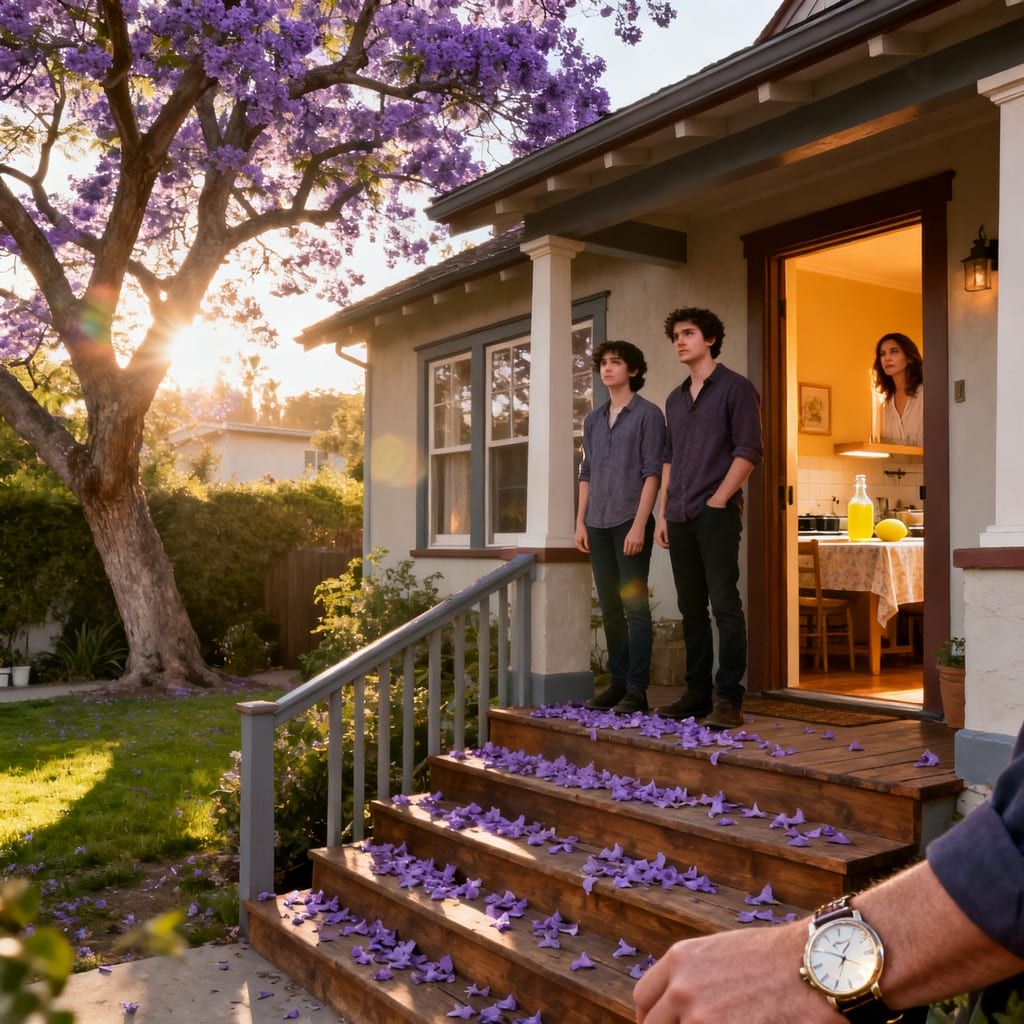
A daughter learns to read between the lines of a life split in two
Read more →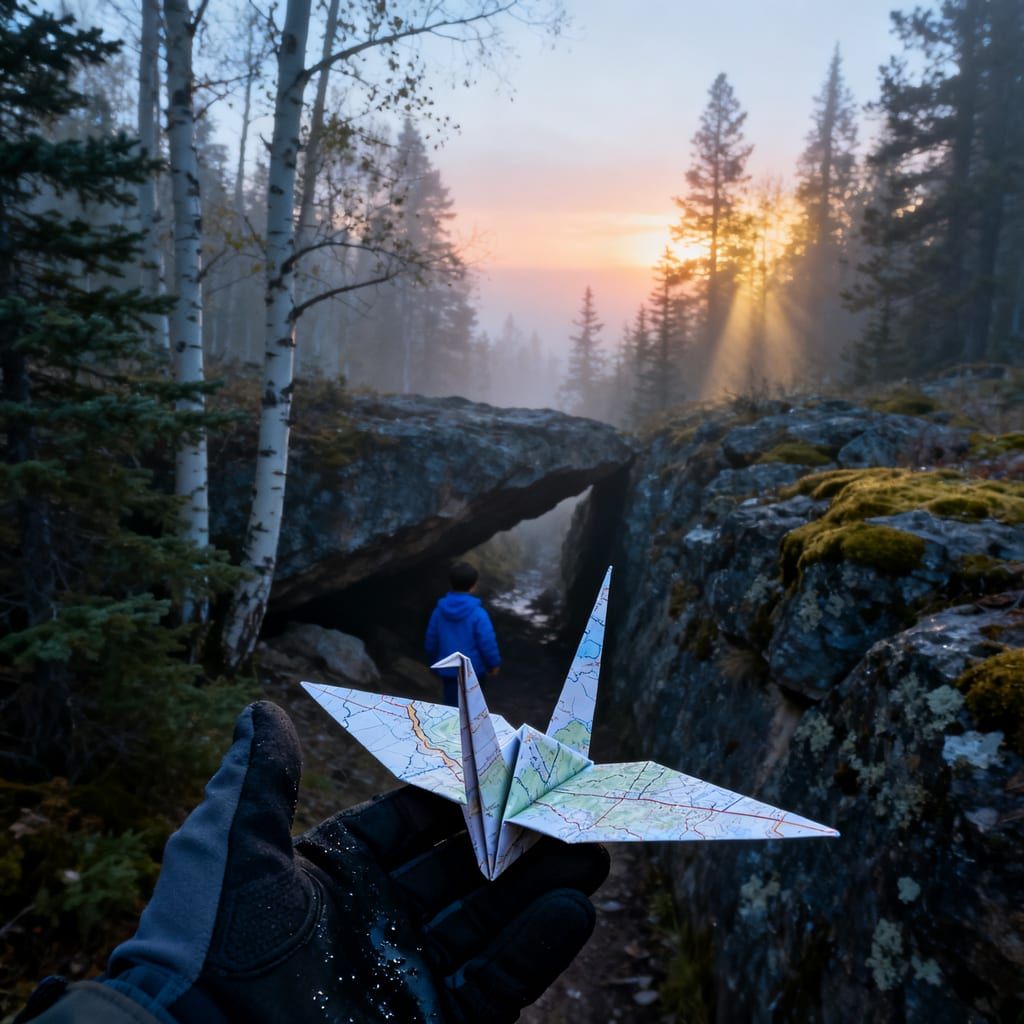
A fog-draped night, two souls found, and the quiet shape of a life
Read more →
Story audiobooks for children of all ages — a new one every day on Smarter Way Stories.