Two Houses and One Quiet Heart
A daughter learns to read between the lines of a life split in two
Read more →
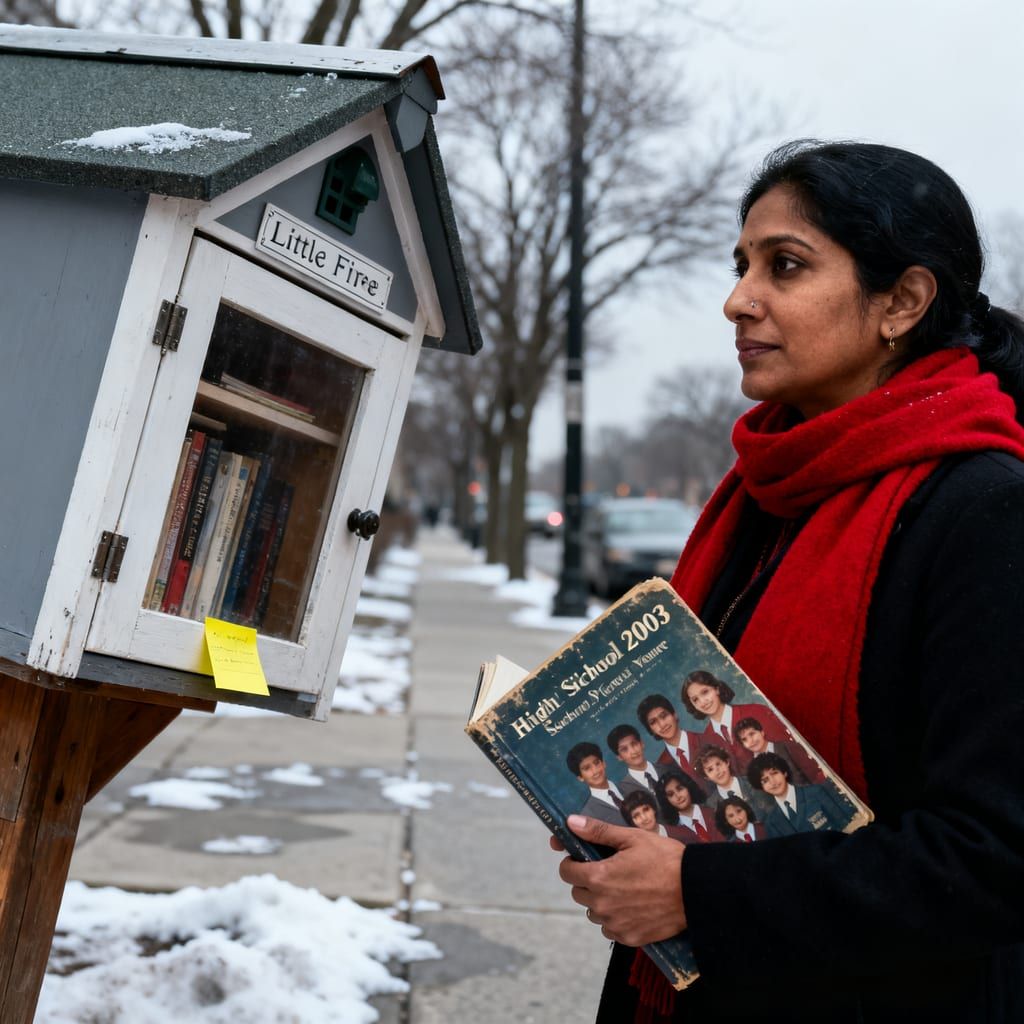
The yearbook is wedged between a cookbook with melted chocolate fingerprints and a paperback whose spine has died gloriously from being loved. The Little Free Library leans a little in the February wind. The sky is a bruise. The sidewalk smells like thawing snow and bus exhaust.
Noor presses her gloved hand flat to the plexiglass door, seeing her reflection first-dark hair pulled low, red scarf damp around the edges-before she sees the embossed school crest: Roosevelt High, 2003. She lifts the book. Its cover is scuffed smooth in places where someone's fingers had lingered, thinking.
She should be heading back to her car. The rideshare app is awake and hungry. Instead she walks to the bench with its chipped green paint and sits.
Inside the front cover, in blue ink still stubbornly bright: Jesse Alvarez.
It doesn't ring a bell. But the margins sing.
She leans into the music of teenagers-exclamation points and elongated vowels and hearts closed at an angle. Superlatives: Most Likely to Never Leave the City. Best Laugh. Most Artistic. There's a photograph of a papier-mâché mask with a sunburst painted around the eyes. There's someone scrawling, "Alvarez! Don't forget-after prom 7-Eleven taquitos. Never change, fool." There's a page where the B's smudge, where someone drew the old school bulldog with human eyelashes.
A girl named Celina writes in purple, "You made me look up in art-like actually up, like the ceiling has stories? Thanks for that."
Noor smiles despite the cold worming through her jeans. Her own senior quote had been something about distance making the heart grow fonder, which she'd hated by November. She thinks of her classroom years-paper cuts and the lingering scent of chalk, the ache in her wrist from turning pottery wheels, how kids brought her grief in pieces, as if art class was a place where you could set down the heavy and look at it without anyone deciding for you what it was.
Her phone buzzes. Ring of steel; someone needs a ride from the grocery store. She tucks the book into her canvas tote like contraband.
At a red light, she cracks the spine a little, shame making her glance in the rearview even though no one is there. At the curb waiting for a passenger, she reads a whole page of messy advice-"Never forget where you came from"-and tries not to roll her eyes, then doesn't, because there's a sincerity under the bravado that makes her throat warm.
She begins to slip small archival sticky notes into the gutters of the pages. They are the good ones she used to give her students-the ones that won't leave scars. On one where Jesse wears a crown from homecoming made of wrinkle-prone foil, she writes, "What did being seen like this feel like-warmth or debt?"
On a bruised corner where someone wrote, "Dude, you're gonna be huge, Hollywood!" she tucks a note that says, "It's okay if you get small first."
By the gym team photo-parallel bars catching the glare of the camera-she writes, "What did you love that no one thought counted?"
She is not sure why her hand doesn't shake. She is not sure why it feels like laying a small cloth over a sleeping animal so it does not startle when it wakes.
Between fares, she turns to the senior quotes. The typography is snotty and noble all at once. Under a black-and-white portrait of a boy with dark hair, lips pressed into a private joke, there's a line: "Build the small bridges."
She underlines it with her fingertip, then lets her hand rest there for a breath that fogs the page.
That night she photographs the cover-the Roosevelt crest braving a kitchen table ringed with tea stains. She adds the picture to the neighborhood Facebook group, her fingers hovering before she types: "Found this in the Little Free Library on Damen. Belongs to Jesse Alvarez. Would love to get it back to him or family."
She doesn't mention the notes. She doesn't know if you admit to writing in a stranger's past.
A ping at midnight. "That's my brother's," someone writes. A profile picture of a woman in a yellow dress on a pier. Marisol. "We haven't seen him much in years. Where can I meet you?"
Noor types and erases. She pictures the notes like tufts of dandelion gone to seed, trembling. She types, "There's a taquería on Western, by the mural with the orange fox. Tomorrow?"
It is the kind of place where the tile floor is wiped into a permanent sheen and the salsas glow like stained glass. Marisol arrives in a jean jacket and a scarf with a pattern that looks like rain. She says Noor's name with an open vowel that makes it feel like less of a question.
They order tacos al pastor and horchata. They sit.
Marisol runs her hand down the edge of the yearbook, gentling the cracked spine the way you settle a toddler. She opens to a random page, laughs once-the kind of laugh that blows the dust off a cupboard-and taps a joke. "He and Manny drew that bulldog every year, like it was a sacred duty. Look, he gave it eyelashes. I used to tease him, 'Our bulldog is a lady now.'"
On the inside cover there is their father's handwriting, a neat engineer's print: "Proud of you, m'ijo. Keep building. -Dad, 2003." Marisol's mouth goes a little sideways. Her eyes slick.
"That was the year he left," she says. "He still wrote in the book. He was in the driveway when Jesse got home from graduation. He had the pen ready-funny, right?"
Noor's hands curl in her lap, as if holding a thing too delicate to place on the table. "I-" She stops. The world feels briefly balanced on the lip of a glass.
Marisol closes her eyes for a beat. When she opens them, she is somewhere else in time but also here. "He died last spring," she says. "Jesse. Relapse no one saw coming. We never found his box of school things." She smiles at the page like it might turn back time if she's gentle. "And now this shows up at a little library, like he sent it on a bus with transfers."
Noor feels heat rise, then shame. "I shouldn't have-" She gestures with both hands, uselessly. "I wrote notes. I don't know why I-"
Marisol slides her hand over Noor's, warm from the cup, her palm a steadying weight. "The notes feel like someone sat with him in the dark," she says. "It's not a trespass, it's a vigil."
Noor nods, the lump in her throat swollen enough to change her voice. "I'm sorry for your loss," she says, a phrase that feels like a coat too formal for the weather.
"Me too." Marisol looks at the senior quote. Her finger finds "Build the small bridges" like it is a light switch. "He was always fixing other people's stuff. The radio, the step to our porch, the latch on our neighbor's gate. He said you don't always get to build the highway. Build the little footbridges so people can cross the puddles."
They talk around the tacos they forget to eat. They trade small stories like wrinkled receipts. The smell of gym floors. The way a guidance counselor shrugged and said, "Community college is fine," like a door politely closing. The way men in their families carried grief like a backpack they could not admit was heavy.
When the plate goes cold, Marisol asks, "Can I take it tonight?"
Noor hesitates. Then she nods. "I'll want it back," she says quickly. "To finish what I started. And then it's yours."
The yearbook leaves a rectangular absence in her tote that evening, like a book-shaped shadow. She drives late. Snow trembles in the streetlights but refuses to fall. In the pause between passengers, she pictures Marisol on a couch with a blanket over her knees, turning the pages the way you open drawers after a death-carefully, startled by a sock.
When Marisol returns the book the next day, they meet on the sidewalk with their breath making small clouds. "Finish," Marisol says, pressing the yearbook into Noor's hands. "Then bring him back to us."
Noor makes tea that night and clears a space at her kitchen table. The scent of mint-sharp, green-seems like permission. She opens the book to the photo of Jesse in a papier-mâché mask with sunbursts ringing the eyes. On her note she writes, "When the mask felt safer than your own skin, what color did the inside of it glow?"
On the page of signatures run to the edges, she tucks a thin slip that says, "It is not weak to lay something down."
Under the senior quote-"Build the small bridges"-she writes, "Some days, the small bridge is getting out of bed. Count it."
She adds a map, hand-drawn on vellum, taped to the back page with archival corners. It's a short walk sketched in ink from the taquería past the mural with the orange fox to a laundromat on Maple, where she and two other drivers and a retired school nurse have tacked up a corkboard. It is titled, in block letters, "Letters to Eighteen." Strangers have been leaving messages there for the selves they can remember like a smell-some angry, some shy-lighted, some so tender they ache when you read them.
She draws a little star beside the laundromat door. A key. A legend. She writes, "Where bridges begin."
They meet in the shadow of a bus shelter, wind slicing thin. Cars hiss on slush. Noor hands over the yearbook, a little heavier now, somehow.
Marisol turns to the map and makes a joyful noise that belongs in kitchens. "You made a home for it," she says.
"A place to put the notes," Noor says. "A place to hear them back."
Marisol opens to the page with the mask. There, in a new hand curling in a different grammar of grief, careful and looped, are additions Noor didn't write. Answers, stitched right beside the questions.
Next to Noor's, "What did being seen like this feel like-warmth or debt?" there is, from Marisol: "He told me sometimes it felt like a bill he didn't know how to pay. Sometimes it felt like the lamp on in the kitchen when you think everyone's asleep."
Next to, "What did you love that no one thought counted?" there is, "He loved walking slow. Collecting screws he found on the sidewalk and putting them in jars."
Under the quote about bridges, Marisol has added, "He built one you couldn't see-between me and Dad-by fixing the porch step neither of us would admit we tripped on."
On the inside back cover, in a space Noor had left blank, there is a single line addressed to Noor in Marisol's hand: "You built one."
The laundromat, when they go that afternoon, smells like soap and coins. The corkboard grows fat with papers trembling in the dryer-draft. Noor pins a photo of the yearbook to the corner-Jesse's black-and-white portrait looking sly, all that future hovering.
People are folding towels and reading aloud to children from labels to pass the time. An old man writes to his teenage self, "Start the garden sooner." A kid in a puffer coat writes, "You are not weird. You are a specific." Marisol smooths a thumb over a pink note and laughs so lightly it's almost a breath, then she slips her brother into all that company by pinning a photocopied page with his quote.
They stand shoulder to shoulder. Noor thinks of bridges that appear unannounced-planks laid by impulse and awkwardness and the grit to show up again.
Outside, the evening is the color of dishwater. Somewhere, far, a train moans. The wind lifts, then settles.
On her next break between fares, Noor drives past the Little Free Library leaning into winter. She stops. She opens the plexiglass door and adds a small sign in neat, teacher script: "Leave a note if you need to. Take one if you do."
She closes it gently. She looks up-actually up. The sky is still heavy, but it holds.
She gets back in the car, breath fogging the windshield, the scent of mint clinging to her scarf. The app chimes. She pulls into traffic.
Some days a bridge is a glance that lingers. Some days it's paper and glue. Some days it's a stranger's yearbook, carried forward like a lantern.
And some days, you get to cross.
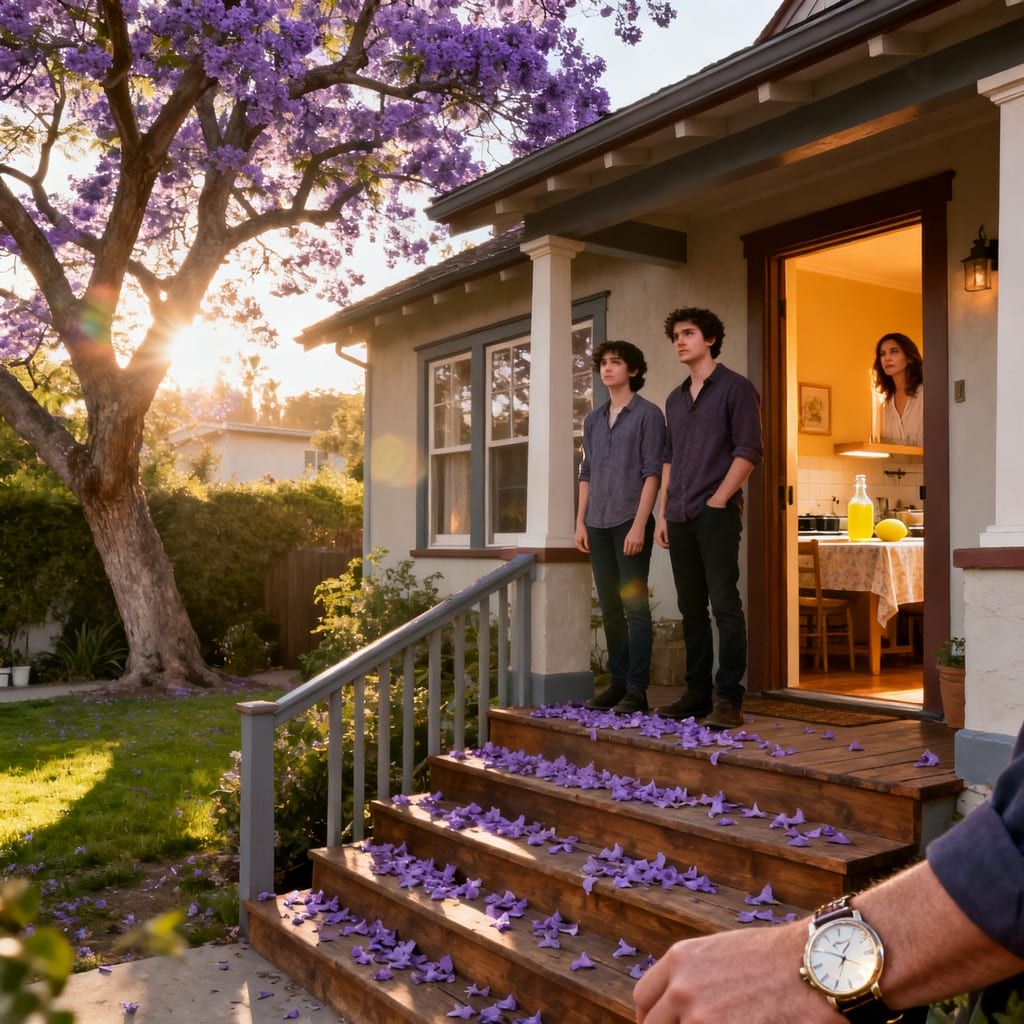
A daughter learns to read between the lines of a life split in two
Read more →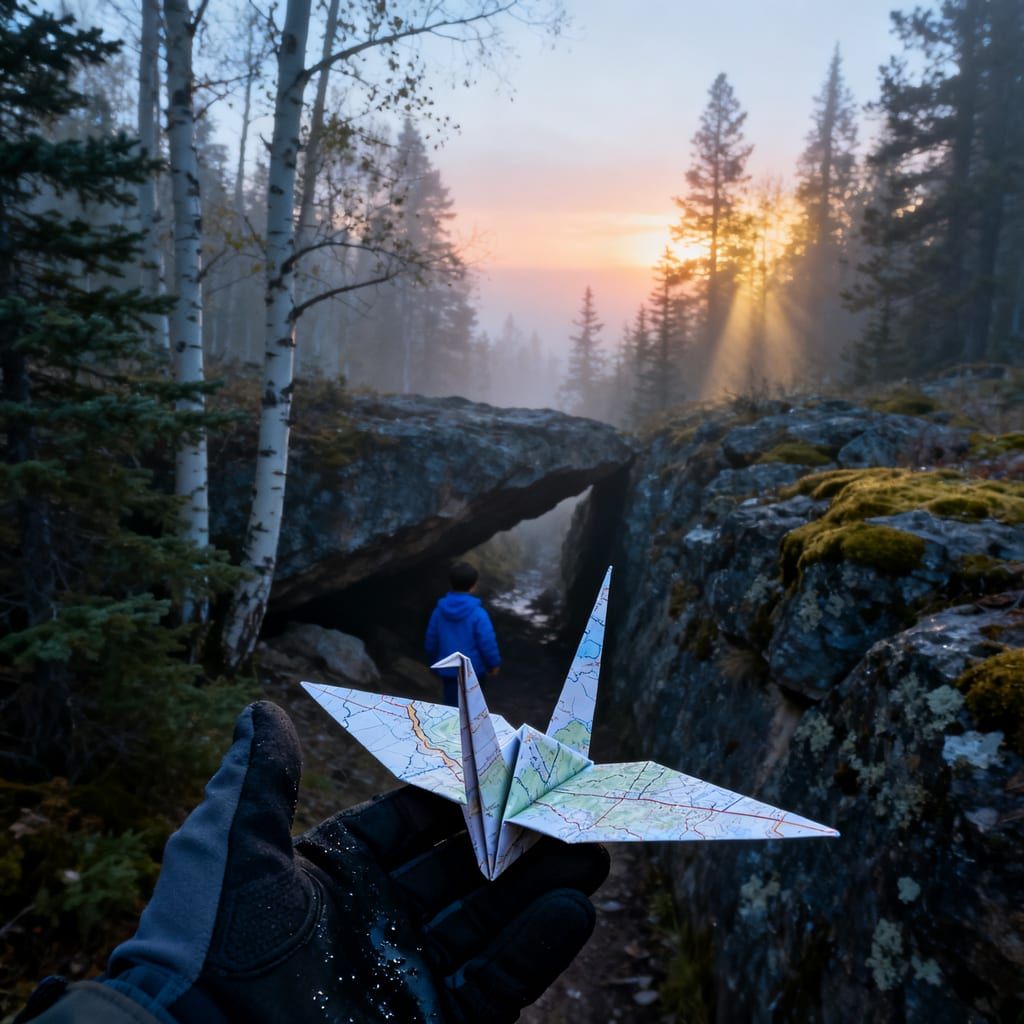
A fog-draped night, two souls found, and the quiet shape of a life
Read more →
Story audiobooks for children of all ages — a new one every day on Smarter Way Stories.