Two Houses and One Quiet Heart
A daughter learns to read between the lines of a life split in two
Read more →
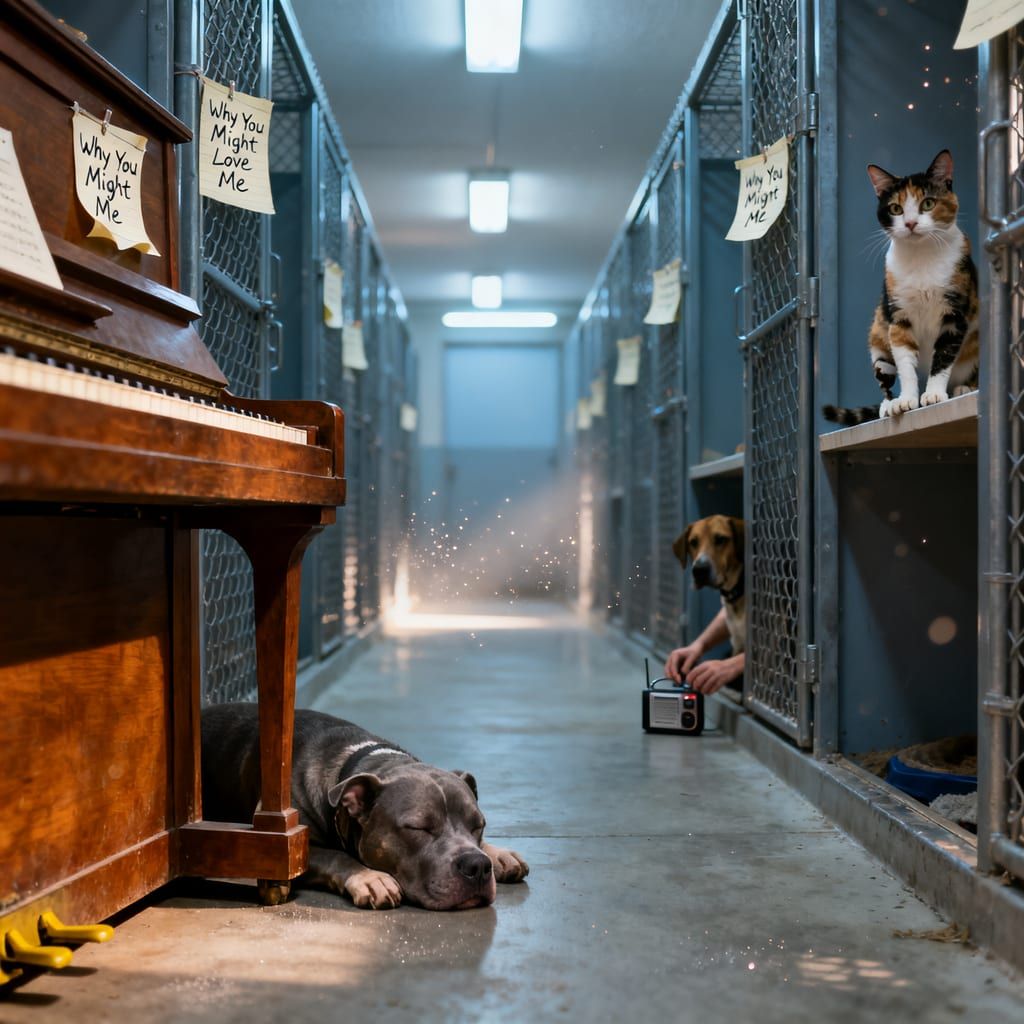
On the mornings she unlocks the shelter before the sun, Lena can hear the city deciding to wake up. A garbage truck yawns on Grand, a bus sighs, a pigeon beats its wings once, twice, and the dogs stir behind chain-link like distant thunder warming up.
By seven-oh-two, she is in the back corridor, keys jangling on her belt, snapping on the lights in sections so no one startles. Coffee breath. Cold concrete. The crisp click of her pen.
"Good morning, Brutus," she says as the gray-muzzled pit bull does his ritual-one circle clockwise, one counter, a sit that wobbles.
He looks at her the way old dogs do when the joint hurts and they pretend it doesn't. He huffs. She hums a bar of a lullaby without meaning to, the one with the boat and the stars. He lowers himself, chin on paws-waiting.
The staff meeting is ten chairs and one folding table in a room that smells like disinfectant and last week's muffins. On the whiteboard: a sharpie graph climbing like a bad idea. Live release rate, the director says, tapping the numbers. Rising intakes, she adds. Limited kennels. And then the word they don't let land hard-euthanasia-skimming the surface like a stone.
"People want puppies with pink tongues," says Marcos from adoptions, not unkindly. He rubs his jaw. "They want easy."
"We have a hound who only sleeps if the radio hums," says Tasha from nights. "What do I put on his card, Snores to Sinatra?"
Lena keeps her mouth closed around the shape of something that could be an idea and could be trouble. Her paper agenda names animals by case number and intake date; there's no room where a person would go, if someone were telling their story.
Back in the corridor, Brutus sneezes. A three-legged calico blinks at her from a high perch, fur the color of fog and marmalade-Kite, who lost a back leg on a street that did not stop for cats. A blind rabbit sits like a cloud with ears in a pen that keeps getting cleaned but never smells like hay long enough. The radio hound-that sweet hound-whines until she flips the dial to a station that plays old soul and advertisements for mattresses.
It is a crowded shelter. It is all the wrong kind of math.
The idea comes while she is labeling a syringe, and by lunch there are index cards on her clipboard. She prints the words at the top without decoration: Why You Might Love Me.
She writes for Brutus:
For Kite:
For the blind rabbit:
For the hound:
She pins the first card on Brutus's kennel. He leans forward and sniffs the edge as if it were a hand.
"Not a warning," she tells him. "A love letter."
The volunteers notice. They straighten the cards. They take photos, then videos of themselves reading aloud in drowsy afternoon light, the dogs blinking like old men at a matinee. A high school kid posts a montage set to a song Lena doesn't recognize. By Friday, a local columnist comes through with a notepad and a fuzzy scarf, crying behind her sunglasses. On Sunday, three people arrive with blankets sewn from t-shirts and time in their pockets.
Adoptions move from impossible to maybe. Maybe to almost.
The city inspector is a woman with perfect bangs and a fluorescent vest that has seen better hallways. She takes notes on a tablet and speaks in numbers. "Grant renewal pending. Live release rate below target." She doesn't meet Brutus's eyes. She doesn't need to. Her math doesn't have room.
After she leaves, the director closes her office door soft and then hard. "We have six weeks," she tells the staff the next morning. "We cut intakes we can cut. We fast-track anyone we can. We make... decisions."
In the break room, Tasha stares into her coffee like it might say something back. Marcos swears into the sink and then apologizes to it. Lena drains her cup, tastes metal, and goes hunting for more index cards.
At the county building, the records clerk wears a sweater with pilled elbows and a nametag that has dropped its first letter. She prints stacks of intake summaries and slides them across in a manila envelope that smells like dust and lemon oil.
At her desk that night under the humming fluorescent, Lena opens the envelope and divides the papers into piles. Dogs, cats, small mammals, the one iguana somebody had a plan for and then didn't. She's halfway through the last stack when something with her old last name surfaces in official ink.
Mora-, the hyphen is a ghost in the middle of a life. Her birth date. The address she fled in a dress with daisies. Unadoptable. Aggressive. Does not attach.
She reads it once. Then again like it might change. The word sits in her mouth like a coin. This is how a label becomes a leash. This is how you teach someone to stop pulling.
She doesn't cry. The air is too dry for it. Instead she hums the boat-song she hums when the dogs are trembling, and the note holds.
Brutus flunks another meet-and-greet, all chest and no patience, a bark that ricochets. "History of bites," the file says. History means all the times the pain made him quick.
"Let me take him," Lena tells Marcos. In the exam room, she hums while the vet lifts Brutus's lip with two fingers. The molar is a mountain cracked through the middle. Pulp exposed. A fault line in a mouth.
"No wonder," the vet says softly.
They book a dental, the kind of decision that would have been off the table three months ago when the table felt smaller. While Brutus sleeps under a warm blanket afterward, Lena rewrites every card.
Not warnings. Needs named plain.
The upright appears a week later, carved legs and yellowed keys, donated by a volunteer whose aunt moved to assisted living and didn't want to let go. It comes on a flatbed with three men in matching shirts who grunt like a chorus as they wheel it past the mop sink.
The retired piano tuner arrives as if summoned by the ad in the thrift newsletter, hat in hand, fingers that move the way old pickpockets move-sure, gentle. "Haven't tuned one since my wife passed," he tells Lena, not to be tragic, but because the air between them can hold it.
"Think you remember how?" she asks.
"I don't forget the useful things."
He folds into the bench, leans an ear close as if the strings are telling jokes. The first chord is a cough. The second remembers. By the third, the hound has fallen asleep in a heap by the foot pedals, snores tucked under a Motown groove. Brutus noses the sound, sighs, and-miracle-goes down. The room breathes with him.
When the tuner comes back the next day, he doesn't bring tools. He brings a leash. "I walk slow," he says to Brutus, to Lena, to the fact of it. "I talk to the radio when I cook. It would be good to talk to a dog instead."
She watches them go the length of the corridor like a newsreel no one thought would run. Brutus looks back once-not to ask, but to mark. She hums him out the door.
After that, the trickle is a stream. Two nurses with stethoscopes still around their necks come for the cloud with ears; they cackle at paperwork, cry in the parking lot, text a photo of the rabbit sprawled like a spilled meringue on a blanket. A night-shift baker in flour-dusted clogs adopts Kite and buys a thrift-store radio she leaves on in the kitchen until dawn, the cat curled on the counter above the dial like a comma in a long sentence finally taking a breath.
The inspector's numbers don't flinch, not at first. Numbers are winter; they don't feel it until spring.
On the morning the inspector returns, Lena wipes a clean square of wall by the mop sink. It drips down her wrist and feels like church when she was small and believed in floors.
She pins an index card there without anyone watching.
Why You Might Love Me:
She stands with her palm flat against the paper until the pin decides to stay put. Then she tucks her hands in her pockets and goes about feeding the radio hound, who hums along to an advertisement for tires like it's an aria.
The inspector tours with her tablet, the director shadowing like a moon. Marcos cracks a joke that actually lands. Tasha pretends she isn't holding her breath and then forgets and breathes anyway. The inspector's bangs don't move.
At the piano, she pauses. "A... program?" she says, as if the word might bite.
"Unlikely Hearts," Lena says, finding the name as she says it. "We tell the whole story, including what they need."
The inspector taps. Numbers blink. She nods once the way city people nod when they see something work against the odds-grudging, impressed, both. "Funding remains," she says. "With conditions."
Conditions are fine. Nobody here is afraid of work.
Sunday afternoon smells like stew and beeswax. Lena stands in the doorway of a small apartment with books piled in forgiving towers and a photo of a woman in a daffodil dress on the piano. Brutus lifts his head without getting up, tail thumping slow, then faster when she hums the boat-song, lower now to fit around the bass note of the piano's good C.
"He sleeps under there," the widower says, ladle in hand, nodding at the shine under the keys. "Snores like a man who finally forgave something." He sets two bowls on the table. "You'll stay?"
"I'll stay." She does. They eat with the radio low, the piano in tune, the dog dreaming of something that doesn't hurt anymore.
When she leaves, her tote is heavier with lightness. Kite's empty pill bottle clicks against her key ring; she'll rinse it and recycle it and text the baker a reminder to pick up the refill. There's a shopping list folded in her back pocket for Mrs. Alvarez on the third floor, who looked at the newest three-legged senior and said, Let's try, like some people say grace.
On the bus home, Lena watches the city pass-a mural that needs a blue touch-up, a boy on a scooter dragging his foot to brake, a woman on a stoop teaching herself to crochet from a video. Across the aisle, a couple share headphones and an orange.
At her stop, the wind catches her coat and tries to lift it like a curtain call. She laughs into it. In her apartment, she sets her keys down, hums to the plants, flips on the radio, and pins a second card to the inside of the cupboard where the mugs wait.
Why You Might Love Me:
She doesn't say it out loud. She doesn't need to. Somewhere a dog snorts in his sleep. Somewhere a rabbit folds herself into a loaf the color of snow. Somewhere a cat lands on three feet and stays.
The city decides to sleep. And in the rooms where nobody used to come, footsteps pause at the door, hands find the latch, and someone says the only word that ever mattered. "Home."
A daughter learns to read between the lines of a life split in two
Read more →
A fog-draped night, two souls found, and the quiet shape of a life
Read more →
Story audiobooks for children of all ages — a new one every day on Smarter Way Stories.