Two Houses and One Quiet Heart
A daughter learns to read between the lines of a life split in two
Read more →
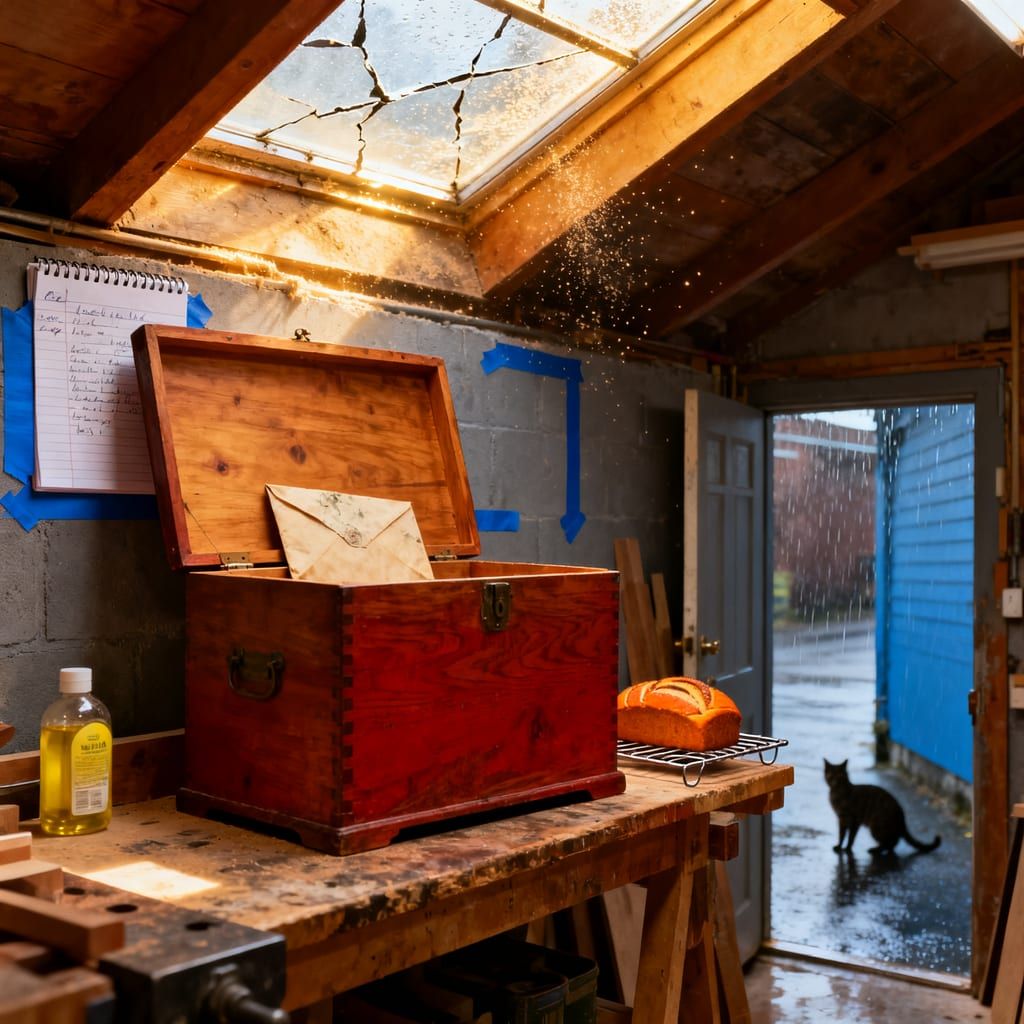
On mornings when the marine layer is slow to leave Portland, Sofia props the workshop door with a clamp and lets the wet air mingle with the smell of lemon oil. Dust motes float like patient birds. The alley cat-the color of old rope-threads himself between sawhorses as if he owns the place.
She sands in measured arcs, palms finding the heat in wood. The rhythmic shush is its own weather. On certain days, beneath the labor and the hum of her small sander, something else rises too-faint as breath on glass. A laugh stitched inside a chair joint. A hushed argument stuck under the lip of a drawer. The quiet weight of a child's secret pressed into felt lining.
She doesn't call it magic. She doesn't call it anything.
After she left the glass box with its view of the river and a line of ergonomic chairs, Sofia rented this back-alley space with a cracked skylight and a history of bike repairs. She put her last good jacket up on consignment, bought a lathe with a scratch on it, and started coaxing life out of battered maple and oak.
Clients wander in off Alberta Street with stories and broken hinges. Sofia listens, nods, and never promises more than a good repair. She tapes blue painter's tape to a wall and begins a ledger there when the murmurs won't leave her alone. The Memory Ledger. Wide-ruled, spiral bound, smudged in the corners from glue and oil.
She writes in pencil the way a person hums without meaning to. Names she can taste more than hear. A humming that limps into a key and finds its way. The smell of oranges and rain. Sometimes she writes nothing at all, just presses her fingertips into a page and draws the imprint of a curve she cannot name.
The table is kitchen-big, scarred as a knee and burn-marked in one corner. Sofia sands until the scorch becomes a softened heart and rubs oil in with the slow affection of someone unknotting hair. It is late afternoon when the tune lifts-thin, bright, insistent.
G major.
She hears it as if the table is a throat trying out a note. She dries her hands and takes a photo with the light falling true: the restored top, the scalloped leg now steady again. On a whim-against every practical cell in her body-she posts it with a caption: "Oak kitchen table, heart-shaped scorch left as is. There's a ghost of a birthday song in G major under here."
By evening a woman named Elena has sent three messages, the last one all urgency: "This is impossible. My mother sang every birthday in G-she couldn't play piano but she said G was happy."
Sofia types, deletes, types again. Against herself, she invites Elena to come by with the old family in the old minivan.
They arrive carrying the kind of quiet that already tips toward tears. Elena runs her fingers over the burn until her breath stutters. "We have a photo," she says, pulling it from a wallet so overfull it's ready to quit. In the picture: a younger table, a just-lit cake, a woman mid-laugh, the same scorch in the same soft heart.
Someone begins to hum the birthday tune, badly and beautifully, and the room gives it back-faint but sure. No one looks at Sofia. They look at the table as if it remembered them without effort. When Elena presses a folded bill into Sofia's palm, Sofia tries to give it back.
"Please," Elena says. "You returned something we didn't know we'd lost."
Word leaks. People arrive with chairs that favor one leg, tables with ink constellations from long-ago homework. A man brings in a dresser smelling of mothballs and theater dust; he leaves stroking the brass pulls as if they purr. A woman brings a piano bench and takes away, astonished, the soft thud of her grandmother's slippers.
Sofia writes it all down. Her pencil grows little, the eraser worn to a nub. The alley cat dozes on a folded blanket as if all of this is ordinary.
The cedar hope chest is nailed shut along the back, a puckered line like a thin-lipped mouth. "Estate sale," the courier says, setting it down with a grunt. "Smells like a campfire and a church."
Sofia leans close. It smells like wet cedar and old oranges, like the underside of a porch after rain. She waits for the client to leave before she touches it properly. The wood is thirsty. She rubs oil in with her thumbs and the shop goes smaller, the way rooms do when memory lays its hand on your shoulder.
The melody comes easy as breath.
Not a birthday tune. A lullaby, hummed on broken syllables, the one that rode her to sleep in so many borrowed bedrooms: duérmete mi niña, duérmete ya...
The pencil drops without meaning to. She laughs once, a sound too close to a sob to be comfortable. It's nothing. It's the oil, it's late, it's the rain in the gutters. She hums back and the chest answers the way a shoreline answers a stone: with rings that move outward from a center you cannot quite see.
She turns the chest carefully and sees what she hadn't before: the back panel isn't original. Those nails weren't meant for this grain. With a thin blade she works one free, then another, breath held, as if any loud exhale could scatter something fragile inside.
The panel gives, just enough. Behind it: a sliver of air, then a felt-lined pocket. Inside, a stitched cloth label, the thread gone to the color of tea.
S. M.
She has seen those initials her whole life-on aprons and handkerchief corners, stitched in the side seam of a dress her grandmother wore to church. Sofía Morales, always two beats on the f and a laugh tucked into the i.
Her breath goes hot and small. She flips the lid and there it is, penciled faint under the rim, steady cramped script: "If found, please return to 48B, Edgewood Court. Ask for Rosa, next door."
Her grandmother lived three addresses at once-whatever her son could pay, whatever a cousin could spare-but Edgewood Court with its peeling railings and rosemary bush was the closest thing to always. Sofia stands very still until the room stops tilting.
The alley brightens, then dims. She keeps working, because work is the only bridge she trusts. She softens the gouges, leaves the tiny ones that speak clearly, polishes the hardware until it shows her face and a little of who she used to be.
The address is still there when the light goes honey. She locks up with her hands shaking just enough to make the key argue, then loads the chest into her van, wedging it with moving blankets and two paint cans. She drives by feel, muscle memory of a neighborhood she hasn't let herself turn down in years. The rosemary bush is bigger. The railings still peel.
Rosa opens before Sofia can knock twice. Older, smaller, same eyes that miss nothing. "Mendez?" she says, like a question that contains its own answer.
"It's Sofia," she says, and the name tastes like orange and rain and cedar. "I-found something. It belonged to Abuela."
Rosa doesn't cry. She sets a hand to Sofia's cheek and says, "I kept that note there because your father said he'd be back for it. Years pass. The paper stayed." She points across the parking lot at a weathered duplex with potted tomatoes fighting for their lives. "Apartment two. He keeps the porch light on more than the bill can stand."
He answers quickly, like he was standing behind the door listening for anyone at all. His hair has given itself over to gray without asking permission. His shirt is clean the way it gets when someone washes it in the sink.
"Sofi," he says, and the nickname buckles her at the knees for a second. In his eyes is apology first, then fear, then something like relief.
"I brought something," she says, moving aside so he can see. They carry the chest in awkwardly, shoulders knocking in a choreography they used to know. The living room is tired but scrubbed-mismatched chairs, a couch with the dignity of a thousand naps, a blanket folded neat enough to make your throat catch.
He sets his fingers on the lid like it might leap up and run. He hums a scrap of the lullaby, off-key and holy, and laughs without humor. "She sang that even when she forgot other things," he says. "I sold this to keep us fed. I told myself I'd buy it back when the jobs came steady. Jobs didn't come steady. Shame did."
"I know," Sofia says, though she doesn't. Not in the way he means. She knows the hunger that wakes you with its teeth. She knows the way shame can wallpaper a room until even the windows look like they belong to it.
They sit-he on the couch edge, she on a chair that wobbles until she plants it firm. He puts his thumb under the latch and waits. "Can we?" he asks. A courtesy. A prayer.
They lift together.
Inside: the breath of cedar. A scrap of blue ribbon. A bowl of wooden buttons. And, under the felt liner that she almost doesn't peel back because enough is enough for one day, a slim envelope with the seam re-glued and re-glued. On the front, her grandmother's hand: "Para mi Sofía-when she finds her way."
The paper thins in her hands like something that might disappear if she blinks too hard. She slides out a recipe card, greasy with gratitude. Orange-cinnamon bread in a careful hand that lists measurements and also the way to lean on the counter while it bakes. Behind it, a note on lined paper torn from a school notebook.
"For what is loved returns, in time," it reads, in Spanish first and then the careful English her grandmother practiced for bus drivers and forms.
Sofia laughs, a bright, startled bark, and then she is crying, the kind that loosens the ribs. Her father's hand hovers in the space between them, then lands on her shoulder where it belongs.
"I should have called," he says.
"I should have looked," she says.
They sit with it. The room holds the weight and doesn't break. Outside, a siren passes without asking for focus. The tomatoes tilt their faces toward a sliver of late sun.
Back at the workshop, the alley cat supervises as if he was here for all of it. Sofia copies the recipe into the Memory Ledger not out of habit but because the ledger has always been a place for returns. She oils the chest one more time, working the cloth in circles, letting the lullaby drift and not correcting the parts that don't remember the words.
Elena messages again with a photo of her mother's birthday cake, frosting cracked in the middle from too much love. A boy arrives to pick up a rocking chair and leaves walking different, like someone gave his spine new instructions. An older woman brings a chipped nightstand and leans on the counter while Sofia rubs color back into the drawer's lip; she doesn't say anything about ghosts, but when she leaves she kisses the air toward the wood like it could catch it.
People keep coming, carrying what carried them. Sofia keeps listening.
She bakes the orange-cinnamon bread on a Wednesday afternoon, the workshop oven making the room too hot. The smell is exactly the one she has been chasing without naming: citrus waking the dark, sugar going to amber, cinnamon carrying the corners of the room home. She slices the loaf thick. She places two pieces in waxed paper and drives them to the duplex where the porch light burns steady.
Her father opens it with a question already formed. She answers by handing him the bread. They eat it on mismatched plates. He says, "You get the salt right?" and she says, "She always said just enough," and he laughs because always and just enough have never lived easily together in this family.
They make a plan. Not a dramatic one. Coffee on Fridays. Fix the wobble in his chair. Teach him the names of her tools. Learn the names of her father's regrets and sort the ones worth keeping from the ones that were only trying to keep him company.
Sofia stops telling people she hears furniture. If they ask, she says she listens. She runs a cloth along a table edge and hums for the part that hums back. She writes in the ledger with a new pencil that is long enough to feel like a beginning. Sometimes she tucks a copy of a recipe between the pages-orange-cinnamon, stained with the first bake-because some returns arrive with instructions.
When a man picks up a refurbished trunk and asks, "Do you think it remembers?" Sofia meets his eyes and says, "I think it knows how to be held." He nods like a person who hasn't been held in a while and carries his history carefully down the alley.
The marine layer takes its time. The alley cat decides the cedar chest is a shore worth sleeping on. Sofia rubs oil into grain, patient as tide, and the room fills with the soft chorus of what has made a life-laughter, argument, lullaby, bread. She doesn't claim anything. She doesn't have to.
At closing, she flips the sign, runs her hand along the ledger's worn cover, and hums the last line of a song that has learned to live in wood. Outside, the air smells of oranges and rain.
What is loved, she thinks, her palm on the cedar's lid, returns in its own key-if you listen.
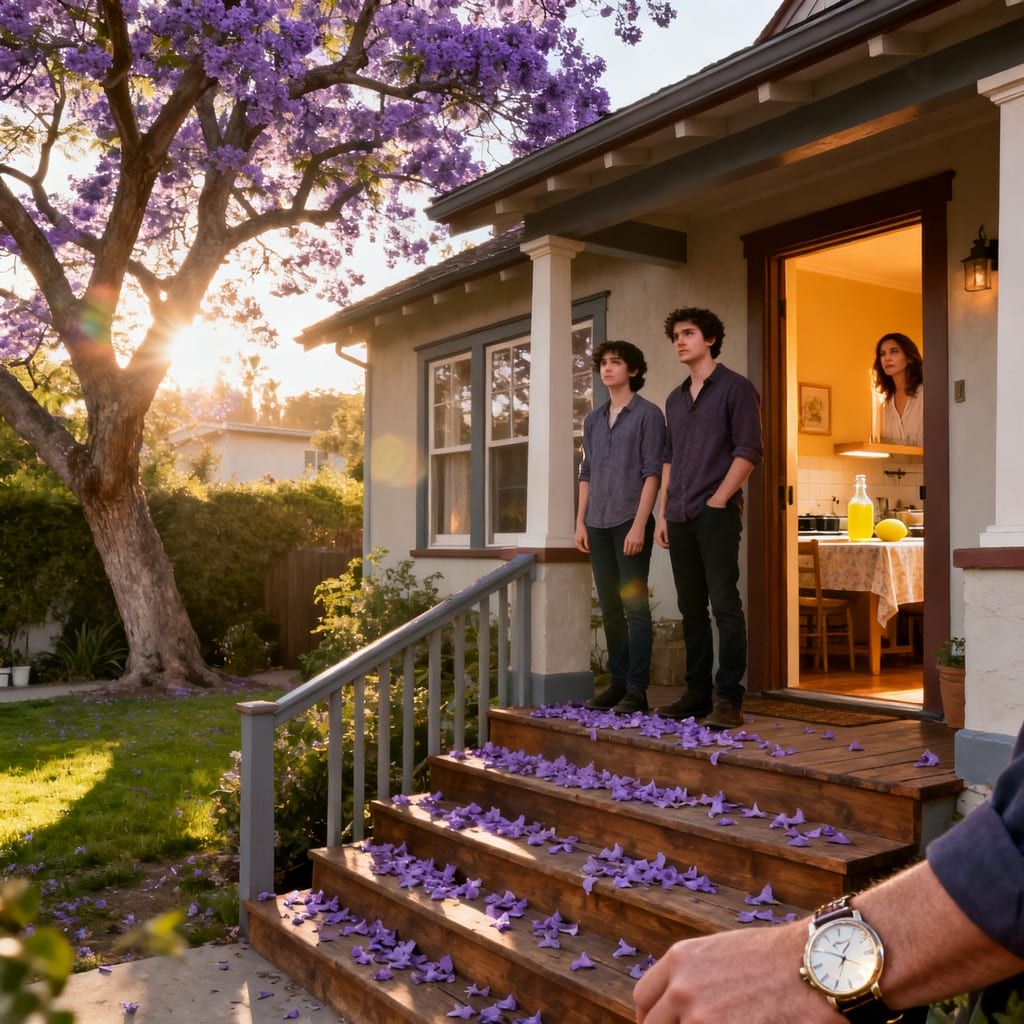
A daughter learns to read between the lines of a life split in two
Read more →
A fog-draped night, two souls found, and the quiet shape of a life
Read more →
Story audiobooks for children of all ages — a new one every day on Smarter Way Stories.