What Darkness Taught the Photographer
A class without sight teaches a way to see
Read more →

The wool coat fit like a thought I'd been trying to finish-heavy at the shoulders, warm where January wanted to needle me. I bought it at a thrift store that smelled like cedar and old pennies, the clerk ringing me up with mittens still on. Outside, Chicago tilted toward snow. The L clattered like cutlery in a drawer.
I didn't find the list until the corner by my building, fingers burrowing for my keys. The paper was tucked deep in the right pocket, soft at the folds, creased with care. "Before Spring," the title said in block letters that tried not to tremble. Twelve wishes, seven checked, five left open like cupped hands. The handwriting leaned a little to the right, neat as a schoolteacher, intimate as a sleepover secret.
See Lake Michigan at dawn in January. Sing karaoke sober. Return an overdue library book from 1999. Make your mother's soup from memory. Apologize to Mateo R. with both hands open.
I stood under the stoop light, breath fogging, and read it twice. The checked boxes were small acts-"learn to say no," "tip a busker with my last five," "call Alma back"-already claimed. The unchecked ones glinted like dropped coins.
My apartment had been silent since Mara left in September, the quiet making a sound if you listened long enough. I'd been laid off in October, "strategic realignment," a phrase you could skate on until you hit cold, black water. Days stretched; I rearranged mugs and bookmarked articles about "navigating transitions" I never read. The list warmed the pocket against my thigh.
I didn't have a plan. I had winter and a stranger's handwriting.
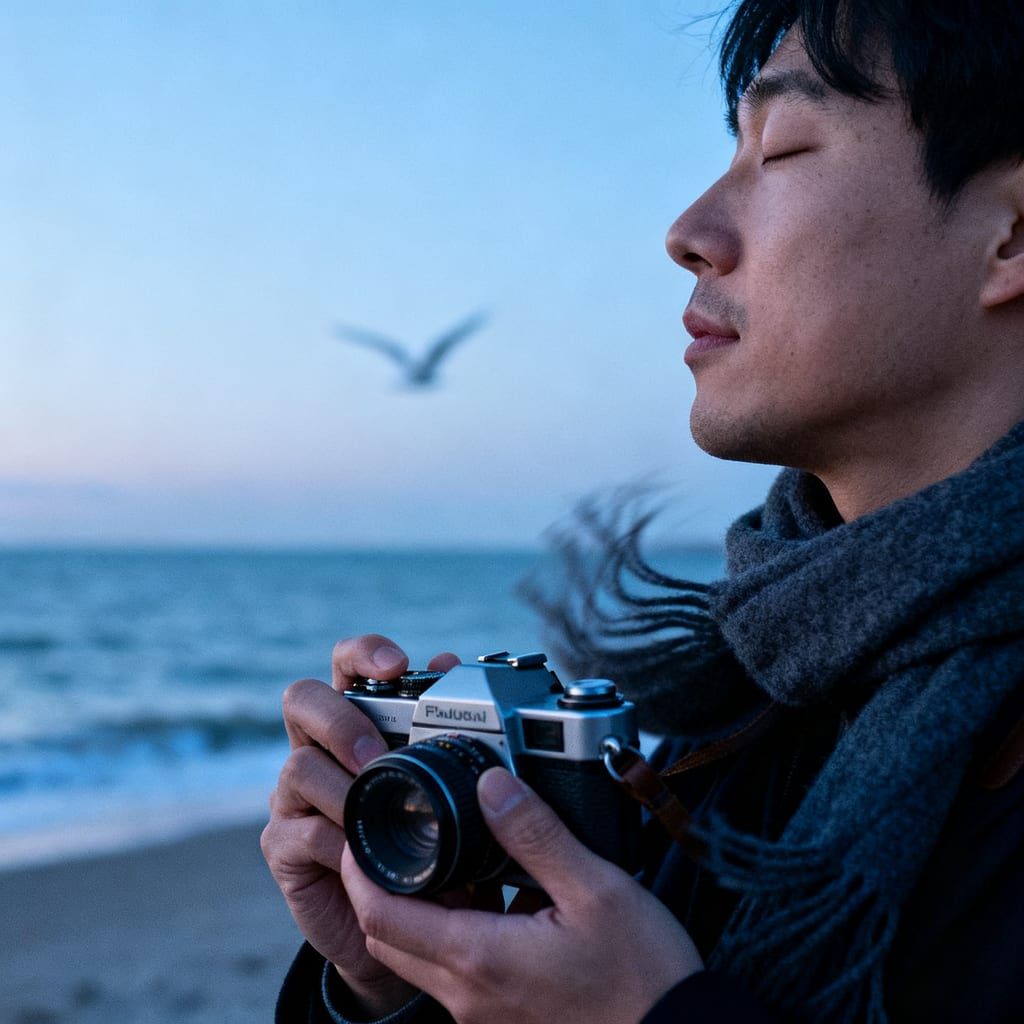
I set an alarm for 5:15 a.m. and didn't hit snooze. The lake in January is a creature with a sleeping pulse. I walked through a world that had been erased and drawn again-lamp posts wearing little bonnets of snow, streets hushed under the city's famous stubbornness. When the sky went from ink to graphite, then to the first thumb-smudge of blue, I stood at the edge of Lake Michigan and waited.
Dawn was a gray-blue bruise that brightened from within. Ice floes knocked shoulders; someone nearby stamped their feet, a metronome of cold. Steam threaded off my mouth and off the lake in low veils, and a gull scolded the horizon. The sun slid up like a promise said quietly. I watched it, hands deep in wool, and checked the first box with my mitten's edge, ink bleeding a little from the mist.
Two nights later, I pushed open the door at a bar on Clark that still had Christmas lights in January-a string of warm dots making a constellation of excuses. The karaoke host wore a hat with earflaps and a grin like a dare. My breath tasted like peppermint tea. No beer, no shot-the point was the rawness.
"You got this," the bartender said, distracted, when I signed up. He didn't know me. It still helped.
I sang "Mr. Brightside" a beat too fast, voice wobbling on the high notes. A man at the end of the bar slapped the wood in time as if he were clapping underwater. A woman with silver hair threw her head back at the chorus and sang with me. When I finished, there was applause-not pity, not Midwestern politeness. Applause that felt like a blanket somebody had warmed in a dryer and handed over. I checked the second box on my way out under snow that had learned to sparkle.
The library was on the South Side, brick and patient. The book, "Beloved," was wrapped in a grocery bag like it might be embarrassed. The cover was softened from years of being read hard and wrong and right, the spine re-taped with a strip that had bubbled.
"We don't do punitive fines anymore," the librarian said, her hair haloed with flyaways, her smile making space. "Just the story, back where it belongs."
"It's not my story," I said, then flushed. "I mean-"
"It is, now," she said, stamping the return with a thunk that sounded like an amen.
When I checked that box, a small wind moved through me. Not a gust. A draft from a door opening.
My mother's soup lived mostly in smell memories-onions hitting hot butter, cumin waking up, rice that went tender without dissolving into sadness. The list didn't say whose mother. It only said your-and by then the pronoun had started to include me, whoever the original writer had meant.
At Patel Brothers on Devon, I held my phone like a talisman and called my father. We haven't been a teaching-each-other family, but necessity writes new recipes.
"She never measured," he said, the clatter of his own kitchen in the background. "A palm of this. A pinch until it smells like the house you want."
An elderly grocer with a knit cap and sharp eyes overheard me asking about the right dal. He laid his hand flat over a sack. "This one," he said, tapping twice. "And for the broth, brown the onions longer than you think is right. That's the trick. You'll want to rush. Don't." He leaned in. "Put a whole chili in and fish it out before serving-like a ship that sails through."
I chopped, I stirred, I burned my thumb and didn't curse. The kitchen fogged, winter pressed up against the other side of the glass like a child. Steam blurred the window until the city dissolved and I was cooking inside a memory someone had lent me. When I lifted the lid, the smell was an answer I didn't know I'd asked for. I ate standing at the counter, tasting cumin, ginger, the comfort of things that had boiled and settled.
I checked the box while the pot clicked, cooling, and my empty apartment felt less like a diagnosis.
The last unchecked box had teeth. "Apologize to Mateo R. with both hands open." I circled it until the paper thinned. Mateo R. could be anyone or no one. The coat had no receipt, no clue beyond lint and a ticket stub for a bus route I didn't ride.
I posted a photo of the list in the neighborhood group with a careful caption. Found in a coat on Western Ave. Does "Mateo R." mean anything to anyone? I expected silence. The internet, like winter, is better at indifference than warmth.
Two hours later, a message pinged-Alma Delgado. I think that list was my grandmother's.
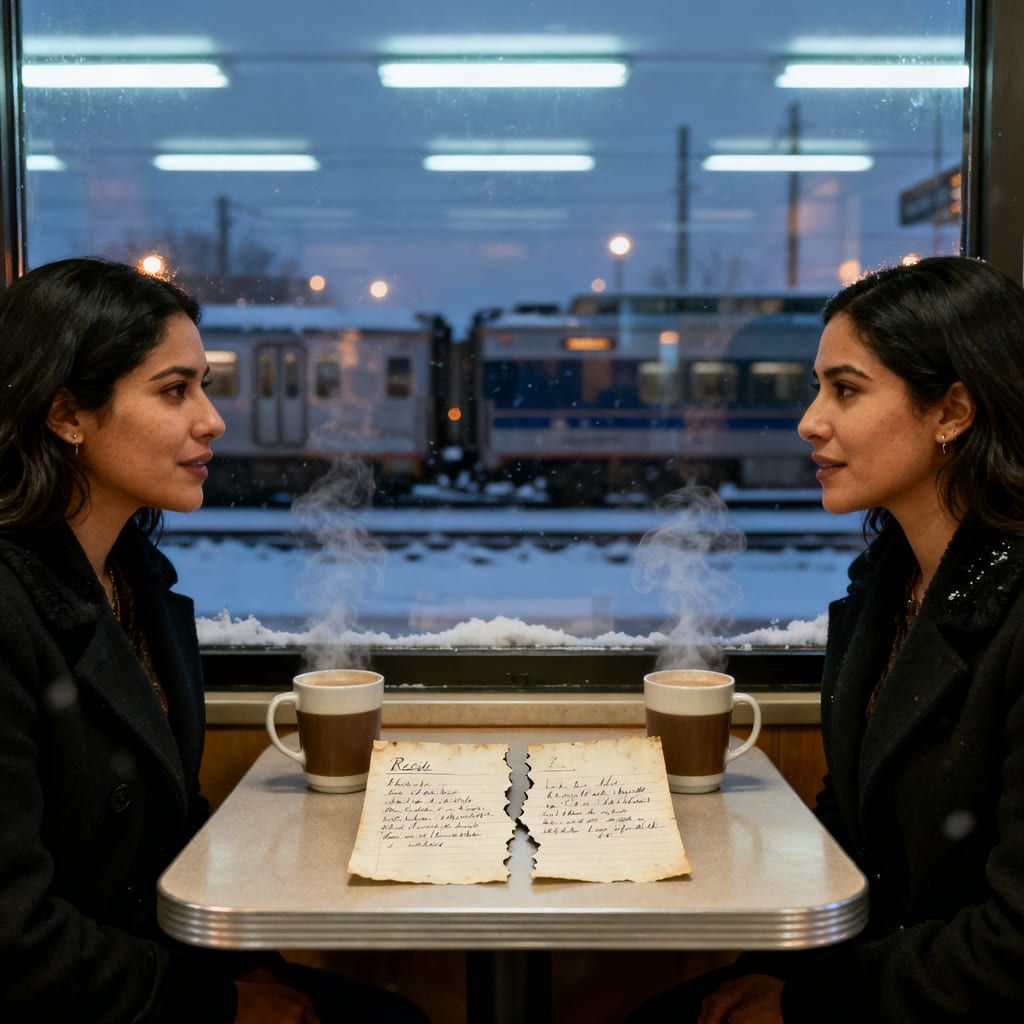
We met at a diner with a slanted floor that made coffee cups skate a little if you weren't vigilant. Alma was small, fierce-eyed, a scarf blazing against January. She smoothed the paper like it was hair.
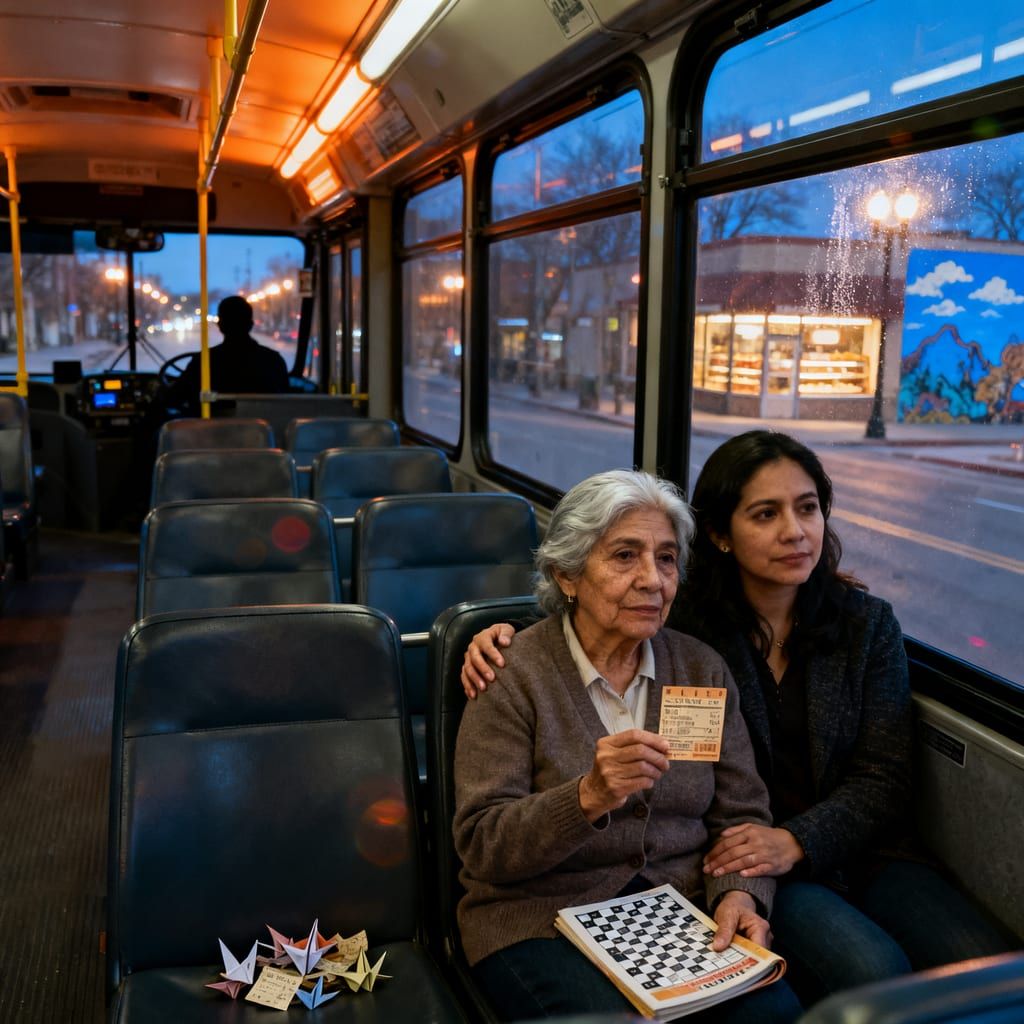
"Rosa Delgado," she said. "My abuela. Drove the #79 bus for thirty years. She'd ask people what they were wishing for when the lights were out at six p.m. and everybody was tired and honest. She wrote them down. Not to steal them-" Alma's voice wobbled, then steadied. "To remember that wanting is a kind of prayer. She said if she said them with her hands, maybe some would live longer than a ride."
"The checked boxes-"
"Some were hers. Some were riders'. She liked karaoke." Alma smiled at the table. "Sober, too, after she quit. She called me back. That was me. I checked that for her last summer. She..."
Alma didn't finish the sentence. She didn't have to. Fall had already said it.
"Mateo R.," I said, softly.
"Her son," she said, even softer. "My uncle. They hadn't spoken in five years. Stupid things at first and then big things that grew around them. She had a stroke in September. Before she could-" Alma looked at the window, where snow flared and dimmed as cars went by. "She wanted to apologize with both hands open. She said that a month before, after church. She made a face and showed me her palms, as if she was holding two oranges she couldn't drop."
We ate my leftover soup at my place two nights later, bowls warming our fingers. Alma told me stories about a woman who drove a city's arteries and knew its heartbeat-teenagers sleeping two stops past their own, old men who told jokes like origami, nurses dropping their masks and their shoulders at six in the morning. A life of hands on a wheel that wasn't a metaphor until it was.
We found Mateo in a suburb with trees too well-behaved for my taste. Alma called; his voice was wary, then curious, then certain. "Come," he said, after a pause that felt like backing up.
His kitchen was tidy in the way of someone used to people coming over and not wanting to be caught. He made coffee. Alma unfolded the list on the table like a runner for a feast.
"She kept these," Alma said, and her voice had two notes now. "She didn't get to finish."
"She always had a list," Mateo said without smiling. "Christmas. Composting. How to make me less stubborn." He rubbed his jaw, looked at me like I'd arrive later in the story and he was trying to see how. "You're-?"
"Just the coat," I said. "Just winter. I started doing them. I don't know why."
"Because you had time," he said, and the cruelty that wasn't meant for me went past me and landed somewhere he could see.
Alma read the wishes aloud. We laughed at "sing karaoke sober" and then at "wear red every day for a week"-Alma rolled her eyes. "She tried, she looked like a tulip farm." We went quiet at "plant a tree with someone you love." No one had written it. It was in the checked list, but the box was blank. Maybe Rosa had told the bus, and the bus had believed her.
"She wanted to say she was sorry," Alma said, hand on the table, palm up. "She wanted to say it without excuses. With both hands open."
Mateo looked at her hand, then at his, then at the window, where a wind chime was catching a stubborn breeze. He set his coffee down with a careful sound.
"Okay," he said. He looked at me once, as if to make sure there was a witness who wasn't family. "Okay."
We sat with that. There are apologies you deliver like a speech and apologies you bring like bread and wait while the other person decides whether to eat. We passed the list back and forth, the paper getting softer.
"I'm sorry I hung up," he said, not to me, not to the room. "I'm sorry I let it calcify. I'm sorry I didn't go to the bus stop. I'm sorry I thought there'd be more time." His hands were open, palms up, as if checking if they were empty.
Alma nodded without moving, tears going where they wanted.
We didn't check the box then. It didn't feel like a box you could check for someone. But when Alma folded the paper and tucked it into her wallet, the kitchen felt less crowded by ghosts.
In March, when the soil in Mateo's backyard stopped clanging and started giving, we planted a sapling Alma picked. A serviceberry-white blossoms in spring, berries for birds, branches that let light through. The ground smelled like pennies and wet paper. Our breath no longer made clouds unless we laughed.
We took turns with the shovel, the kind of work that makes silence friendly. When the hole was ready, we lowered the tree as if it might startle. I held it straight while Mateo slid earth back in, Alma tamping with her boots. Wind chimes flickered a metallic lullaby.
"She liked these," Mateo said, flicking one with a finger. "Said it was proof the air was doing something."
When we were done, Alma pulled the list from her pocket. The paper had a weariness that felt like devotion. We looked at "plant a tree with someone you love" and then at each other.
"She didn't write this," Alma said. "But she meant it."
"We do, too," I said.
We drew three neat checks, the ink so black against the history of creases it could have been new.
Back at my apartment, the coat hung on its peg, a little damp still from flurries. I slid a hand into the pocket and felt only lining, no paper, no map, no instructions. The city was still cold, the job board still a glare. But my days had started to thrum like something plugged back in.
Out the window, the lake wasn't a bruise anymore. It was a body waking up.
I didn't find the stranger. I found the circle that forms when hands open and don't close again too quickly. The coat still fits. The list is lighter now.
Winter hasn't ended yet. But the boxes-somebody's, mine-are mostly breathing.
Story audiobooks for children of all ages — a new one every day on Smarter Way Stories.